
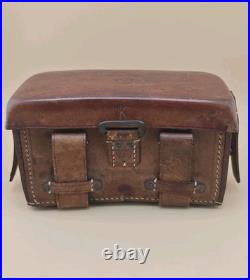
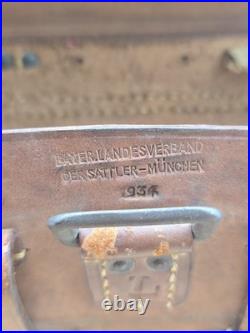
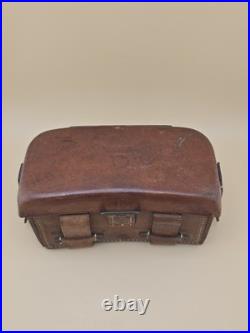
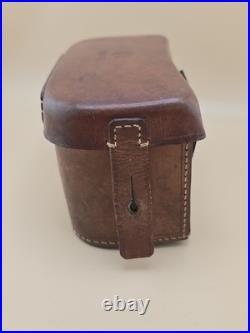
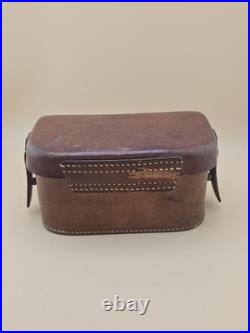
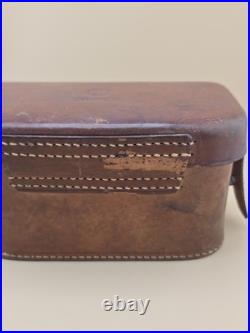
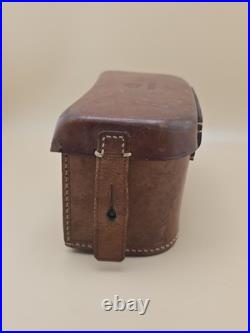
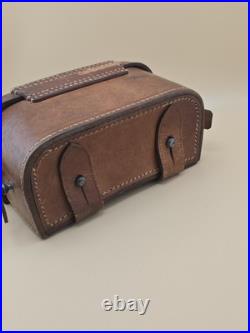
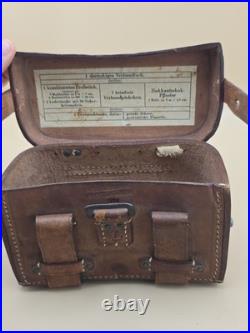
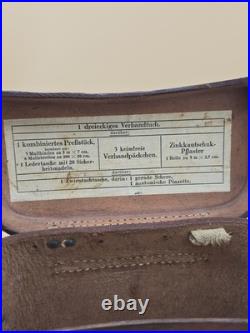
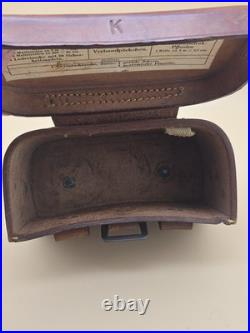
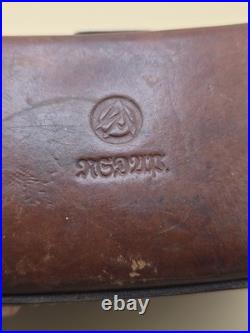

Empty 1934 German 1934 Leather Medical Pouch. Very good condition would be hard to find one in better.

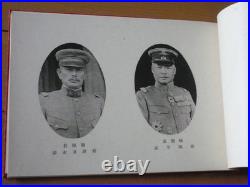
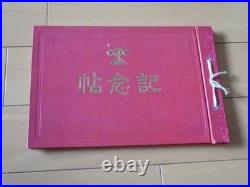
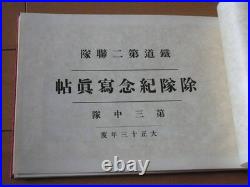
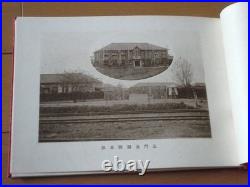
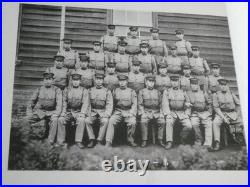
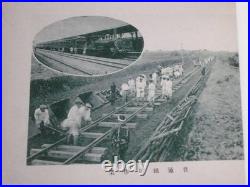
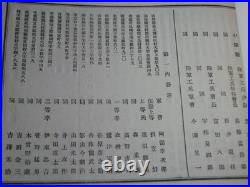
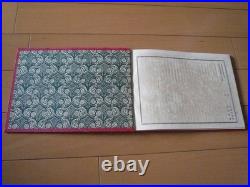
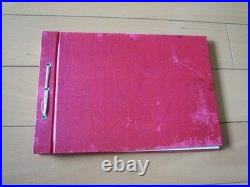
This is an original 1924 commemorative discharge photo album from the 3rd Company, 2nd Railway Regiment of the Imperial Japanese Army. The title page reads: “2nd Railway Regiment Commemorative Discharge Photo Album 3rd Company Taisho 13 [1924]” Unlike an ordinary personal photo album, this is a unit-specific historical record in which the regiment, company, and year are clearly identified. Two Senior Army Officers At the beginning of the album are portrait photographs of two senior officers: Division Commander Morinari Morioka Later reached the rank of General in the Imperial Japanese Army Regimental Commander Teijiro Niihara Later reached the rank of Major General in the Imperial Japanese Army These portraits are followed by photographs of the 3rd Company, military facilities, railway operations, and rosters identifying members of the unit. What Was an Imperial Japanese Army Railway Regiment? The Railway Regiments were specialized Imperial Japanese Army units responsible for military railway construction, repair, operation, and transportation. Railways were essential for moving troops, ammunition, food, equipment, and other military supplies. Railway troops could also be tasked with dismantling or destroying railway infrastructure when required. The 2nd Railway Regiment was based at Tsudanuma in Chiba Prefecture and would later serve in railway operations on the Asian continent. This album dates from 1924, well before the regiment’s later large-scale wartime deployments, making it particularly interesting as a record of the unit during the interwar period. Railway Soldiers at Work One of the most fascinating photographs is captioned: “Ordinary Railway Operations” It shows numerous soldiers working directly on railway tracks, with a steam locomotive and passenger cars visible in the same scene. It is an excellent visual record of what these specialized soldiers actually did. The album also contains a unit personnel roster, recording names, ranks, and other information about the soldiers. Together, the photographs and roster preserve not only the identity of the unit, but also the commanding officers, ordinary soldiers, military facilities, and actual railway work associated with it. A Record from 1924 The 2nd Railway Regiment also participated in railway restoration work following the Great Kanto Earthquake of 1923. This album was produced the following year, in 1924. In later years the regiment would be deployed to China, including operations connected with the Jinan Incident and the Second Sino-Japanese War. The men pictured here therefore belong to an earlier chapter in the history of a unit that would later become deeply involved in Japan’s military railway operations overseas. Swords and medals often receive the most attention from militaria collectors, but armies could not function without logistics. Troops, weapons, ammunition, food, and equipment all had to move. The Railway Regiments were among the specialized units responsible for making that movement possible. Nearly a century later, this album still preserves the faces and names of the officers and soldiers who served there, the facilities they used, and even the railway work they performed. There is age-related wear, staining, discoloration, and rubbing to the covers and pages. Please examine the photographs carefully for the condition and contents. An unusual original historical record documenting the Imperial Japanese Army’s 2nd Railway Regiment through its commanders, soldiers, facilities, personnel roster, and military railway operations. Own a Piece of History. International Buyers – Please Note.

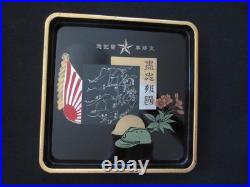
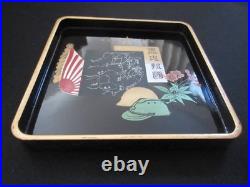
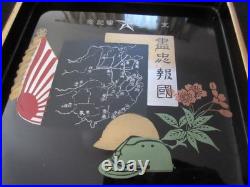

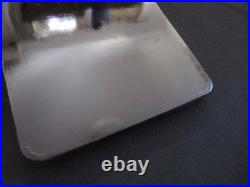
Japanese Wartime Lacquer Tray – China Incident Commemorative This is a Japanese commemorative lacquerware tray dating from the prewar or wartime period. The front features striking military imagery including a Rising Sun flag, a map of China, military helmets, flowers, and a five-pointed star. At the top are the Japanese words China Incident Commemoration. ” The “China Incident was the term commonly used in Japan at the time for the conflict with China that began in 1937 and developed into the Second Sino-Japanese War. Another inscription reads “Jinchu Hokoku” – Devote one’s loyalty in service to the nation. This phrase was widely used in wartime Japan and reflected the strong emphasis placed on loyalty, duty, and national service. Japanese Lacquerware Japan has a centuries-old tradition of fine lacquerware. Japanese lacquer pieces are admired for their deep glossy surfaces, durability, careful craftsmanship, and decorative techniques developed over generations. What makes this tray especially interesting is the combination of traditional Japanese decorative craftsmanship with unmistakably wartime imagery. It shows how military culture was not confined to uniforms, weapons, or the battlefield. It also entered ordinary objects used and displayed in Japanese homes. The Name “Sasamoto” The reverse is marked “Sasamoto” in Japanese. Although its exact meaning cannot be confirmed, the manner in which it is written suggests that it may be the name of the original owner rather than a maker’s mark. If so, it gives this piece an additional human connection – a wartime object once kept in the home of a person or family named Sasamoto. Condition There are scratches, surface wear, staining, and some losses around the edges consistent with age. Please examine all photographs carefully for the exact condition. More than simply a military souvenir, this tray preserves a glimpse of everyday life and social values in wartime Japan. History does not survive only in weapons and battlefields. Sometimes it survives quietly in an object that once sat inside someone’s home. Own a Piece of History. International Buyers – Please Note.

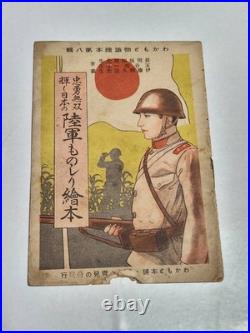
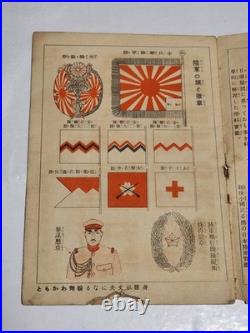
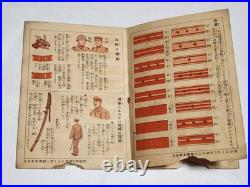
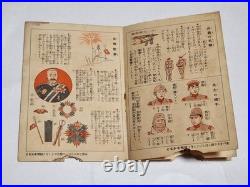
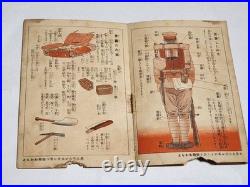
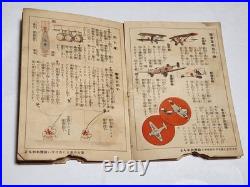
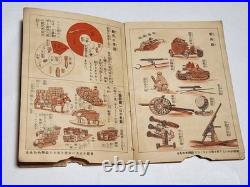
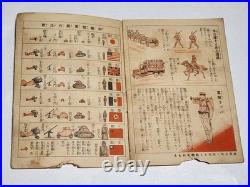
Published in Japan in 1937, this original illustrated book is titled The Glorious Japanese Army – An Illustrated Book of Military Knowledge. At first glance, it may look like simply an old children’s picture book. Open the pages, however, and it becomes a fascinating window into how the Japanese Army was presented to young people in the late 1930s. The year 1937 was also the year the Second Sino-Japanese War began. The book introduces the Imperial Japanese Army through colorful illustrations designed to make military subjects easy for young readers to understand. Inside are illustrations of Japanese Army uniforms, soldiers’ equipment, military insignia, rank markings and military banners, together with many different aspects of the Army itself. There are also sections showing military aircraft and aerial bombing, tanks and armored vehicles, machine guns, artillery, military bugles, transportation and supplies. What makes this book particularly interesting is that it was not a technical manual produced for soldiers. It was created for children. For today’s collector, that gives the book another dimension. Beyond the aircraft, tanks and uniforms, these pages preserve something less tangible: how the Japanese military was introduced to children during the 1930s. One particularly interesting section compares the armies of several countries, with illustrations representing Japan, Britain, Germany, France, the Soviet Union and others. It provides a fascinating glimpse of how foreign militaries were presented to Japanese children in 1937. Even if you cannot read Japanese, the numerous color illustrations make this an enjoyable piece to explore. Aircraft, armored vehicles, uniforms, equipment and insignia are all presented visually, allowing us to see much of the same military world that a Japanese child would have discovered while turning these pages nearly 90 years ago. Condition This is an original period children’s book and shows considerable age-related wear, staining and discoloration. As clearly visible in the photographs, there is also material loss along the lower edges of a number of pages, apparently from insect damage. Despite its age and wear, the surviving illustrations remain remarkably interesting. This book preserves more than pictures of military equipment. It preserves the image of the Japanese Army as it was shown to children in 1937. An unusual piece for collectors interested in the Imperial Japanese Army, military aviation, armored vehicles, uniforms, or the social and educational history of prewar Japan. Own a Piece of History. International Buyers – Please Note.

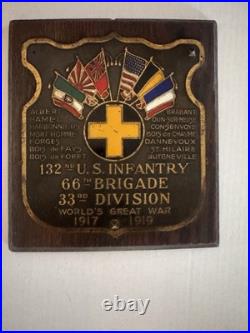
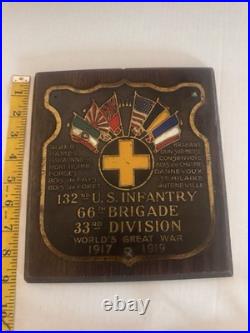
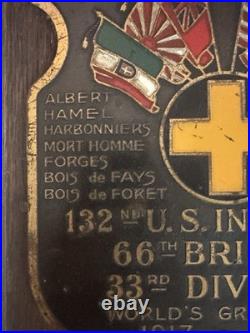
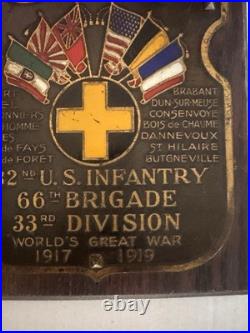
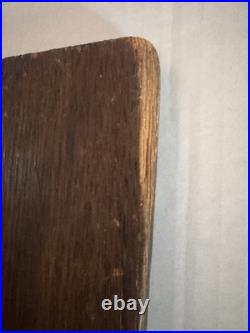
Army 132nd Infantry 66th Brigade 33rd Division Military Plaque. Please refer to photos for accurate visual condition. It does show some wear. And there is a chip out of the edge of the wood on one aide. Otherwise, it is in good vintage condition. A very cool piece of history.

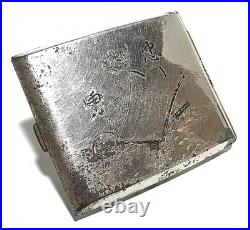
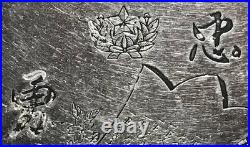
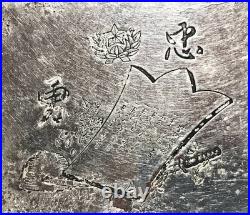
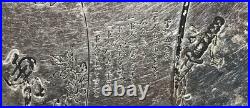
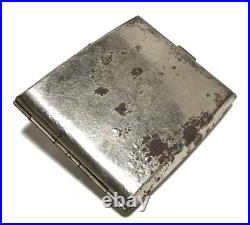
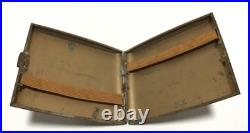
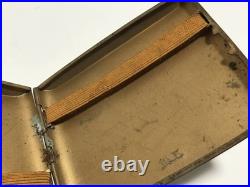
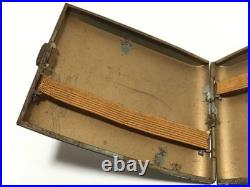
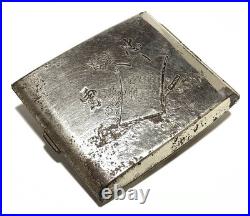
This is a prewar Imperial Japanese Army metal cigarette case associated with the Imperial Guard Division, one of the most prestigious formations of the former Japanese Army. At the top of the front is the distinctive Imperial Guard Division emblem, rather than a generic Army star. Large characters on either side read: – Loyalty – Valor Below the emblem is a design based on a commemorative plaque associated with Army Commemoration Day, and within the plaque are the Five Principles of the Imperial Rescript to Soldiers and Sailors. The Imperial Rescript to Soldiers and Sailors was issued by Emperor Meiji in 1882 and became one of the central foundations of military education in prewar Japan. Its five principal virtues were: Loyalty, Courtesy, Valor, Faithfulness, and Frugality. These principles were repeatedly taught to Japanese soldiers and sailors as the moral standards expected of military personnel. The combination of the Imperial Guard Division emblem, the words “Loyalty” and “Valor, ” and the Five Principles of the Imperial Rescript gives this small personal item unusually strong historical character. The Imperial Guard Division had its roots in the forces responsible for protecting the Emperor and the Imperial Palace. The original Guards Division organization was reorganized during World War II, and the Imperial Japanese Army itself ceased to exist following Japan’s surrender in 1945. The Imperial Rescript likewise lost its role as a military code with the dissolution of the armed forces. Cigarettes were also closely connected with everyday military life. A metal cigarette case was both a practical personal accessory and something a serviceman could carry in his uniform pocket. The original retaining straps remain inside the case. Approximate size: 7.5 × 9 × 1.5 cm The surface shows age-related wear, rust, scratches, and loss of plating. These signs of use are part of the object’s nearly century-old character. This is not simply a cigarette case. It is a small surviving object that preserves the symbols, values, and everyday material culture of Japan’s prewar military world. Own a Piece of History. International Buyers – Please Note.

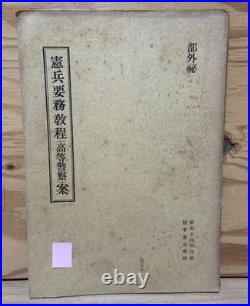
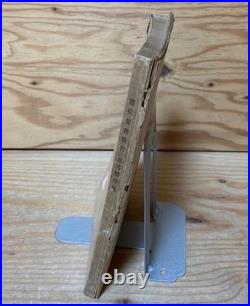
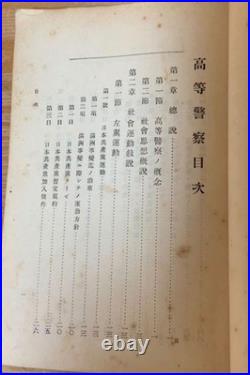
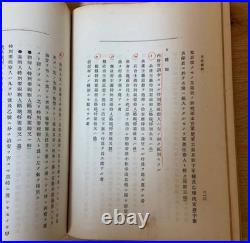
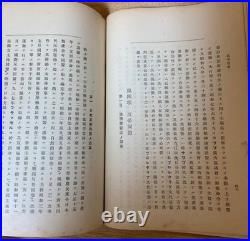
What did the Japanese military consider dangerous ideas? This is an original. 1939 (Showa 14) “Confidential” training manual. Kempei Yomu Kyotei (Higher Police Draft). Imperial Japanese Army Kempei School. Served not only as the military police but also as one of Japan’s most powerful security organizations. Their responsibilities included counterintelligence, political surveillance, suppression of espionage, and monitoring of ideological movements. Because of these activities, the Kempeitai became one of the most feared organizations in prewar and wartime Japan. This manual was prepared to train officers assigned to. Political and social thought. The Japanese Communist Party. Post-Manchurian Incident security situation. Rather than a general history book, this is a. Showing how the Japanese military itself analyzed political ideology and internal security before World War II. One reason this manual is particularly scarce is that it was marked. And distributed only within the Kempei educational system. After Japan’s surrender in 1945, the Kempeitai was dissolved under the Allied Occupation, and many internal military police documents were destroyed or discarded, making surviving originals increasingly difficult to find today. For collectors of WWII militaria, intelligence history, political history, or Japanese military documents, this is an exceptional research piece that reveals the hidden side of wartime Japan. Own a Piece of History. International Buyers – Please Note. Thank you for your understanding.

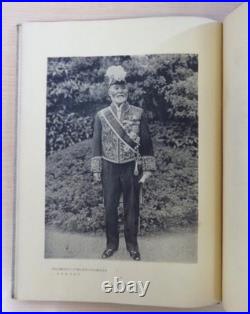
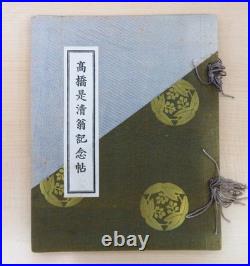
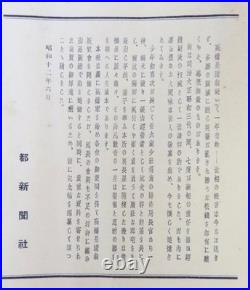
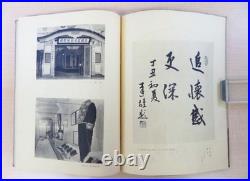
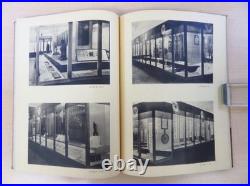
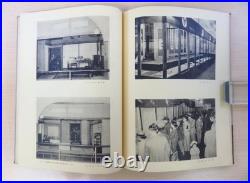
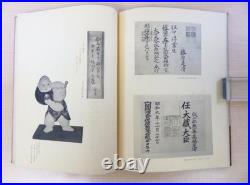
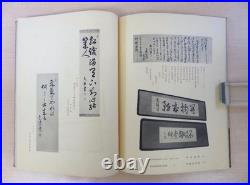
This is an original Japanese memorial photo book published in 1937 (Showa 12). Documenting a special exhibition held one year after the death of. A central political figure assassinated during Japan’s largest domestic military coup attempt. The February 26 Incident (1936). The exhibition was organized by Miyako Shimbun and held at Shirokiya Department Store, Nihonbashi, Tokyo. And this volume records the event through photographs, calligraphy, official documents, and exhibition displays. The February 26 Incident marked a decisive turning point in modern Japanese history. After the incident, overt military rebellion subsided. But the political influence of the armed forces expanded rapidly. Civilian control weakened, fiscal restraint collapsed, and Japan moved steadily toward prolonged war in East Asia. And eventually full involvement in World War II. Takahashi Korekiyo had opposed unlimited military spending and advocated financial balance and civilian governance. His death symbolized the loss of restraint at the highest level of government. This book was produced immediately after that turning point. Making it a contemporary visual record of how Japanese society commemorated the moment when civilian leadership faded and militarization accelerated. Photographs of the memorial exhibition space. Original calligraphy and handwritten documents. Displayed personal artifacts and official records. Period exhibition architecture and visitors. Contemporary explanatory texts by the publisher. Rather than a biography, this volume functions as a historical archive. Capturing how the event was publicly presented and understood at the time. Complete with original covers and contents. Overall very clean and well preserved. Long out of print. Please refer to photos for exact condition details. 225 × 283 mm. International Buyers – Please Note. Thank you for your understanding.


This is an official, non-public photo album published in 1929 (Showa 4) to commemorate the Enthronement Ceremony of Emperor Showa. In pre-war Imperial Japan. Was not only the head of state but the Supreme Commander of the Imperial Japanese Army and Navy. The enthronement ceremony therefore marked the formal transfer of supreme military command, making this event a crucial moment in Japan’s military and political history. Nature of the Album. Its purpose was not decorative, but documentary and institutional-to preserve the official record of a national and military ceremony tied directly to imperial authority and command structure. Cover Inscription (Original Text). The gold-stamped cover reads. (Imperial Enthronement Commemorative Photo Album). The album features a cloth-bound cover with gold lettering, typical of formal military and imperial publications of the era. Contents (Military & Historical Value). The album contains a wide range of official photographs and documents, including. Formal portraits of Emperor Showa and Empress Kojun. Enthronement ceremony processions and rituals. Military formations, guards, and ceremonial troops. Security arrangements and controlled urban spaces. Crowds under strict supervision. Detailed map of the Kyoto Imperial Palace complex. Official explanatory texts and event records. The presence of military uniforms, formations, command hierarchy, and ceremonial discipline clearly reflects the emperor’s role as supreme military authority. This is not a simple commemorative book-it is a visual record of state power and military legitimacy in early Showa Japan. The colophon clearly states. Printed: April 15, 1929. Issued: April 17, 1929. Marked: Non-Public / Not for Sale. These details confirm the album as a primary historical source, not a later reproduction. Expected age-related wear is present, including light toning and minor paper waviness. There are no major tears or missing pages, and the album remains fully usable for study and display. For a pre-war military and imperial document, the condition is comparatively well preserved. Summary (For Collectors & Researchers). Emperor Showa as Supreme Commander of Japan’s armed forces. The enthronement as a formal transfer of military authority. A non-public, institutional publication. A rare visual record of imperial ceremony, military order, and state control. Highly recommended for collectors of Imperial Japanese military history. As well as researchers focusing on command structure, state ritual, and pre-WWII Japan. International Buyers – Please Note. Thank you for your understanding.

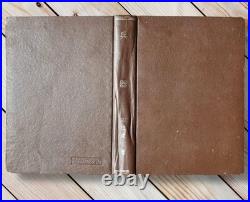
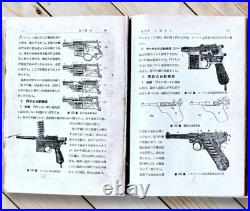
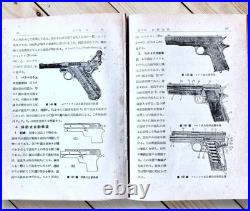
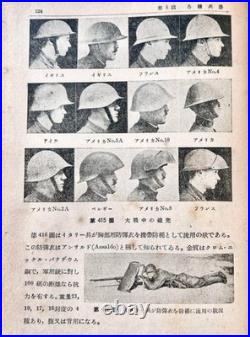
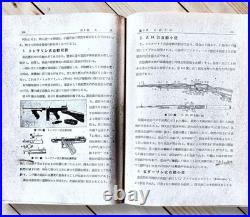
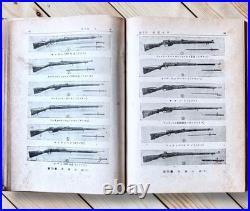
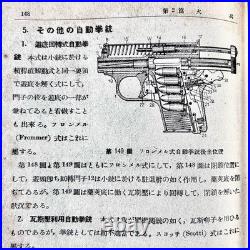
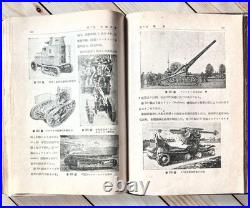
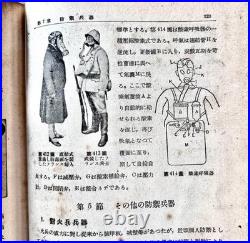
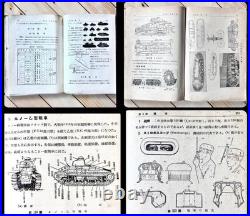
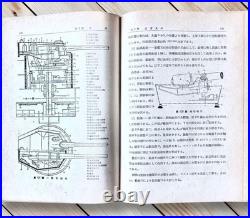
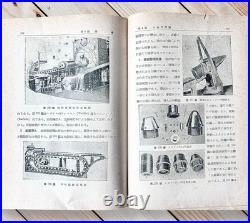
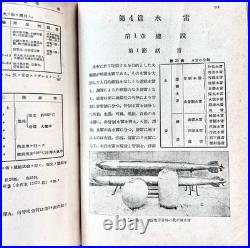
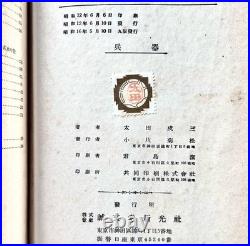
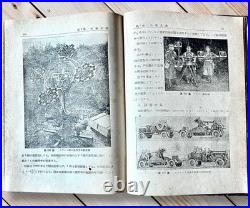
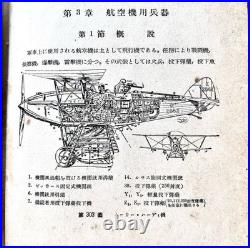
This is an original 1937 edition of “Heiki” (Weapons) – a comprehensive Imperial Japanese Army, Navy, and Air Force reference manual issued during the early stage of the Second Sino-Japanese War. Authored by Seizo Ota, printed and published by Seikodo Shinko-sha in Tokyo, this book served as a classified educational text for military academies and technical officers across Japan’s armed forces. It was designed as a portable field manual, allowing officers and engineers to reference weapon schematics and mechanisms even during deployment or training. Rather than a theoretical study, it was a practical handbook for survival and efficiency on the battlefield – an authentic insight into how soldiers and engineers learned to operate, maintain, and understand their weapons. The content covers a vast range of systems. Infantry small arms and pistols (Type 38 rifle, Mauser, Parabellum, Colt M1911). Artillery and fortification guns. Naval ordnance, torpedoes, and anti-aircraft systems. Aerial bombs, aircraft armaments, and communication devices. Chemical and defensive equipment including gas masks and flame throwers. Comparative diagrams of foreign weapons from Germany, Britain, and the U. Each page is densely illustrated with detailed cross-sections and mechanical diagrams, making it not only an invaluable military study but also an essential source of inspiration for historical modelers, filmmakers, and animation designers seeking authenticity in prewar weapon design. Published just before World War II, Heiki stands as a rare surviving record of Japan’s interwar military technology – a document once held by those who built and operated the empire’s arsenal. Own a piece of history – this manual is a genuine artifact of the knowledge that shaped the Imperial Japanese armed forces. International Buyers – Please Note. Thank you for your understanding.