
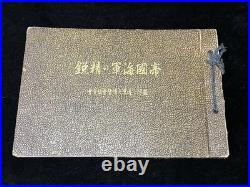
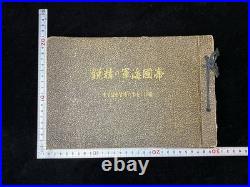
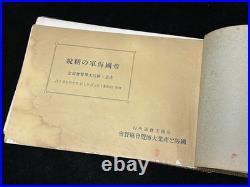
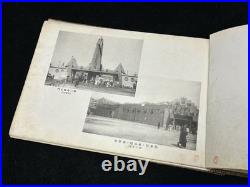
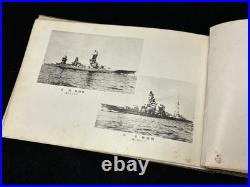
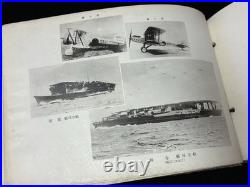
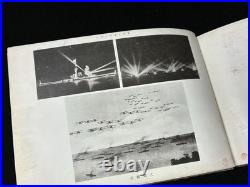
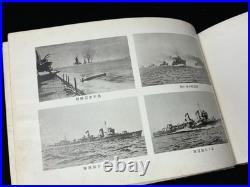

Its title translates as: “The Elite of the Imperial Japanese Navy” The album was produced to commemorate the National Defense and Industry Exposition held in Japan in 1935. Akagi would later become one of the most famous Japanese aircraft carriers of World War II, participating in the attack on Pearl Harbor before being lost at the Battle of Midway in 1942. But this album was published in 1935-six years before the Pacific War began. The album goes well beyond portraits of individual warships. It includes photographs of battleships, aircraft carriers, destroyers, naval aircraft, seaplanes, aerial formations, torpedo firing, fleet maneuvers and dramatic nighttime searchlight exercises. The opening pages also record the dates of the National Defense and Industry Exposition: From March 27, 1935 to May 10, 1935. The exposition was a public event presenting Japan’s national defense and modern industry to ordinary visitors. This gives the album another interesting historical dimension: it shows not only the Japanese Navy itself, but also how naval power and technology were presented to the Japanese public in the mid-1930s. For collectors today, the timing is particularly fascinating. Battleships still represented enormous naval power, while aircraft carriers and naval aviation were becoming increasingly important. Both worlds appear side by side in these pages. The album is more than 90 years old and shows age-related wear, staining and discoloration. Please examine the photographs carefully for condition. Own a Piece of History. International Buyers – Please Note.

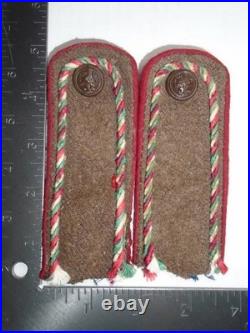
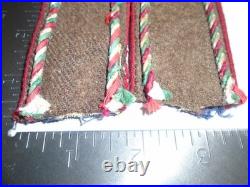
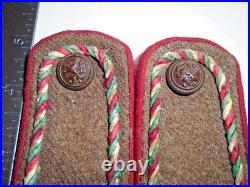
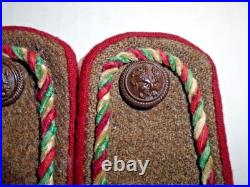
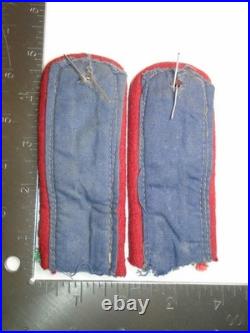
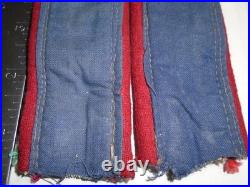
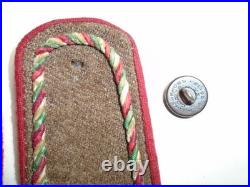
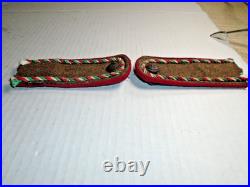
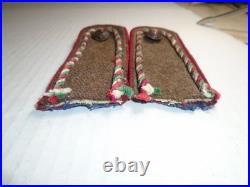
Low price for fast sale……………. Original Pre-WWII Kingdom of Bulgaria Army Officer Candidate Shoulder Boards. Model 1936 uniform regulations Bulgarian Royal Army. Check out my other items. All my listings currently using.

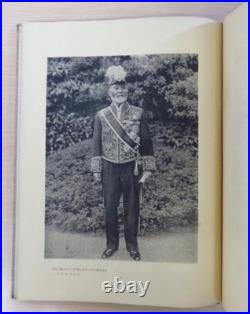
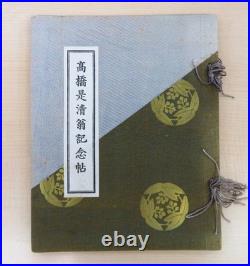
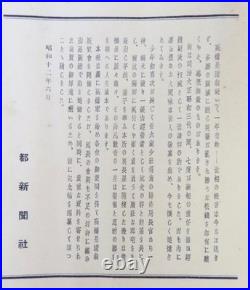
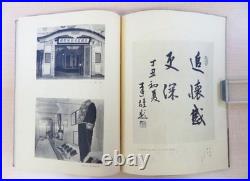
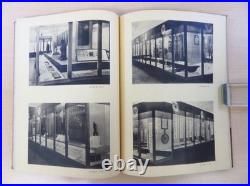
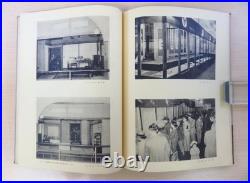
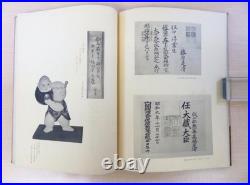
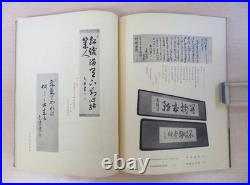
This is an original Japanese memorial photo book published in 1937 (Showa 12). Documenting a special exhibition held one year after the death of. A central political figure assassinated during Japan’s largest domestic military coup attempt. The February 26 Incident (1936). The exhibition was organized by Miyako Shimbun and held at Shirokiya Department Store, Nihonbashi, Tokyo. And this volume records the event through photographs, calligraphy, official documents, and exhibition displays. The February 26 Incident marked a decisive turning point in modern Japanese history. After the incident, overt military rebellion subsided. But the political influence of the armed forces expanded rapidly. Civilian control weakened, fiscal restraint collapsed, and Japan moved steadily toward prolonged war in East Asia. And eventually full involvement in World War II. Takahashi Korekiyo had opposed unlimited military spending and advocated financial balance and civilian governance. His death symbolized the loss of restraint at the highest level of government. This book was produced immediately after that turning point. Making it a contemporary visual record of how Japanese society commemorated the moment when civilian leadership faded and militarization accelerated. Photographs of the memorial exhibition space. Original calligraphy and handwritten documents. Displayed personal artifacts and official records. Period exhibition architecture and visitors. Contemporary explanatory texts by the publisher. Rather than a biography, this volume functions as a historical archive. Capturing how the event was publicly presented and understood at the time. Complete with original covers and contents. Overall very clean and well preserved. Long out of print. Please refer to photos for exact condition details. 225 × 283 mm. International Buyers – Please Note. Thank you for your understanding.


This is an original. 1934 portrait medal of Marshal Admiral Togo Heihachiro. In the same year that Togo died. Togo Heihachiro died on. And was honored with a state funeral. This medal was produced in that same year, making it a period commemorative piece closely connected with the national mourning and remembrance of one of the most important figures in modern Japanese naval history. The front features a finely modeled portrait of Togo in full ceremonial military uniform. The surrounding inscription reads. ? Marshal Admiral, Senior First Rank, Grand Cordon, First Class of Merit, Marquis Togo Heihachiro. The artist’s signature reads. Made by Masakichi Hata. Masakichi Hata was an important Japanese sculptor and medal artist who worked closely with the Japan Mint and played a major role in its medal engraving and sculptural work. The reverse depicts the famous battleship associated with Togo and bears the inscriptions. “Made by the Japan Mint”. The fate of the Empire depends upon this battle. Let every man do his utmost. This phrase is closely associated with the. Battle of Tsushima on May 27, 1905. When Togo commanded the Imperial Japanese Navy’s Combined Fleet against the Russian Baltic Fleet. The reverse therefore brings together four powerful symbols in one design. The original fitted presentation case is also included. Inside the case are the gold inscriptions. “Marshal Togo Portrait Plaque”. This is not simply a later souvenir of Admiral Togo. It is a genuine 1934 commemorative portrait piece created in the very year of his death, when his achievements were being formally remembered throughout Japan. The metal surface shows natural age-related patina, and the fitted case shows wear and deterioration consistent with its age. A remarkable surviving object connecting Admiral Togo, the battleship Mikasa, the Russo-Japanese War, and the memory of the Battle of Tsushima. Own a Piece of History. International Buyers – Please Note. Thank you for your understanding.

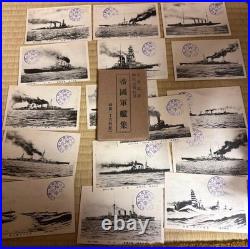
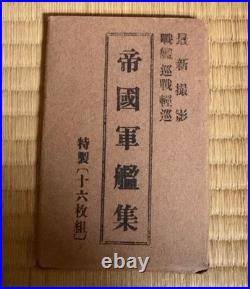
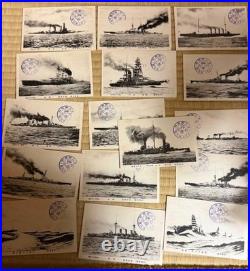
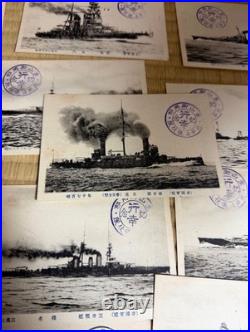
This is an original set of 16 Imperial Japanese Navy warship postcards. Produced in Showa 3 (1928), during the early Showa period. The early Showa era represents a transitional phase in Japanese naval history. Following World War I and the Washington Naval Treaty (1922). During this period, Japan faced strict limitations on battleship construction. Which led the Imperial Japanese Navy to focus on design efficiency, speed, and visual presence rather than sheer numbers. The photographs in this set primarily depict warships underway at sea. Emphasizing their silhouettes, smoke plumes, and hull forms. Rather than combat imagery, these postcards were intended to showcase. Modern naval technology and national prestige during peacetime or semi-peacetime years. All postcards bear matching inspection or archival-style stamps. Indicating that this is not a later assembled group, but rather. A cohesive, period-maintained set. Importantly, this collection predates the Pacific War era. It documents the Imperial Japanese Navy before full-scale wartime mobilization. Making it a valuable visual reference for understanding how Japan presented. Its naval power to the public during the late 1920s. This set is well suited for collectors of. Pre-WWII Japanese naval history. Early Showa era photographic materials. Vintage military postcards as historical documents. Condition shows expected age-related toning, light wear, and paper aging. No major damage noted. Please refer to images for details. Approximate 7-21days(To USA).

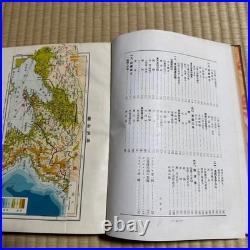
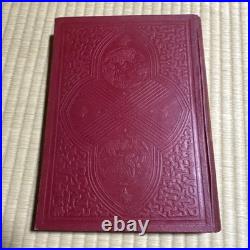
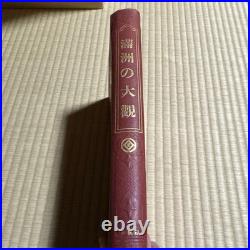
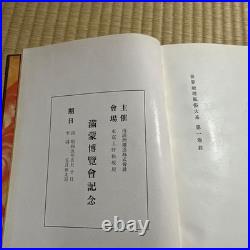
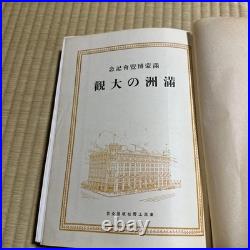
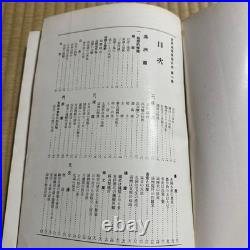
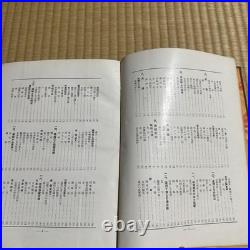
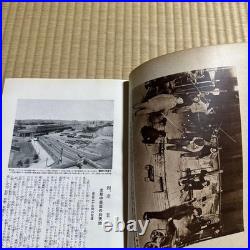
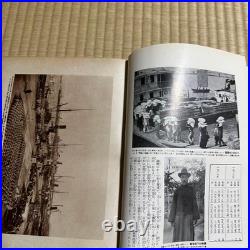
This is an original 1930 Japanese photo and geography book titled “A Grand View of Manchuria”, published to commemorate the Manchuria-Mongolia Exposition held in Tokyo. The book clearly identifies: “Sponsored by the South Manchuria Railway Company” “Venue: Matsuzakaya, Ueno, Tokyo” “Commemorating the Manchuria-Mongolia Exposition” The exposition was held from May 10 to May 19, 1930, and was designed to introduce Manchuria to the Japanese public through displays of its cities, industries, transportation, resources, and regional development. The key institution behind this publication was the South Manchuria Railway Company, commonly known as Mantetsu. Despite its name, Mantetsu was far more than a railway company. It operated railways, mines, ports, hotels, urban development projects, industrial facilities, and extensive research organizations. It functioned as a powerful semi-governmental enterprise closely tied to Japan’s expansion on the Asian continent and to the political and military system surrounding Manchuria. Because of its extraordinary economic and political reach, Mantetsu has often been compared to a Japanese version of the East India Company. This book therefore offers more than a simple travel view of Manchuria. Inside are extensive photographs and articles covering places such as Dairen, Port Arthur, Mukden, Changchun, Harbin, Fushun, and the regions along the South Manchuria Railway network. Railways, ports, industry, cities, landscapes, and local people are all presented through the perspective of prewar Japan. The volume also includes a color map of Manchuria, providing a valuable visual record of how the region was geographically understood and presented in Japan at the time. The date 1930 is especially important. The Mukden Incident would begin the following year in 1931, and the state of Manchukuo would be established in 1932. This means the book was produced before Manchukuo existed, only one year before the political and military situation in Manchuria changed dramatically. It is not a military manual, but it preserves the world that existed immediately before the Manchurian Incident: the South Manchuria Railway, Japan’s growing continental ambitions, and the public image of Manchuria presented to people in Tokyo. In that sense, it offers a rare look at the civilian, economic, and propagandistic side of the history that soon became a military crisis. Nearly a century ago, visitors in Tokyo opened this book and looked toward Manchuria as a land of railways, industry, resources, and opportunity. One year later, that same region became the center of an international conflict. Own a Piece of History. International Buyers – Please Note.

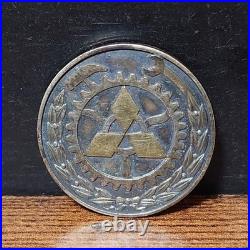
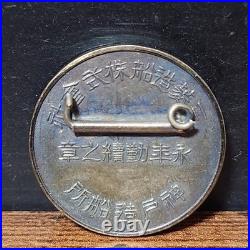
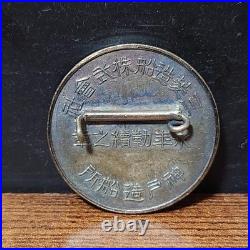
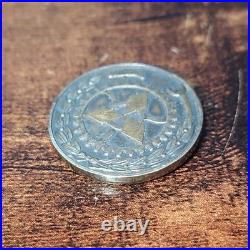
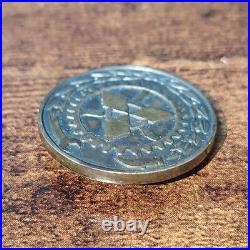
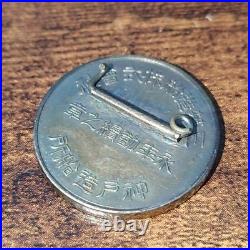
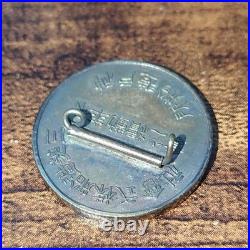
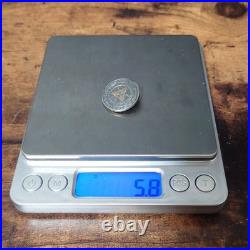
This is an original pre-WWII long-service award badge issued by Mitsubishi Shipbuilding Co. Kobe Shipyard to recognize a long-serving employee or worker. The reverse is clearly inscribed in Japanese: Mitsubishi Shipbuilding Co. ” “Long Service Award” “Kobe Shipyard Mitsubishi Shipbuilding Co. Was established in 1917 when Mitsubishi’s shipbuilding operations became an independent company. In 1934, the company was reorganized and renamed Mitsubishi Heavy Industries. The front prominently features Mitsubishi’s famous three-diamond emblem, surrounded by industrial imagery including a gear-like design and decorative foliage. This is not a military decoration or an Imperial Japanese Navy badge. It was an internal company award recognizing long service at the Kobe Shipyard. However, its historical background is closely connected with the extraordinary growth of Japanese heavy industry and shipbuilding during the decades before World War II. Mitsubishi became one of Japan’s most important shipbuilding enterprises, producing both commercial vessels and warships. The wider Mitsubishi shipbuilding organization was responsible for famous Imperial Japanese Navy vessels including the battlecruiser Kirishima, later reconstructed as a battleship. Kirishima was built at Mitsubishi’s Nagasaki Shipyard, not Kobe Shipyard, and is mentioned here only to illustrate the historical importance of Mitsubishi’s shipbuilding operations. There is no claim that this particular badge has a direct connection to Kirishima. What makes this piece particularly interesting is the human story behind it. This small badge survives as evidence that one such person spent many years working at Mitsubishi’s Kobe Shipyard and was formally recognized for that service. The obsolete Mitsubishi Shipbuilding Co. Company name engraved directly into the badge also makes it an interesting artifact of Japanese corporate and industrial history. There is age-related wear, discoloration, scratches, and patina. The pin mechanism on the reverse is damaged and partially missing. Please examine the photographs carefully for the exact condition. An interesting collectible for those interested in pre-WWII Japan, Mitsubishi history, shipbuilding, naval history, industrial history, and early Japanese corporate memorabilia. A small personal artifact from the people behind Japan’s rise as a major shipbuilding nation. Own a Piece of History. International Buyers – Please Note.

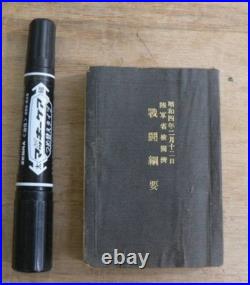
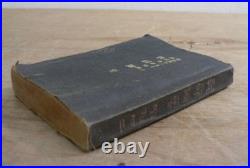
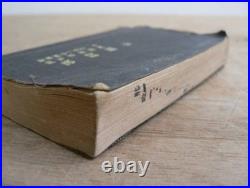
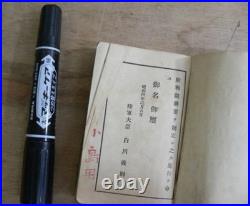
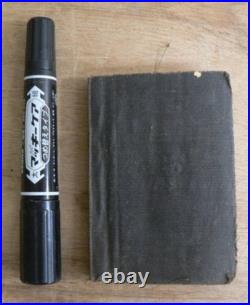
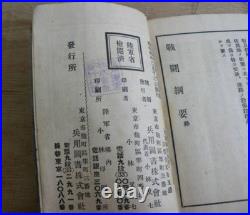
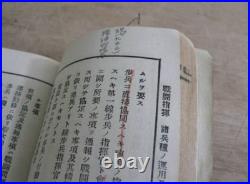
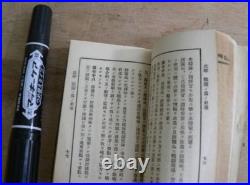
This book, Combat Outline , was an official Imperial Japanese Army training manual, issued in 1929 (Showa 4) by Heiyo Tosho Co. It standardized how infantry units were to march, deploy, attack, defend, retreat, and communicate. The manual uses diagrams and concise explanations to unify drills and ensure consistency across regiments. Written in the tense years between WWI and the Manchurian Incident (1931), it reflects Japan’s shift toward large-scale military readiness. Unlike propaganda works, this is a practical handbook meant for soldiers and junior officers, showing exactly what was considered “basic combat knowledge” at the time. Aged wear with stains, tears, and discoloration. Red pencil markings and notes are present, evidence of real field use. A genuine pre-WWII field manual that reveals how the Japanese Army trained its soldiers. A rare chance to study the tactical mindset of the Showa era. Own a Piece of History. Approximate 7-21days(To USA).

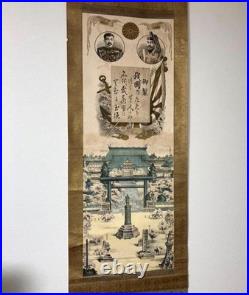
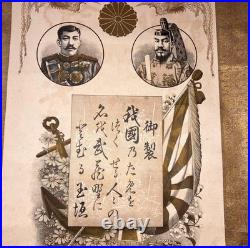
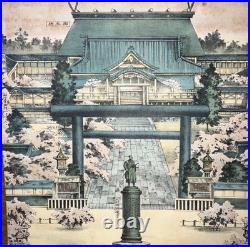
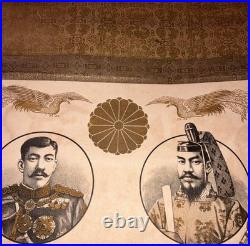
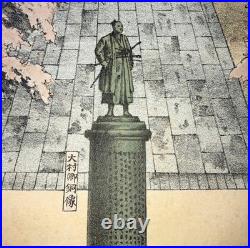
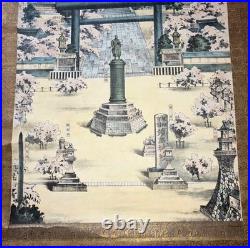
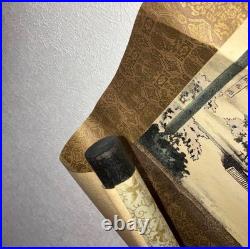
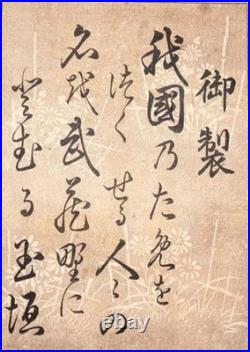
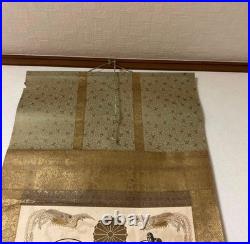
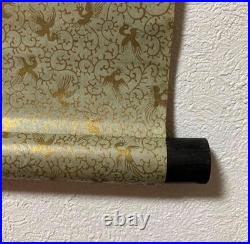
This hanging scroll is a pre-World War II Japanese historical artwork that visually explains how modern Japan understood state authority, military reform, and national remembrance. Rather than depicting combat, this piece presents the ideological framework behind war memory, making it a valuable primary visual document from early 20th-century Japan. Upper Section: Supreme Authority of the State. At the top are portraits of. During this period, the emperor was not only a monarch but the symbolic center of political and moral authority. Because Emperor Taisho is depicted, this scroll is believed to have been produced after 1910, most likely in the 1910s. Central Section: Anchor, Rising Sun, and Inscription. The center features a rising sun motif combined with an anchor, symbolizing the state and its military institutions. Above this imagery is a handwritten inscription in a style similar to imperial or commemorative verse, conveying the idea that. Those who sacrificed their lives for the nation must be remembered and honored by future generations. This section represents the ideological core of the scroll. Lower Section: Omura Masujiro Statue and Yasukuni Shrine. The lower portion depicts the bronze statue of. Omura Masujiro is widely regarded as the founder of the modern Japanese army. He introduced Western military systems and played a central role in transforming Japan’s feudal forces into a modern national army during the Meiji Restoration. Behind the statue appears. Including its torii gate and main structures. What Is Yasukuni Shrine? Yasukuni Shrine was established to enshrine those who died in service of the state. In prewar Japan, it functioned as a symbolic space where individual deaths were transformed into national memory, closely linked with state ideology and commemoration. Meaning of the Composition. The scroll follows a deliberate vertical structure. Top: The State (Emperors Meiji & Taisho). Middle: Ideology and symbolism (anchor, rising sun, inscription). Bottom: Military foundation and remembrance (Omura Masujiro & Yasukuni Shrine). This structure visually explains how authority, military reform, and remembrance were connected in pre-war Japan. Age-related toning, stains, and wear consistent with pre-WWII materials. Offered strictly as a historical and cultural artifact. No modern political intent or endorsement implied. International Buyers – Please Note. Thank you for your understanding.

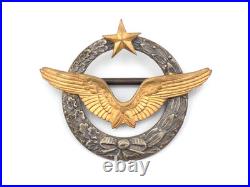
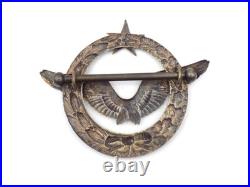
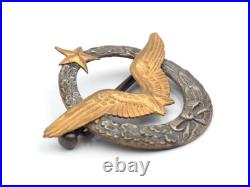
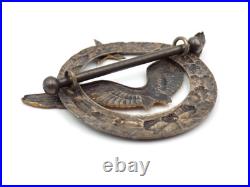
Original Pre-WWII French Air Force Pilot Badge. Excellent example 1930s French Air Service pilot’s badge made in stamped brass in three pieces, silvered and fire gilt. Measures 57mm across the wings. Two loops on reverse with a bar fastener. See my other auctions with military and other items! Please feel free to ask any questions. We strive to satisfy our customers.