
Pre-WWII Japanese South Manchuria Railway Manchuria Photo Book Map 1930
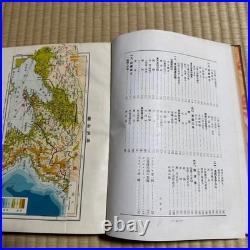
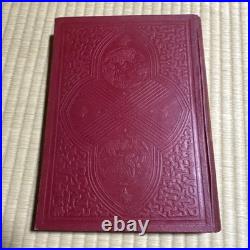
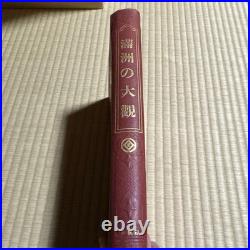
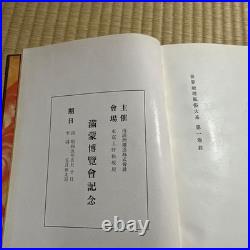
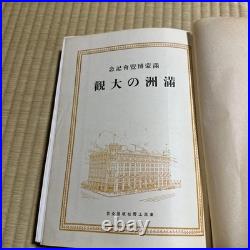
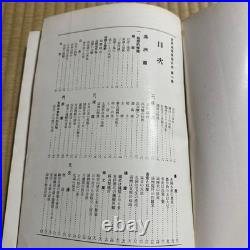
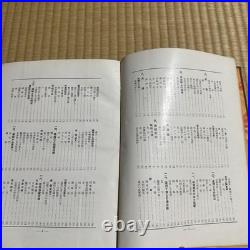
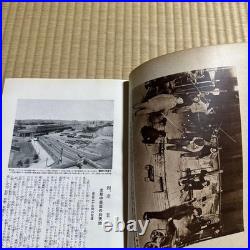
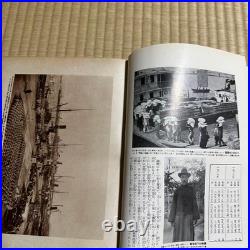

This is an original 1930 Japanese photo and geography book titled “A Grand View of Manchuria”, published to commemorate the Manchuria-Mongolia Exposition held in Tokyo. The book clearly identifies: “Sponsored by the South Manchuria Railway Company” “Venue: Matsuzakaya, Ueno, Tokyo” “Commemorating the Manchuria-Mongolia Exposition” The exposition was held from May 10 to May 19, 1930, and was designed to introduce Manchuria to the Japanese public through displays of its cities, industries, transportation, resources, and regional development. The key institution behind this publication was the South Manchuria Railway Company, commonly known as Mantetsu. Despite its name, Mantetsu was far more than a railway company. It operated railways, mines, ports, hotels, urban development projects, industrial facilities, and extensive research organizations. It functioned as a powerful semi-governmental enterprise closely tied to Japan’s expansion on the Asian continent and to the political and military system surrounding Manchuria. Because of its extraordinary economic and political reach, Mantetsu has often been compared to a Japanese version of the East India Company. This book therefore offers more than a simple travel view of Manchuria. Inside are extensive photographs and articles covering places such as Dairen, Port Arthur, Mukden, Changchun, Harbin, Fushun, and the regions along the South Manchuria Railway network. Railways, ports, industry, cities, landscapes, and local people are all presented through the perspective of prewar Japan. The volume also includes a color map of Manchuria, providing a valuable visual record of how the region was geographically understood and presented in Japan at the time. The date 1930 is especially important. The Mukden Incident would begin the following year in 1931, and the state of Manchukuo would be established in 1932. This means the book was produced before Manchukuo existed, only one year before the political and military situation in Manchuria changed dramatically. It is not a military manual, but it preserves the world that existed immediately before the Manchurian Incident: the South Manchuria Railway, Japan’s growing continental ambitions, and the public image of Manchuria presented to people in Tokyo. In that sense, it offers a rare look at the civilian, economic, and propagandistic side of the history that soon became a military crisis. Nearly a century ago, visitors in Tokyo opened this book and looked toward Manchuria as a land of railways, industry, resources, and opportunity. One year later, that same region became the center of an international conflict. Own a Piece of History. International Buyers – Please Note.