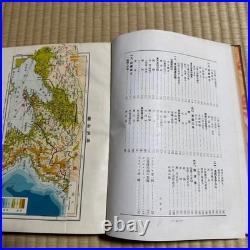
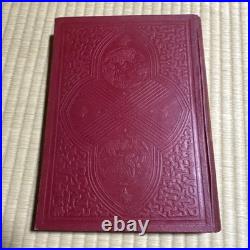
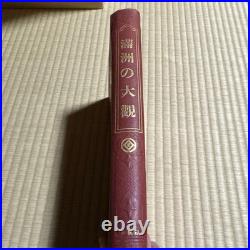
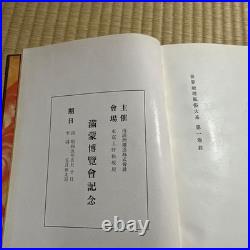
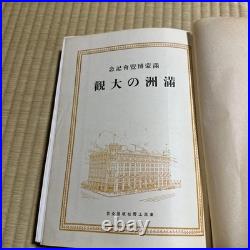
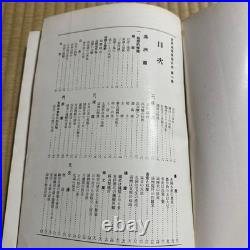
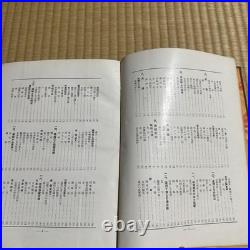
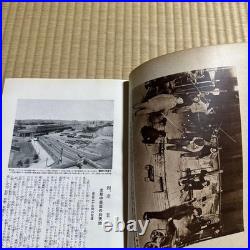
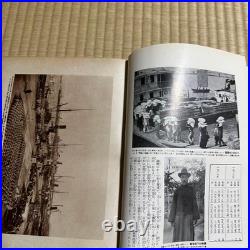
This is an original 1930 Japanese photo and geography book titled “A Grand View of Manchuria”, published to commemorate the Manchuria-Mongolia Exposition held in Tokyo. The book clearly identifies: “Sponsored by the South Manchuria Railway Company” “Venue: Matsuzakaya, Ueno, Tokyo” “Commemorating the Manchuria-Mongolia Exposition” The exposition was held from May 10 to May 19, 1930, and was designed to introduce Manchuria to the Japanese public through displays of its cities, industries, transportation, resources, and regional development. The key institution behind this publication was the South Manchuria Railway Company, commonly known as Mantetsu. Despite its name, Mantetsu was far more than a railway company. It operated railways, mines, ports, hotels, urban development projects, industrial facilities, and extensive research organizations. It functioned as a powerful semi-governmental enterprise closely tied to Japan’s expansion on the Asian continent and to the political and military system surrounding Manchuria. Because of its extraordinary economic and political reach, Mantetsu has often been compared to a Japanese version of the East India Company. This book therefore offers more than a simple travel view of Manchuria. Inside are extensive photographs and articles covering places such as Dairen, Port Arthur, Mukden, Changchun, Harbin, Fushun, and the regions along the South Manchuria Railway network. Railways, ports, industry, cities, landscapes, and local people are all presented through the perspective of prewar Japan. The volume also includes a color map of Manchuria, providing a valuable visual record of how the region was geographically understood and presented in Japan at the time. The date 1930 is especially important. The Mukden Incident would begin the following year in 1931, and the state of Manchukuo would be established in 1932. This means the book was produced before Manchukuo existed, only one year before the political and military situation in Manchuria changed dramatically. It is not a military manual, but it preserves the world that existed immediately before the Manchurian Incident: the South Manchuria Railway, Japan’s growing continental ambitions, and the public image of Manchuria presented to people in Tokyo. In that sense, it offers a rare look at the civilian, economic, and propagandistic side of the history that soon became a military crisis. Nearly a century ago, visitors in Tokyo opened this book and looked toward Manchuria as a land of railways, industry, resources, and opportunity. One year later, that same region became the center of an international conflict. Own a Piece of History. International Buyers – Please Note.
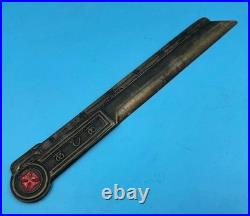
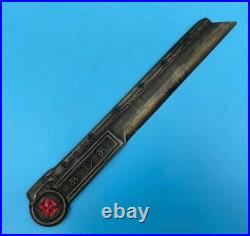
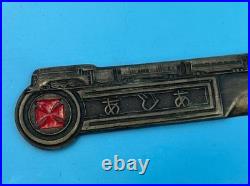
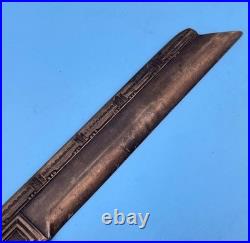
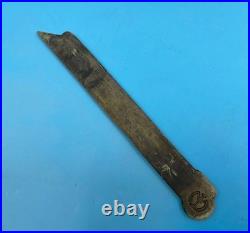
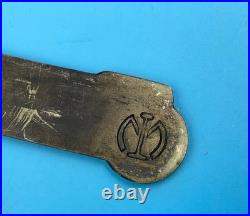
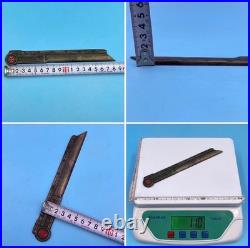
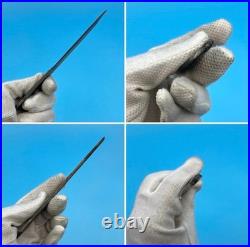
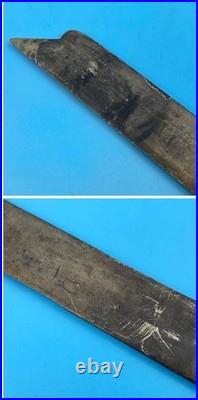
Rare commemorative paper knife issued by the South Manchuria Railway Company (Mantetsu) during the 1930s, celebrating the legendary express train “Asia” (Ajia-go) – the flagship of Japan’s imperial railway network in Manchukuo. Made of solid brass, beautifully engraved with the relief of the Asia Express locomotive, the train name “??? , ” and the red Mantetsu company crest. The reverse side also bears the official logo mark. 19 cm in length, 110 g in weight. Some age patina and wear, consistent with its age. Founded in 1906 after the Russo-Japanese War, the South Manchuria Railway (SMR) was far more than a transport company – it was the economic and military backbone of Japan’s control over Manchuria. Mantetsu managed railways, mines, cities, and intelligence networks, serving both civilian and military logistics. The Asia Express, inaugurated in 1934, represented the peak of Japanese engineering in the prewar era. Running between Dalian, Mukden (Shenyang), and Harbin, it featured streamlined design, air conditioning, and luxurious interiors. The train became a symbol of imperial prestige and modern power, used by military officers and diplomats as a moving showcase of empire. This paper knife embodies that historical moment – where technology, propaganda, and military ambition converged in Japan’s expansion across Asia. A rare collectible for historians and railway or militaria collectors alike. Own a piece of history. International Buyers – Please Note. Thank you for your understanding.
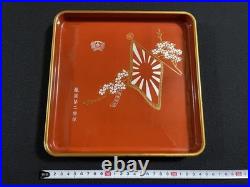
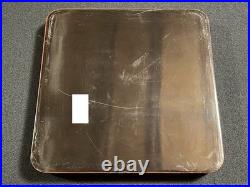
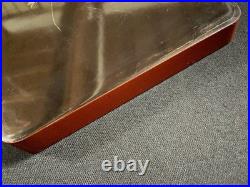
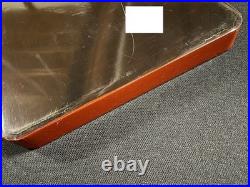
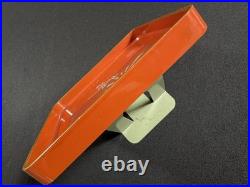
This is a remarkable commemorative lacquer tray associated with the 2nd Railway Regiment of the Imperial Japanese Army. On the left side of the tray, the unit name is clearly written in Japanese: “2nd Railway Regiment” The center features a large Imperial Japanese Army Rising Sun flag surrounded by cherry blossoms, with an Army star and a unit-related emblem above. Unlike ordinary infantry units, railway regiments were specialized technical units responsible for constructing, repairing, maintaining, and operating military railways. Their work made it possible to move troops, weapons, ammunition, food, and other supplies across long distances. The history of the 2nd Railway Regiment reaches back to 1908, when its predecessor unit was established at Tsudanuma in Chiba Prefecture. It was reorganized as the 2nd Railway Regiment in 1918. Its history crossed several major events in modern Japan. After the Great Kanto Earthquake of 1923, the unit participated in railway reconstruction work. In 1928, it was deployed during the Jinan Incident in China. Following the outbreak of the Second Sino-Japanese War in 1937, the regiment operated railways in North China and also participated in the Xuzhou Campaign. It later served in Manchuria and North China. Near the end of World War II, in 1945, the main body of the regiment was transferred to Sasebo in Kyushu, where it helped protect Japanese National Railways steam locomotives and railway operations. The regiment ended the war in Kyushu. In other words, the name preserved on this tray belonged to a unit whose history stretched from disaster relief and railway reconstruction in Japan to military railway operations on the Asian continent and finally the defense of Japan itself. The tray is also a beautiful example of the way traditional Japanese decorative arts were incorporated into military commemorative objects. The vivid vermilion surface, gold-colored border, cherry blossoms and elaborate flag design reflect the decorative tradition of Japanese lacquerware. Lacquerware had long been valued in Japan not only as practical tableware but also for ceremonial, presentation and commemorative purposes. This combination of military history, railway history and traditional Japanese craftsmanship makes the piece particularly interesting. Age-related scratches and wear are visible, especially on the reverse and around the edges, but the principal decoration and the inscription identifying the 2nd Railway Regiment remain clearly visible. Rather than representing only the men who fought at the front, this tray tells the story of the technical soldiers who built, repaired and operated the railways that kept an army moving. Own a Piece of History. International Buyers – Please Note.
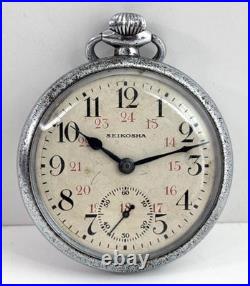
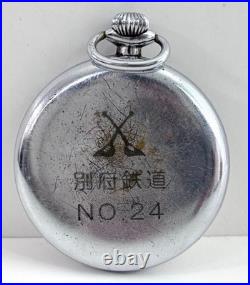
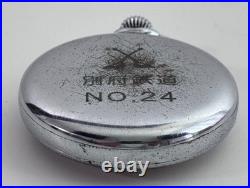
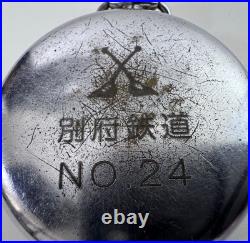
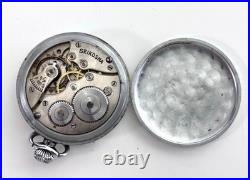
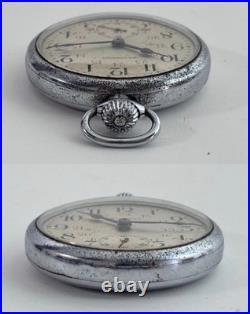
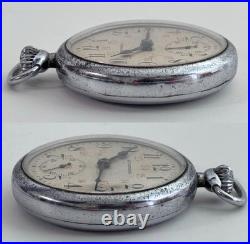
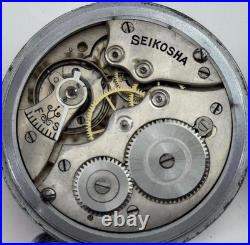
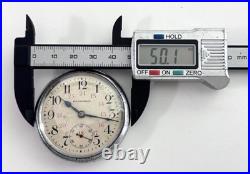
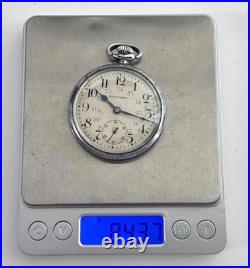
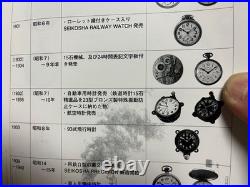
Thank you for viewing this item. This is an original pre-WWII Imperial Japanese railway pocket watch made by Seikosha (the predecessor of SEIKO), with a confirmed railway engraving. What is this item? This is a railway-issued pocket watch used for timekeeping in the Japanese railway system before and during the early Showa period. The back is clearly engraved. This indicates it was an actual working tool assigned to railway personnel. In pre-war Japan, railways were not just transportation. They were a critical national infrastructure, responsible for. Every train had to run on precise time schedules. This watch was part of that system. ? It was used to control time – the invisible backbone of operations. About Seikosha (SEIKO). At the time, railway watches required extremely high accuracy, often comparable to Swiss standards. ? This brand represents Japan’s transition to domestically produced precision timekeeping. According to historical reference materials (see attached photo). Railway watches with 24-hour dial like this model were produced around. Therefore, this piece is confirmed to be. ? Pre-WWII (before World War II). Railway pocket watch (Size 19 type). Slightly short power reserve when fully wound. Long-term accuracy not tested (may have deviation). Scratches, wear, and aging consistent with use. Please check photos for details. Why this piece is rare. Railway watches were tools, heavily used and rarely preserved. Engraved examples are limited and highly collectible. Clear historical usage (named railway + number). ? This is not just a watch – it is a documented piece of history. This watch once measured time for real railway operations. Someone relied on this exact piece to keep trains moving on schedule. Now, it is your chance to hold that history. Own a Piece of History. International Buyers – Please Note. Thank you for your understanding.
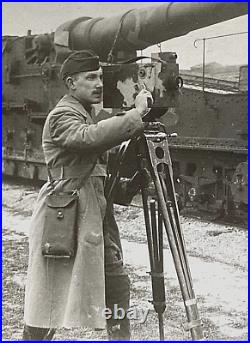
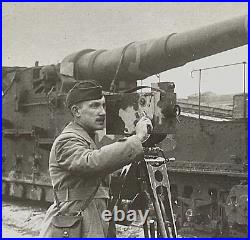
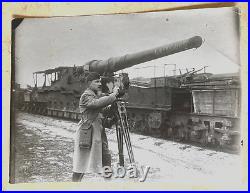
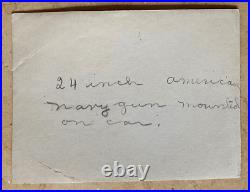
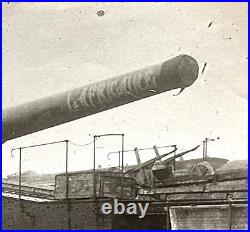
WW1 US ARMY SIGNAL CORPS CINEMATOGRAPHER FILMS FRENCH RAILWAY GUN PHOTO c1918. DURING WW1 A US ARMY SIGNAL CORPS CINEMATOGRAPHER FILMS A FRENCH RAILWAY GUN IN FRANCE. WW1 US ARMY SIGNAL CORPS CINEMATOGRAPHER IN HIS TRENCHCOAT AND OVERSEAS FOLD DOWN CAP WITH A RARELY IF EVER SEEN CAMOUFLAGED HAND CRANKED MOVIE CAMERA, FILMS A MASSIVE CAMOUFLAGED 12″ GUN BORE FRENCH RAILWAY GUN ” CANON de 305 MODÉLE 1906/10 À GLISSEMENT. NAMED BY ITS CREW ; ” L’ AFRICAINE ” AND PAINTED NEAR THE GUN’S MUZZLE TIP. SHARP FOCUS WITH VERY GOOD CONTRAST. DIMENSIONS: 3 11/16 x 4 7/8. PERIOD HAND ID’D (INCORRECTLY) ON THE REVERSE. Navy gun mounted car. THIS IS NOT A REPRODUCTION OR A COPY.