
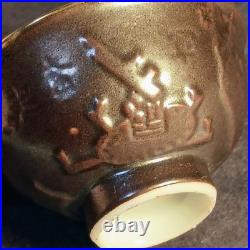
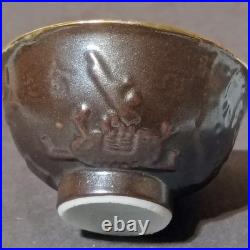
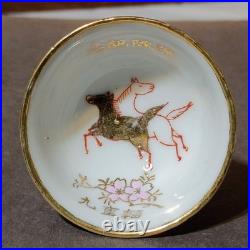
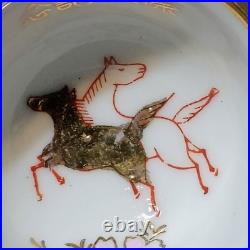
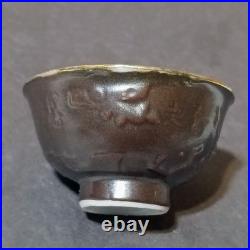
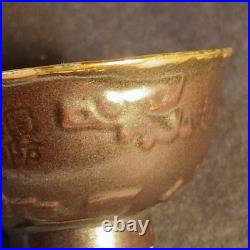
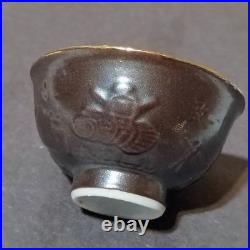
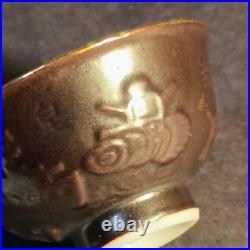
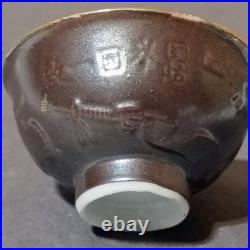
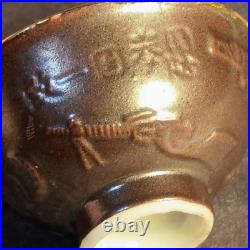
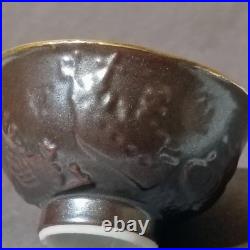
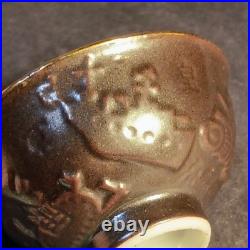
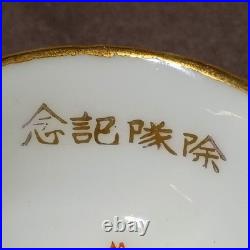

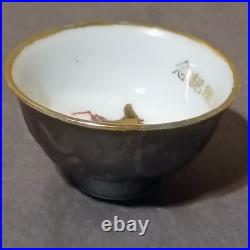
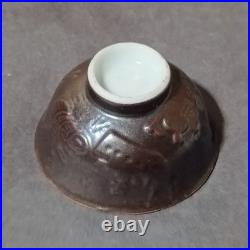

Bottom interior text reads as “9th Transport/Supply Corps”. Top interior text reads as “Discharge from military service commemoration”. This is the reference to the WW2 Japanese legend of giant crabs eating soldiers. This is a very unique design for an imperial Japanese commemorative cup. The text on the outside of the cup above the LMG is very hard to read. It appears to include , being “Japan-America” and is commonly used in WW2 phrases. Being “War against America”.

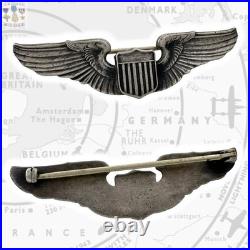
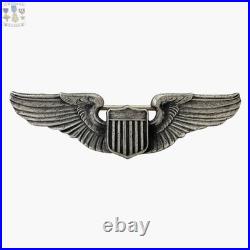
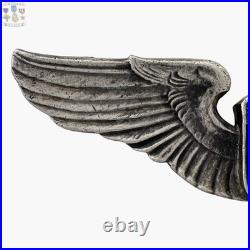
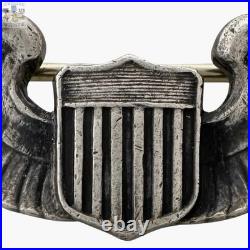
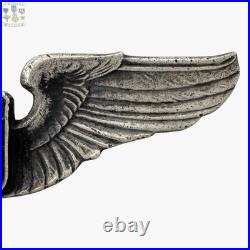
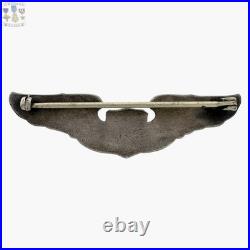
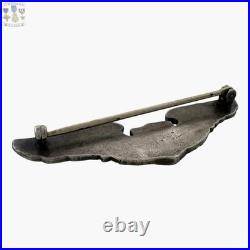
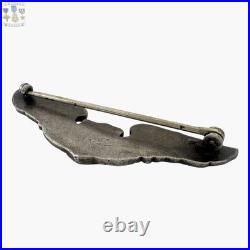
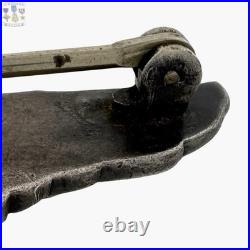
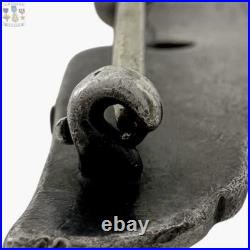
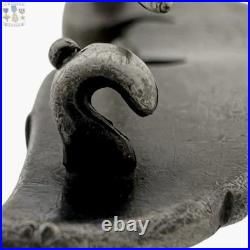
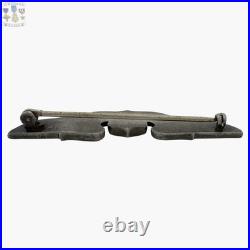
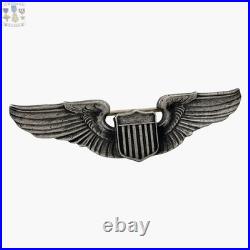
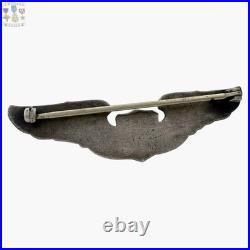
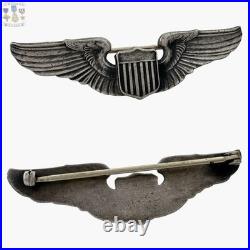
ORIGINAL EARLY 1920’S INTERWAR PERIOD UNITED STATES ARMY AIR CORPS PILOT WINGS, 3 INCH FULL SIZE, PIN-BACK. WEIGHT: 26 GRAMS UNMARKED STERLING SILVER. During World War II, with the rise of the Army Air Forces, a second series of aviator badges were issued to include a design that has survived to the modern day. The Pilot Badge was issued in three degrees, including Pilot, Senior Pilot, and Command Pilot. A polished silver colored version of these badges is currently used as the United States Air Force Pilot Badges. From August 1941 to November 1942, the Enlisted Aviator program was restarted. Candidates had to be at least 18, possess a high school diploma, and have graduated at the top of their high school class. Graduates were rated as Flight Staff Sergeants or Flight Technical Sergeants and wore the same pilot’s wings as officers. They were usually assigned to pilots of transport and auxiliary aircraft to free officer pilots to pilot the more prestigious fighters and bombers. Auxiliary pilots received their own special wings to indicate their status and specialty. In November 1942 all enlisted pilots were promoted to Flight Officer rank and enlisted cadets were graded as Flight Officers or Second Lieutenants depending on merit. Please let me know if there’s anything else I can do for you!

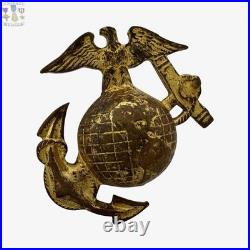
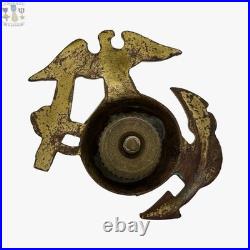
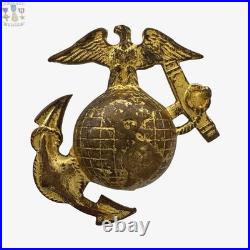
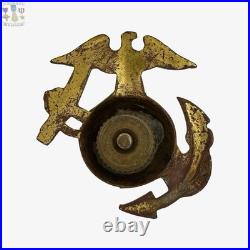
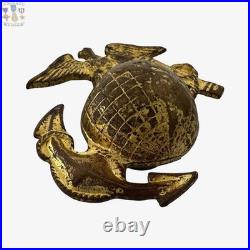
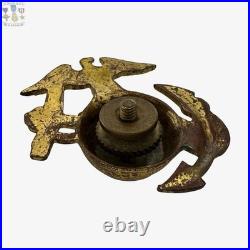
ORIGINAL 1930’S UNITED STATES MARINE CORPS ENLISTED EAGLE GLOBE ANCHOR HAT/CAP INSIGNIA, 1-5/8 INCH X 1-1/2 INCH, SCREW-BACK. The Globe-and-Anchor Cap Device is worn on the cap of the Marine Corps dress uniform. The globe on the U. Marine emblem signifies continuing historical service in any part of the world. The eagle represents the United States. The anchor, which dates back to the founding of the Corps in 1775, acknowledges the naval tradition of the Marines and their continual service under the command of the Department of the Navy. Please let me know if there’s anything else I can do for you!

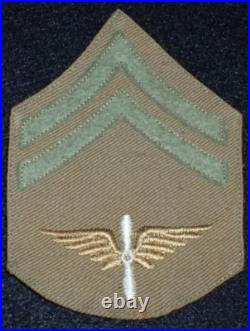
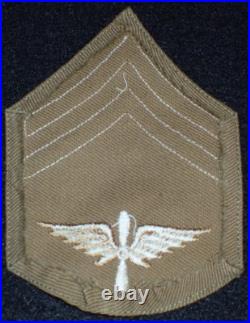
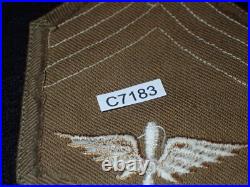
1920s WW2 AAC Army Air Corps Corporal’Winged Propeller’ Chevrons Patch Cotton. Original 1920’s WWII AAC Army Air Corps Corporal’Winged Propeller’ Chevrons Patch Cotton, Early Production, Good Issued. As Photographed with wear as seen – Period Pre or Early Wartime Production. A Nice Candidate for any Collection, Library, or Display. Recent Estate Collection Acquisition & Presented as Acquired, Scarce (single not pair). Check back often – we search estates and sources across the world to bring a fine selection of militaria. Please review all photos for details regarding the condition of the item listed – further condition information will be included in the listing as is relevant, if you need additional photographs or have questions regarding the condition please do not hesitate to ask. I describe all items to the best of my ability – please do not hesitate to ask any and all questions prior to the close of the listing. Mistakes very rarely occur – however if one does please rest assured that it will be corrected. International Buyers are Welcome!


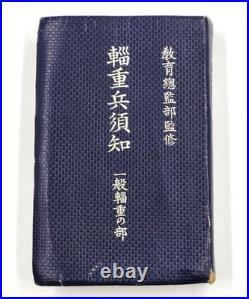
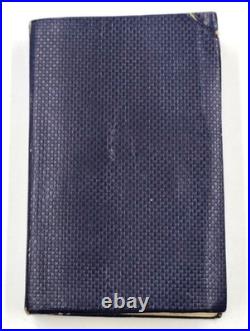
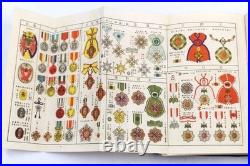
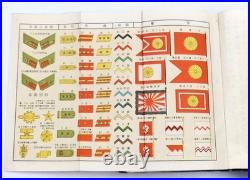

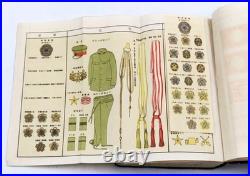
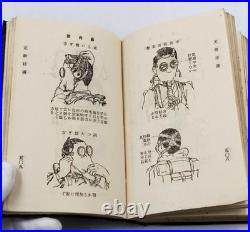
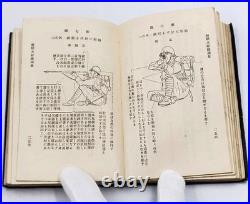
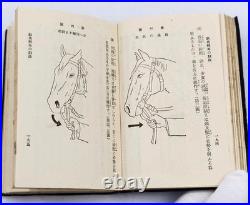
This is an original Imperial Japanese Army military handbook titled. (“What Every Logistics Soldier Should Know”), supervised by the Army Inspector General of Military Education. The cover is marked. Army Inspector General of Military Education Supervision. This was a compact educational handbook intended for soldiers serving in the Japanese Army’s logistics and transport branch. What Was the Army Inspector General of Military Education? The Army Inspector General of Military Education was one of the most influential organizations within the Imperial Japanese Army. It was responsible for military doctrine, officer education, training programs, and the preparation of official instructional materials used throughout the army. Because this handbook was supervised by that organization, it was not simply a commercial publication but an official educational reference reflecting Imperial Japanese Army training standards. The Forgotten Soldiers of the Japanese Army. The Shichohei (Logistics Corps) were responsible for transporting food, ammunition, equipment, uniforms, and horses to frontline units. In modern terms, they were the military logistics and supply branch. Interestingly, logistics troops often received less prestige than combat arms within the Japanese military culture. A famous wartime saying even mocked them as. Shichohei are not real soldiers. History ultimately proved otherwise. Many military historians consider Japan’s chronic logistical weaknesses to be one of the major factors contributing to its defeat during the Pacific War. As supply lines collapsed, entire units suffered from starvation, ammunition shortages, and lack of equipment. This handbook therefore represents a rarely preserved glimpse into the branch responsible for sustaining the Japanese Army. Imperial and military flags. Orders, decorations, and medals. Army uniforms and equipment. Logistics and transport training. Several attractive fold-out color plates illustrate military insignia, decorations, flags, and uniforms, making this both a practical military handbook and an excellent research reference. Why It Is Scarce. Most Japanese military instructional materials were discarded or destroyed after 1945. Pocket reference books such as this were heavily used by soldiers and rarely survived in good condition. Furthermore, while infantry, aviation, and armored units are widely collected today, surviving materials relating specifically to the Japanese Army’s logistics branch appear much less frequently on the market. An excellent item for collectors of Imperial Japanese military history, military education, uniforms, insignia, and logistics history. Own a Piece of History. International Buyers – Please Note. Thank you for your understanding.

See photos for condition. ?????????????????????????????????????????????????????????????????????????????????????????????????????????????????????????????????????????????????????????????????????? R? E? A? S? O? N? A? B? L? E????????????? . It’s a great opportunity to find some amazing deals.

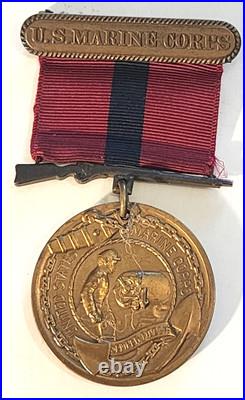
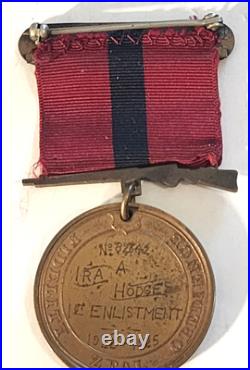
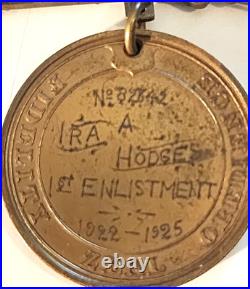
This medal has some wear from normal use. It is named to IRA A. HODGES 1ST ENLISTMENT NO. (Please see photos for more details). Additional photos available upon request. Please specify details you would like to see more clearly. Most items not sent internationally.

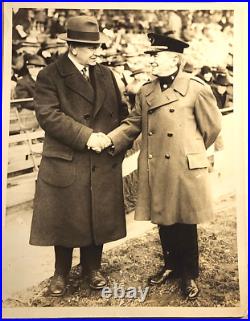
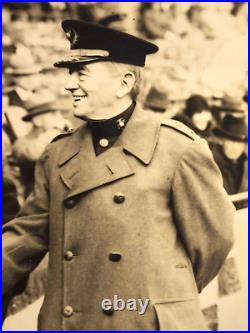
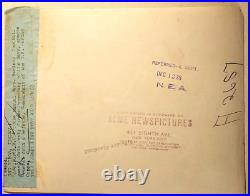
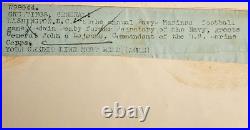
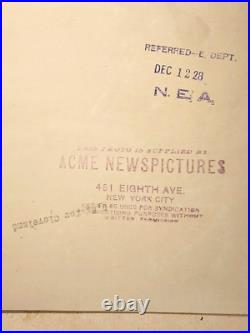
GENERAL JOHN A LEJEUNE U. This photo has some wear from normal use. There are stamps and typed text on the back. The photo is approx. 6 1/2 across x approx. (see photos for more details). Additional photos available upon request. Please specify details you would like to see more clearly.

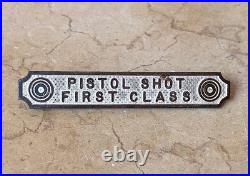
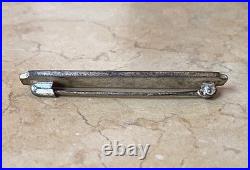
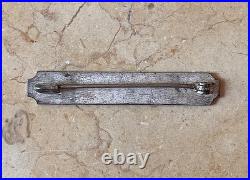
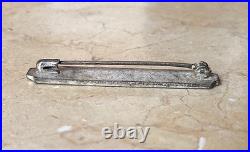
MARINE CORPS SILVER “PISTOL SHOT FIRST CLASS” QUALIFICATION BADGE. MARINE CORPS SILVER “PISTOL SHOT FIRST CLASS” QUALIFICATION BADGE USMC 1922. DIMENSIONS: (WIDTH) 1 3/4. THIS IS NOT A REPRODUCTION.

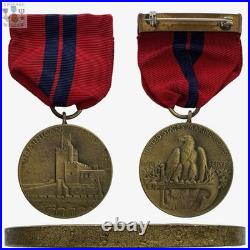
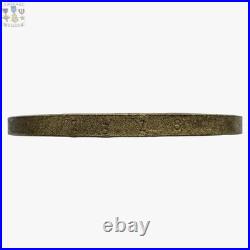
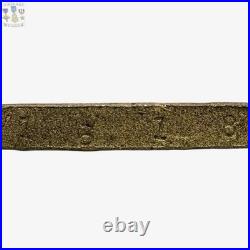
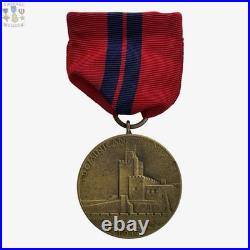
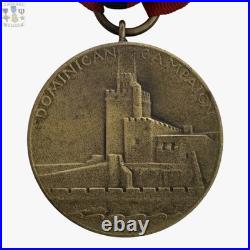
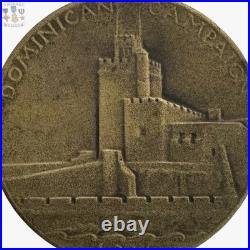
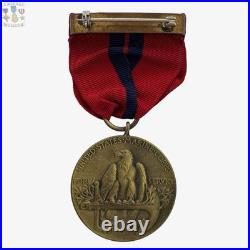
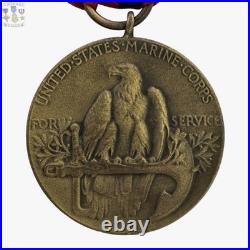
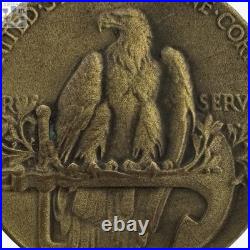
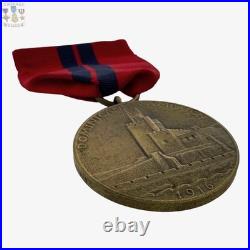
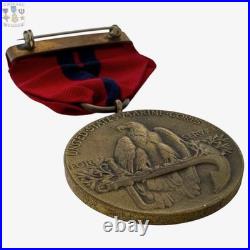
Make sure to read all of the information I have provided, I do my absolute best to identify and describe the item. The photos are of the actual item. 1916 DOMINICAN CAMPAIGN MEDAL, W/ FULL WRAP BROOCH. PRODUCED BY JOSEPH MAYER. RIBBON DRAPE TESTED UV NEGATIVE. The Dominican Campaign Medal is a military decoration of the United States Navy and United States Marine Corps which was created on December 29, 1921. To be awarded the Dominican Campaign Medal, a servicemen must have performed active military duty in the Dominican Republic between May 5 and December 4, 1916. The medal commemorates the 1916 United States invasion of the Dominican Republic. The medal was designed by Adolph Alexander Weinman, and the design approved by the United States Commission of Fine Arts in November 1923. It was the first Navy and Marine Corps medal whose reverse face contained the inscription “For Service” on a straight line. All previous reverse faces of Navy and Marine Corps medals had placed the inscription on a curve. Please let me know if there’s anything else I can do for you!