
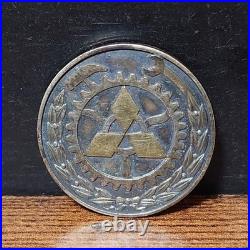
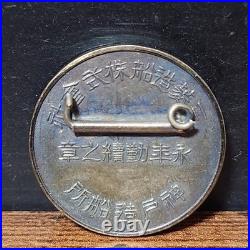
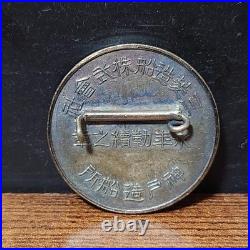
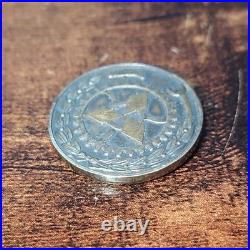
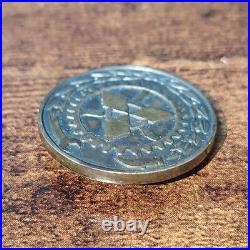
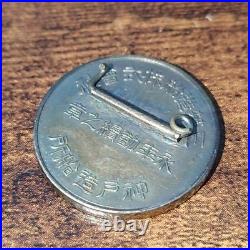
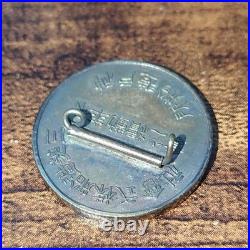
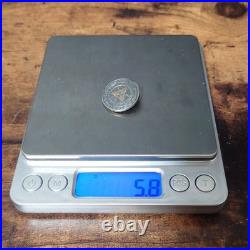

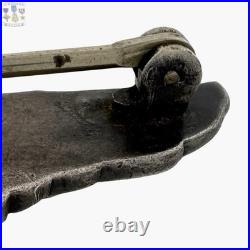
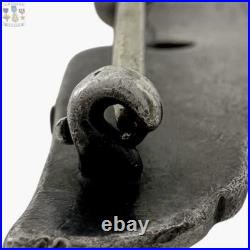
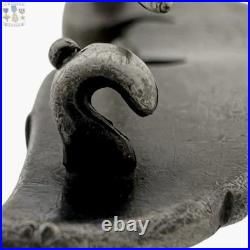
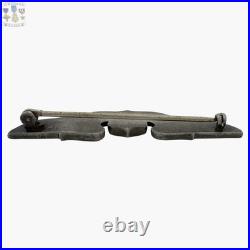
This is an original pre-WWII long-service award badge issued by Mitsubishi Shipbuilding Co. Kobe Shipyard to recognize a long-serving employee or worker. The reverse is clearly inscribed in Japanese: Mitsubishi Shipbuilding Co. ” “Long Service Award” “Kobe Shipyard Mitsubishi Shipbuilding Co. Was established in 1917 when Mitsubishi’s shipbuilding operations became an independent company. In 1934, the company was reorganized and renamed Mitsubishi Heavy Industries. The front prominently features Mitsubishi’s famous three-diamond emblem, surrounded by industrial imagery including a gear-like design and decorative foliage. This is not a military decoration or an Imperial Japanese Navy badge. It was an internal company award recognizing long service at the Kobe Shipyard. However, its historical background is closely connected with the extraordinary growth of Japanese heavy industry and shipbuilding during the decades before World War II. Mitsubishi became one of Japan’s most important shipbuilding enterprises, producing both commercial vessels and warships. The wider Mitsubishi shipbuilding organization was responsible for famous Imperial Japanese Navy vessels including the battlecruiser Kirishima, later reconstructed as a battleship. Kirishima was built at Mitsubishi’s Nagasaki Shipyard, not Kobe Shipyard, and is mentioned here only to illustrate the historical importance of Mitsubishi’s shipbuilding operations. There is no claim that this particular badge has a direct connection to Kirishima. What makes this piece particularly interesting is the human story behind it. This small badge survives as evidence that one such person spent many years working at Mitsubishi’s Kobe Shipyard and was formally recognized for that service. The obsolete Mitsubishi Shipbuilding Co. Company name engraved directly into the badge also makes it an interesting artifact of Japanese corporate and industrial history. There is age-related wear, discoloration, scratches, and patina. The pin mechanism on the reverse is damaged and partially missing. Please examine the photographs carefully for the exact condition. An interesting collectible for those interested in pre-WWII Japan, Mitsubishi history, shipbuilding, naval history, industrial history, and early Japanese corporate memorabilia. A small personal artifact from the people behind Japan’s rise as a major shipbuilding nation. Own a Piece of History. International Buyers – Please Note.

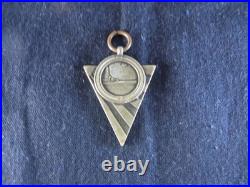
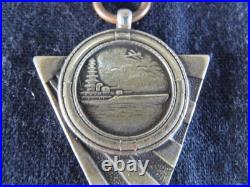
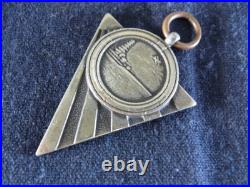
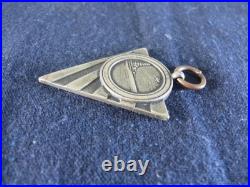
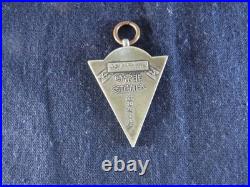
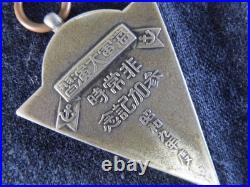
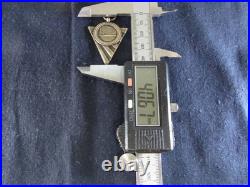
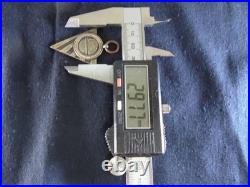
This is an original Japanese Navy participation commemorative medal from the 1934 (Showa 9) Emergency Naval Maneuvers. ” The reverse is clearly inscribed in Japanese: “Naval Grand Maneuvers” “Emergency Period” “Participation Commemorative” “Showa 9 [1934] These inscriptions are particularly important because they connect the piece directly to a specific Japanese naval exercise and a specific year, rather than making it simply a generic naval souvenir. For collectors unfamiliar with the term, large-scale naval maneuvers were major training exercises in which warships, aircraft, communications, command systems, and fleet tactics were tested under conditions intended to simulate actual operations. The year 1934 places this piece in a particularly interesting period of Japanese history. It came only a few years after the 1931 Manchurian Incident and after Japan announced its withdrawal from the League of Nations in 1933, at a time when international tensions surrounding Japan were rapidly increasing. The use of the term “Emergency” on the medal itself makes it especially evocative of the political and military atmosphere of early-1930s Japan. The front features an impressive naval design combining a warship and aircraft. This combination is also historically interesting, reflecting a period when aviation was becoming increasingly important to Japanese naval operations alongside the traditional battle fleet. The medal has a distinctive triangular form with a suspension ring at the top. Approximate dimensions: Height: 40.7 mm Width: 29.8 mm The piece shows age-related patina, surface wear, scratches, and discoloration consistent with an old metal commemorative item. Please carefully examine the photographs for the exact condition. What makes this piece particularly collectible is that its story can still be read directly from the object itself: the organization, event, purpose, and year are preserved in its inscriptions. More than a small naval medal, it is a surviving artifact connected to a specific Imperial Japanese Navy exercise during the increasingly tense years preceding the Pacific War. Own a Piece of History. International Buyers – Please Note.

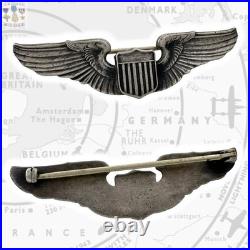
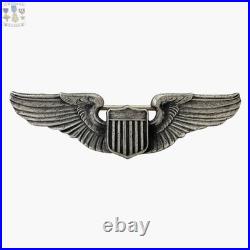
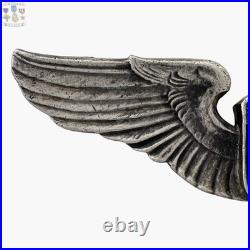
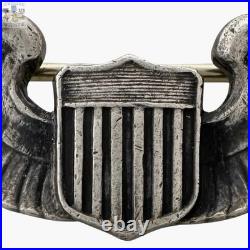
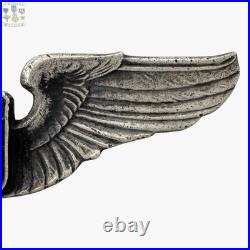
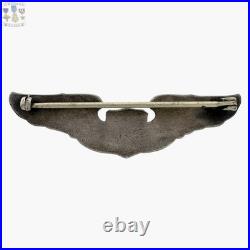
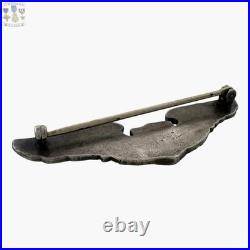
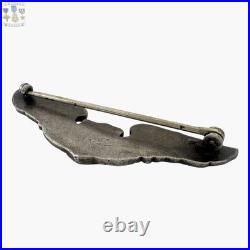
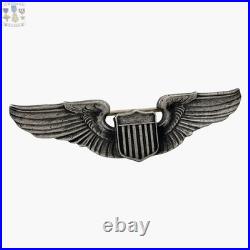
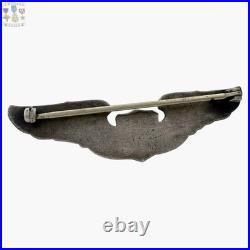
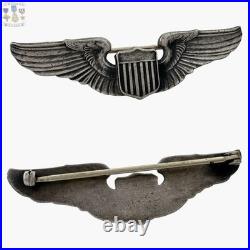
ORIGINAL EARLY 1920’S INTERWAR PERIOD UNITED STATES ARMY AIR CORPS PILOT WINGS, 3 INCH FULL SIZE, PIN-BACK. WEIGHT: 26 GRAMS UNMARKED STERLING SILVER. During World War II, with the rise of the Army Air Forces, a second series of aviator badges were issued to include a design that has survived to the modern day. The Pilot Badge was issued in three degrees, including Pilot, Senior Pilot, and Command Pilot. A polished silver colored version of these badges is currently used as the United States Air Force Pilot Badges. From August 1941 to November 1942, the Enlisted Aviator program was restarted. Candidates had to be at least 18, possess a high school diploma, and have graduated at the top of their high school class. Graduates were rated as Flight Staff Sergeants or Flight Technical Sergeants and wore the same pilot’s wings as officers. They were usually assigned to pilots of transport and auxiliary aircraft to free officer pilots to pilot the more prestigious fighters and bombers. Auxiliary pilots received their own special wings to indicate their status and specialty. In November 1942 all enlisted pilots were promoted to Flight Officer rank and enlisted cadets were graded as Flight Officers or Second Lieutenants depending on merit. Please let me know if there’s anything else I can do for you!

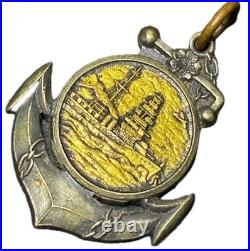
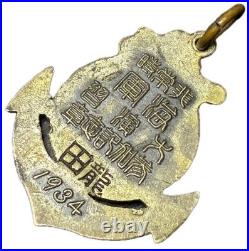
This is an original commemorative badge issued for the. 1934 Imperial Japanese Navy Great Naval Exercise. Bearing the name of the light cruiser. The reverse is engraved with. The front features an impressive design combining a warship cutting through heavy seas, a large naval anchor, and a cherry blossom suspension. Although compact, it captures the distinctive imagery and spirit of the Imperial Japanese Navy. Among the very first purpose-built light cruisers of the Imperial Japanese Navy. Commissioned in 1919, she served for more than two decades, participating in operations from the pre-war years through the Pacific War, including Wake Island, Rabaul, New Guinea, and numerous escort missions before being sunk by the U. Represents a significant period in Japanese naval history. Following the Manchurian Incident and Japan’s withdrawal from the League of Nations, national tensions were rising, and large-scale naval exercises became increasingly important demonstrations of military readiness. Reflects the atmosphere of growing international uncertainty during that era. Imperial Japanese Navy artifacts are considerably scarcer than Imperial Japanese Army items. What makes this badge especially desirable is that it is. Named for the cruiser Tatsuta. For collectors of Imperial Japanese Navy memorabilia, named warships, or pre-war naval history, this is a highly collectible piece that tells the story of one particular cruiser and the sailors who served aboard her. Own a Piece of History. International Buyers – Please Note. Thank you for your understanding.

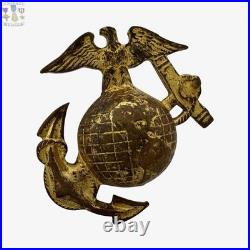
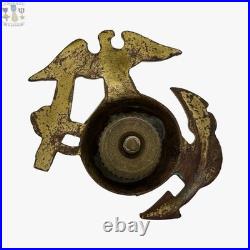
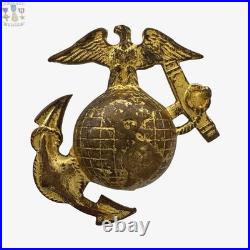
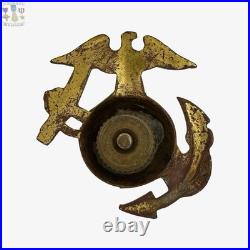
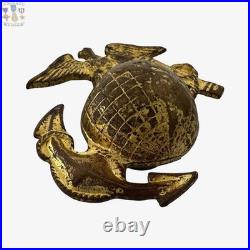
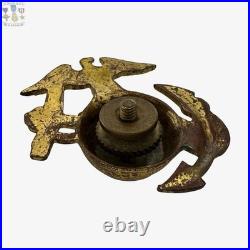
ORIGINAL 1930’S UNITED STATES MARINE CORPS ENLISTED EAGLE GLOBE ANCHOR HAT/CAP INSIGNIA, 1-5/8 INCH X 1-1/2 INCH, SCREW-BACK. The Globe-and-Anchor Cap Device is worn on the cap of the Marine Corps dress uniform. The globe on the U. Marine emblem signifies continuing historical service in any part of the world. The eagle represents the United States. The anchor, which dates back to the founding of the Corps in 1775, acknowledges the naval tradition of the Marines and their continual service under the command of the Department of the Navy. Please let me know if there’s anything else I can do for you!

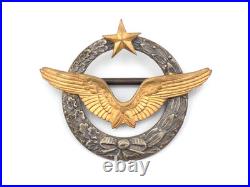
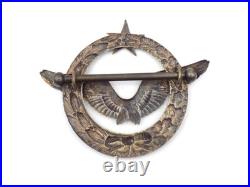
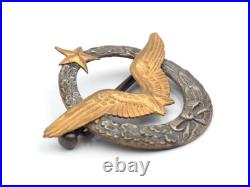
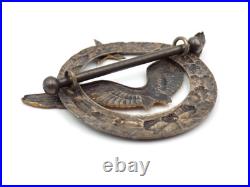
Original Pre-WWII French Air Force Pilot Badge. Excellent example 1930s French Air Service pilot’s badge made in stamped brass in three pieces, silvered and fire gilt. Measures 57mm across the wings. Two loops on reverse with a bar fastener. See my other auctions with military and other items! Please feel free to ask any questions. We strive to satisfy our customers.

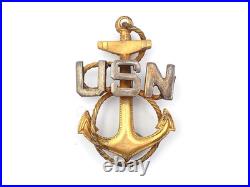
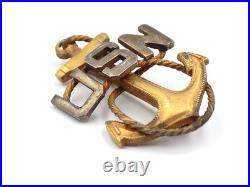
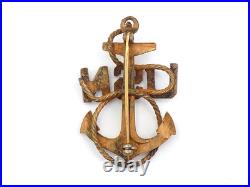
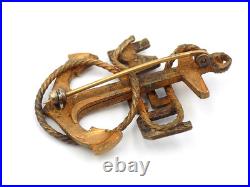
Original Post-WWI US Navy Chief Petty Officer CPO Fouled-anchor Cap Badge. Very nice original item. Made in gilt and silvered bronze with a 90° pin-back fastener and barrel-catch. A little bit of an oddball item with straight USN, from other examples it might be pre-WWI and date to the Mexican incursion period. See my other auctions with military and other items! Please feel free to ask any questions. We strive to satisfy our customers.


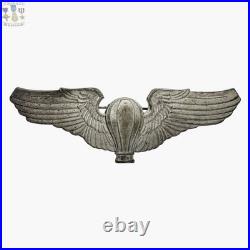
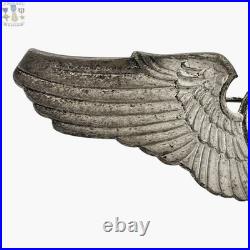
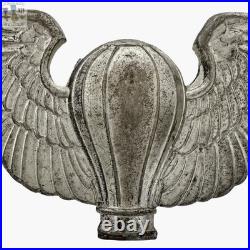

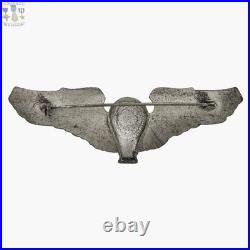
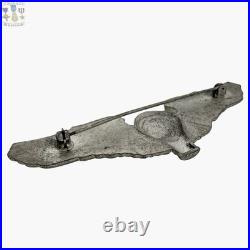
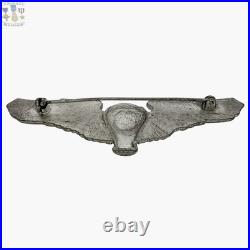
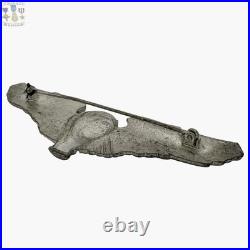
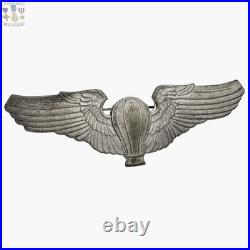
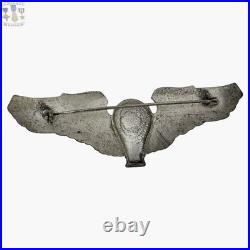
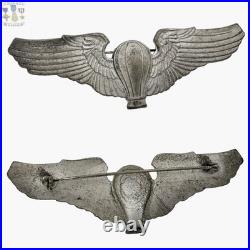
RARE ORIGINAL PRE – WORLD WAR II UNITED STATES ARMY AIR FORCES BALLOON PILOT WINGS, 3-1/4 INCH SIZE, PIN-BACK. The Balloon Pilot Badge is a military badge of the United States Armed Forces which was issued during the First and Second World Wars. The badge was issued by both the United States Army and the U. Air Force, with the Navy equivalent known as the Dirigible Pilot Badge. Originally known as the Aeronaut Badge, the Balloon Pilot Badge was created in 1918 and awarded to pilots of military observation balloons. The badge consisted of a balloon centered on a standard Pilot’s Badge and was issued in two degrees. The senior degree of the Aeronaut Badge was denoted by a star centered above the winged balloon. The Aeronaut Badge was awarded under the authority of the United States Army Air Service and the United States Army Air Corps until the mid-1930s. The badge was then redesignated the Balloon Pilot Badge and, during the Second World War (WWII), was issued by the Army Air Forces. Like its predecessor, the Balloon Pilot Badge was issued in junior and senior degrees. The Army Air Forces also issued a Balloon Observer Badge for those who served as co-pilots and support crew on board military balloon craft. Due to the aircraft technology advances of the 1940s, balloon aeronautics became militarily obsolete by the 1950s. At that time, the United States Air Force discontinued the Balloon Pilot Badge; however, the basic version of the badge is still issued by the U. Air Force Auxiliary’s Civil Air Patrol. Please let me know if there’s anything else I can do for you!

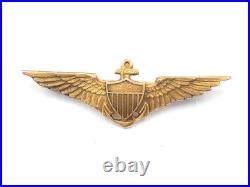
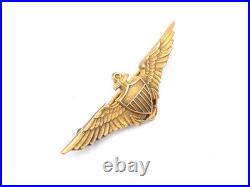
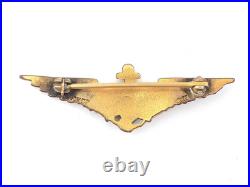
Original 1920s US Navy Naval Aviator Pilot Wings Cap Badge Robbins Co. Very nice original item. Construction in gilt brass. Measures 1-1/2 in width. Pin-back fastener with a 45° pin and U-catch. Marked on each wing 1/30 10K GF (Gold Filled) and the early triple hallmark for. Robbins Company, Attleboro, MA. See my other auctions with military and other items! Please feel free to ask any questions. We strive to satisfy our customers.

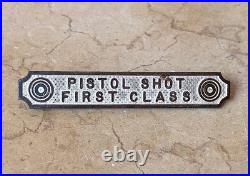
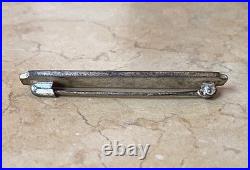
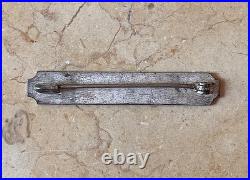
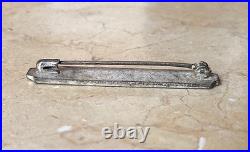
MARINE CORPS SILVER “PISTOL SHOT FIRST CLASS” QUALIFICATION BADGE. MARINE CORPS SILVER “PISTOL SHOT FIRST CLASS” QUALIFICATION BADGE USMC 1922. DIMENSIONS: (WIDTH) 1 3/4. THIS IS NOT A REPRODUCTION.