
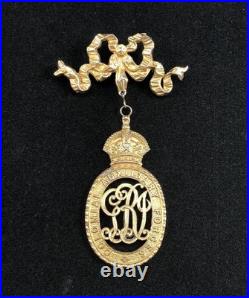
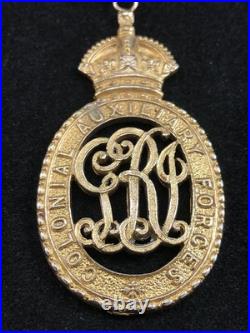
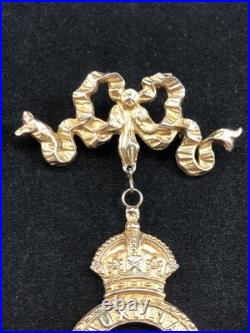
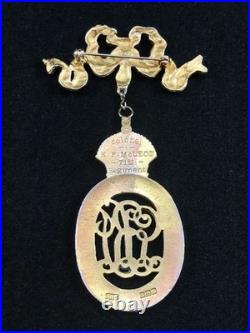
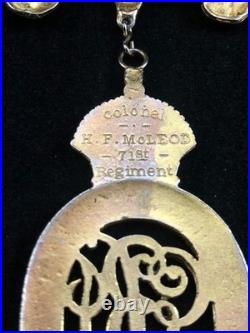
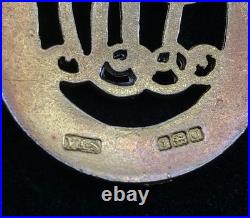
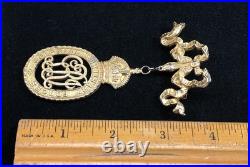

Inscribed Colonel HF McLeod 71st regiment. Made in Birmingham with date letter of 1910.

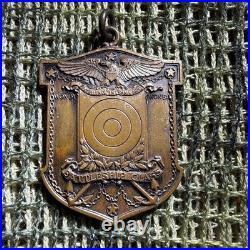
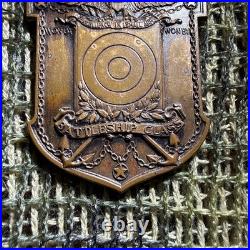
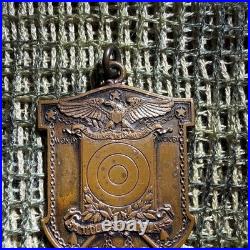
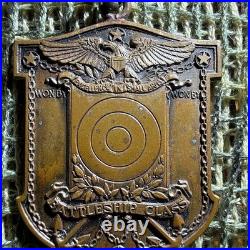
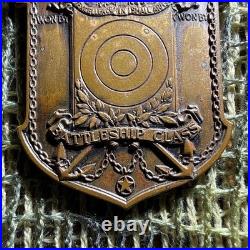
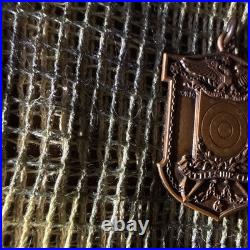
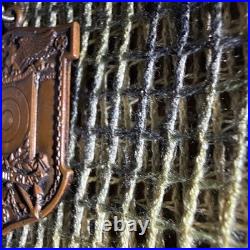
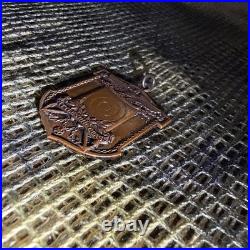
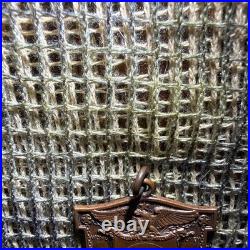
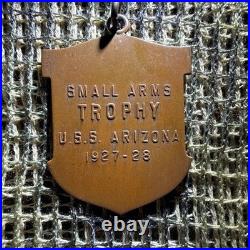
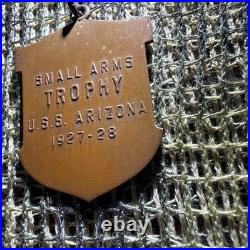
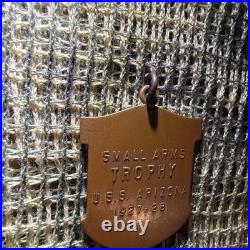
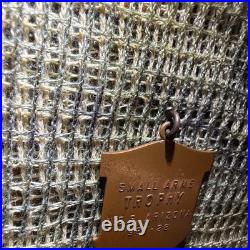
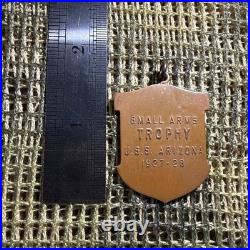
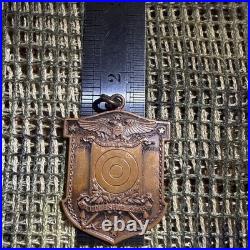
The USN USS ARIZONA Battleship Class Small Arms Trophy Medal is an original piece from the period of 1927-28, making it a valuable collectible for enthusiasts of militaria. This bronze medal reflects the history and significance of naval battleships during that time, particularly the USS Arizona. Ideal for collectors or history buffs interested in military artifacts, this trophy medal is a rare find that commemorates a significant era in American naval history. USN USS ARIZONA Battleship Class -Small Arms Trophy Medal -bronze, 1927-28. Appears to be made of bronze or copper colored metal. Approximately 2-1/4″ in height x 1-1/4″ in width, see photos for condition. Estate fresh find, don’t snooze on this one -USS Arizona items rarely come up for sale! Used medal only, nothing else. See my other listings, save my store as I’ll be listing a large collection of scarce items soon!

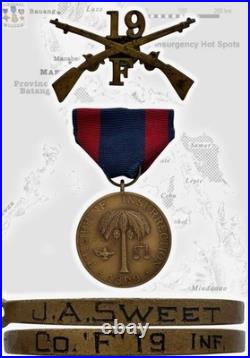
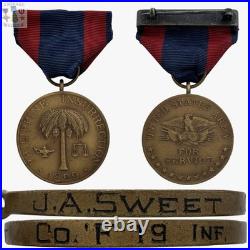
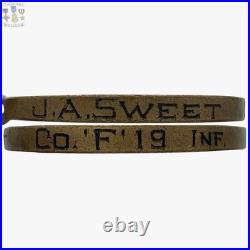
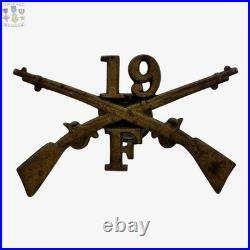
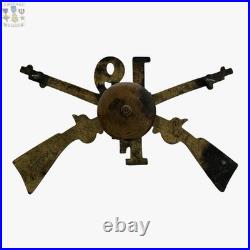
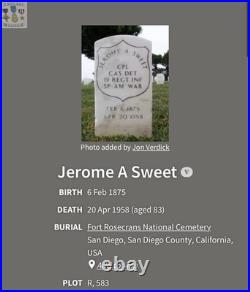
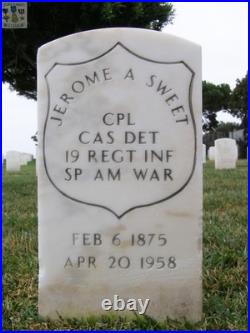
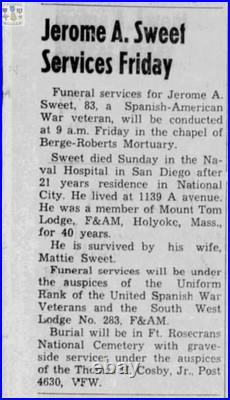
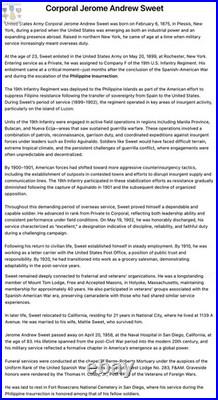
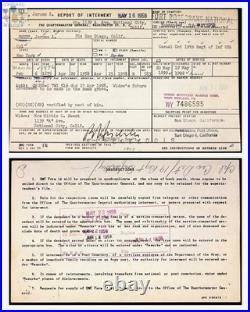
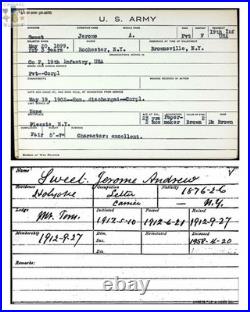
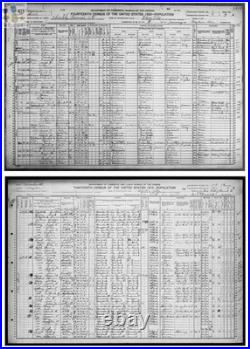
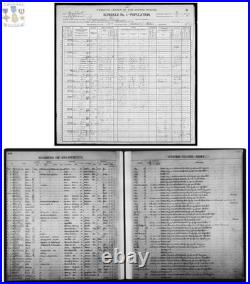
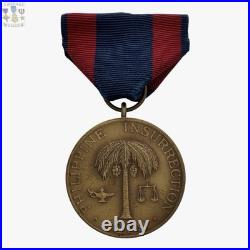
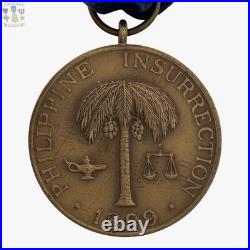
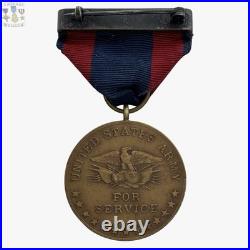
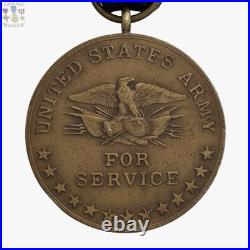
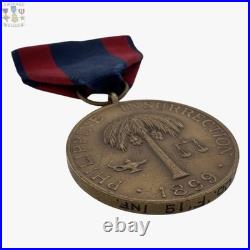
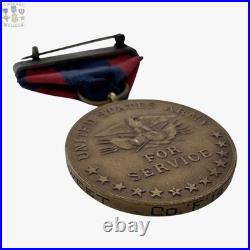
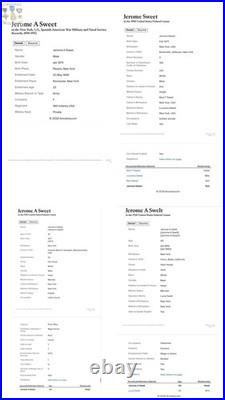
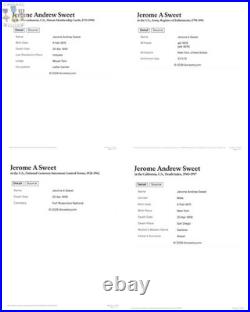
United States Army Corporal Jerome Andrew Sweet was born on February 6, 1875, in Plessis, New York, during a period when the United States was emerging as both an industrial power and an expanding presence abroad. Raised in northern New York, he came of age at a time when military service increasingly meant overseas duty. At the age of 23, Sweet enlisted in the United States Army on May 20, 1899, at Rochester, New York. Entering service as a Private, he was assigned to Company F of the 19th U. His enlistment came at a critical moment-just months after the conclusion of the Spanish-American War and during the escalation of the Philippine Insurrection. The 19th Infantry Regiment was deployed to the Philippine Islands as part of the American effort to suppress Filipino resistance following the transfer of sovereignty from Spain to the United States. Units of the 19th Infantry were engaged in active field operations in regions including Manila Province, Bulacan, and Nueva Ecija-areas that saw sustained guerrilla warfare. These operations involved a combination of patrols, reconnaissance, garrison duty, and coordinated expeditions against insurgent forces under leaders such as Emilio Aguinaldo. Soldiers like Sweet would have faced difficult terrain, extreme tropical climate, and the persistent challenges of guerrilla conflict, where engagements were often unpredictable and decentralized. The 19th Infantry participated in these stabilization efforts as resistance gradually diminished following the capture of Aguinaldo in 1901 and the subsequent decline of organized opposition. Throughout this demanding period of overseas service, Sweet proved himself a dependable and capable soldier. He advanced in rank from Private to Corporal, reflecting both leadership ability and consistent performance under field conditions. On May 19, 1902, he was honorably discharged, his service characterized as “excellent, ” a designation indicative of discipline, reliability, and faithful duty during a challenging campaign. Following his return to civilian life, Sweet established himself in steady employment. By 1910, he was working as a letter carrier with the United States Post Office, a position of public trust and responsibility. By 1920, he had transitioned into work as a grocery salesman, demonstrating adaptability in the post-service years. Sweet remained deeply connected to fraternal and veterans’ organizations. He was a longstanding member of Mount Tom Lodge, Free and Accepted Masons, in Holyoke, Massachusetts, maintaining membership for approximately 40 years. He also participated in veterans’ groups associated with the Spanish-American War era, preserving camaraderie with those who had shared similar service experiences. In later life, Sweet relocated to California, residing for 21 years in National City, where he lived at 1139 A Avenue. He was married to his wife, Mattie Sweet, who survived him. Jerome Andrew Sweet passed away on April 20, 1958, at the Naval Hospital in San Diego, California, at the age of 83. His lifetime spanned from the post-Civil War period into the modern 20th century, and his military service reflected a formative chapter in America’s emergence as a global power. Funeral services were conducted at the chapel of Berge-Roberts Mortuary under the auspices of the Uniform Rank of the United Spanish War Veterans and South West Lodge No. Graveside honors were rendered by the Thomas H. Post 4630 of the Veterans of Foreign Wars. He was laid to rest in Fort Rosecrans National Cemetery in San Diego, where his service during the Philippine Insurrection is honored among that of his fellow soldiers. I will include 21 full size color printed copies of the research presented. UNITED STATES ARMY SPANISH AMERICAN WAR PHILIPPINE INSURRECTION CAMPAIGN MEDAL W/ FULL WRAP BROOCH. STUDLEY, PRODUCED BY DAVIDSON OF PHILADELPHIA. SWEET CO’F’ 19 INF. UNITED STATES ARMY SPANISH AMERICAN WAR CO. F 19TH INFANTRY CAP BADGE. Please let me know if there’s anything else I can do for you!

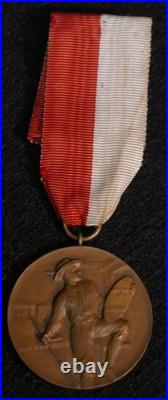
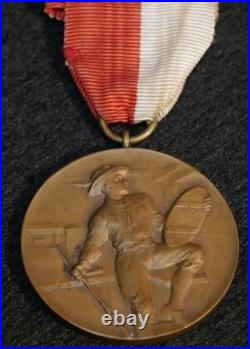
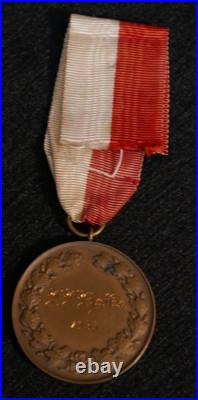
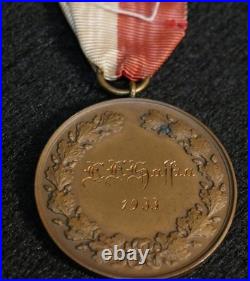
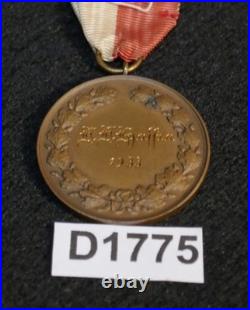
Original 1933 Unknown Weimar German Award Medal Named Inscribed Shooter Hunter. As Photographed with wear and age as seen (please see photos for condition). A Great Candidate for any Collection, War Room, or Display. Recent Estate Collection Acquisition & Presented as Acquired. Check back often – we search estates and sources across the world to bring a fine selection of militaria. Please review all photos for details regarding the condition of the item listed – further condition information will be included in the listing as is relevant, if you need additional photographs or have questions regarding the condition please do not hesitate to ask. I describe all items to the best of my ability – please do not hesitate to ask any and all questions prior to the close of the listing. Mistakes very rarely occur – however if one does please rest assured that it will be corrected. International Buyers are Welcome!

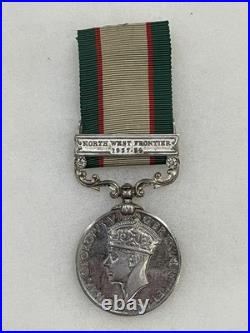
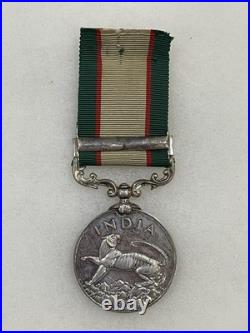
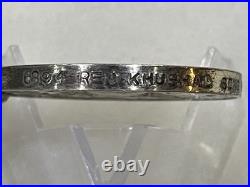
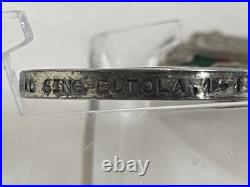
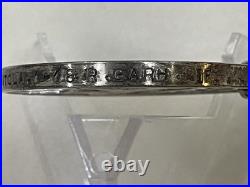
British India General Service Medal Northwest Frontier 1937-39 – R. Officially impressed 6894 Rfn. Khushal Sing Butola, 1-18 R. The 1st Battalion, 18th Royal Garhwal Rifles (1-18 Garhwal Rifles) actively served during the tribal uprisings on the North-West Frontier (now Pakistan) from 1937 to 1939. The battalion was engaged in counter-insurgency and regional pacification operations, countering Pashtun tribal guerrillas in regions like Waziristan. Please see the detailed photographs for the condition of the medal. All sales in the United States or Canada. Check out my other medals and other militaria items.

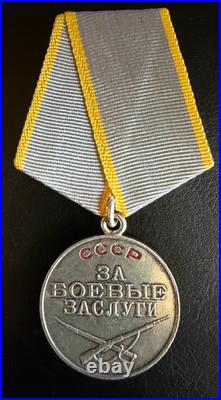
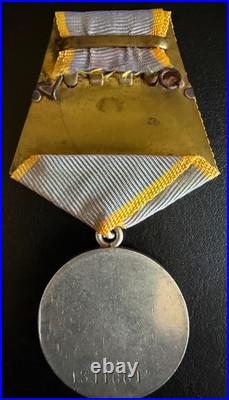
Original Soviet WW2 Medal “For Battle Merit” (???????????????) with wartime serial number 1311661. Authentic silver wartime issue awarded approximately in late 1944 during the Second World War. Original suspension and ribbon. Strong details with attractive aged patina. Instituted in 1938, this medal was awarded to Soviet military personnel for combat merit, battlefield service and military achievement. Original USSR issue. Serial number: 1311661. Approximate award year: 1944. Condition: good vintage condition with normal age wear. Guaranteed authentic period piece. Rare and desirable WW2 Soviet militaria collectible.

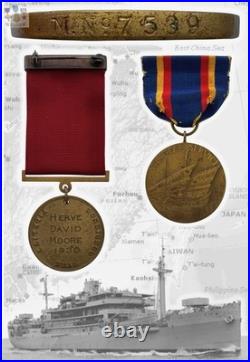
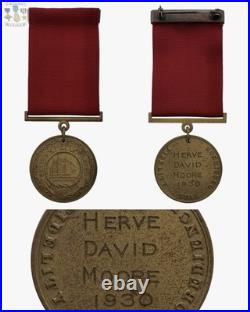
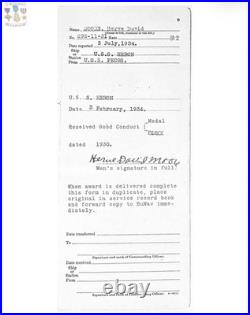
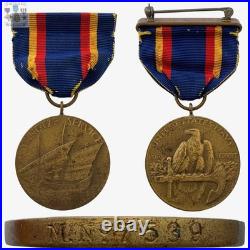
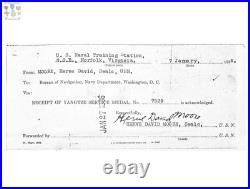
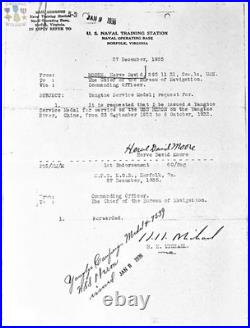
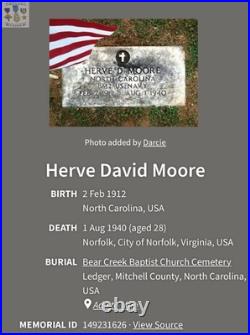
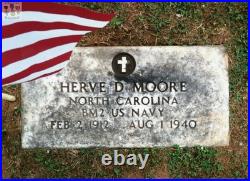
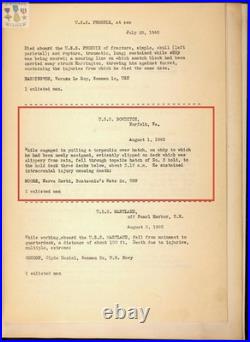
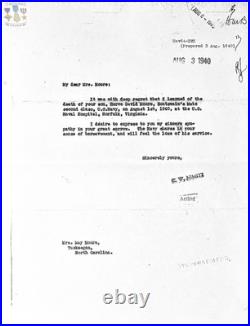
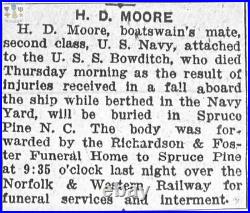
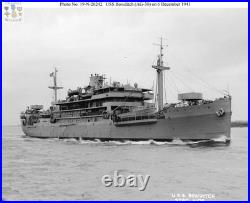
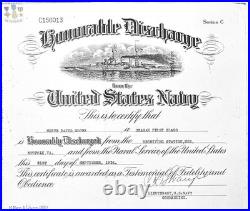
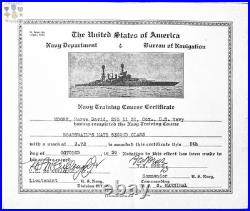
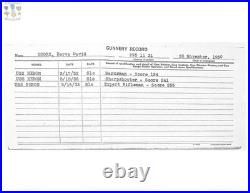
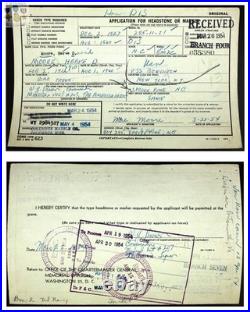
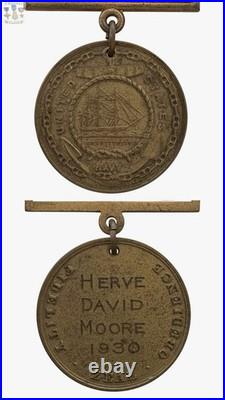
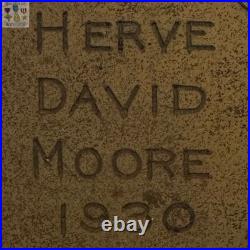
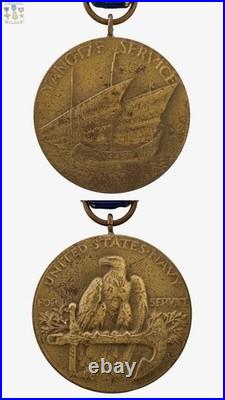
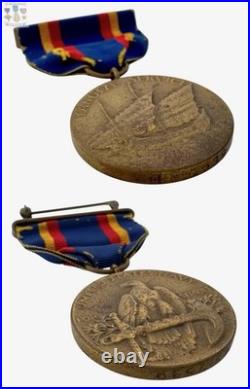
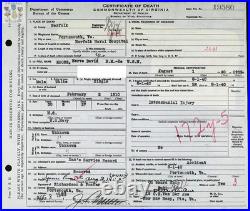
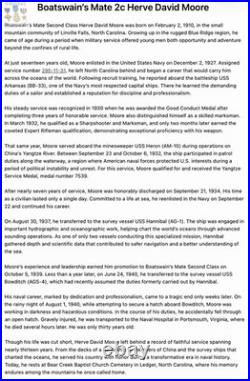
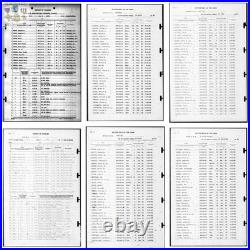
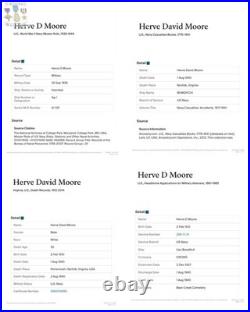
Boatswain’s Mate Second Class Herve David Moore was born on February 2, 1910, in the small mountain community of Linville Falls, North Carolina. Growing up in the rugged Blue Ridge region, he came of age during a period when military service offered young men both opportunity and adventure beyond the confines of rural life. At just seventeen years old, Moore enlisted in the United States Navy on December 2, 1927. Assigned service number 295-11-31, he left North Carolina behind and began a career that would carry him across the oceans of the world. His steady service was recognized in 1930 when he was awarded the Good Conduct Medal after completing three years of honorable service. Moore also distinguished himself as a skilled marksman. In March 1932, he qualified as a Sharpshooter and Marksman, and only two months later earned the coveted Expert Rifleman qualification, demonstrating exceptional proficiency with his weapon. Interests during a period of political instability and unrest. For this service, Moore qualified for and received the Yangtze Service Medal, M. After nearly seven years of service, Moore was honorably discharged on September 21, 1934. His time as a civilian lasted only a single day. Committed to a life at sea, he reenlisted in the Navy on September 22 and continued his career. On August 30, 1937, he transferred to the survey vessel USS Hannibal (AG-1). As one of only two vessels conducting this specialized mission, Hannibal gathered depth and scientific data that contributed to safer navigation and a better understanding of the sea. Moore’s experience and leadership earned him promotion to Boatswain’s Mate Second Class on October 5, 1939. His naval career, marked by dedication and professionalism, came to a tragic end only weeks later. On the rainy night of August 1, 1940, while attempting to secure a hatch aboard Bowditch, Moore was working in darkness and hazardous conditions. Gravely injured, he was transported to the Naval Hospital in Portsmouth, Virginia, where he died several hours later. He was only thirty years old. Though his life was cut short, Herve David Moore left behind a record of faithful service spanning nearly thirteen years. Today, he rests at Bear Creek Baptist Church Cemetery in Ledger, North Carolina, where his memory endures among the mountains he once called home. I will include 26 full size color printed copies of the research presented. ORIGINAL 1930’S UNITED STATES NAVY GOOD CONDUCT MEDAL W/ FULL WRAP BROOCH. ORIGINAL 1920’S UNITED STATES NAVY YANGTZE SERVICE MEDAL W/ FULL WRAP BROOCH. RIBBON DRAPES TESTED U. Please let me know if there’s anything else I can do for you!

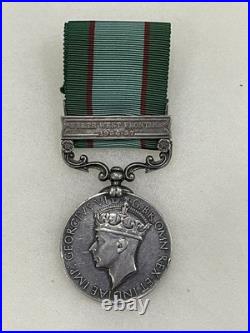
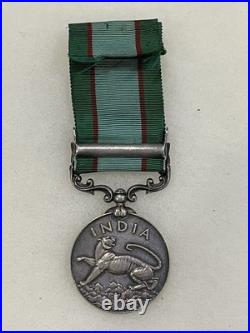
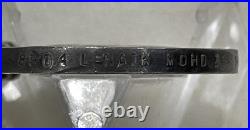
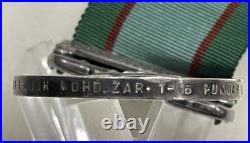
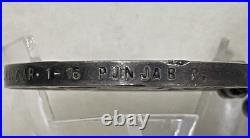
British India General Service Medal Northwest Frontier 1936-37 – 1-16 Punjab Regt. Officially impressed 8904 L-Naik Mohd. In October 1937, the 1/16 Battalion was assigned to the 3rd (Jhelum) Brigade at Ghariom and subsequently moved to Mir Ali to secure the vital Bannu-Razmak road. In WW2, the regiment fought in Burma against the Japanese. Please see the detailed photographs for the condition of the medal. All sales in the United States or Canada. Check out my other medals and other militaria items.

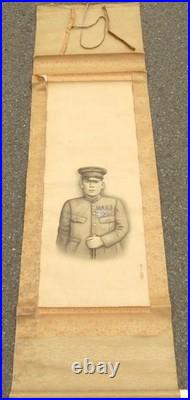
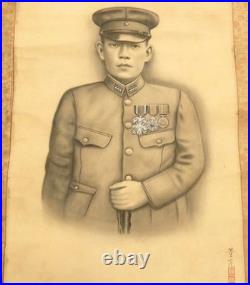
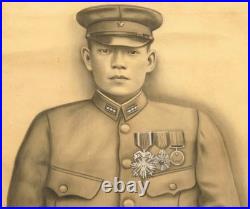
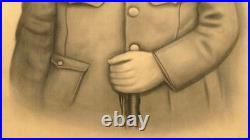
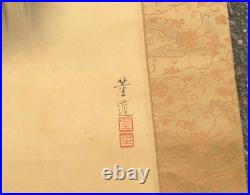
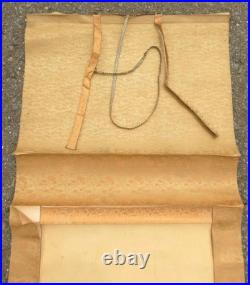
WWII Imperial Japanese Army Officer Portrait Hanging Scroll. This hanging scroll depicts an. Imperial Japanese Army Captain. Wearing a Type 45 military cap, captain’s rank insignia, and several decorations. Although no production date or the officer’s name is recorded, several details suggest that it was. Most likely created during the pre-war or WWII period. Rather than after the war. The uniform includes what appears to be the. Introduced in 1912 and worn by Japanese Army officers through the end of World War II. The rank insignia and decorations are also consistent with an Imperial Japanese Army captain. Another important clue is the format itself. Before photography became commonplace in Japanese homes. Hanging scroll portraits (kakejiku). Were a traditional way to preserve the image and achievements of respected family members. Military officers were sometimes commemorated in this manner, making these portraits both family heirlooms and historical records. Following Japan’s surrender in 1945, the Allied Occupation implemented extensive demilitarization policies. Public displays celebrating the Imperial Japanese military largely disappeared, and portraits honoring military officers became far less common. For these reasons, collectors generally regard works of this type as being associated with the pre-war or wartime era. While the officer’s identity is unknown, the portrait conveys the story of an individual soldier whose service was important enough to be preserved by those around him. An unusual historical display piece combining military history, portrait art, and traditional Japanese craftsmanship. Original Imperial Japanese Army officer portrait. Depicts a Captain wearing a Type 45 military cap. Multiple medals and decorations illustrated. Traditional Japanese hanging scroll format. Likely pre-war or WWII era. Excellent display piece for WWII and Japanese militaria collections. Own a Piece of History. Approximate 7-21days(To USA).

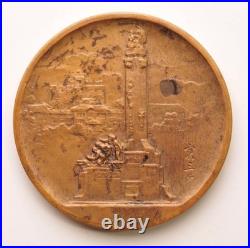
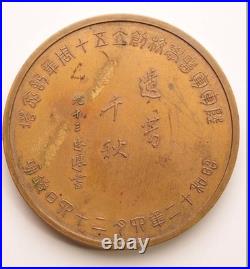
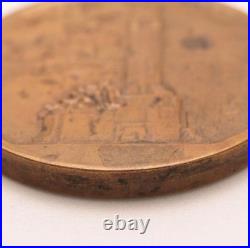
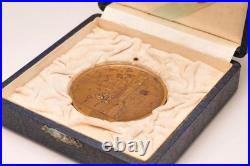
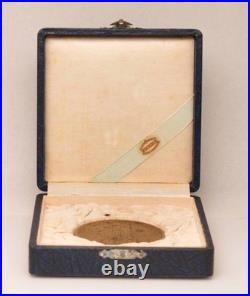
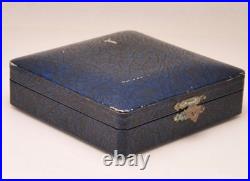
Original Imperial Japanese Army Medical School 50th Anniversary commemorative medal with its original presentation box. This large bronze medal was produced to commemorate the. 50th anniversary of the Imperial Japanese Army Medical School. One of Japan’s most important military medical institutions. The anniversary ceremony was held in. While the monument depicted on the medal was completed on. The obverse features a beautifully sculpted relief of the. Army Medical School Memorial Tower. Erected to celebrate the institution’s fiftieth anniversary. Near the base appears the signature. “Jitsuzo” (by sculptor Jitsuzo Hinago). One of Japan’s best-known medal and monument sculptors of the pre-war era. The reverse is engraved with. “Imperial Japanese Army Medical School 50th Anniversary”. “Memorial Tower Completed – June 26, 1937″. It also bears the inscription. “Iho Senshu” (Legacy for a Thousand Autumns). Together with a handwritten dedication. The Imperial Japanese Army Medical School served as the highest educational institution for military physicians, surgeons, medical officers, and medical researchers. Its graduates supported the Japanese Army through the First Sino-Japanese War, the Russo-Japanese War, World War I, and the years leading up to World War II. The campus was largely destroyed during the. Tokyo air raids of 1945. And the school was abolished after Japan’s surrender. Today, the former site is occupied by institutions such as Japan’s. National Institute of Infectious Diseases. Reflecting the location’s continued connection to medical research and public health. The site has also attracted historical interest because human remains discovered there after the war continue to be the subject of academic research, making the former Army Medical School an important location in both Japanese military and medical history. Original presentation box, and connection to one of Imperial Japan’s most significant military educational institutions, this is an outstanding historical artifact for collectors of Imperial Japanese militaria, military medicine, and medical history. Imperial Japanese Army Medical School 50th Anniversary Medal. Original presentation box included. Shows age-related wear, patina, and storage wear to both the medal and presentation box. Please examine all photographs carefully for condition details. Own a Piece of History. International Buyers – Please Note. Thank you for your understanding.