
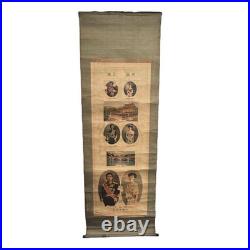
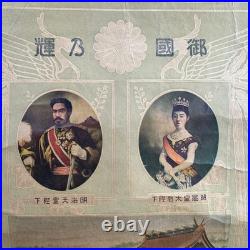
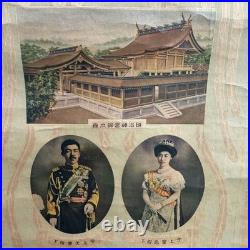
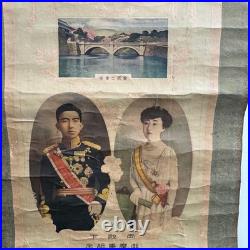

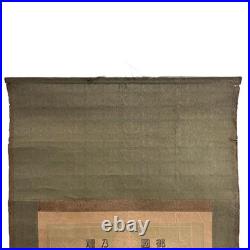
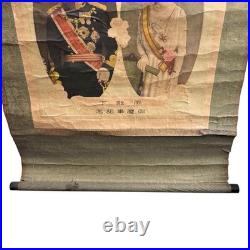

This large antique Japanese hanging scroll commemorates an important moment in the life of Crown Prince Hirohito, who would later become Emperor Showa of Japan. At the bottom are portraits of Crown Prince Hirohito and Princess Nagako, the future Emperor Showa and Empress Kojun. Beneath their portraits appears the Japanese inscription: Commemorating the Auspicious Occasion of Their Imperial Highnesses This inscription is an important clue to the historical context of the piece. Crown Prince Hirohito married Princess Nagako on January 26, 1924, during Japan’s Taisho era. Hirohito was still a young Crown Prince, approximately three years before he ascended the throne and became the emperor whose reign would encompass World War II and Japan’s postwar transformation. The scroll presents much more than the young couple. Its imagery includes: Emperor Meiji and Empress Shoken Meiji Shrine Nijubashi Bridge at the Imperial Palace Crown Prince Hirohito and Princess Nagako The Imperial chrysanthemum crest and decorative phoenix motifs At the top appears the phrase , approximately meaning The Glory of the Nation. The composition is particularly interesting from a historical perspective. Emperor Meiji and Empress Shoken appear above the Meiji Shrine and Imperial Palace imagery, while the young Crown Prince and his bride appear below. It visually connects the Meiji imperial generation with the next generation of Japan’s Imperial Family. Today, Hirohito is inevitably associated with some of the most consequential events of the 20th century: the rise of militarized Japan, the Pacific War, Japan’s defeat in 1945, and the country’s remarkable postwar transformation. But this scroll captures an earlier moment. The war was still far in the future. Hirohito was not yet Emperor. It comes from a Japan celebrating the marriage of its young Crown Prince and his future Empress. That contrast is what makes this piece especially fascinating. Measuring approximately 150 cm (59 in) long and 51 cm (20 in) wide, it is a substantial display piece as well as an artifact of Japanese imperial and social history. The scroll shows significant age-related wear, including creases, wrinkles, discoloration, fading, stains, and other deterioration. Please examine all photographs carefully. These signs of age are consistent with an object that has survived for approximately a century. Dating Note: Based on the portraits and the inscription commemorating an auspicious occasion involving the Crown Prince and Princess, this piece is believed to relate to their 1924 marriage. However, no clearly visible production date or publisher’s mark has been confirmed, so the exact year of manufacture cannot be guaranteed. More than simply an old Japanese decorative scroll, this is a surviving image of Hirohito before he became Emperor – at the beginning of a life that would become inseparable from modern Japanese history. Own a Piece of History. International Buyers – Please Note.

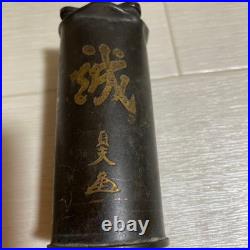
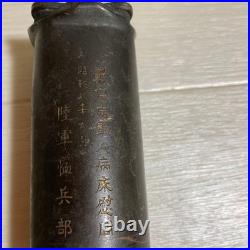
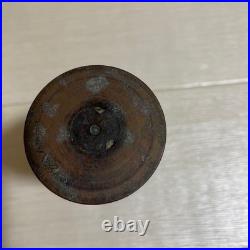
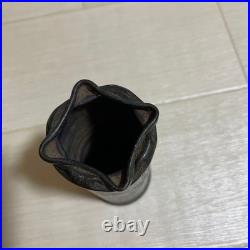
This is a 1933 Imperial Japanese Army commemorative vase connected with a hospital for wounded and sick soldiers. The inscription on the body reads: “Hospital Visit for Wounded and Sick Soldiers” “September 1933″ “Army Welfare Department” On the opposite side is the large character “Makoto” , meaning sincerity, devotion, or faithfulness. Beneath it is the inscription “Written by Sadao”. Based on the date and historical context, this inscription is believed to refer to General Sadao Araki, who was serving as Japan’s Minister of War at the time. Araki was one of the most influential Army figures of early Showa Japan and became closely associated with the Imperial Way faction and the Army’s emphasis on spiritual discipline and loyalty. The year 1933 is especially important. Japan had already entered Manchuria following the Manchurian Incident of 1931, and the state of Manchukuo had been established in 1932. In 1933, Japan announced its withdrawal from the League of Nations. This vase therefore comes from a moment when Japan was moving away from international cooperation and toward a more militarized national direction. Yet this object does not represent the battlefield itself. It represents what happened after soldiers came back wounded or sick. The Army Welfare Department was involved in activities intended to support and soldiers, including those undergoing treatment. Based on the inscription, this vase was likely produced for use during a hospital visit or event for wounded and sick servicemen. It may have been presented to a patient, placed in a military hospital ward, or used as part of the ceremony. That is what makes this piece particularly interesting. The large word “Makoto” was not simply decorative. In the Imperial Japanese military, ideas such as loyalty, sincerity, self-sacrifice, and spiritual strength were heavily emphasized. If the calligraphy is indeed connected with Sadao Araki, the message would have carried additional meaning for wounded soldiers undergoing recovery. In other words, this vase represents two sides of the same military system: compassion toward wounded soldiers-and the expectation that they maintain military spirit even while lying in a hospital bed. The surface shows age-related wear, discoloration, oxidation, scratches, and other signs of its approximately 90-year history. Please examine the photographs carefully for condition. A weapon tells us how a war was fought. This small vase tells us something different: what happened to the soldiers who survived long enough to return wounded. A rare and deeply human artifact from Japan in 1933, at a critical point on the road toward the wars that would follow. Own a Piece of History. International Buyers – Please Note.

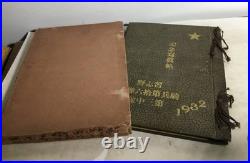
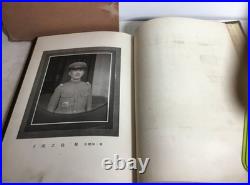
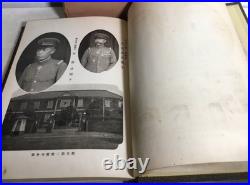
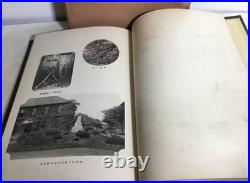
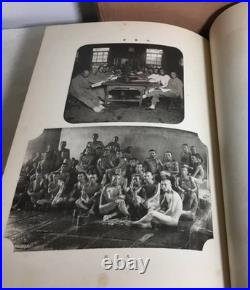
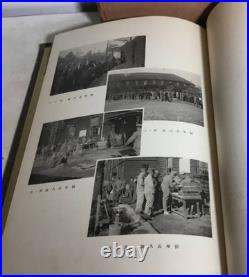
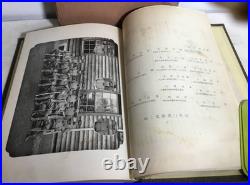
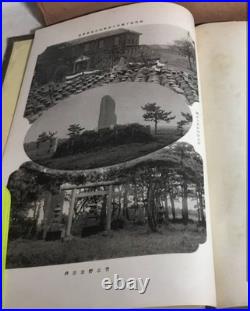
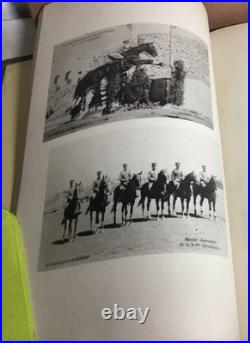
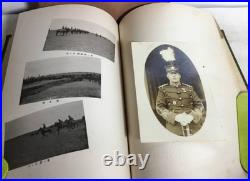
Cover Inscription (faithful reading). Imperial Japanese Army Cavalry 16th Regiment, 3rd Company, Narashino. ? What was the Narashino Cavalry 16th Regiment? One of the Imperial Japanese Army’s cavalry regiments, stationed in Narashino, Chiba Prefecture. Cavalry was considered an elite branch in the modern Army, tasked with reconnaissance, charges, and communications. This album is a commemorative photographic record of the 16th Regiment, 3rd Company, featuring their barracks, training exercises, officers’ portraits, and scenes of soldiers’ daily life. Produced by Kobayashi Photo Studio / Sankosha in a deluxe format. Showa 7 (1932), immediately after the Manchurian Incident (1931-32), when Japan was intensifying its military expansion into mainland China. This site was the Army’s central cavalry base after the Russo-Japanese War, and later became the birthplace of Japan’s paratroop units. To preserve the memory and pride of the unit. For soldiers and their families, such albums served as proof of service and a personal military chronicle. Professionally photographed, printed, and bound in a heavy commemorative album format – clearly intended as an official record and keepsake. ?? Historical Context (1932). 1931: The Manchurian Incident breaks out; Japan occupies northeast China. 1932: Founding of Manchukuo, rising militarism within Japan. Narashino cavalry units intensify training for possible continental deployment. This album is thus a direct product of Japan’s shift into its prewar military buildup. ? Collector’s Appeal. Primary source value: Provides a vivid record of military life, training, commanding officers, and regimental facilities. Rarity: Japanese cavalry was soon replaced by tanks and mechanized units, and the branch itself was abolished after WWII. Surviving photo albums are scarce. Historical importance: An artifact directly tied to Japan’s interwar military expansion following the Manchurian Incident. Artistic value: Clear professional photography, original binding, and preserved storage case. Highly collectible for militaria and Japanese pre-WWII history enthusiasts. International Buyers – Please Note. Thank you for your understanding.

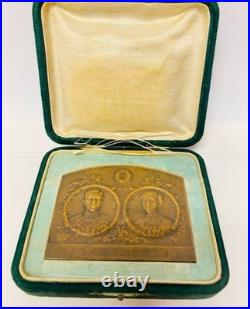
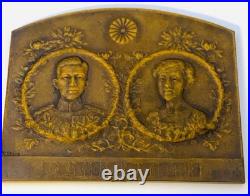
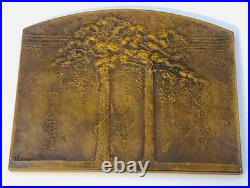
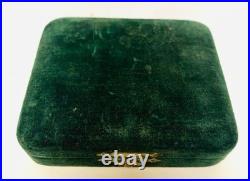
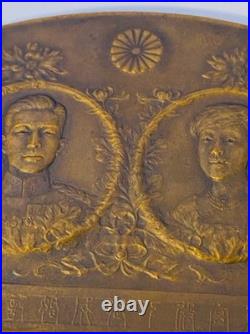
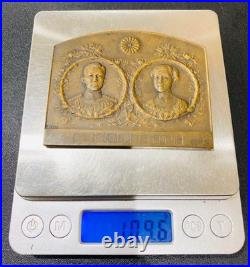
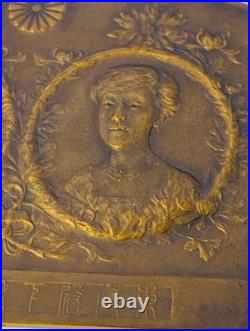
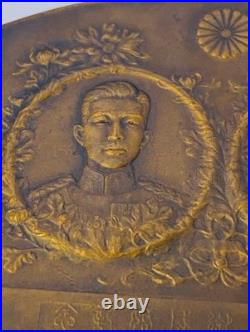
Own a Piece of History. This unique commemorative bronze desk plaque was issued by the Japan Mint in January 1924 to celebrate the marriage of the Imperial Crown Prince-later Emperor Hirohito (Emperor Showa)-and his bride, Princess Nagako (later Empress Kojun). The piece is styled as a miniature shotate (Japanese desk screen), a traditional item used to partition space and display important art objects. Features the crowned portraits of Crown Prince Hirohito and Princess Nagako encircled by laurel wreaths, with the Imperial chrysanthemum crest above. ? (“Commemorating the Marriage of the Crown Prince”). Depicts pine and wisteria trees (symbols of longevity and prosperity) and is engraved. ? (“January, Taisho 13 [1924]”). Who was Crown Prince Hirohito? This plaque marks the beginning of his journey as Emperor. Such commemorative plaques were prestigious, not for public sale, and distributed only to high-ranking officials and dignitaries involved in the wedding. The shotate (desk screen) design is rare, blending Western art deco influences with traditional Japanese symbolism. Why collect this item? This is more than just a collectible. It’s a tangible fragment of Japanese Imperial history-witness to a marriage that shaped an era, sealed in bronze by the national mint. Ideal for collectors of Japanese medals, Imperial memorabilia, or World War I/early Showa period artifacts. Some signs of age, as expected for an item over 100 years old. Approximate 7-21days(To USA).

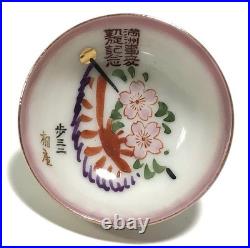
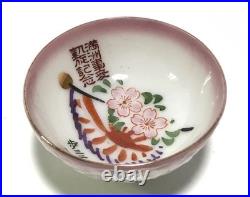
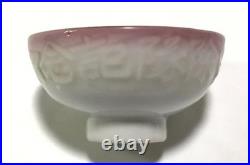
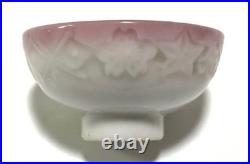
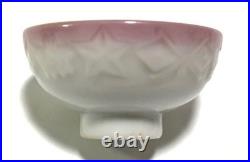
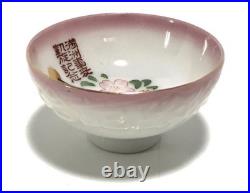
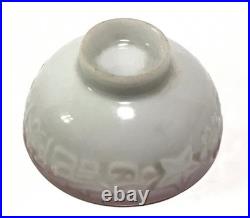
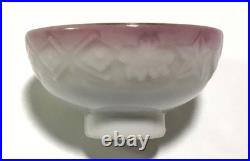
WWII Imperial Japanese Army Manchurian Incident Commemorative Military Sake Cup. Thank you for visiting. Imperial Japanese Store Kamikaze. This small porcelain military sake cup tells the story of one Japanese soldier who likely served during the. Unlike ordinary souvenirs, this cup preserves both military history and a personal milestone. Inside the cup are several important inscriptions. “Manchurian Incident Victory Return Commemoration”. Around the rim appears. The cup also bears. Which most likely refers to the. Of the Imperial Japanese Army. Another inscription appears to read. Although the characters are somewhat difficult to read, so this identification cannot be confirmed with certainty. What was the Manchurian Incident? The Manchurian Incident began in. Becoming one of the most significant events leading toward the Second Sino-Japanese War and eventually the Pacific War. Following the incident, Japanese forces occupied Manchuria and established the state of. For soldiers who participated, surviving the campaign and returning home safely was considered an important milestone worthy of commemoration. The 32nd Infantry Regiment. The inscription “Ho 32″ strongly suggests the. Although this cannot be stated with absolute certainty. The regiment was established in. And had a distinguished service history. The Second Sino-Japanese War. The Battle of Okinawa. During the Manchurian Incident, elements of the regiment participated in operations including the. The regiment later became well known for its determined resistance during the Battle of Okinawa, making it one of the better-known infantry regiments of the Imperial Japanese Army. The Story This Cup Tells. Reading the inscriptions together suggests a compelling story. Its owner most likely. Served with what was probably the 32nd Infantry Regiment. Participated in the Manchurian Incident. Completed his period of military service. And received this commemorative cup to celebrate both his return and his honorable discharge. Rather than commemorating a victory alone, this cup appears to celebrate the completion of an entire chapter in one soldier’s life. Military Sake Cups in Japanese Army Culture. Military sake cups were much more than drinking vessels. They were presented during important milestones such as enlistment, deployment, promotion, victory celebrations, safe return, and discharge from military service. Many were produced for only a single individual. As a result, they often preserve names, units, campaigns, and personal histories that would otherwise have been lost. Collectors often regard these cups as miniature military biographies preserved in porcelain. The cup features several symbolic military motifs. Cherry blossoms, representing the Japanese soldier. A bugle, symbolizing military ceremonies, mobilization, and victory celebrations. Decorative elements reflecting the patriotic aesthetic of pre-war Japan. 5.5 cm (2.2 inches). In diameter, it preserves an extraordinary amount of military history. 5.5 cm (2.2 in). This is more than a military sake cup. It is a surviving record of one soldier’s journey-from deployment during the Manchurian Incident to his safe return and discharge from military service. A remarkable piece of personal military history. Own a Piece of History. International Buyers – Please Note. Thank you for your understanding.

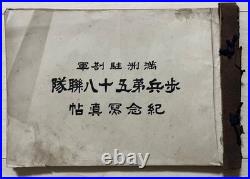
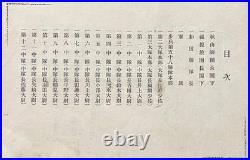
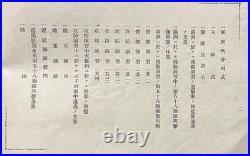
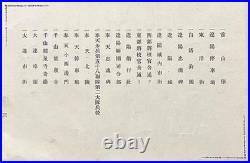
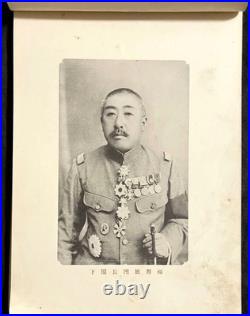
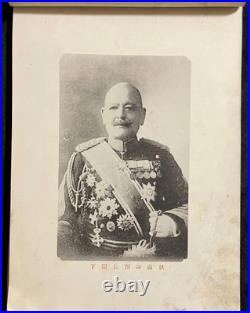
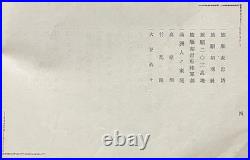
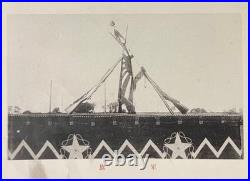
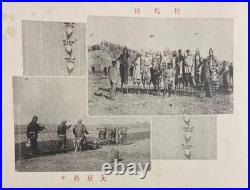
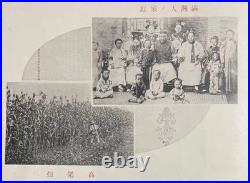
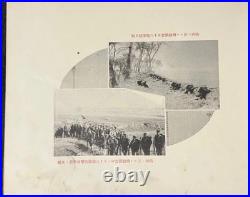
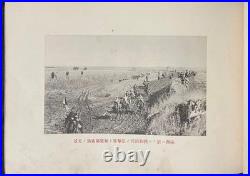
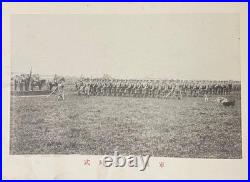
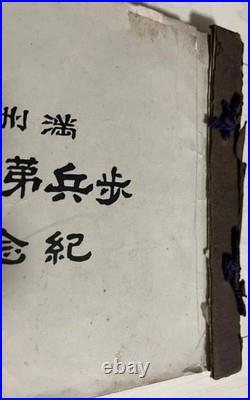
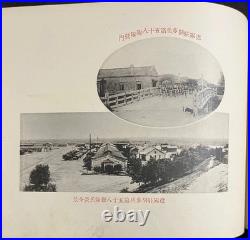
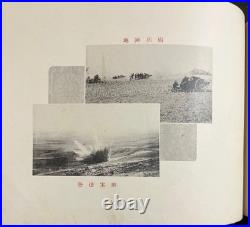
This is an original Imperial Japanese Army commemorative photo album documenting the Manchuria garrison period, dating to the Taisho era (circa 1910s), prior to World War II. The album was compiled as a “Manchuria Garrison Commemoration” (/) and contains period photographs illustrating military life, training, ceremonies, maneuvers, and surrounding landscapes during Japan’s early military presence in Manchuria. Unlike later wartime propaganda materials, this album reflects an early stage of Japanese continental deployment, when garrison duty emphasized discipline, formation training, field exercises, and symbolic military rituals. Contents & Historical Context. The photographs include, but are not limited to. Military formations and drills. Infantry training exercises and field maneuvers. Artillery and live-fire training scenes. Ceremonial flag displays and inspections. Garrison facilities and barracks. Surrounding Manchurian landscapes, farmland, and local environments. Civilian scenes offering rare contextual insight into the region during this period. These images collectively document the daily operational reality of a Japanese Army garrison unit stationed in Manchuria during the Taisho period, a time that is comparatively underrepresented in surviving photographic records. The Taisho era represents a transitional phase in Imperial Japanese military history-situated between the Russo-Japanese War and the later escalation of continental warfare in the 1930s. As such, this album is valuable not only as a military artifact, but also as a primary visual source for researchers studying. Early Japanese military administration in Manchuria. Pre-World War II garrison life. The evolution of training doctrine and military organization. Colonial-era regional landscapes and civilian life. Albums of this nature were typically produced in limited numbers, often for internal commemoration, making complete surviving examples increasingly scarce. Size: 22 × 15 cm. Covers are missing (removed), as shown. Pages show age-related wear, toning, stains, and minor damage. Overall condition is consistent with an original photographic album of this age. Please review all images carefully. No modern reproductions or reprints-this is an original period item. Notes for Collectors & Institutions. This item is offered strictly as a historical artifact and research material. No political ideology is endorsed or implied. Serious collectors of early Imperial Japanese military material. International Buyers – Please Note. Thank you for your understanding.

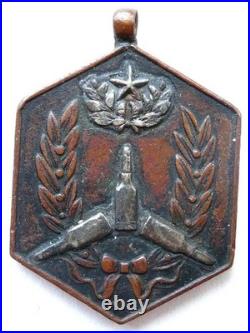
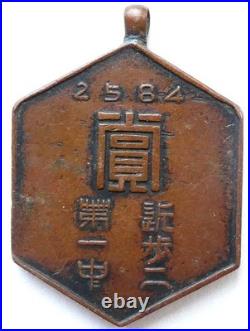
A rare medal from 1924 (Taisho 13) of the 1st Company, Konoe Infantry Regiment No. Shows age-related scratches, dirt, and wear consistent with its age. Suitable for collectors of Imperial Japanese Army militaria and pre-WWII Japanese military history. International Buyers – Please Note.

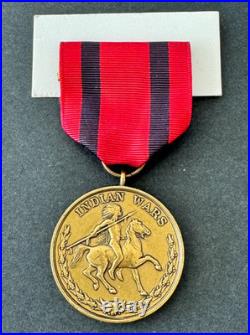
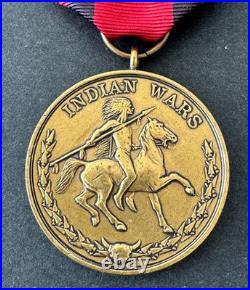
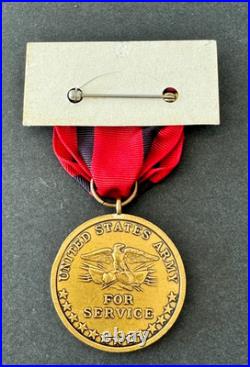
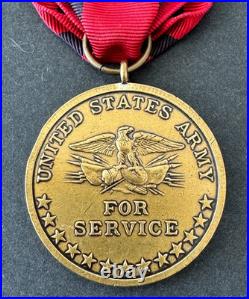
This is an authentic United States Army Indian Campaign Medal, initially authorized by the War Department via General Orders 12 in 1907 to recognize military service during the American Indian Wars spanning 1790 to 1891. This historic bronze decoration was retroactively issued to veterans and stands as a foundational piece of early 20th-century U. The bronze medallion remains in outstanding condition with a rich, uncleaned golden-bronze patina. The stamped lettering and micro-details of the horse, rider, and reverse military trophy remain crisp and sharp with minimal high-point wear. The original silk ribbon maintains bold coloration and tight weaves, free of significant rot, staining, or shredding. The top features a clean, rectangular white backing card used for clean preservation or showcase presentation. We always take plenty of photos and provide detailed descriptions of our items. Therefore, you are asked to please check ALL posted photos and review the Description Section before purchasing an item from our store. Before listing, we clean and inspect our items for neatness and accuracy. We know how important it is that your item arrive quickly and undamaged, so we will take great care in packing your items professionally and properly. You will never be disappointed.

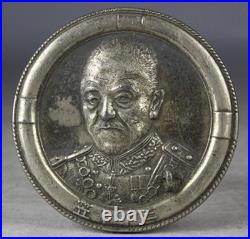
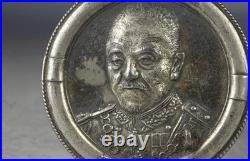
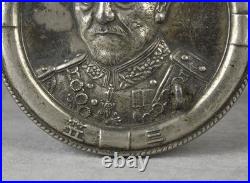
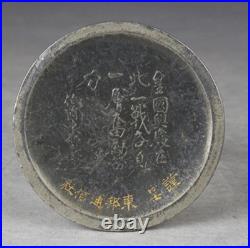
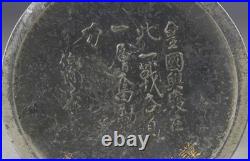

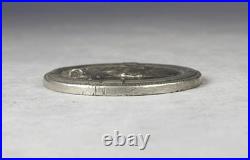
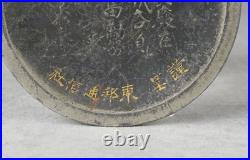
Thank you for visiting. This is a fascinating commemorative medal related to the Imperial Japanese Navy and Admiral Heihachiro Togo, one of the most famous naval commanders in Japanese history. The front features a detailed relief portrait of Admiral Togo, surrounded by the name “Mikasa, ” the legendary battleship that served as his flagship during the Russo-Japanese War. The reverse side bears the famous phrase. The fate of the Empire depends upon this battle. This was the historic signal associated with the Battle of Tsushima in 1905, one of the most decisive naval victories of the modern era. The medal also includes the inscription. “Presented by Toho News Agency”. This detail is particularly important historically. Toho News Agency was a real prewar Japanese media and communications organization, and the use of the word “Presented” strongly suggests this was an actual commemorative distribution item from the prewar or wartime period, rather than a modern tourist reproduction. It may have been created for. Russo-Japanese War memorial activities. Imperial Japanese Navy promotion. The design itself also strongly reflects prewar Japanese military aesthetics, including. Porthole-like border inspired by battleship imagery. Heavy military-style relief portrait. Symbolic Imperial Navy slogan. Admiral Togo remains internationally famous even today and is sometimes referred to as. The Nelson of the East. The Battle of Tsushima is still studied worldwide as one of the most significant naval battles in history, making artifacts related to Togo and Mikasa highly desirable among naval historians and militaria collectors. This is not simply a medal. It is a surviving piece of Imperial Japanese naval mythology and national memory. 7.1 cm width. Condition shows age and use, including. Please carefully review all photographs for condition details. Only the items shown in the photographs are included. Own a Piece of History. International Buyers – Please Note. Thank you for your understanding.

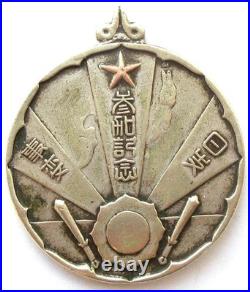
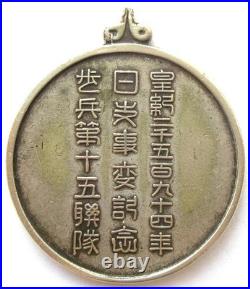
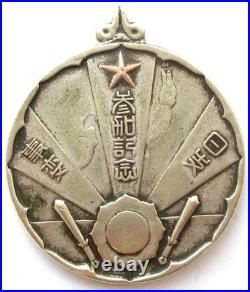
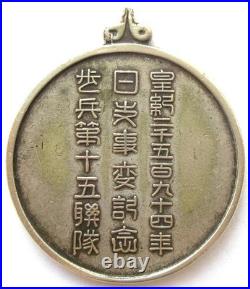
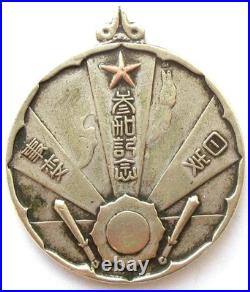
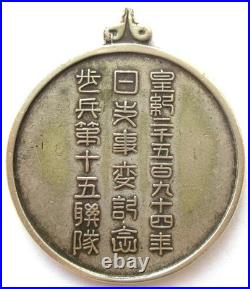
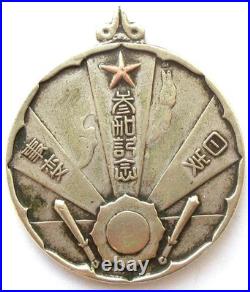
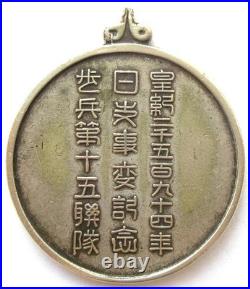
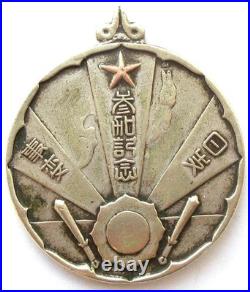
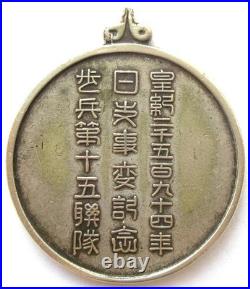
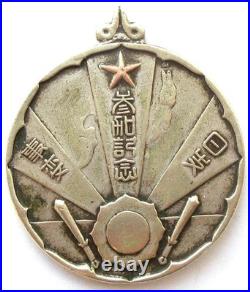
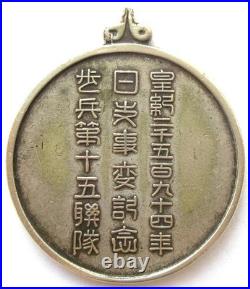
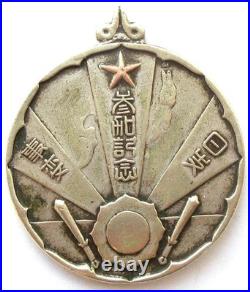
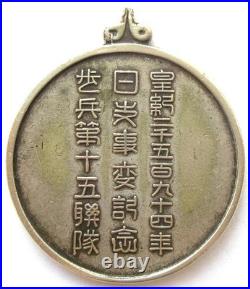
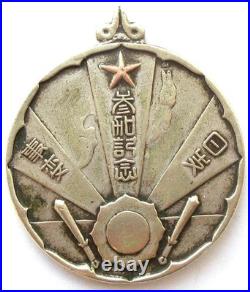
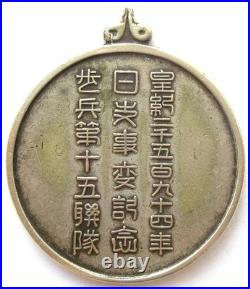
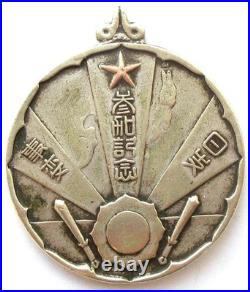
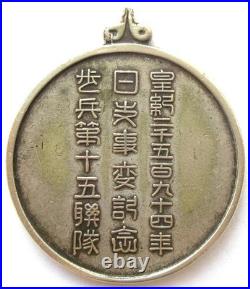
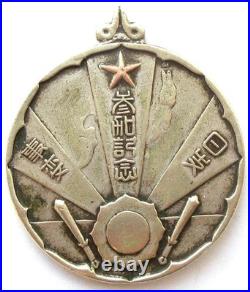
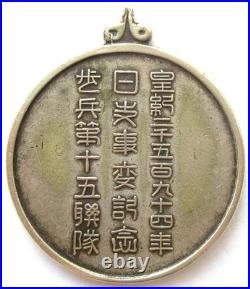
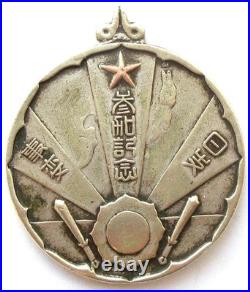
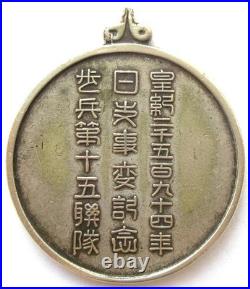
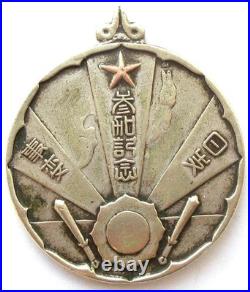
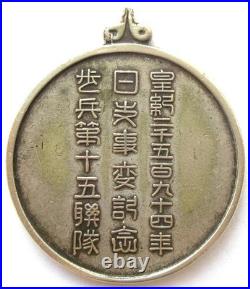
This is a commemorative medal for the 15th Infantry Regiment of the Imperial Japanese Army’s participation in the Sino-Japanese War. The ring at the top is detached. International Buyers – Please Note. Thank you for your understanding.