
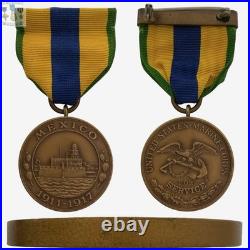
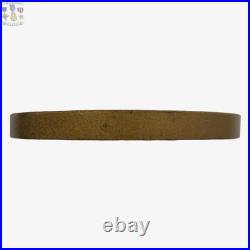
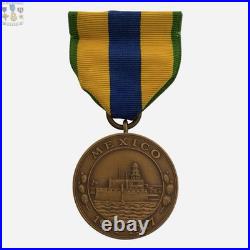
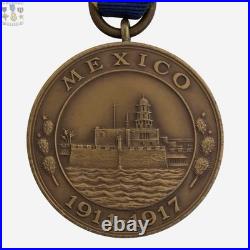
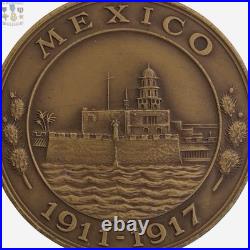
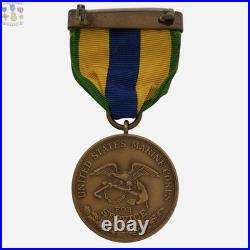
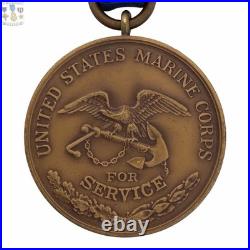
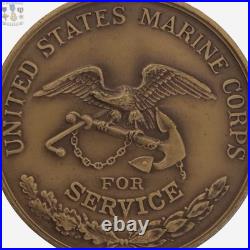
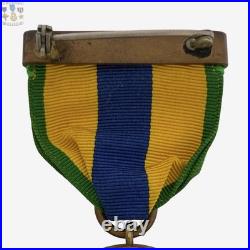
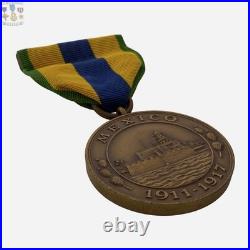
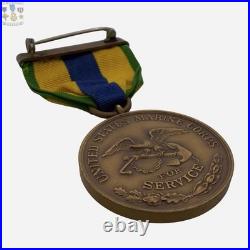

RIBBON DRAPE TESTED U. The Mexican Service Medal is an award of the United States military which was established by General Orders of the United States War Department on December 12, 1917. The Mexican Service Medal recognizes those service members who performed military service against Mexican forces between the dates of April 12, 1911 and June 16, 1919. To be awarded the Mexican Service Medal, a service member was required to perform military duty during the time period of eligibility and in one of the following military engagements. Veracruz Expedition: April 21 to November 23, 1914. Punitive Expedition into Mexico: March 14, 1916 to February 7, 1917. Buena Vista, Mexico: December 1, 1917. San Bernardino Canyon, Mexico: December 26, 1917. La Grulla, Texas: January 8 – January 9, 1918. Pilares, Chihuahua: March 28, 1918. Nogales, Arizona: November 1-26, 1915, or August 27, 1918. El Paso, Texas and Ciudad Juárez, Chihuahua: June 15 – June 16, 1919. The United States Navy issued the Mexican Service Medal to members of the Navy and Marines who participated in any of the above actions, as well as to service members who served aboard U. Naval vessels patrolling Mexican waters between April 21 and November 26, 1914, or between March 14, 1916, and February 7, 1917. The Mexican Service Medal was also awarded to any service member who was wounded or killed while participating in action any against hostile Mexican forces between April 12, 1911 and February 7, 1917. Although a single decoration, both the Army and Navy issued two different versions of the Mexican Service Medal. The Army Mexican Service Medal displayed an engraving of a yucca plant, while the Navy version depicts the San Juan de Ulúa fortress in Veracruz harbor. Both medals displayed the annotation “1911 – 1917″ on the bottom of the medal. The Mexican Service Medal was a one time decoration and there were no service stars authorized for those who had participated in multiple engagements. For those Army members who had been cited for gallantry in combat, the Citation Star was authorized as a device to the Mexican Service Medal. There were no devices authorized for the Navy’s version of the decoration. A similar decoration, known as the Mexican Border Service Medal also existed for those who had performed support duty to Mexican combat expeditions from within the United States. Please let me know if there’s anything else I can do for you!

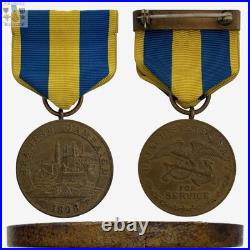
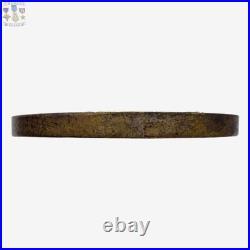
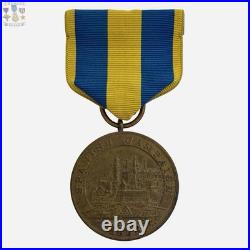
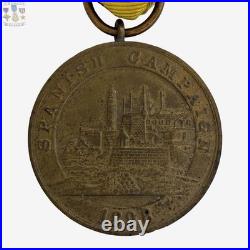
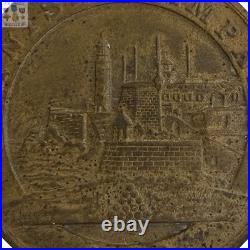
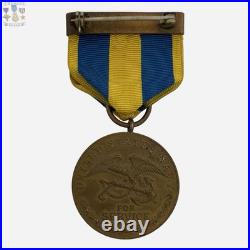
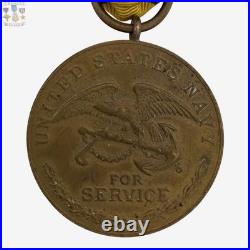
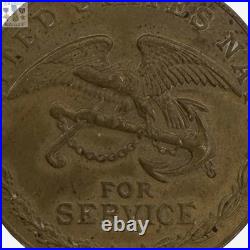
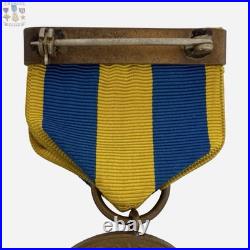
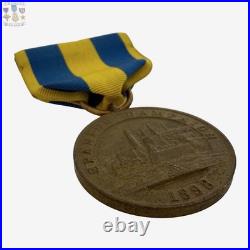
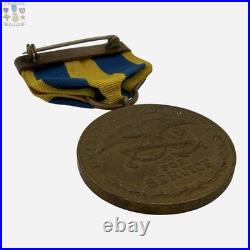
Make sure to read all of the information I have provided, I do my absolute best to identify and describe the item. The photos are of the actual item. UNITED STATES SPANISH AMERICAN WAR. 1898 NAVY SPANISH CAMPAIGN MEDAL, W/ LOCKING CATCH FULL WRAP BROOCH. STUDLEY & PRODUCED BY DAVISON OF PHILADELPHIA. Please let me know if there’s anything else I can do for you!

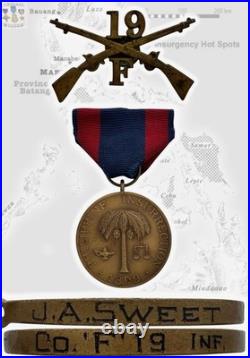
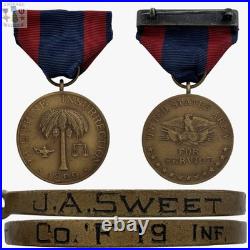
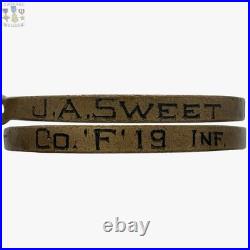
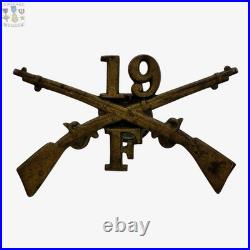

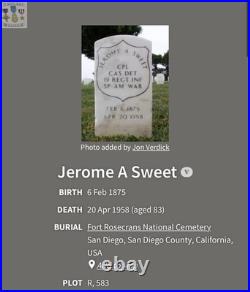
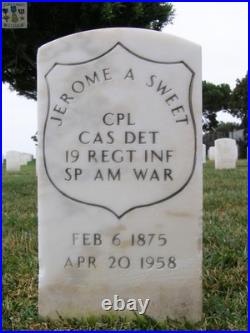
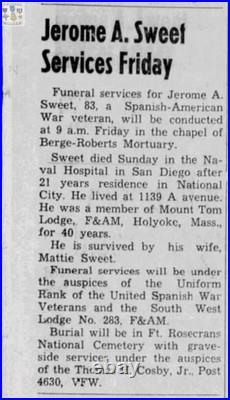
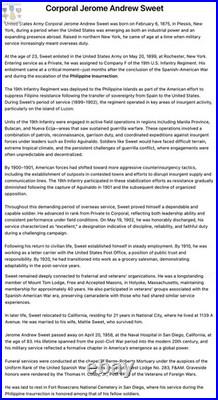
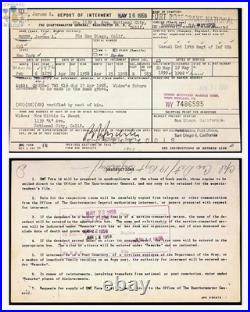
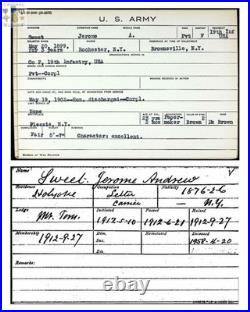
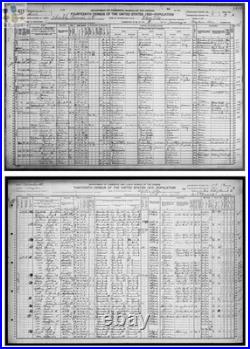
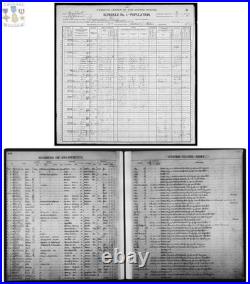
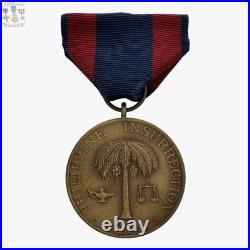
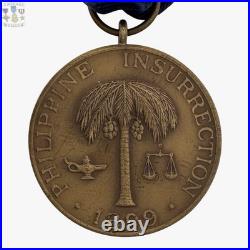
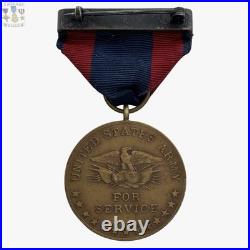
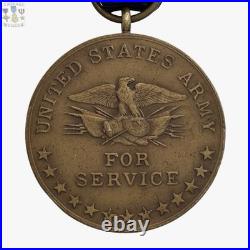
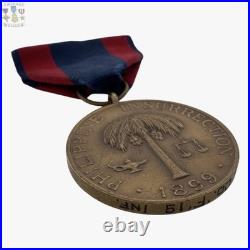
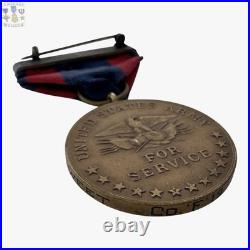
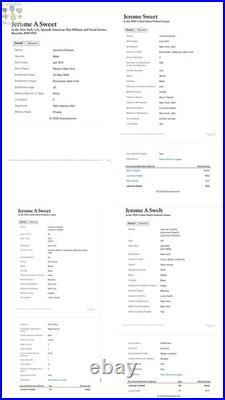
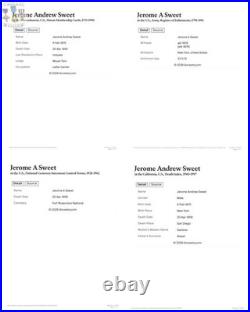
United States Army Corporal Jerome Andrew Sweet was born on February 6, 1875, in Plessis, New York, during a period when the United States was emerging as both an industrial power and an expanding presence abroad. Raised in northern New York, he came of age at a time when military service increasingly meant overseas duty. At the age of 23, Sweet enlisted in the United States Army on May 20, 1899, at Rochester, New York. Entering service as a Private, he was assigned to Company F of the 19th U. His enlistment came at a critical moment-just months after the conclusion of the Spanish-American War and during the escalation of the Philippine Insurrection. The 19th Infantry Regiment was deployed to the Philippine Islands as part of the American effort to suppress Filipino resistance following the transfer of sovereignty from Spain to the United States. Units of the 19th Infantry were engaged in active field operations in regions including Manila Province, Bulacan, and Nueva Ecija-areas that saw sustained guerrilla warfare. These operations involved a combination of patrols, reconnaissance, garrison duty, and coordinated expeditions against insurgent forces under leaders such as Emilio Aguinaldo. Soldiers like Sweet would have faced difficult terrain, extreme tropical climate, and the persistent challenges of guerrilla conflict, where engagements were often unpredictable and decentralized. The 19th Infantry participated in these stabilization efforts as resistance gradually diminished following the capture of Aguinaldo in 1901 and the subsequent decline of organized opposition. Throughout this demanding period of overseas service, Sweet proved himself a dependable and capable soldier. He advanced in rank from Private to Corporal, reflecting both leadership ability and consistent performance under field conditions. On May 19, 1902, he was honorably discharged, his service characterized as “excellent, ” a designation indicative of discipline, reliability, and faithful duty during a challenging campaign. Following his return to civilian life, Sweet established himself in steady employment. By 1910, he was working as a letter carrier with the United States Post Office, a position of public trust and responsibility. By 1920, he had transitioned into work as a grocery salesman, demonstrating adaptability in the post-service years. Sweet remained deeply connected to fraternal and veterans’ organizations. He was a longstanding member of Mount Tom Lodge, Free and Accepted Masons, in Holyoke, Massachusetts, maintaining membership for approximately 40 years. He also participated in veterans’ groups associated with the Spanish-American War era, preserving camaraderie with those who had shared similar service experiences. In later life, Sweet relocated to California, residing for 21 years in National City, where he lived at 1139 A Avenue. He was married to his wife, Mattie Sweet, who survived him. Jerome Andrew Sweet passed away on April 20, 1958, at the Naval Hospital in San Diego, California, at the age of 83. His lifetime spanned from the post-Civil War period into the modern 20th century, and his military service reflected a formative chapter in America’s emergence as a global power. Funeral services were conducted at the chapel of Berge-Roberts Mortuary under the auspices of the Uniform Rank of the United Spanish War Veterans and South West Lodge No. Graveside honors were rendered by the Thomas H. Post 4630 of the Veterans of Foreign Wars. He was laid to rest in Fort Rosecrans National Cemetery in San Diego, where his service during the Philippine Insurrection is honored among that of his fellow soldiers. I will include 21 full size color printed copies of the research presented. UNITED STATES ARMY SPANISH AMERICAN WAR PHILIPPINE INSURRECTION CAMPAIGN MEDAL W/ FULL WRAP BROOCH. STUDLEY, PRODUCED BY DAVIDSON OF PHILADELPHIA. SWEET CO’F’ 19 INF. UNITED STATES ARMY SPANISH AMERICAN WAR CO. F 19TH INFANTRY CAP BADGE. Please let me know if there’s anything else I can do for you!


The medal commemorates military actions in Morocco, specifically in the region known as Haut-Guur. This original piece would be a valuable addition to any collection of militaria memorabilia, showcasing a piece of French military history in a unique and historical context.

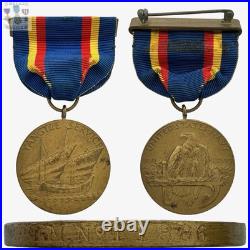
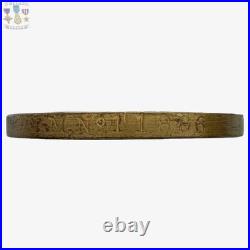
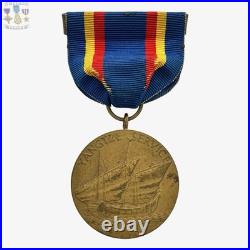
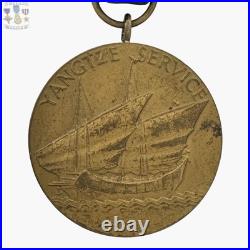
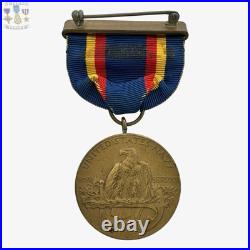
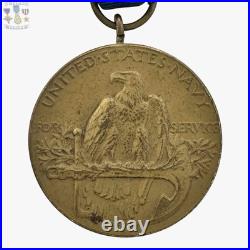
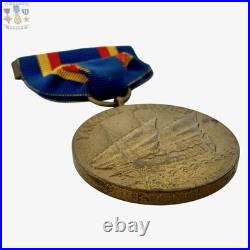
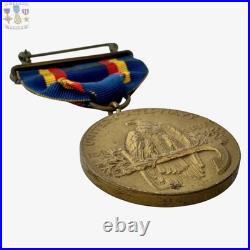
ORIGINAL UNITED STATES NAVY YANGTZE SERVICE CAMPAIGN MEDAL W/ FULL WRAP BROOCH. PRODUCED BY THE U. RIBBON DRAPES TESTED U. Please let me know if there’s anything else I can do for you!

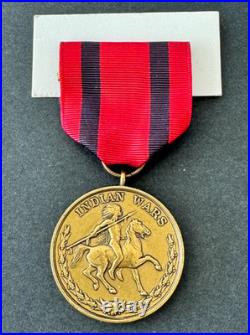
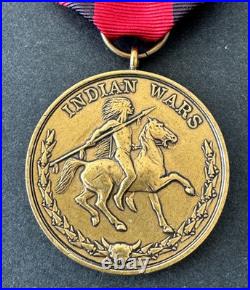
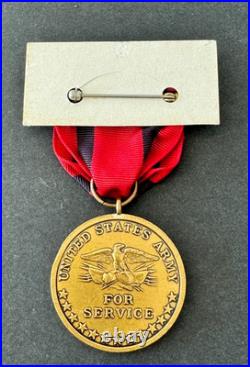
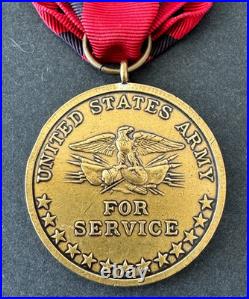
This is an authentic United States Army Indian Campaign Medal, initially authorized by the War Department via General Orders 12 in 1907 to recognize military service during the American Indian Wars spanning 1790 to 1891. This historic bronze decoration was retroactively issued to veterans and stands as a foundational piece of early 20th-century U. The bronze medallion remains in outstanding condition with a rich, uncleaned golden-bronze patina. The stamped lettering and micro-details of the horse, rider, and reverse military trophy remain crisp and sharp with minimal high-point wear. The original silk ribbon maintains bold coloration and tight weaves, free of significant rot, staining, or shredding. The top features a clean, rectangular white backing card used for clean preservation or showcase presentation. We always take plenty of photos and provide detailed descriptions of our items. Therefore, you are asked to please check ALL posted photos and review the Description Section before purchasing an item from our store. Before listing, we clean and inspect our items for neatness and accuracy. We know how important it is that your item arrive quickly and undamaged, so we will take great care in packing your items professionally and properly. You will never be disappointed.

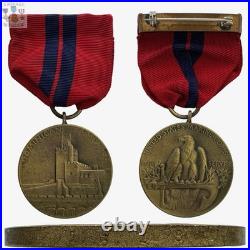
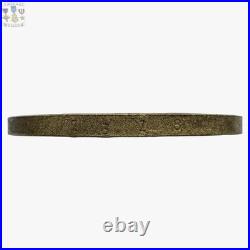
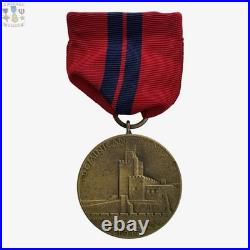
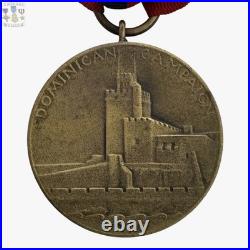
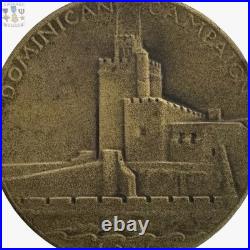
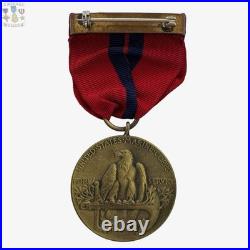
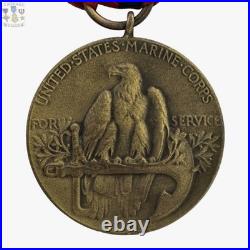
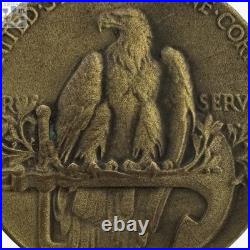
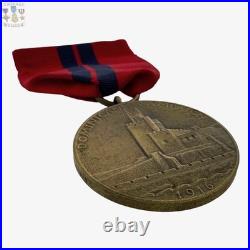
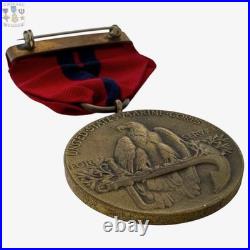
Make sure to read all of the information I have provided, I do my absolute best to identify and describe the item. The photos are of the actual item. 1916 DOMINICAN CAMPAIGN MEDAL, W/ FULL WRAP BROOCH. PRODUCED BY JOSEPH MAYER. RIBBON DRAPE TESTED UV NEGATIVE. The Dominican Campaign Medal is a military decoration of the United States Navy and United States Marine Corps which was created on December 29, 1921. To be awarded the Dominican Campaign Medal, a servicemen must have performed active military duty in the Dominican Republic between May 5 and December 4, 1916. The medal commemorates the 1916 United States invasion of the Dominican Republic. The medal was designed by Adolph Alexander Weinman, and the design approved by the United States Commission of Fine Arts in November 1923. It was the first Navy and Marine Corps medal whose reverse face contained the inscription “For Service” on a straight line. All previous reverse faces of Navy and Marine Corps medals had placed the inscription on a curve. Please let me know if there’s anything else I can do for you!


RIBBON DRAPE TESTED U. The Mexican Service Medal is an award of the United States military which was established by General Orders of the United States War Department on December 12, 1917. The Mexican Service Medal recognizes those service members who performed military service against Mexican forces between the dates of April 12, 1911 and June 16, 1919. To be awarded the Mexican Service Medal, a service member was required to perform military duty during the time period of eligibility and in one of the following military engagements. Veracruz Expedition: April 21 to November 23, 1914. Punitive Expedition into Mexico: March 14, 1916 to February 7, 1917. Buena Vista, Mexico: December 1, 1917. San Bernardino Canyon, Mexico: December 26, 1917. La Grulla, Texas: January 8 – January 9, 1918. Pilares, Chihuahua: March 28, 1918. Nogales, Arizona: November 1-26, 1915, or August 27, 1918. El Paso, Texas and Ciudad Juárez, Chihuahua: June 15 – June 16, 1919. The United States Navy issued the Mexican Service Medal to members of the Navy and Marines who participated in any of the above actions, as well as to service members who served aboard U. Naval vessels patrolling Mexican waters between April 21 and November 26, 1914, or between March 14, 1916, and February 7, 1917. The Mexican Service Medal was also awarded to any service member who was wounded or killed while participating in action any against hostile Mexican forces between April 12, 1911 and February 7, 1917. Although a single decoration, both the Army and Navy issued two different versions of the Mexican Service Medal. The Army Mexican Service Medal displayed an engraving of a yucca plant, while the Navy version depicts the San Juan de Ulúa fortress in Veracruz harbor. Both medals displayed the annotation “1911 – 1917″ on the bottom of the medal. The Mexican Service Medal was a one time decoration and there were no service stars authorized for those who had participated in multiple engagements. For those Army members who had been cited for gallantry in combat, the Citation Star was authorized as a device to the Mexican Service Medal. There were no devices authorized for the Navy’s version of the decoration. A similar decoration, known as the Mexican Border Service Medal also existed for those who had performed support duty to Mexican combat expeditions from within the United States. Please let me know if there’s anything else I can do for you!


2ND NICARAGUAN CAMPAIGN MEDAL. W/ SPLIT WRAP BROOCH. PRODUCED BY THE U. RIBBON DRAPE TESTED UV NEGATIVE. The Second Nicaraguan Campaign Medal is a campaign medal of the United States Navy & Marine Corps which was authorized by an act of the United States Congress on 8 November 1929. The Second Nicaraguan Campaign Medal was awarded for service during operations in Nicaragua from 1926 to 1933. An earlier campaign medal, the Nicaraguan Campaign Medal, was awarded for service in Nicaragua 1912. The Second Nicaraguan Campaign Medal was considered a separate award from the first version of the medal and Navy regulations permitted the receipt and wear of both decorations, if so authorized. Southerland, who had been in overall command of both Nicaraguan campaigns, was the first recipient of both versions of the Nicaraguan Campaign Medal. The Second Nicaraguan Campaign Medal appeared as a medal suspended from a red ribbon with several white stripes. The medal displayed a woman (representing Columbia), armed with a sword, defending two other figures with a cloak. The medal bore the words Second Nicaraguan Campaign with the dates 1926 – 1930 displayed on the medal’s edges (although the medal was authorized until 1933). No devices were authorized. Please let me know if there’s anything else I can do for you!


The product is an original VERY RARE vintage or antique glass Cufflink or Military pin dresser trinket box, ? Inkwell associated with a US Military Campaign Hat Calvary. Hand painted golden yellow trim, slight wear on the paint. No chips or cracks. This very rare collectible is a piece of militaria history originating from the United States. With its originality and theme of militaria, this item would be a valuable addition to any collection focused on military memorabilia from the early 20th century. Inkwell paper clip trinket or cufflink holder. Great gift for that Military collector that has almost everything!