
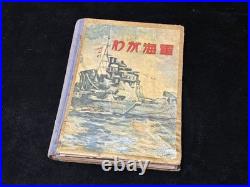
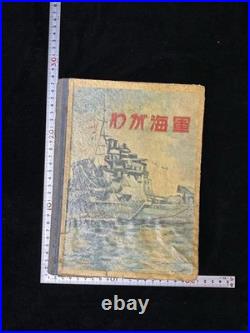
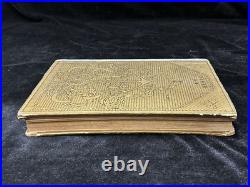
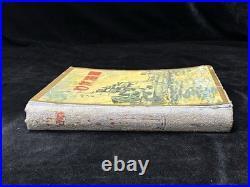
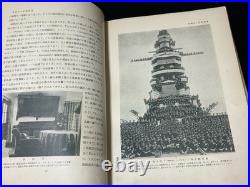
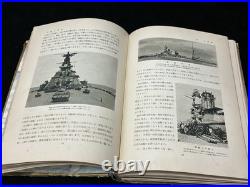
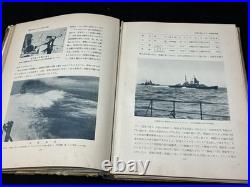
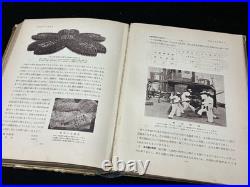
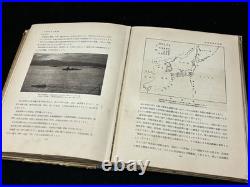
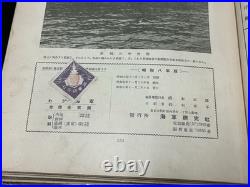

Featuring numerous photographs and explanatory text, the book introduces Japanese naval vessels-including battleships-as well as the daily work and training of naval personnel and the role of the navy. What Did the Imperial Japanese Navy Look Like Eight Years Before Pearl Harbor? In December 1941, the Japanese attack on Pearl Harbor became the event that marked the beginning of the Pacific War. This book, however, was published eight years earlier, in 1933. At that time, the Imperial Japanese Navy was a large naval force equipped with battleships, cruisers, destroyers, submarines, aircraft, and other military assets. 1933 was also the year Japan announced its withdrawal from the League of Nations. As the international situation continued to change, interest in the role of the navy and maritime defense was growing in Japan. About Kaigun Kenkyusha Kaigun Kenkyusha, the publisher of this book, was an organization that introduced naval knowledge and information through publications. The book appears to have been intended not only for naval specialists, but also for general Japanese readers interested in warships and naval activities. It presents the structure and importance of the navy in a way that could be understood by a broad audience. It is also an interesting historical source for understanding how the Japanese public viewed and understood the navy during this period. The Imperial Japanese Navy of the 1930s in Photographs Opening the pages reveals images of the Imperial Japanese Navy as it appeared at the time, including the bridges and decks of massive battleships and warships sailing at sea. Although warships were enormous weapons of war, they were operated by hundreds of crew members-sometimes more than one thousand. The book also includes maps showing the waters surrounding Japan, along with explanations concerning maritime defense. These materials offer insight into why Japan considered naval power so important during this era. A Time Before the Outcome of the War Was Known When this book was published in 1933, the Pacific War had not yet begun. The warships and sailors shown in these photographs would later face a turbulent and tragic period in history. We know how history ended. However, the people who held this book in their hands at the time did not yet know what the future would bring. Seen in this context, the book is more than a simple introduction to warships. It is also a historical record of how the Japanese navy was presented to the public during an era that was moving toward war. Condition This is an original copy published in 1933. Due to age, it shows discoloration, stains, and wear to the covers and spine. The spine, in particular, has noticeable age-related deterioration. Please review all photographs carefully for the detailed condition. An excellent historical reference for collectors and researchers interested in the prewar Imperial Japanese Navy, warships, naval aviation history, and Japan during the period leading up to World War II. Own a Piece of History. International Buyers – Please Note.

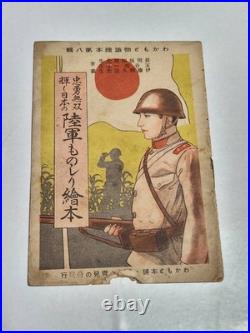
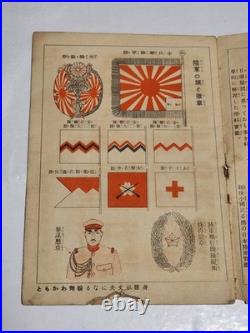
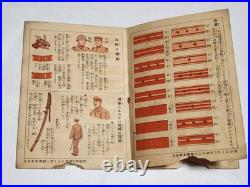
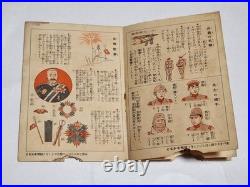
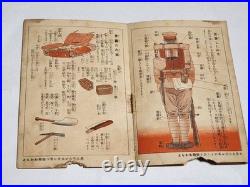
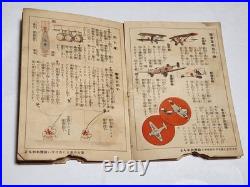
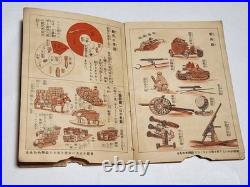
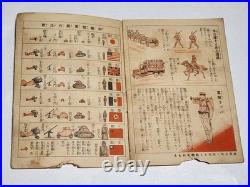
Published in Japan in 1937, this original illustrated book is titled The Glorious Japanese Army – An Illustrated Book of Military Knowledge. At first glance, it may look like simply an old children’s picture book. Open the pages, however, and it becomes a fascinating window into how the Japanese Army was presented to young people in the late 1930s. The year 1937 was also the year the Second Sino-Japanese War began. The book introduces the Imperial Japanese Army through colorful illustrations designed to make military subjects easy for young readers to understand. Inside are illustrations of Japanese Army uniforms, soldiers’ equipment, military insignia, rank markings and military banners, together with many different aspects of the Army itself. There are also sections showing military aircraft and aerial bombing, tanks and armored vehicles, machine guns, artillery, military bugles, transportation and supplies. What makes this book particularly interesting is that it was not a technical manual produced for soldiers. It was created for children. For today’s collector, that gives the book another dimension. Beyond the aircraft, tanks and uniforms, these pages preserve something less tangible: how the Japanese military was introduced to children during the 1930s. One particularly interesting section compares the armies of several countries, with illustrations representing Japan, Britain, Germany, France, the Soviet Union and others. It provides a fascinating glimpse of how foreign militaries were presented to Japanese children in 1937. Even if you cannot read Japanese, the numerous color illustrations make this an enjoyable piece to explore. Aircraft, armored vehicles, uniforms, equipment and insignia are all presented visually, allowing us to see much of the same military world that a Japanese child would have discovered while turning these pages nearly 90 years ago. Condition This is an original period children’s book and shows considerable age-related wear, staining and discoloration. As clearly visible in the photographs, there is also material loss along the lower edges of a number of pages, apparently from insect damage. Despite its age and wear, the surviving illustrations remain remarkably interesting. This book preserves more than pictures of military equipment. It preserves the image of the Japanese Army as it was shown to children in 1937. An unusual piece for collectors interested in the Imperial Japanese Army, military aviation, armored vehicles, uniforms, or the social and educational history of prewar Japan. Own a Piece of History. International Buyers – Please Note.

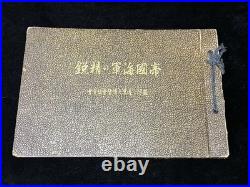

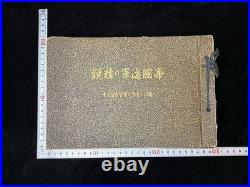
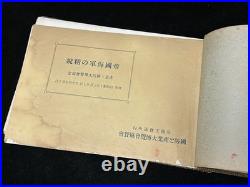
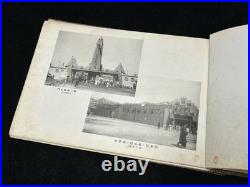
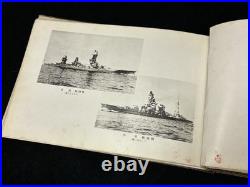
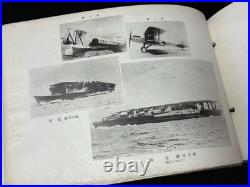
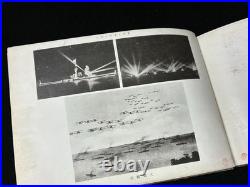
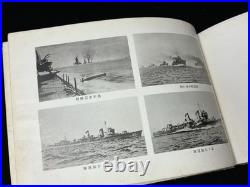
Its title translates as: “The Elite of the Imperial Japanese Navy” The album was produced to commemorate the National Defense and Industry Exposition held in Japan in 1935. Akagi would later become one of the most famous Japanese aircraft carriers of World War II, participating in the attack on Pearl Harbor before being lost at the Battle of Midway in 1942. But this album was published in 1935-six years before the Pacific War began. The album goes well beyond portraits of individual warships. It includes photographs of battleships, aircraft carriers, destroyers, naval aircraft, seaplanes, aerial formations, torpedo firing, fleet maneuvers and dramatic nighttime searchlight exercises. The opening pages also record the dates of the National Defense and Industry Exposition: From March 27, 1935 to May 10, 1935. The exposition was a public event presenting Japan’s national defense and modern industry to ordinary visitors. This gives the album another interesting historical dimension: it shows not only the Japanese Navy itself, but also how naval power and technology were presented to the Japanese public in the mid-1930s. For collectors today, the timing is particularly fascinating. Battleships still represented enormous naval power, while aircraft carriers and naval aviation were becoming increasingly important. Both worlds appear side by side in these pages. The album is more than 90 years old and shows age-related wear, staining and discoloration. Please examine the photographs carefully for condition. Own a Piece of History. International Buyers – Please Note.

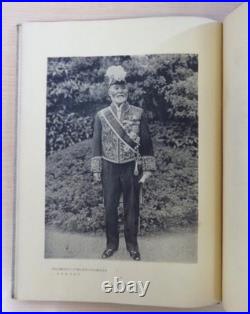
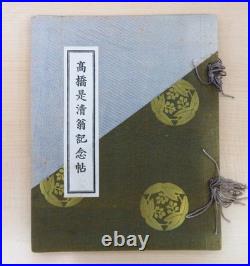
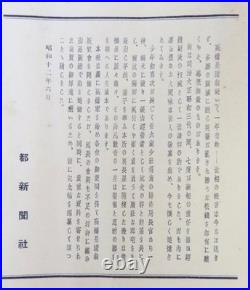
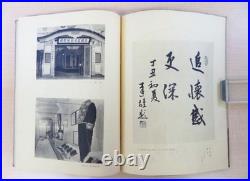
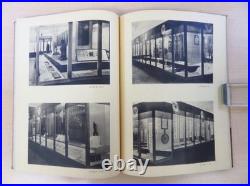
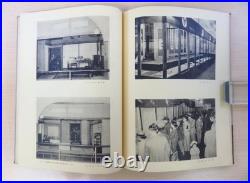
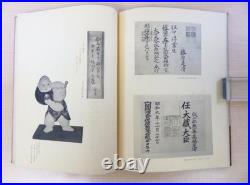
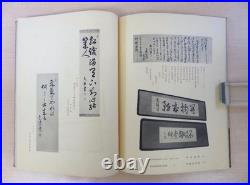
This is an original Japanese memorial photo book published in 1937 (Showa 12). Documenting a special exhibition held one year after the death of. A central political figure assassinated during Japan’s largest domestic military coup attempt. The February 26 Incident (1936). The exhibition was organized by Miyako Shimbun and held at Shirokiya Department Store, Nihonbashi, Tokyo. And this volume records the event through photographs, calligraphy, official documents, and exhibition displays. The February 26 Incident marked a decisive turning point in modern Japanese history. After the incident, overt military rebellion subsided. But the political influence of the armed forces expanded rapidly. Civilian control weakened, fiscal restraint collapsed, and Japan moved steadily toward prolonged war in East Asia. And eventually full involvement in World War II. Takahashi Korekiyo had opposed unlimited military spending and advocated financial balance and civilian governance. His death symbolized the loss of restraint at the highest level of government. This book was produced immediately after that turning point. Making it a contemporary visual record of how Japanese society commemorated the moment when civilian leadership faded and militarization accelerated. Photographs of the memorial exhibition space. Original calligraphy and handwritten documents. Displayed personal artifacts and official records. Period exhibition architecture and visitors. Contemporary explanatory texts by the publisher. Rather than a biography, this volume functions as a historical archive. Capturing how the event was publicly presented and understood at the time. Complete with original covers and contents. Overall very clean and well preserved. Long out of print. Please refer to photos for exact condition details. 225 × 283 mm. International Buyers – Please Note. Thank you for your understanding.


This is an original. 1934 portrait medal of Marshal Admiral Togo Heihachiro. In the same year that Togo died. Togo Heihachiro died on. And was honored with a state funeral. This medal was produced in that same year, making it a period commemorative piece closely connected with the national mourning and remembrance of one of the most important figures in modern Japanese naval history. The front features a finely modeled portrait of Togo in full ceremonial military uniform. The surrounding inscription reads. ? Marshal Admiral, Senior First Rank, Grand Cordon, First Class of Merit, Marquis Togo Heihachiro. The artist’s signature reads. Made by Masakichi Hata. Masakichi Hata was an important Japanese sculptor and medal artist who worked closely with the Japan Mint and played a major role in its medal engraving and sculptural work. The reverse depicts the famous battleship associated with Togo and bears the inscriptions. “Made by the Japan Mint”. The fate of the Empire depends upon this battle. Let every man do his utmost. This phrase is closely associated with the. Battle of Tsushima on May 27, 1905. When Togo commanded the Imperial Japanese Navy’s Combined Fleet against the Russian Baltic Fleet. The reverse therefore brings together four powerful symbols in one design. The original fitted presentation case is also included. Inside the case are the gold inscriptions. “Marshal Togo Portrait Plaque”. This is not simply a later souvenir of Admiral Togo. It is a genuine 1934 commemorative portrait piece created in the very year of his death, when his achievements were being formally remembered throughout Japan. The metal surface shows natural age-related patina, and the fitted case shows wear and deterioration consistent with its age. A remarkable surviving object connecting Admiral Togo, the battleship Mikasa, the Russo-Japanese War, and the memory of the Battle of Tsushima. Own a Piece of History. International Buyers – Please Note. Thank you for your understanding.

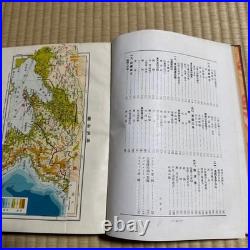
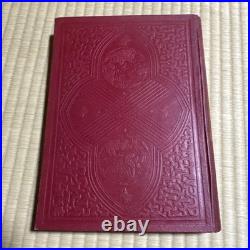
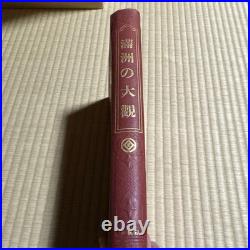
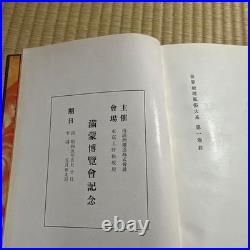
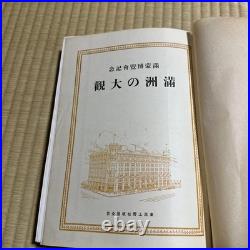
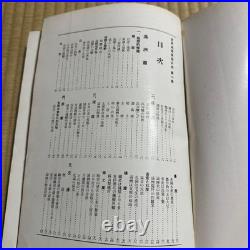
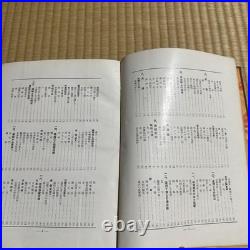
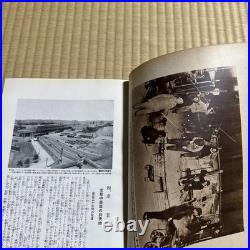
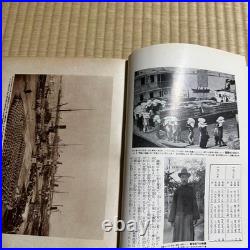
This is an original 1930 Japanese photo and geography book titled “A Grand View of Manchuria”, published to commemorate the Manchuria-Mongolia Exposition held in Tokyo. The book clearly identifies: “Sponsored by the South Manchuria Railway Company” “Venue: Matsuzakaya, Ueno, Tokyo” “Commemorating the Manchuria-Mongolia Exposition” The exposition was held from May 10 to May 19, 1930, and was designed to introduce Manchuria to the Japanese public through displays of its cities, industries, transportation, resources, and regional development. The key institution behind this publication was the South Manchuria Railway Company, commonly known as Mantetsu. Despite its name, Mantetsu was far more than a railway company. It operated railways, mines, ports, hotels, urban development projects, industrial facilities, and extensive research organizations. It functioned as a powerful semi-governmental enterprise closely tied to Japan’s expansion on the Asian continent and to the political and military system surrounding Manchuria. Because of its extraordinary economic and political reach, Mantetsu has often been compared to a Japanese version of the East India Company. This book therefore offers more than a simple travel view of Manchuria. Inside are extensive photographs and articles covering places such as Dairen, Port Arthur, Mukden, Changchun, Harbin, Fushun, and the regions along the South Manchuria Railway network. Railways, ports, industry, cities, landscapes, and local people are all presented through the perspective of prewar Japan. The volume also includes a color map of Manchuria, providing a valuable visual record of how the region was geographically understood and presented in Japan at the time. The date 1930 is especially important. The Mukden Incident would begin the following year in 1931, and the state of Manchukuo would be established in 1932. This means the book was produced before Manchukuo existed, only one year before the political and military situation in Manchuria changed dramatically. It is not a military manual, but it preserves the world that existed immediately before the Manchurian Incident: the South Manchuria Railway, Japan’s growing continental ambitions, and the public image of Manchuria presented to people in Tokyo. In that sense, it offers a rare look at the civilian, economic, and propagandistic side of the history that soon became a military crisis. Nearly a century ago, visitors in Tokyo opened this book and looked toward Manchuria as a land of railways, industry, resources, and opportunity. One year later, that same region became the center of an international conflict. Own a Piece of History. International Buyers – Please Note.

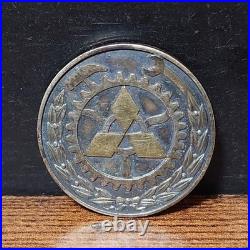
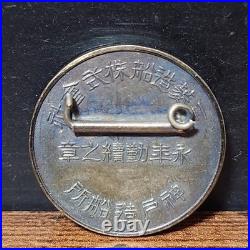
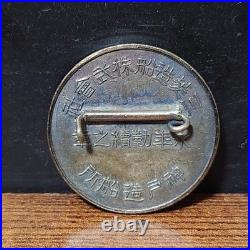
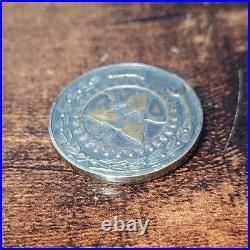
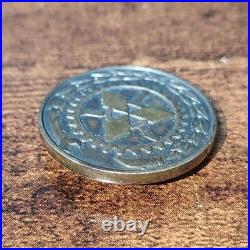
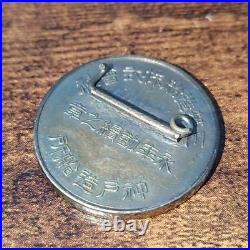
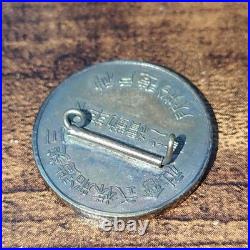
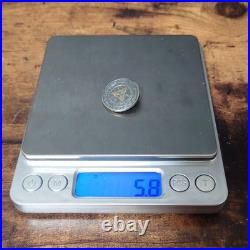
This is an original pre-WWII long-service award badge issued by Mitsubishi Shipbuilding Co. Kobe Shipyard to recognize a long-serving employee or worker. The reverse is clearly inscribed in Japanese: Mitsubishi Shipbuilding Co. ” “Long Service Award” “Kobe Shipyard Mitsubishi Shipbuilding Co. Was established in 1917 when Mitsubishi’s shipbuilding operations became an independent company. In 1934, the company was reorganized and renamed Mitsubishi Heavy Industries. The front prominently features Mitsubishi’s famous three-diamond emblem, surrounded by industrial imagery including a gear-like design and decorative foliage. This is not a military decoration or an Imperial Japanese Navy badge. It was an internal company award recognizing long service at the Kobe Shipyard. However, its historical background is closely connected with the extraordinary growth of Japanese heavy industry and shipbuilding during the decades before World War II. Mitsubishi became one of Japan’s most important shipbuilding enterprises, producing both commercial vessels and warships. The wider Mitsubishi shipbuilding organization was responsible for famous Imperial Japanese Navy vessels including the battlecruiser Kirishima, later reconstructed as a battleship. Kirishima was built at Mitsubishi’s Nagasaki Shipyard, not Kobe Shipyard, and is mentioned here only to illustrate the historical importance of Mitsubishi’s shipbuilding operations. There is no claim that this particular badge has a direct connection to Kirishima. What makes this piece particularly interesting is the human story behind it. This small badge survives as evidence that one such person spent many years working at Mitsubishi’s Kobe Shipyard and was formally recognized for that service. The obsolete Mitsubishi Shipbuilding Co. Company name engraved directly into the badge also makes it an interesting artifact of Japanese corporate and industrial history. There is age-related wear, discoloration, scratches, and patina. The pin mechanism on the reverse is damaged and partially missing. Please examine the photographs carefully for the exact condition. An interesting collectible for those interested in pre-WWII Japan, Mitsubishi history, shipbuilding, naval history, industrial history, and early Japanese corporate memorabilia. A small personal artifact from the people behind Japan’s rise as a major shipbuilding nation. Own a Piece of History. International Buyers – Please Note.

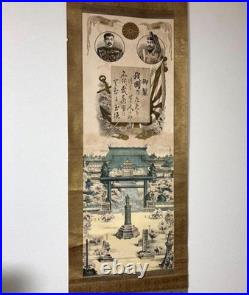
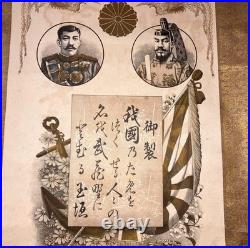
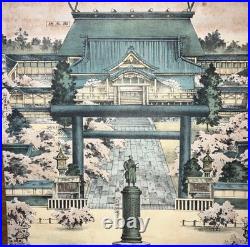
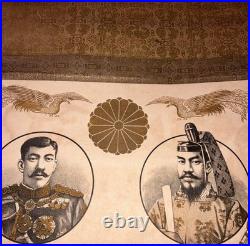
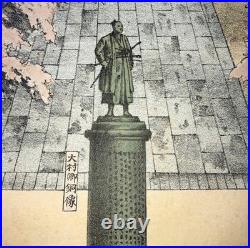
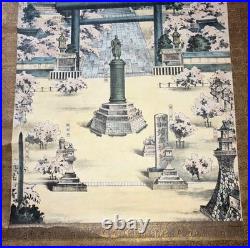
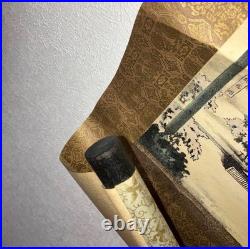
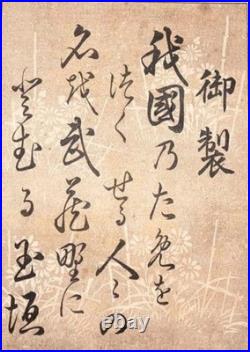
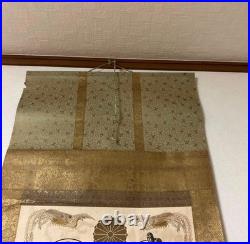
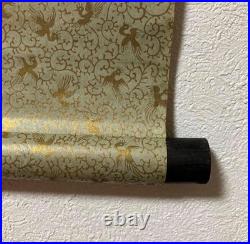
This hanging scroll is a pre-World War II Japanese historical artwork that visually explains how modern Japan understood state authority, military reform, and national remembrance. Rather than depicting combat, this piece presents the ideological framework behind war memory, making it a valuable primary visual document from early 20th-century Japan. Upper Section: Supreme Authority of the State. At the top are portraits of. During this period, the emperor was not only a monarch but the symbolic center of political and moral authority. Because Emperor Taisho is depicted, this scroll is believed to have been produced after 1910, most likely in the 1910s. Central Section: Anchor, Rising Sun, and Inscription. The center features a rising sun motif combined with an anchor, symbolizing the state and its military institutions. Above this imagery is a handwritten inscription in a style similar to imperial or commemorative verse, conveying the idea that. Those who sacrificed their lives for the nation must be remembered and honored by future generations. This section represents the ideological core of the scroll. Lower Section: Omura Masujiro Statue and Yasukuni Shrine. The lower portion depicts the bronze statue of. Omura Masujiro is widely regarded as the founder of the modern Japanese army. He introduced Western military systems and played a central role in transforming Japan’s feudal forces into a modern national army during the Meiji Restoration. Behind the statue appears. Including its torii gate and main structures. What Is Yasukuni Shrine? Yasukuni Shrine was established to enshrine those who died in service of the state. In prewar Japan, it functioned as a symbolic space where individual deaths were transformed into national memory, closely linked with state ideology and commemoration. Meaning of the Composition. The scroll follows a deliberate vertical structure. Top: The State (Emperors Meiji & Taisho). Middle: Ideology and symbolism (anchor, rising sun, inscription). Bottom: Military foundation and remembrance (Omura Masujiro & Yasukuni Shrine). This structure visually explains how authority, military reform, and remembrance were connected in pre-war Japan. Age-related toning, stains, and wear consistent with pre-WWII materials. Offered strictly as a historical and cultural artifact. No modern political intent or endorsement implied. International Buyers – Please Note. Thank you for your understanding.

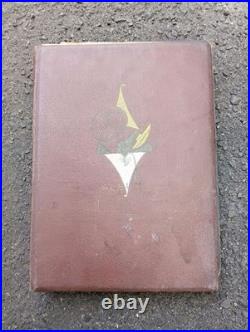
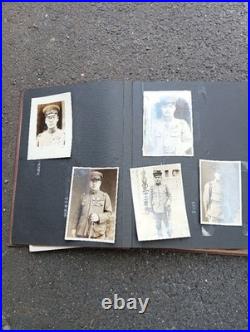
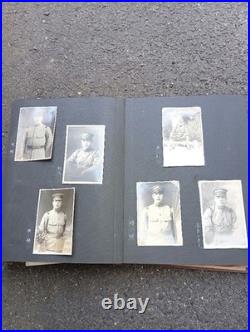
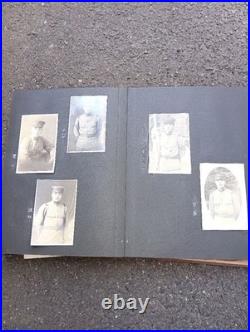
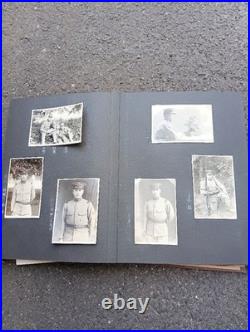
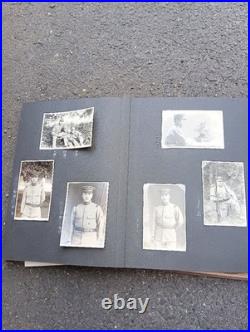
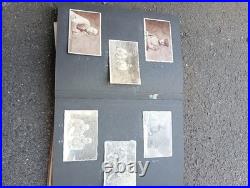
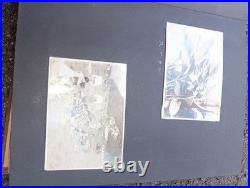
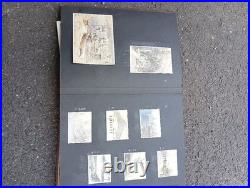
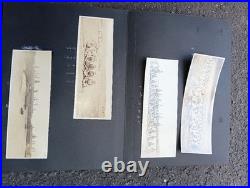
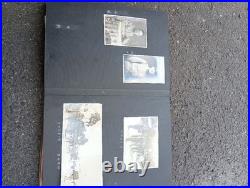
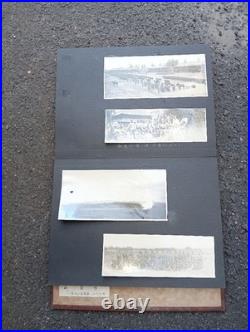
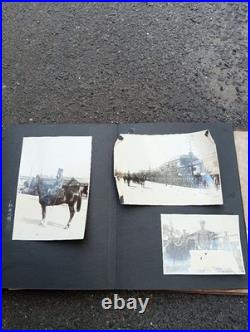
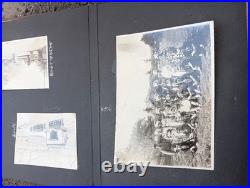
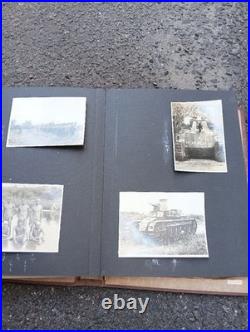
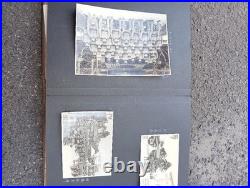
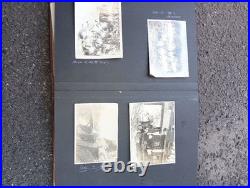
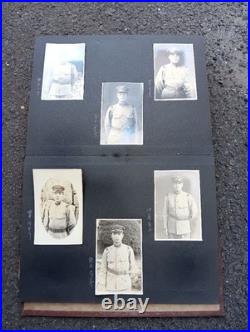
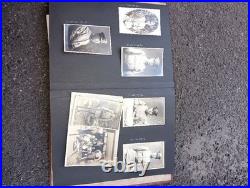
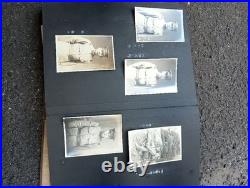
Pre-WWII Imperial Japanese Army Infantry Photo Album 112 Photos 1930s. Condition Vintage pre-owned item. The album spine binding is detached, but the photographs remain viewable and enjoyable. Please check the images carefully for detailed condition. Item Details Type: Original Military Photo Album Country: Japan Era: Estimated around Showa 8 (circa 1933) Number of Photos: Approx. 112 photographs Album Size: Approx. 25 cm x 19 cm Contents (as identified). Imperial Japanese Army infantry regiment. Soldiers and military uniforms. Tanks and armored vehicles. Military ceremonies and regimental flag events. Locations including Yamagata Station, Chitoseyama, Obanazawa, and Kajo Park. Officers such as Brigade Commander Kawahara and Colonel Tanaka Historical Context This album is believed to date from around 1933 during the early expansion period of the Imperial Japanese Army following the Manchurian Incident. It documents military personnel, equipment, ceremonies, and local activities, providing a rare visual record of the pre-World War II Japanese Army. Following the Manchurian Incident of 1931, the Imperial Japanese Army entered a period of rapid expansion and military activity across East Asia. During this time, soldiers and officers often compiled personal or regimental photo albums to record training exercises, ceremonies, and daily life within their units. Albums containing large numbers of original photographs are particularly valuable to historians and collectors because they provide a continuous visual record of military organization, equipment, and regional deployment during the early 1930s. Examples documenting infantry regiments and military life in regional Japan, such as Yamagata, are relatively scarce and offer unique insight into the pre-World War II era of the Japanese military. About other area, please ask me. International Buyers – Please Note. We do not mark merchandise values below value or mark items as “gifts” – US and International government regulations prohibit such behavior.

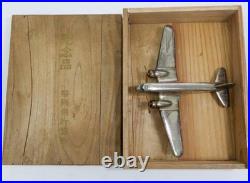
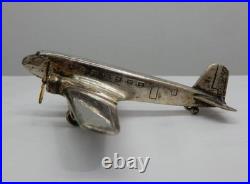
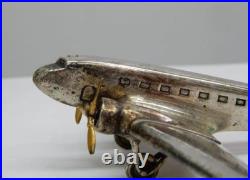
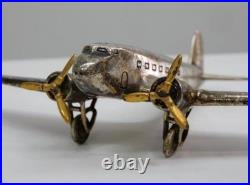
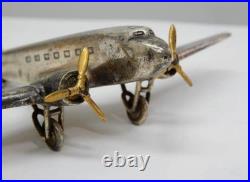
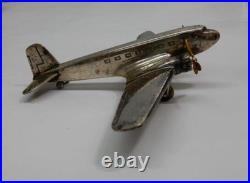
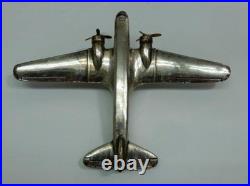
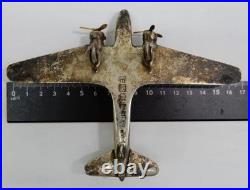
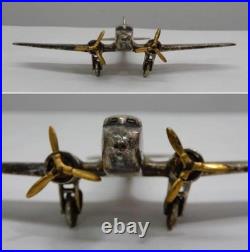
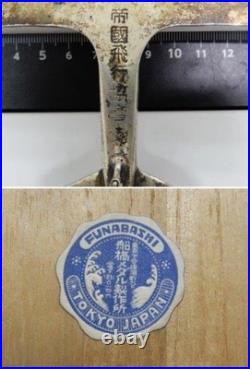
Original pre-war cast-metal desktop model of a twin-engine transport aircraft, presented as a commemorative/award by the Imperial Japanese Aviation Association (: / Romaji: Teikoku Hiko Kyokai). Box lid bears the ink stamp:??? (“Commemorative Item – Imperial Japanese Aviation Association”). Underside of the airplane is cast/engraved:?? . Metal alloy body (cast “white metal”/zinc type), nickel-silver tone. Two small propellers fitted. Size (photos with ruler): wingspan approx. 17-18 cm (? 7 in), length 13-14 cm (? 5-5.5 in). Period piece; not a modern reproduction. The Imperial Japanese Aviation Association was a semi-public national body active from the 1910s through the 1940s to promote aviation in Japan. It worked with government, Army/Navy, schools, and industry to popularize flying, sponsor air meets & model contests, publish magazines, and raise donation funds for aircraft procurement. Items like this were awards, presentation gifts, or donor premiums to encourage public support for aviation. What happened / what does it represent? A stylized model of a twin-engine transport (civil/military liaison & training types of the late 1930s). Such commemoratives were displayed in schools, clubs, and private homes-symbols of modern technology and national aviation pride on the eve of the Pacific War. Late 1930s-early 1940s (Showa pre-war years). The casting style, typography, and association mark match period souvenirs before 1945. Produced and awarded in Japan; the Association’s activities were nationwide, with headquarters in Tokyo and regional chapters. Why was it made? To promote aviation awareness, reward supporters, and commemorate events (air shows, exhibitions, donation drives, school programs). The clearly marked box and base show it was an official Association presentation. How was it made/used? Cast-metal body with plated finish; small press-fit propellers; presented in a plain kiri-style wood box stamped with the association name-practical packaging typical of period awards. Exact Japanese Marks (for researchers). Why collectors value this piece. Clearly association-marked on both box and model. Pre-WWII aviation object-bridges civil & military collecting fields. Compact desktop size; excellent display & research value. Imperial Japanese Aviation Association; Teikoku Hiko Kyokai; prewar Japan; aviation award; transport aircraft model; WWII home-front; propaganda; donor premium; original box; Japanese militaria; aeronautical history. Historical note: This item is offered as a period artifact for research/collecting purposes only. It does not endorse any past ideology. Approximate 7-21days(To USA).