
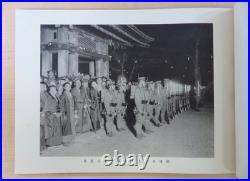
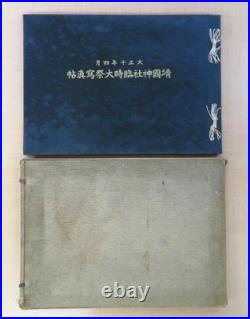
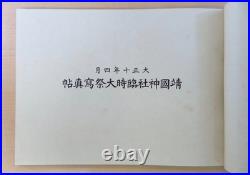
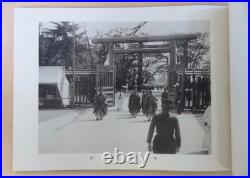
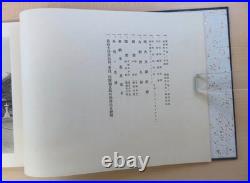
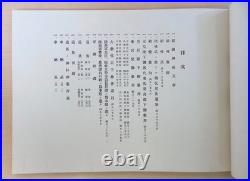
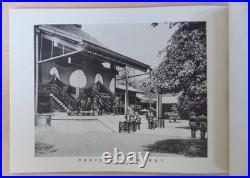
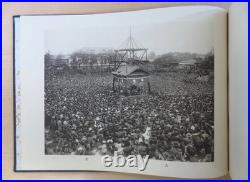
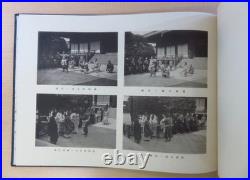
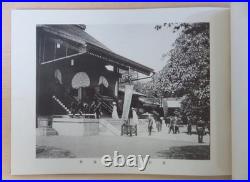

Own a Piece of History – An Exceptional Taisho-Era Imperial Japan Photo Album. This is an original photo album documenting the Special Grand Festival (“Rinji Taisai”) held at Yasukuni Shrine in April, Taisho 10 (1921). A luxury first-edition volume featuring gold-decorated endpapers, four-edge gilding, and traditional Japanese ribbon binding. Complete with its original outer case. Yasukuni Shrine was the central state institution dedicated to honoring the fallen soldiers of the Imperial Japanese Army and Navy. Throughout the Meiji and Taisho eras, the shrine served as. A national military memorial site. A place for state-sponsored rituals. A venue for Imperial family visits (Shinpan / Royal attendance). A symbolic space for military morale and national identity. During the Taisho era-after the Russo-Japanese War and during the social changes after WWI-Yasukuni became the core of Japan’s modern military ceremonial culture. What is the “Special Grand Festival” (Rinji Taisai)? Unlike ordinary annual festivals, a Rinji Taisai was an extraordinary state ceremony conducted for. Newly enshrined war dead. Large-scale visits by the Emperor, Crown Prince, or senior nobles. Combined ceremonies of the Army, Navy, and State. The 1921 festival recorded here reflects the post-Siberian Expedition era, with increased enshrinements and major military reorganization. The album includes rare photographs documenting. Imperial family attendance (Taisho-era court attire visible). High-ranking Army & Navy officers. Ritual formations, honor guards, and military delegations. Night-time ceremonies with lined soldiers. Traditional shrine performances and sacred dances. Large crowds of citizens (social history value). Detailed ritual sequences recorded with clarity. This edition is significantly rarer than the later Showa versions. Outer case shows age fading. Album body and photographs remain clean, crisp, and well preserved. Complete pages, no missing plates. A superior surviving example among existing copies. Published: Taisho 10 (1921). Format: Large oblong, approx. 380 × 270 mm. Binding: Ribbon-tied / gilt edges / gold-decorated papers. A truly exceptional artifact for collectors of Imperial Japanese military history, shrine history, or early 20th-century photography. Approximate 7-21days(To USA).

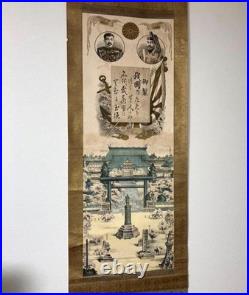
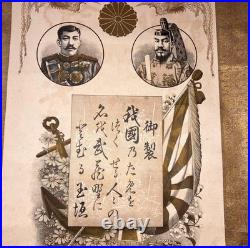
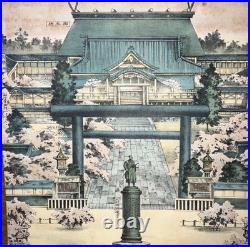
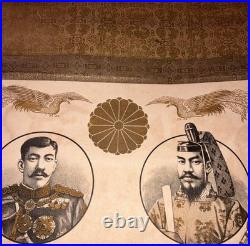
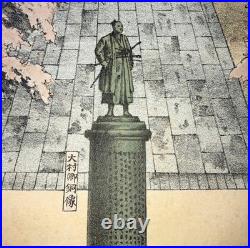
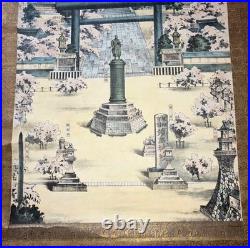
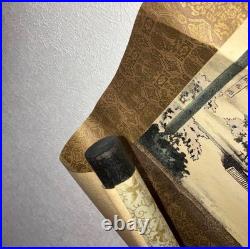
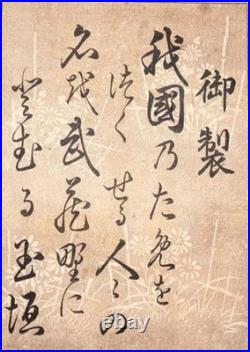
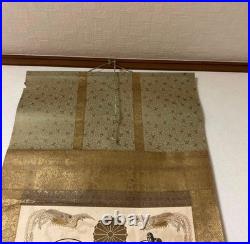
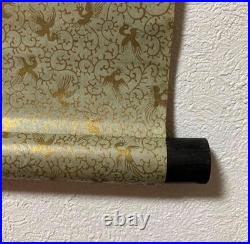
This hanging scroll is a pre-World War II Japanese historical artwork that visually explains how modern Japan understood state authority, military reform, and national remembrance. Rather than depicting combat, this piece presents the ideological framework behind war memory, making it a valuable primary visual document from early 20th-century Japan. Upper Section: Supreme Authority of the State. At the top are portraits of. During this period, the emperor was not only a monarch but the symbolic center of political and moral authority. Because Emperor Taisho is depicted, this scroll is believed to have been produced after 1910, most likely in the 1910s. Central Section: Anchor, Rising Sun, and Inscription. The center features a rising sun motif combined with an anchor, symbolizing the state and its military institutions. Above this imagery is a handwritten inscription in a style similar to imperial or commemorative verse, conveying the idea that. Those who sacrificed their lives for the nation must be remembered and honored by future generations. This section represents the ideological core of the scroll. Lower Section: Omura Masujiro Statue and Yasukuni Shrine. The lower portion depicts the bronze statue of. Omura Masujiro is widely regarded as the founder of the modern Japanese army. He introduced Western military systems and played a central role in transforming Japan’s feudal forces into a modern national army during the Meiji Restoration. Behind the statue appears. Including its torii gate and main structures. What Is Yasukuni Shrine? Yasukuni Shrine was established to enshrine those who died in service of the state. In prewar Japan, it functioned as a symbolic space where individual deaths were transformed into national memory, closely linked with state ideology and commemoration. Meaning of the Composition. The scroll follows a deliberate vertical structure. Top: The State (Emperors Meiji & Taisho). Middle: Ideology and symbolism (anchor, rising sun, inscription). Bottom: Military foundation and remembrance (Omura Masujiro & Yasukuni Shrine). This structure visually explains how authority, military reform, and remembrance were connected in pre-war Japan. Age-related toning, stains, and wear consistent with pre-WWII materials. Offered strictly as a historical and cultural artifact. No modern political intent or endorsement implied. International Buyers – Please Note. Thank you for your understanding.

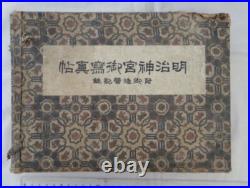
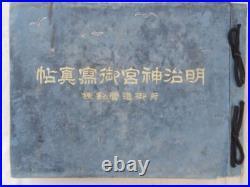
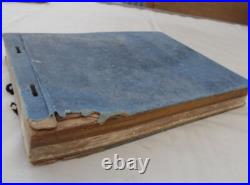

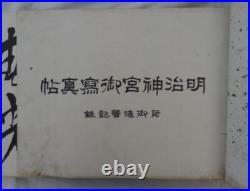
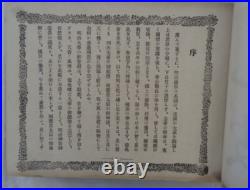
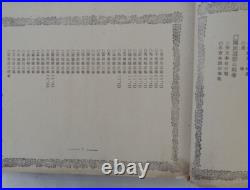
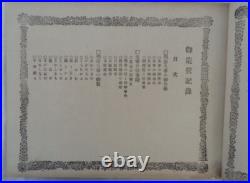
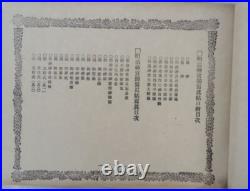
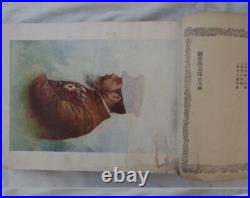
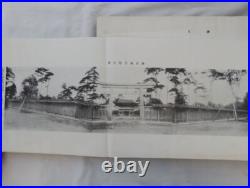
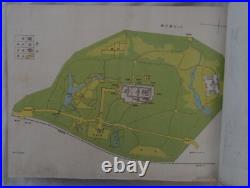
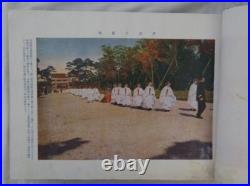
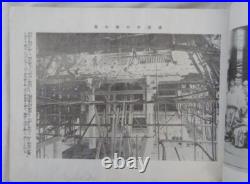
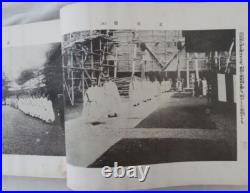
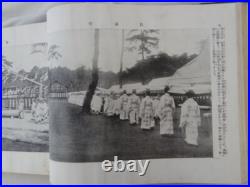
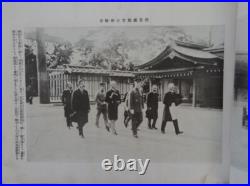
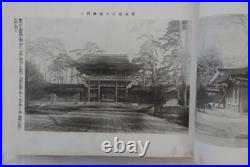
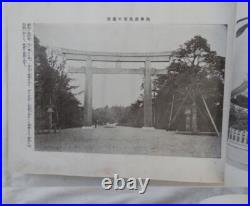
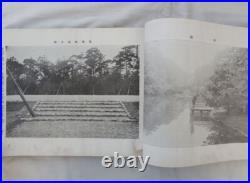
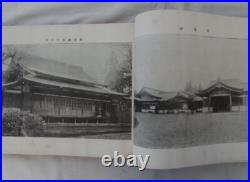
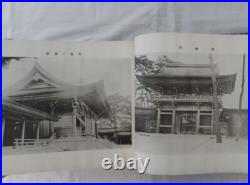
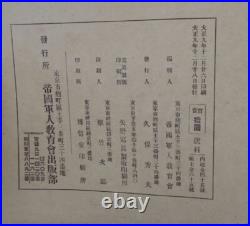
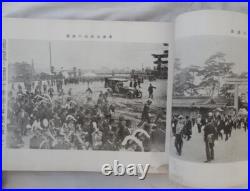
This is an original photo album published in Taisho 9 (1920), just after the completion of Meiji Shrine (Meiji Jingu) in Tokyo. This sacred site was built to honor Emperor Meiji, who led Japan’s rapid modernization in the late 19th and early 20th centuries, transforming the country from a feudal society into a major world power. Rare photographs and illustrations showing the shrine’s grand construction, architecture, rituals, and the first ceremonies ever held at Meiji Jingu. Detailed scenes of traditional Shinto processions, the great torii gate, and the lush forest that was planted as an act of national devotion. A glimpse into the mindset of the era, where loyalty to the Emperor and national unity were central values taught to soldiers and citizens alike. Why is it important? Meiji Shrine is more than a religious site: it became a symbol of Japan’s national identity and its new place in the world after the Meiji Restoration. This album was published by the Imperial Military Education Association, meaning it was intended as an official educational tool for young soldiers-instilling pride, reverence, and national spirit. Who valued this album? Young military cadets, educators, and even ordinary citizens would have seen these images as a source of inspiration and pride. Today, it is a tangible “piece of history” for collectors, researchers, and anyone interested in the roots of modern Japan. There are stains, discoloration, and minor damages due to age, but this only adds to the authenticity and charm of this almost 105-year-old artifact. Own a Piece of History. Approximately 5-7days(To USA).