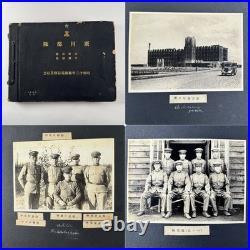
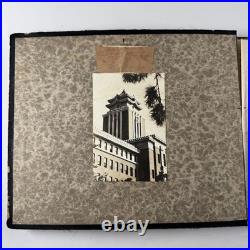
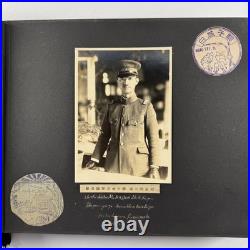
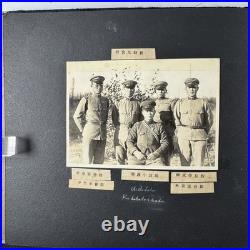
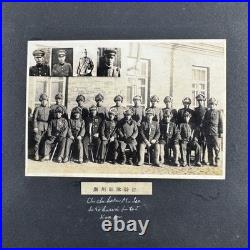
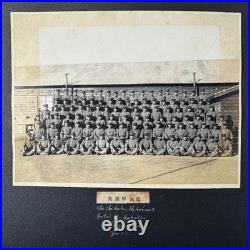
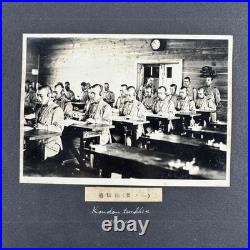
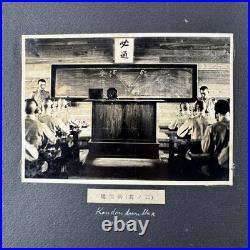
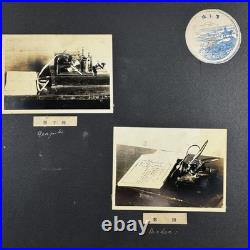
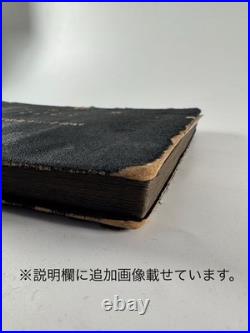
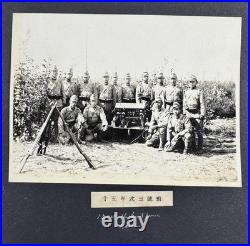
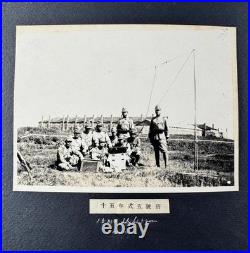
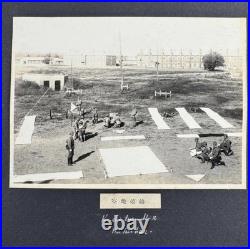
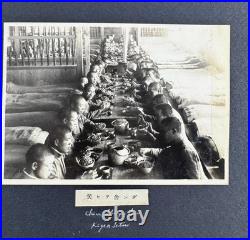
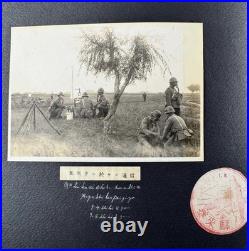
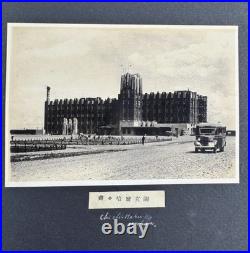
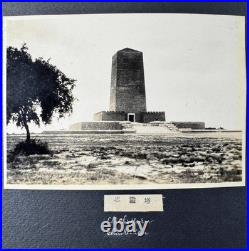
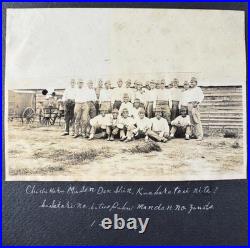
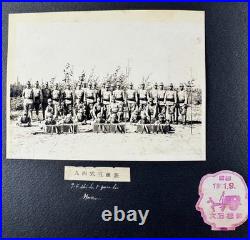
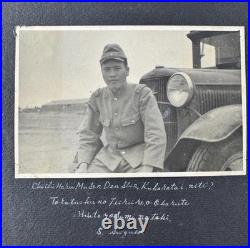

This is an original 1937 Imperial Japanese Army radio communications training photo album containing approximately 65 original photographs. The cover is gilt-lettered with the large unit name: “Hirokawa Unit” and, beneath it in smaller lettering: “Ogushi Unit” “Imari Unit” It is also clearly marked: Commemorative Album for Radio Communications Training, 1937. The exact organizational relationship between these three unit names cannot be confirmed from the album alone, but all three are clearly recorded on the original cover, making this a particularly interesting unit-specific military document. The album contains far more than ordinary soldier portraits. It documents the actual training of Imperial Japanese Army communications personnel, including instructors, assistant instructors, trainees, classroom instruction, radio equipment, field exercises, and unit life. Original Japanese captions visible in the album include: “Instructors and Assistant Instructors” “Trainees” “Hirokawa Unit Headquarters Staff” “Communications Training, Part 1″ “Communications Training, Part 2″ “Receiving Apparatus” “Telegraph Key” “Air-Ground Communication” One of the most striking photographs shows soldiers wearing headphones while practicing radio reception inside a classroom. Another shows an instructor teaching communications procedures at a blackboard. These images provide an unusually direct look at how Imperial Japanese Army signal personnel were actually trained before the Pacific War. The album also contains numerous outdoor radio training photographs. Several images show soldiers gathered around field radio sets with antennas erected in the open. Original caption labels include: Type 94 No. 5 Group” “Type 15 No. 3 Group” “Type 15 No. 5 Group These photographs appear to document training groups organized around specific communications equipment. Another particularly interesting photograph is captioned Air-Ground Communication. It shows personnel working with communication equipment while large ground panels are spread out in an open field, apparently as part of training for communication or signaling between ground units and aircraft. In addition to the technical training photographs, the album includes images of officers, unit headquarters personnel, military vehicles, barracks life, meals, large group portraits, monuments, buildings, and scenes believed to have been taken in Manchuria. Many photographs are accompanied by original Japanese caption labels and handwritten Romanized notes. This is not simply a collection of unrelated military photographs. It is a coherent visual record of the same soldiers, units, equipment, and communications training program. Military communications were the nervous system of an army. Orders, intelligence, artillery coordination, movement, and contact between ground and air units all depended on trained signal personnel. The men shown in this album were part of that invisible network. With approximately 65 original period photographs, named units, communications equipment, classroom training, field radio exercises, and air-ground communication scenes, this album is an exceptionally interesting source for collectors and researchers of: Imperial Japanese Army Signal Corps Military Radio Communications Manchuria Japanese Field Radios Prewar Military Training Military Communications History The album cover shows age-related wear, rubbing, edge loss, and deterioration. The photographs and album pages also show age-related toning, staining, lifting, and other signs of age. Please examine all photographs carefully for the exact condition. Own a Piece of History. International Buyers – Please Note.

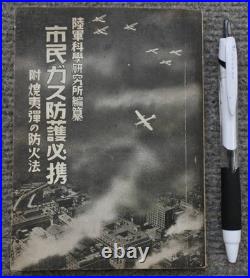
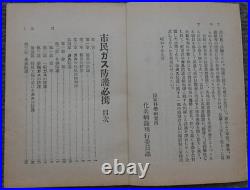
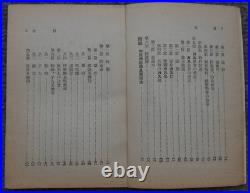
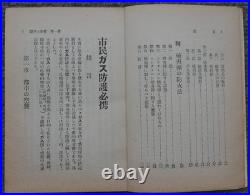
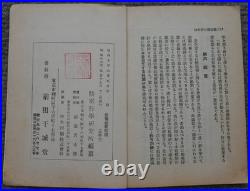
Published in 1937, this is an original prewar Japanese civil-defense manual titled Citizen’s Gas Protection Handbook, compiled by the Imperial Japanese Army Science Research Institute. The book was issued by Maeda Chijodo and was intended not for soldiers, but for ordinary civilians preparing for air raids, poison-gas attacks, incendiary bombs, and other dangers of modern warfare. Its contents include subjects such as: Protection of cities from air raids General gas-defense measures First-aid and rescue stations Different types of gas injuries Civilian gas masks and protective equipment An appendix on how to fight fires caused by incendiary bombs Instructions for civilian anti-gas equipment The Imperial Japanese Army Science Research Institute was established in 1919 as an Army research organization involved in military science and technology, including chemical warfare, gas protection, and related fields. It was abolished in 1941 during a major reorganization of the Army’s technical research system, with its functions transferred to successor organizations. What makes this book especially interesting is its audience. This was not a battlefield field manual. It was created for civilians at a time when the possibility of modern aerial warfare reaching Japanese cities was becoming increasingly real. The dramatic cover shows bombers flying over a city, while the text discusses poison gas, air-raid precautions, and even incendiary-bomb firefighting. It is a direct surviving document from the period when war was beginning to move beyond the battlefield and into the everyday lives of civilians. A fascinating piece for collectors of Japanese military history, civil-defense material, chemical-warfare history, and prewar civilian life. Condition: Shows age-related staining, foxing, toning, wear, and general deterioration. Please examine the photos carefully for condition. Own a Piece of History. International Buyers – Please Note.

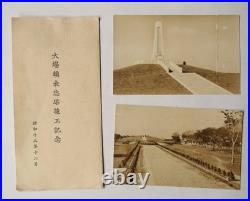

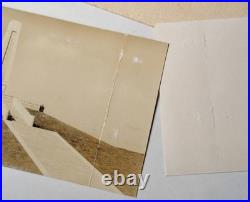

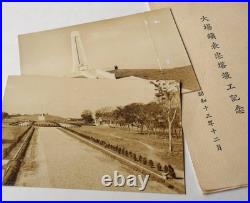

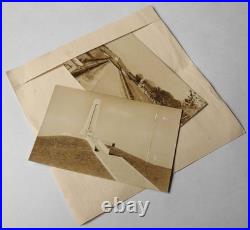
This is an original commemorative photograph set issued for the completion of the Dachang Memorial Tower near Shanghai in December 1938. The original paper folder is clearly inscribed: “Commemoration of the Completion of the Dachang Memorial Tower” “December 1938″ The set contains two period photographs: one showing the memorial tower from close range, and another showing it in the distance beyond the landscaped approach. The historical significance of this location is particularly important. Dachang was one of the major battlefields of the 1937 Battle of Shanghai, where Japanese and Chinese forces fought fiercely during one of the largest and bloodiest campaigns of the early Sino-Japanese War. Approximately one year later, a memorial tower was constructed there to honor the Japanese soldiers who had died in the fighting. In other words, the quiet and carefully landscaped landscape seen in these photographs had been an active battlefield only about a year earlier. That contrast is what makes this set especially compelling. At first glance, the photographs show a peaceful road, newly planted trees, and a white monument rising above the surrounding ground. But knowing what had occurred there only months earlier completely changes how the images are perceived. This is therefore more than simply a pair of prewar photographs of Shanghai. It is a surviving document showing how a battlefield was transformed into a place of remembrance shortly after the fighting had ended. Another important feature is that the photographs remain together with their original commemorative folder, identifying: the location: Dachang the purpose: completion of the memorial tower the date: December 1938 the original two-photo set The photographs show age-related wear. They appear to have been stuck together at some point in the past, resulting in areas of surface loss. One photograph also has a strong vertical crease. Please carefully examine the photographs for condition. They are certainly not in pristine condition. However, for a historical document approaching 90 years of age, these traces of survival are also part of its history. These are not combat photographs. Instead, they document something equally revealing: how the memory of the battle was physically shaped and preserved immediately afterward. An unusual historical piece for collectors interested in the Battle of Shanghai, the Second Sino-Japanese War, Imperial Japanese military history, wartime China, battlefield memorials, or original photographic material. Only about a year before these photographs were taken, this quiet landscape had been a battlefield. In December 1938, these two photographs recorded the newly completed memorial that stood in its place. Own a Piece of History. International Buyers – Please Note.

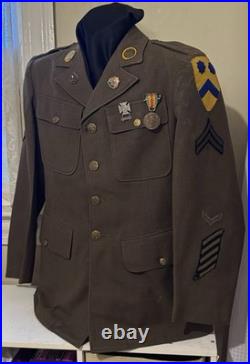
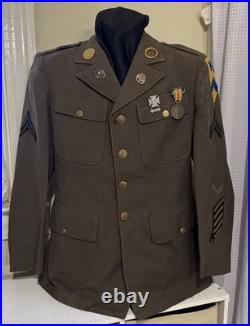
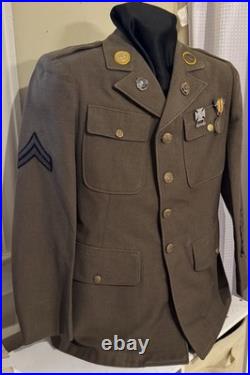
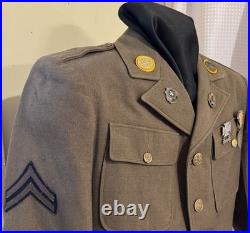
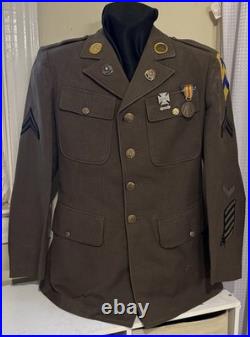
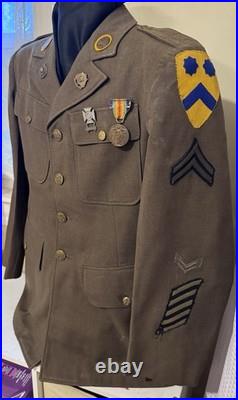
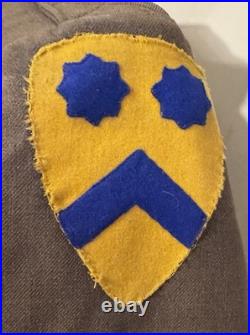
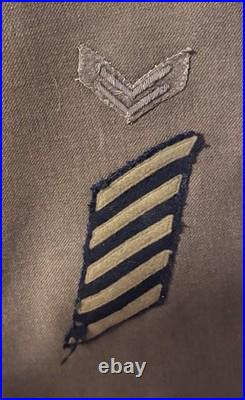
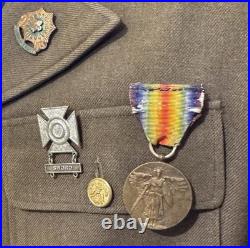
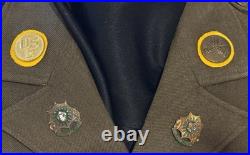
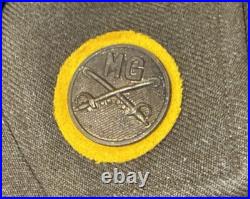
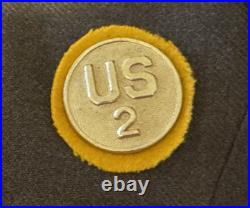
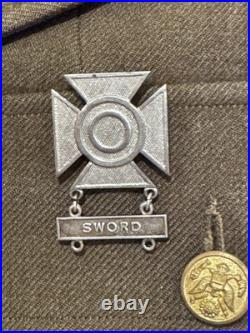
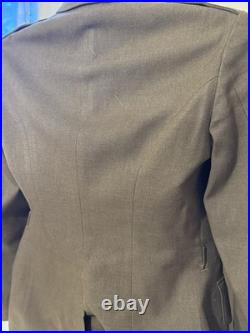
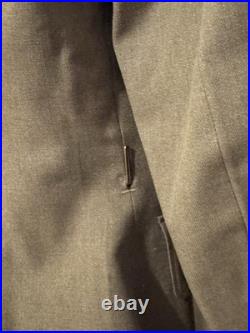
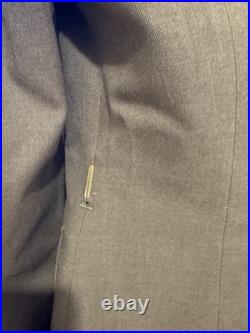
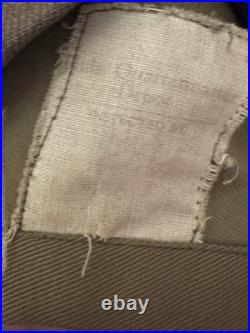
For your consideration is this Pre WWII M1926 Spec 8-31B Wool Service Coat Machine Gun Troop, 2nd Cavalry Regiment, 3rd Cavalry Brigade 2nd Cavalry Division Description: Design: A four-pocket olive-drab wool service coat featuring a notched lapel that could also be buttoned completely closed at the neck with a throat tab for winter weather. Timeline: Evolved from the original 1926 M1926 specification (Spec 8-31), transitioning through Spec 8-31A, updated to Spec 8-31B in 1933, and later succeeded by Spec 8-31C (1937) and Spec 8-31D (1940) leading into World War II. Material: Typically constructed of whipcord wool fabric with a cotton silk mix lining Usage: Widely worn by U. Army enlisted personnel during the interwar period from 1930 through 1933 alongside matching wool breeches, service caps, and wool shirts. Coat Contains. M1926 Spec 8-31B Wool Service Coat. M1926 Type II Collar Disc. “US 2″ Yellow Twill Disc. M1926 Type II Collar Disc. “MG Crossed Sabers” Yellow Twill Disc. 2nd U. Cavalry DI Screw Back x 2. Qualification Badge. SWORD (Sterling Silver). WWI Medal History of MG Tr, 2d Cavalry Regiment The Machine Gun Troop of the 2nd Cavalry Regiment was stationed at Fort Riley, Kansas, during the 1930s, maintaining horse-mounted machine gun capabilities before the U. Army transitioned toward mechanization. Garrison: Fort Riley, Kansas. Role: Provided heavy firepower (machine guns) to the horse cavalry regiment. Transition: In the early 1940s, as the U. Army reorganized and mechanized, traditional horse cavalry machine gun troops were phased out or restructured into modern mechanized reconnaissance and weapons units.

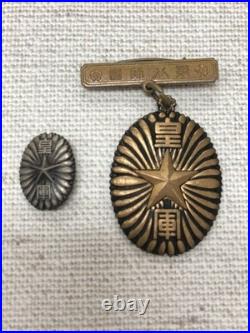
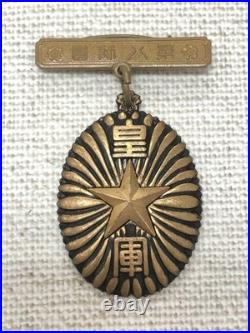
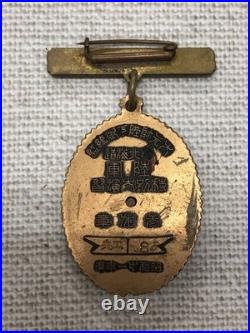
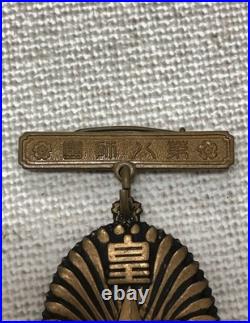
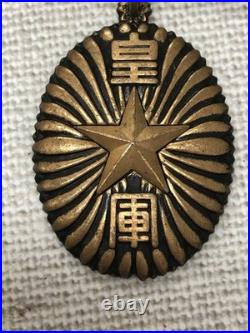
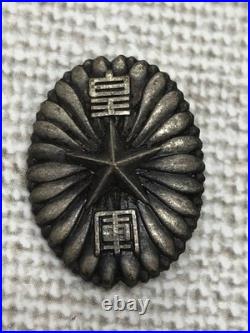
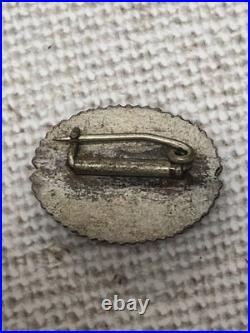
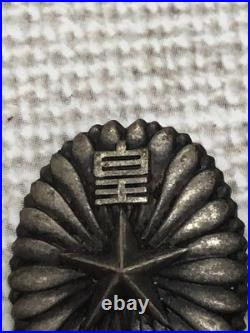
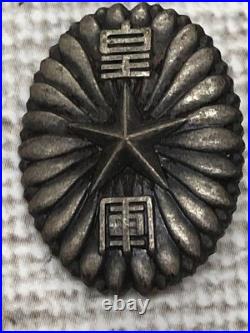
This is an original Imperial Japanese Army participation badge from the 1936 Special Army Maneuvers held in Hokkaido, associated with the 8th Division and most likely the 8th Engineer Regiment. The front features a large Army star with the characters: “Imperial Army” and the upper bar is marked: 8th Division. ” The reverse is especially important and is inscribed: “Maneuvers Supervised by His Majesty the Emperor as Supreme Commander” “Held in Hokkaido” “Special Army Maneuvers” “Participation Badge” “8 – Engineers” “Showa 11″ [1936] The marking “8 – Engineers is particularly interesting. The 8th Division included the 8th Engineer Regiment, making it very likely that this badge belonged to a participant connected with that regiment. The 1936 Hokkaido Special Army Maneuvers were a major Imperial Japanese Army exercise. The 8th Division formed a principal part of the Southern Army, opposing forces centered on the 7th Division. Emperor Hirohito personally supervised the maneuvers in his capacity as supreme commander. Unlike a generic military commemorative badge, this piece preserves several specific historical details in one object: 1936 Hokkaido 8th Division Engineer troops Special Army Maneuvers This makes it possible to connect the badge to a particular military formation, branch, place, and event. The badge shows age-related wear, discoloration, surface oxidation, and loss of finish consistent with its age. Please examine the photographs carefully for condition. A smaller Imperial Army badge is also included, but it should be considered a bonus item. The main item in this listing is the large 8th Division / Engineer participation badge. An interesting piece for collectors of Imperial Japanese Army insignia, engineer troops, 8th Division history, and prewar Japanese military maneuvers. Own a Piece of History. International Buyers – Please Note.

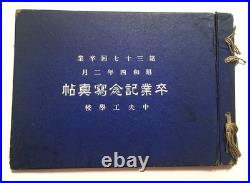
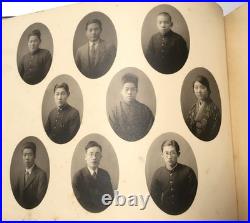
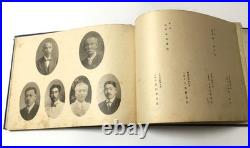
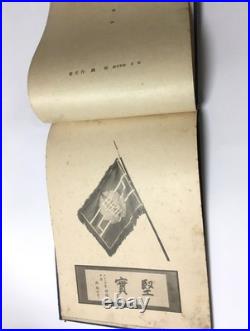
This is an original graduation commemorative photo album from Chuo Technical School in Tokyo, dated February 1929. Founded in 1909, Chuo Technical School trained practical engineers in fields such as architecture, machinery, electrical work, civil engineering, and surveying. Although it was a civilian technical school, these fields stood very close to Japan’s military, government, and industrial infrastructure during the prewar period. One particularly interesting feature is the portrait of the school’s principal, Rensaku Hayashi, a former Imperial Japanese Army Major General. This gives the album an unusual historical context. It is not a military academy album, but it shows how civilian technical education and the military world could overlap in prewar Japan. Skills such as surveying, civil engineering, construction, and mechanical engineering were essential not only to civilian development, but also to military logistics, fortifications, transport, and engineering units. The album contains portraits of faculty and students, group photographs, and a photograph of the school flag bearing the word “Kenjitsu, ” meaning “steadfast” or practical and sincere. These young men graduated in 1929, only two years before the Manchurian Incident. Many of them would go on to live and work through the period in which Japan rapidly expanded its heavy industry, infrastructure, and military mobilization. Rather than showing soldiers already at war, this album captures something earlier: the generation of young technical men who entered Japanese society just before the country moved into the turbulent 1930s and wartime era. There is age-related wear, staining, and deterioration around the binding. Please carefully examine the photographs for condition. Own a Piece of History. International Buyers – Please Note.

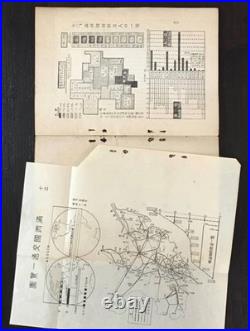
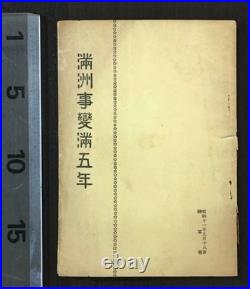
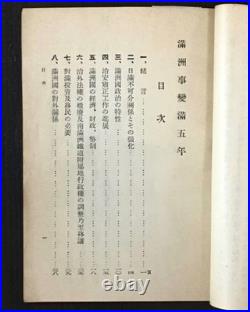
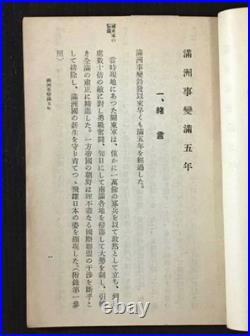
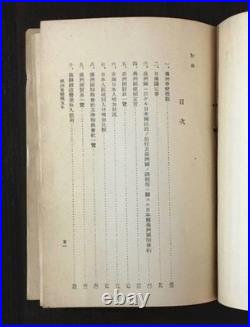
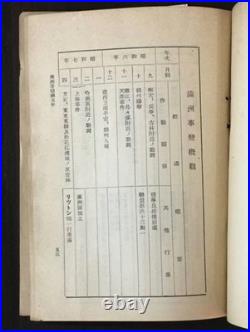
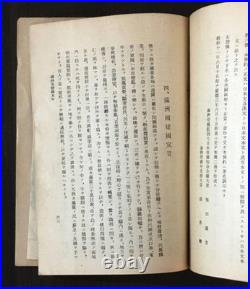
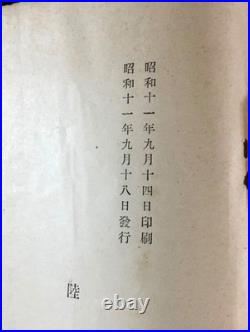
This is an original. 1936 publication issued by the Imperial Japanese Army Ministry. “Five Years Since the Manchurian Incident”. It was published on. Exactly five years after the beginning of the Manchurian Incident in 1931. The Manchurian Incident led to the expansion of Japanese military control in northeastern China and, in 1932, to the establishment of. This book was created by the Japanese Army to review what had happened during those five years and to explain how Manchuria had changed militarily, politically, economically, and logistically. What Happened After the Fighting? The book covers subjects including. The course of the Manchurian Incident. The establishment of Manchukuo. Relations between Japan and Manchukuo. Security operations and military control. Japanese settlement in Manchuria. Finance, industry, and natural resources. Railways and transportation networks. What makes this publication especially interesting is that it does not stop with the fighting itself. It shows what came afterward: railways were expanded, companies were organized, resources were moved, and administrative systems were built. In other words, this is a Japanese Army record of. How military conquest was followed by the construction of a political, economic, and transportation system in Manchuria. The book also includes a. Foldout map showing the transportation network of Manchukuo. In such a vast territory, railways were far more than ordinary civilian transportation. They moved troops, weapons, food, coal, agricultural products, industrial materials, and other strategic supplies. The railway network therefore supported both economic development and military logistics, making it one of the key systems behind Japanese control of Manchuria. A State That Existed for Only 13 Years. Manchukuo was established in 1932 and disappeared in 1945 after Japan’s defeat in World War II. It existed for only about. During that short period, a large political and economic system was created across what is now northeastern China under strong Japanese military and political influence. This book was published while Manchukuo still existed and was only a few years old. It is not a later history book. It is a contemporary primary source showing. How the Imperial Japanese Army itself presented the first five years of the Manchurian Incident and the creation of Manchukuo. This is an original period publication from approximately 90 years ago. The cover and pages show age-related toning, foxing, stains, rubbing, creases, and wear to the edges. The foldout map may also show folds, small tears, or other age-related wear. Please examine all photographs carefully for the exact condition and contents. From the military actions of 1931 came railways, corporations, cities, and eventually an entire state. This book preserves the early history of a country that existed for only thirteen years. Own a Piece of History. International Buyers – Please Note. Thank you for your understanding.

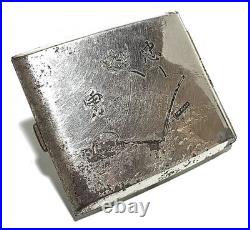
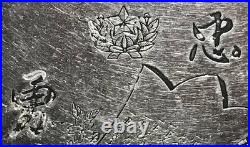
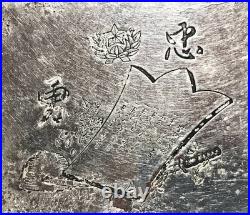
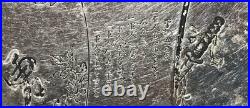
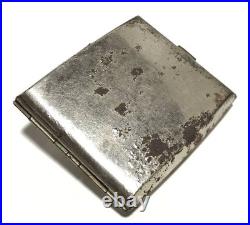
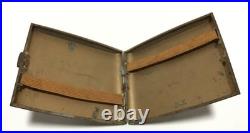
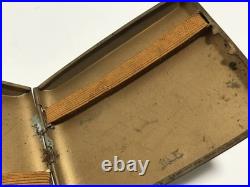
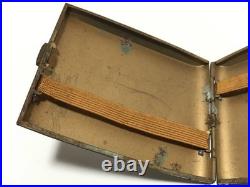
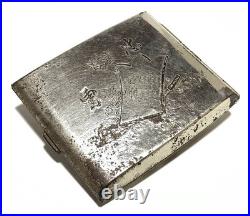
This is a prewar Imperial Japanese Army metal cigarette case associated with the Imperial Guard Division, one of the most prestigious formations of the former Japanese Army. At the top of the front is the distinctive Imperial Guard Division emblem, rather than a generic Army star. Large characters on either side read: – Loyalty – Valor Below the emblem is a design based on a commemorative plaque associated with Army Commemoration Day, and within the plaque are the Five Principles of the Imperial Rescript to Soldiers and Sailors. The Imperial Rescript to Soldiers and Sailors was issued by Emperor Meiji in 1882 and became one of the central foundations of military education in prewar Japan. Its five principal virtues were: Loyalty, Courtesy, Valor, Faithfulness, and Frugality. These principles were repeatedly taught to Japanese soldiers and sailors as the moral standards expected of military personnel. The combination of the Imperial Guard Division emblem, the words “Loyalty” and “Valor, ” and the Five Principles of the Imperial Rescript gives this small personal item unusually strong historical character. The Imperial Guard Division had its roots in the forces responsible for protecting the Emperor and the Imperial Palace. The original Guards Division organization was reorganized during World War II, and the Imperial Japanese Army itself ceased to exist following Japan’s surrender in 1945. The Imperial Rescript likewise lost its role as a military code with the dissolution of the armed forces. Cigarettes were also closely connected with everyday military life. A metal cigarette case was both a practical personal accessory and something a serviceman could carry in his uniform pocket. The original retaining straps remain inside the case. Approximate size: 7.5 × 9 × 1.5 cm The surface shows age-related wear, rust, scratches, and loss of plating. These signs of use are part of the object’s nearly century-old character. This is not simply a cigarette case. It is a small surviving object that preserves the symbols, values, and everyday material culture of Japan’s prewar military world. Own a Piece of History. International Buyers – Please Note.

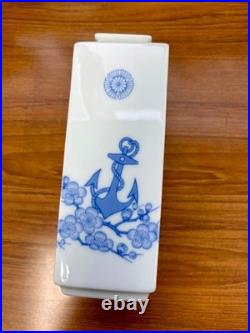
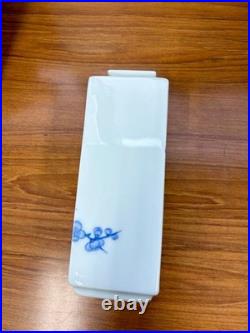
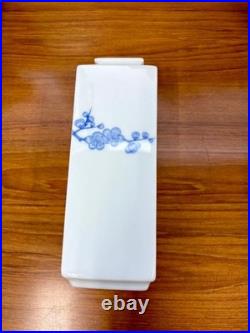
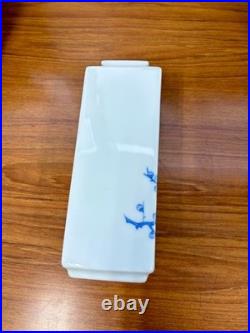
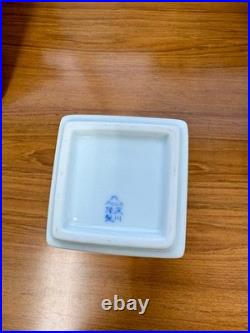

This is a prewar Japanese porcelain vase made by Fukagawa Seiji, closely associated with the Imperial Japanese Navy and the Imperial Household. The front is decorated in underglaze blue with a large Imperial Japanese Navy anchor, plum blossoms, and above them the royal crest of the Takamatsu-no-miya branch of the Imperial Family. The Takamatsu-no-miya family was one of the branches of Japan’s Imperial Household, and Prince Takamatsu himself served as an officer in the Imperial Japanese Navy. Rather than going too deeply into his personal history, the important point here is the unusual combination of an Imperial-family crest and a naval anchor on the same piece. The maker is also highly significant. Fukagawa Seiji, founded in 1894 in Arita, became one of Japan’s most prestigious porcelain manufacturers. It won a gold medal at the 1900 Paris Exposition and later became an official supplier to the Imperial Household. The underside of this vase bears the Fukagawa Seiji maker’s mark. Fukagawa also had a documented connection with the Imperial Japanese Navy. In 1916, the company became a designated Navy factory and supplied tableware for naval officers. In 1942, it was further designated as a Navy-supervised factory, producing and supplying specialized tableware and military-use ceramics. This makes Fukagawa more than simply a famous porcelain maker: during the prewar and wartime period, it had an official manufacturing relationship with the Imperial Japanese Navy. No original box or supporting provenance documents are included with this piece, but the combination of: Imperial-family crest Imperial Japanese Navy anchor Fukagawa Seiji maker’s mark makes it a particularly interesting example of Japanese military and Imperial-era porcelain. I have not found evidence that Fukagawa continued as an official designated supplier to Japan’s postwar Self-Defense Forces. Its strongest documented military connection belongs to the era of the Imperial Japanese Navy. A small porcelain vase, but one that brings together three powerful elements of prewar Japan: the Imperial Household, the Navy, and one of Japan’s most prestigious porcelain makers. Own a Piece of History. International Buyers – Please Note.