
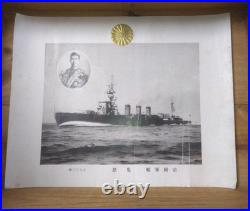
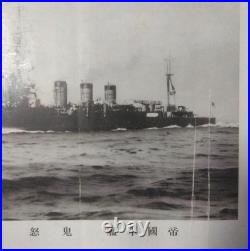
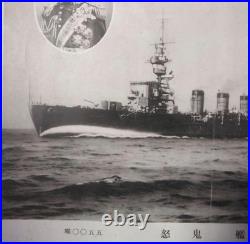
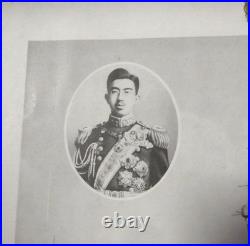
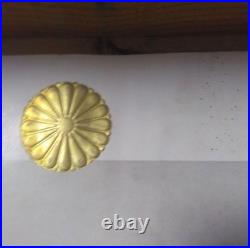

Original Pre-WW2 Imperial Japanese Navy poster featuring the light cruiser KINU (Nagara-class). Printed in the early Showa period, this piece includes a portrait of. Symbol of the Imperial Household. Large format and rare surviving example of naval promotional or commemorative prints from the 1930s. About the Cruiser KINU. She served extensively throughout the Pacific. Philippine invasion operations (1941). Dutch East Indies operations (1942). Guadalcanal “Tokyo Express” transport missions. Numerous escort and supply operations in New Guinea and the Bismarck Sea. Sunk in October 1944. During the Leyte Gulf operations. A warship known for its wide operational range and heavy wartime service. Portrait of Emperor Hirohito, gold Chrysanthemum Seal. Creases, age toning, minor stains. 380 × 296 mm. A valuable display piece for collectors of Imperial Japanese Navy history, warship memorabilia, and pre-WW2 prints. International Buyers – Please Note. Thank you for your understanding.

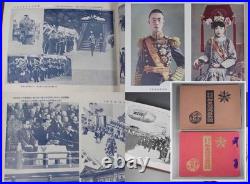
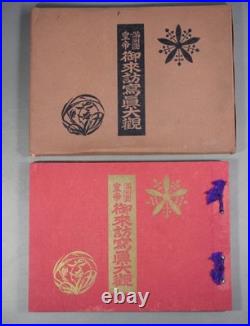
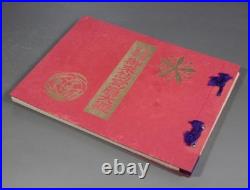

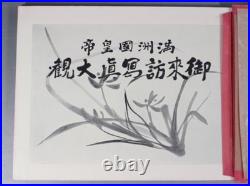
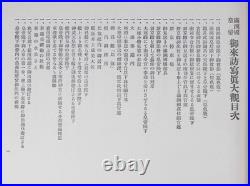
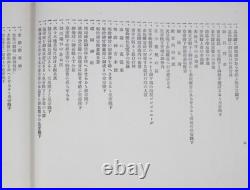
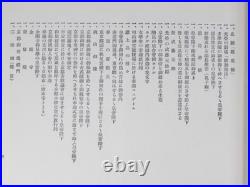
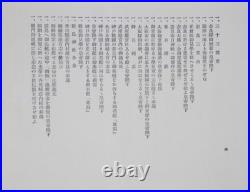
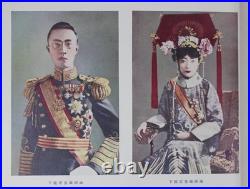
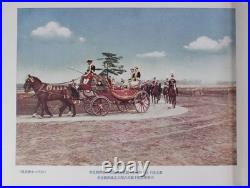
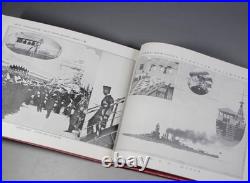
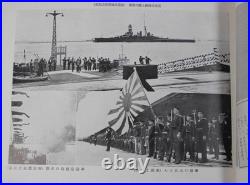
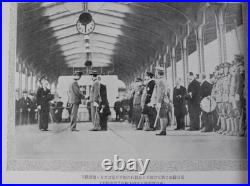
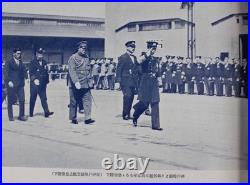
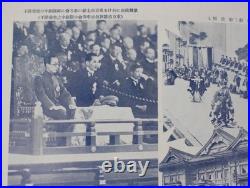
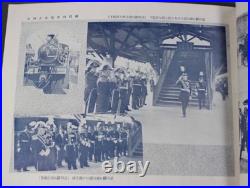
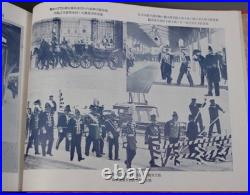
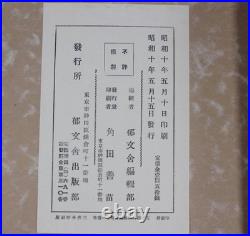
Thank you for your interest. This is an original photo album documenting the official visit of. Manchukuo Emperor Puyi to Japan in 1935 (Showa 10). Who was Puyi? The last Emperor of the Qing Dynasty (China). Later installed as the Emperor of Manchukuo under Japanese influence. He represents a unique figure in world history. ? A fallen emperor turned into the symbolic ruler of a newly created state. Why did he visit Japan in 1935? This visit was not a casual trip. ? A major political and ceremonial event to demonstrate the alliance between Imperial Japan and Manchukuo. During this visit, Puyi. Was formally welcomed at major stations and cities. Inspected military units (Army & Navy). Attended official ceremonies and state events. ? In essence, this was a carefully staged political performance. What this album contains. This album visually records that historic visit, including. Arrival scenes at railway stations. Military parades and ceremonial formations. Official receptions and processions. ? It is a primary historical record, not a later reproduction. Why this item is rare. This piece stands out because. This album documents a specific, short-lived event. It combines photographs + printed explanations. Original binding and storage case are still present. ? Items like this rarely appear on the market. Age-related stains, wear, and discoloration. Damage to outer case. Signs of use consistent with age. Please check photos carefully for details. Collector’s perspective. This is more than a photo album. ? A visual record of a vanished state. ? A document of Imperial Japan’s political narrative. ? A rare surviving piece of 20th-century history. Own a Piece of History. International Buyers – Please Note. Thank you for your understanding.

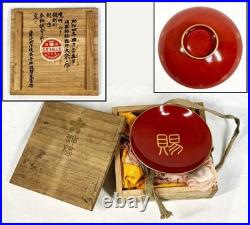
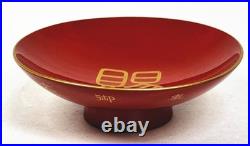
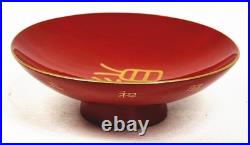
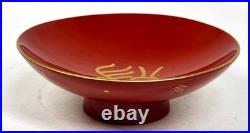
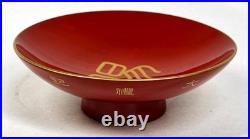
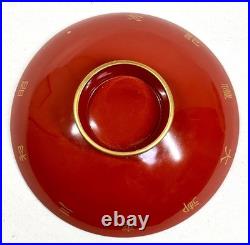
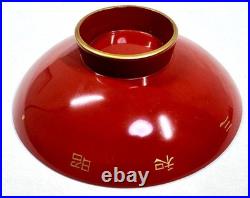
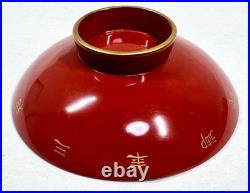
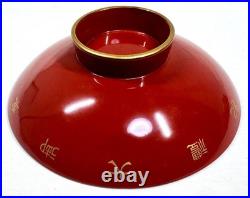
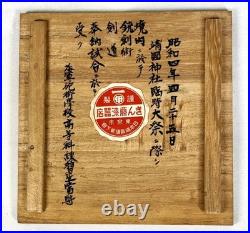
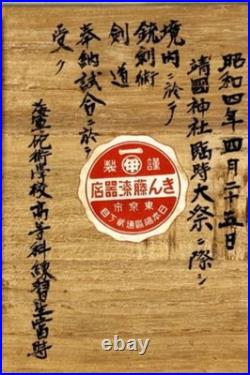
This is an original red lacquer ceremonial sake cup created to commemorate the Imperial Enthronement Ceremony (, Gotairai) of Emperor Showa (Hirohito) in 1928 (Showa 3). The inside of the cup features the bold character?? (“Tamawaru” – “Bestowed” or “Imperial Gift”), symbolizing honor and blessing. Around the outer rim, in gold lacquer, it reads. ? (“Commemorating the Imperial Enthronement Ceremony of Showa 3″). The cup is finished with a fine gilt rim. Box inscription (on the lid interior). The original wooden box has an important inscription, which connects this cup to a later historical event. Right column: Showa 4 (1929), April 25 – Yasukuni Shrine, on the occasion of the Temporary Grand Festival. Center column: Dedication of martial arts demonstrations (?) – bayonet drills and kendo matches were performed. Left column: Signed with affiliation/names (partially in cursive script, preserved as-is). The red circular seal is the mark of the original lacquerware shop. This means the cup, originally made for the 1928 Enthronement, was later dedicated or presented in 1929 at Yasukuni Shrine during a major festival, in connection with martial arts dedication ceremonies. This double provenance-Imperial and martial-greatly enhances its historical value. Who: The Japanese people, martial arts groups, and Shinto community honoring the Emperor. What: A commemorative lacquer sake cup celebrating the Showa Emperor’s enthronement and later used in a Yasukuni Shrine martial arts dedication. When: Cup produced in 1928 (Showa 3); box inscription dated 1929 (Showa 4). Where: The enthronement ceremonies were held in Kyoto; the dedication occurred at Yasukuni Shrine in Tokyo. Why: To celebrate the enthronement as a national event, and to dedicate martial arts performances to the spirits of the fallen. How: Such lacquer cups were used in ceremonial banquets and dedication rituals, then preserved in wooden boxes with inscriptions noting the occasion. Japanese lacquer (urushi) is made from the sap of the lacquer tree. It produces a hard, glossy, and durable coating admired for centuries. This cup uses red lacquer (shu-urushi) with gold-painted inscriptions and a gilt rim, typical of high-quality ceremonial vessels. Care: Avoid direct sunlight and alcohol cleaners. Simply wipe gently with a soft dry cloth. Imperial Enthronement + Yasukuni Shrine martial arts dedication – two major historical events connected in one artifact. Large bold character?? inside, symbolizing honor and Imperial blessing. Original inscribed box with provenance, making it valuable as both a ceremonial object and a historical document. Excellent for collectors of Japanese Imperial memorabilia, martial arts history, and Shinto-related artifacts. ? This is not just a sake cup, but a piece of Japanese history with strong connections to the Imperial Enthronement of Emperor Showa and the Yasukuni Shrine martial traditions of the early Showa period. Approximate 7-21days(To USA).

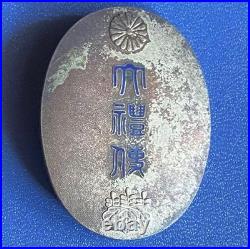
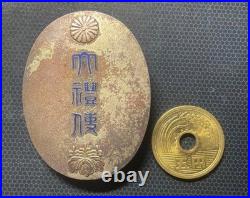
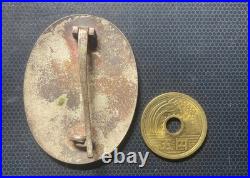

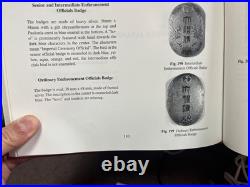
This is an original Imperial Japanese Enthronement Officials Badge. Issued for junior government officials (Hannin-kan) who participated in the Imperial enthronement ceremonies. Imperial Chrysanthemum Crest (symbol of the Emperor). Paulownia Crest (symbol of the Japanese government). The inscription “Enthronement Official” in blue enamel at the center. These badges were worn exclusively during the Daijo (Imperial Enthronement) ceremonies. Which marked the accession of Emperor Hirohito (Showa Emperor). Emperor Hirohito’s accession occurred immediately after the death of the previous emperor. And the early Showa enthronement ceremonies were conducted with restrained formality and limited production. Making surviving official items particularly scarce today. Reverse marked: Japan Mint / I. Official government issue, not a private or souvenir item. Badges such as this were produced in very limited numbers and issued only to authorized personnel. Shows natural age-related wear and patina consistent with an authentic pre-war item. Details and inscription remain clearly visible. Please refer to photos for condition. A rare and well-documented piece of Imperial Japanese ceremonial history. Approximate 7-21days(To USA).

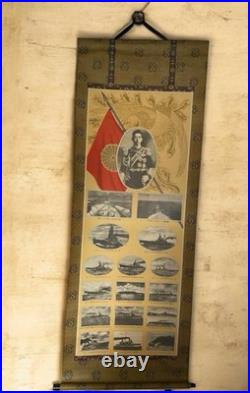
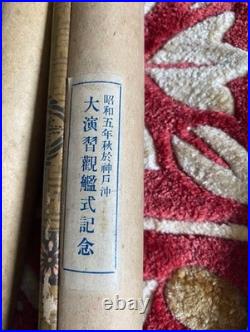

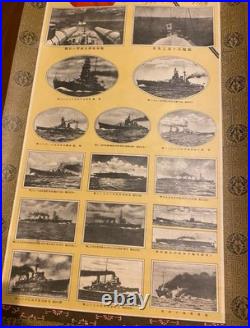
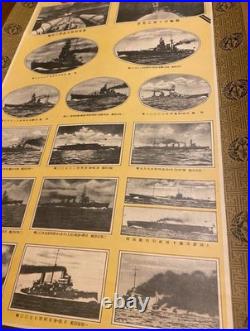
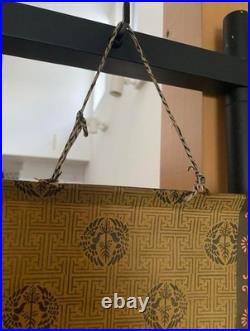
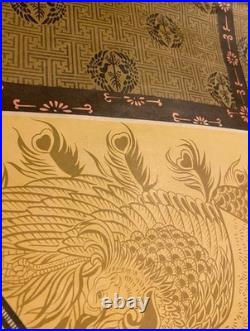
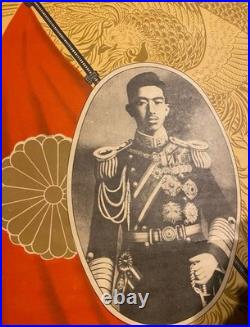
This is an original Imperial Japanese commemorative hanging scroll (kakejiku) issued for the Grand Naval Review held off Kobe Bay on October 26, 1930 (Showa 5). It was the first major fleet review attended by Emperor Hirohito after his enthronement – a spectacular event symbolizing Japan’s naval power and national unity during the early Showa era. About the Naval Review. The “Kantai Kanshiki (Naval Review)” was a grand military ceremony held to display the Imperial Navy’s strength to the Emperor and the public. This 1930 review gathered over 100 warships, including the famous battleships Nagato, Mutsu, Kongo, Hiei, and Fuso – the pride of the Imperial Japanese Navy. The event demonstrated Japan’s technological excellence and growing maritime power in the interwar period, serving both as a training display and a powerful tool of national propaganda. At this time, he served as Commander-in-Chief of the Imperial Army and Navy, and his presence at the fleet review symbolized his role as the unifying figure of the Empire. This scroll represents one of the earliest public displays of the Emperor’s authority over Japan’s armed forces. A portrait of Emperor Hirohito in full military dress, with medals and decorations. A phoenix motif behind him, symbolizing divine authority and renewal. The Imperial chrysanthemum crest and the rising sun flag. The background is woven with Paulownia (Go-shichi-kiri) and Chrysanthemum imperial patterns, emphasizing its official ceremonial origin. The paper label on the roller reads. Commemorating the Grand Naval Review off Kobe Bay, Autumn 1930 (Showa 5). Type: Paper hanging scroll (kakejiku). Material: Lithographic print with silk-pattern mount. 150 × 55 cm. Condition: Very good for age. Some light toning and a retied hanging cord. Includes original mounting with wooden rods. This scroll was produced to celebrate the imperial inspection of the fleet, a major event intended to inspire national pride and military spirit during Japan’s naval peak. Few original scrolls from this ceremony survive today – making this a museum-grade artifact of Imperial Japan’s naval and political history. Own a genuine piece of Japan’s early Showa military heritage. International Buyers – Please Note. Thank you for your understanding.

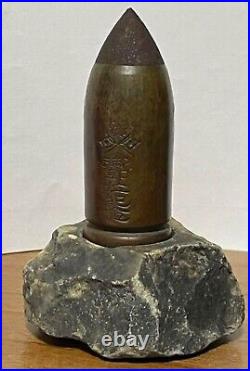
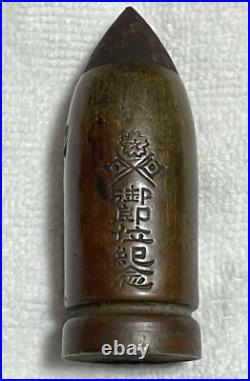
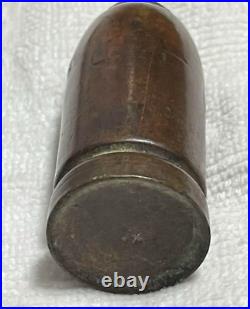
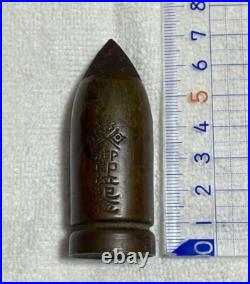
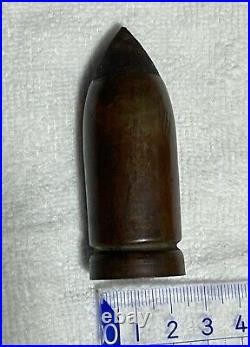
Antique imperial Japanese commemorative art. Rare Imperial Japanese Commemorative Sculpture. Celebrates Emperor Taisho’s Coronation in 1915. Crafted from a 1-inch Naval Gun Shell. Engraved with “Coronation Commemoration” in Japanese. Includes original wooden base. Excellent condition for its age. A unique piece of Japanese history! Perfect for collectors of military antiques and imperial memorabilia. Please examine photos carefully for condition details. Don’t miss this opportunity to own a piece of Imperial Japanese Navy history! Feel free to ask! International Buyers – Please Note. Thank you for your understanding.

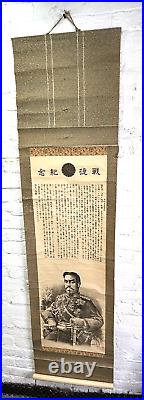
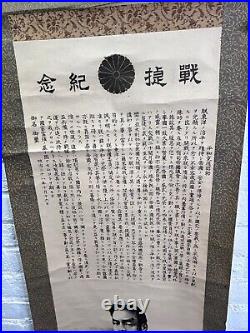
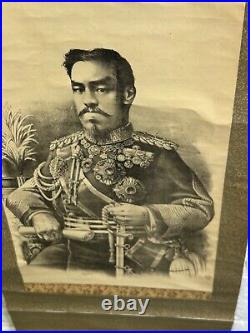
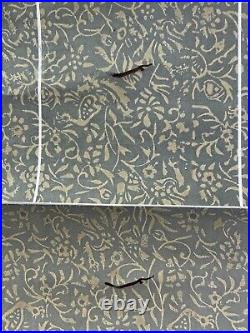
1905 Japanese Emperor Taisho Declaration Of Peace Scroll. It measures 17 inches wide by 69 inches long. Has some stains, creases and a bug damage holes, but still displays great.