
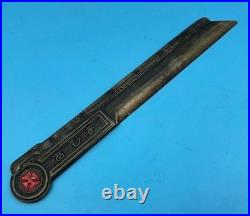
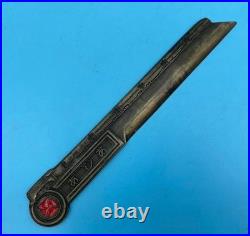
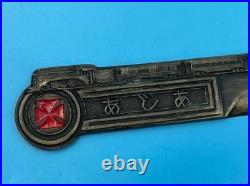
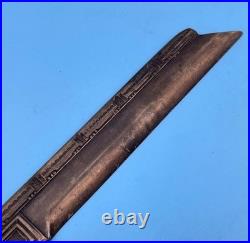
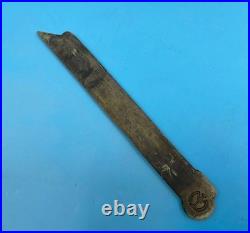
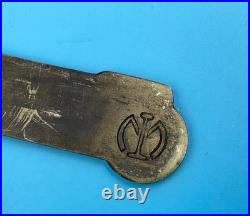
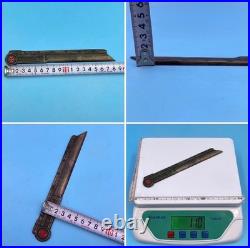
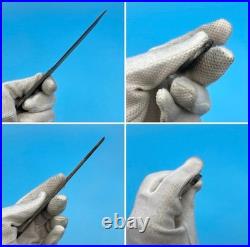
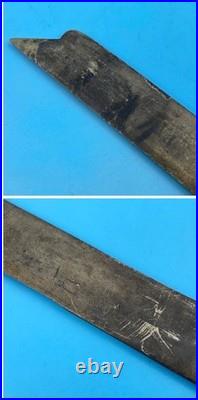

Rare commemorative paper knife issued by the South Manchuria Railway Company (Mantetsu) during the 1930s, celebrating the legendary express train “Asia” (Ajia-go) – the flagship of Japan’s imperial railway network in Manchukuo. Made of solid brass, beautifully engraved with the relief of the Asia Express locomotive, the train name “??? , ” and the red Mantetsu company crest. The reverse side also bears the official logo mark. 19 cm in length, 110 g in weight. Some age patina and wear, consistent with its age. Founded in 1906 after the Russo-Japanese War, the South Manchuria Railway (SMR) was far more than a transport company – it was the economic and military backbone of Japan’s control over Manchuria. Mantetsu managed railways, mines, cities, and intelligence networks, serving both civilian and military logistics. The Asia Express, inaugurated in 1934, represented the peak of Japanese engineering in the prewar era. Running between Dalian, Mukden (Shenyang), and Harbin, it featured streamlined design, air conditioning, and luxurious interiors. The train became a symbol of imperial prestige and modern power, used by military officers and diplomats as a moving showcase of empire. This paper knife embodies that historical moment – where technology, propaganda, and military ambition converged in Japan’s expansion across Asia. A rare collectible for historians and railway or militaria collectors alike. Own a piece of history. International Buyers – Please Note. Thank you for your understanding.

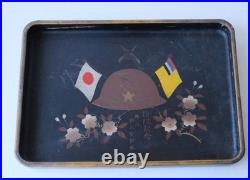
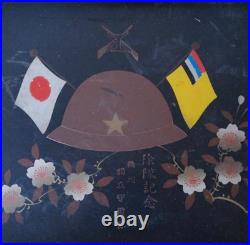
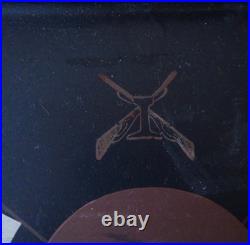
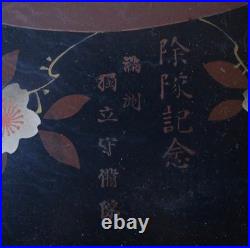
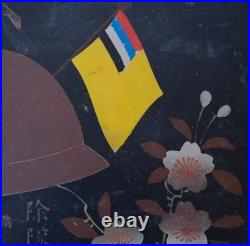
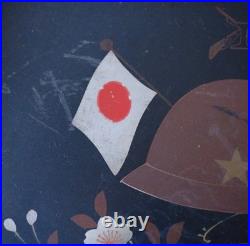
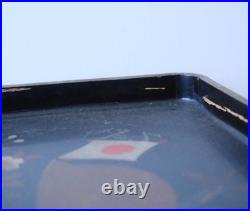
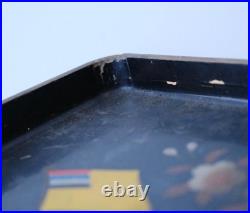
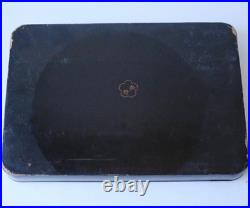
This is an original WWII Imperial Japanese “Discharge Commemorative” lacquer tray from the Manchuria Independent Garrison Unit. 30.5 × 21.5 cm. The tray features the Japanese national flag, the flag of Manchukuo, a military helmet, cherry blossoms, and crossed rifles. The center inscription reads. “Manchuria Independent Garrison Unit”. The Manchuria Independent Garrison Unit was a highly important military force responsible for protecting the South Manchuria Railway (Mantetsu), railway stations, bridges, and strategic facilities throughout Manchukuo. These troops were deeply connected to Japan’s control over Manchuria and served on the front line of the Japanese Empire’s continental expansion policy. During the 1930s-1945 period, they carried out security operations, anti-guerrilla activities, and military patrols across Manchuria. When the Soviet invasion of Manchuria began in August 1945, many of these units were overwhelmed and effectively disappeared during the collapse of Japanese control in the region. Because of this history, authentic artifacts related to the Manchuria Independent Garrison Unit are extremely scarce today. Especially rare are personalized discharge commemorative items like this example, which were privately owned rather than mass-issued military equipment. This is unquestionably a genuine wartime item. One particularly fascinating feature is the combination of the Japanese flag and the Manchukuo flag displayed side by side. This reflects the wartime ideology of “Japan-Manchukuo unity” and strongly captures the atmosphere of Imperial Japan’s presence in Manchuria. The reverse side bears the name “Yano” , which was likely the original owner – possibly the actual soldier who completed his military service and brought this tray home after serving in Manchuria. That personal connection gives the piece far more emotional and historical depth than an ordinary military souvenir. The tray itself is also a fine example of traditional Japanese lacquer craftsmanship. Even during wartime, Japanese commemorative objects often combined military symbolism with refined decorative artistry, and this piece beautifully reflects that tradition. Military helmet, cherry blossoms, Imperial Japanese flag, Manchukuo flag. This tray preserves the atmosphere of a vanished empire. Artifacts related to Manchukuo, Mantetsu, and Imperial Japanese occupation history have become increasingly sought after among international collectors in recent years. Shows age, scratches, lacquer wear, and signs of use consistent with age. Please check all photos carefully. Own a Piece of History. International Buyers – Please Note. Thank you for your understanding.

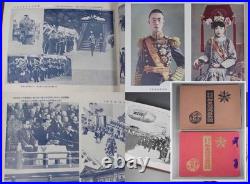
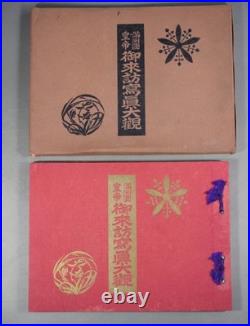
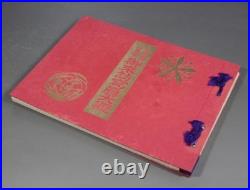
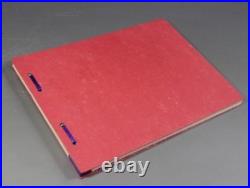
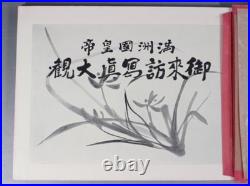
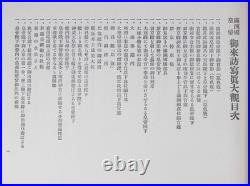
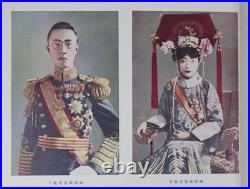
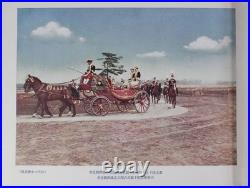
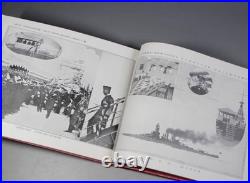
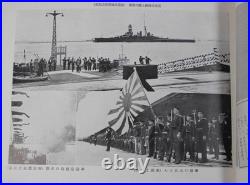
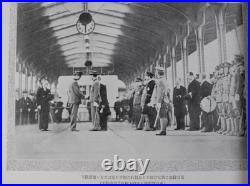
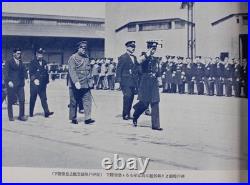
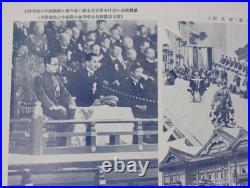
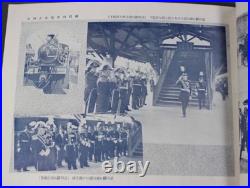
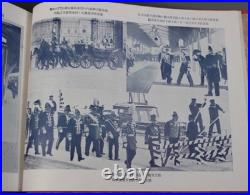
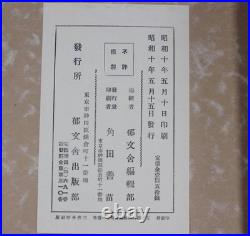
Thank you for your interest. This is an original photo album documenting the official visit of. Manchukuo Emperor Puyi to Japan in 1935 (Showa 10). Who was Puyi? The last Emperor of the Qing Dynasty (China). Later installed as the Emperor of Manchukuo under Japanese influence. He represents a unique figure in world history. ? A fallen emperor turned into the symbolic ruler of a newly created state. Why did he visit Japan in 1935? This visit was not a casual trip. ? A major political and ceremonial event to demonstrate the alliance between Imperial Japan and Manchukuo. During this visit, Puyi. Was formally welcomed at major stations and cities. Inspected military units (Army & Navy). Attended official ceremonies and state events. ? In essence, this was a carefully staged political performance. What this album contains. This album visually records that historic visit, including. Arrival scenes at railway stations. Military parades and ceremonial formations. Official receptions and processions. ? It is a primary historical record, not a later reproduction. Why this item is rare. This piece stands out because. This album documents a specific, short-lived event. It combines photographs + printed explanations. Original binding and storage case are still present. ? Items like this rarely appear on the market. Age-related stains, wear, and discoloration. Damage to outer case. Signs of use consistent with age. Please check photos carefully for details. Collector’s perspective. This is more than a photo album. ? A visual record of a vanished state. ? A document of Imperial Japan’s political narrative. ? A rare surviving piece of 20th-century history. Own a Piece of History. International Buyers – Please Note. Thank you for your understanding.

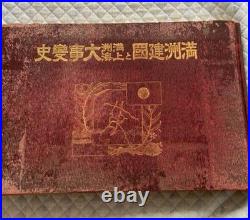
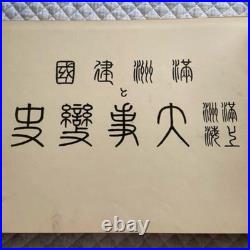
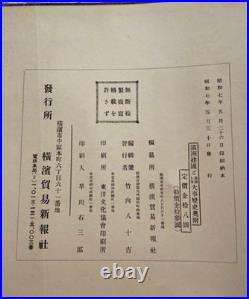
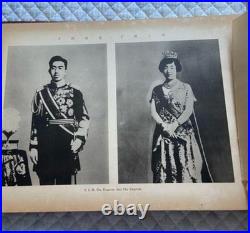
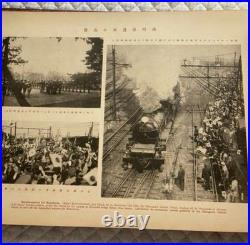
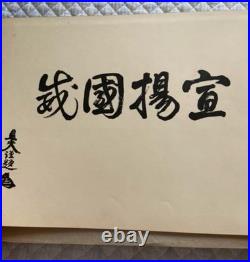
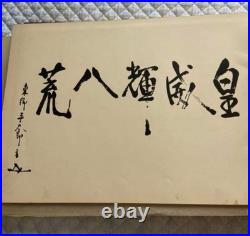
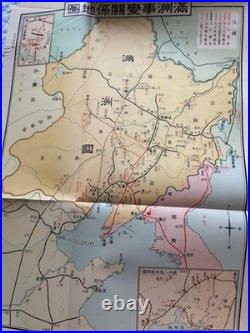
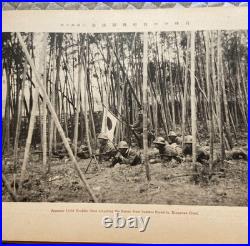
This is a rare large-format pictorial album titled “Manchukuo Founding and the Shanghai Incident”, published in 1932 (Showa 7) by Yokohama Trading News Co. It features numerous original photographs, maps, and calligraphy, documenting the turbulent events in East Asia during the early 1930s. Following the Mukden Incident (September 1931), the Japanese Kwantung Army occupied Manchuria. In March 1932, the puppet state of Manchukuo was proclaimed with the last Qing emperor Puyi as its head of state. For Japan, Manchukuo became both an economic and military stronghold, while the international community strongly criticized it as illegitimate, leading to Japan’s growing isolation in world affairs. In January 1932, hostilities broke out in Shanghai between Japanese and Chinese forces. Intense urban combat followed, including the deployment of Japanese Navy Special Landing Forces. After months of fighting, a ceasefire was signed in May. The scale and violence of the conflict marked a deep escalation in Sino-Japanese tensions. Showa 7 (1932) – A Turning Point. March: Manchukuo officially proclaimed. January-May: First Shanghai Incident. May: Prime Minister Inukai Tsuyoshi assassinated in the May 15 Incident. This year marked a decisive shift in Japan’s path toward militarization and international isolation, eventually leading to its withdrawal from the League of Nations. ? Contents of This Album. Portraits of the Emperor & Empress. Photographs of the Manchurian Incident and Shanghai Incident. Large fold-out color map with railways and battlefields. Calligraphy pages by notable figures. Rare action photos of Japanese military operations. The outer cover shows significant wear due to age, but the internal pages and photographs remain intact. Overall, this is a valuable contemporary primary source that preserves the atmosphere and visual record of 1932. A highly important reference for historians, researchers, and serious collectors of Japanese pre-WWII militaria and Asian history. Own a Piece of History. International Buyers – Please Note. Thank you for your understanding.


The product is a rare WWII Japan Manchukuo Order of the Auspicious Clouds 6th Class medal, originating from Japan. It has been in our family since WW II. This collectible item is an original piece from the period, making it a valuable and unique item for collectors of militaria and historical artifacts. The medal likely holds significant historical and cultural value, reflecting the military history of Japan during World War II. Has been in my family since the end of WWII. My Father brought it home.

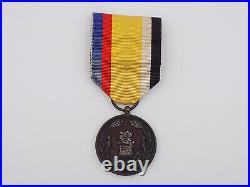
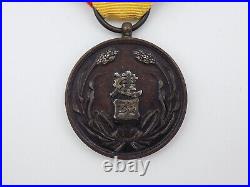
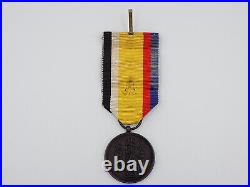
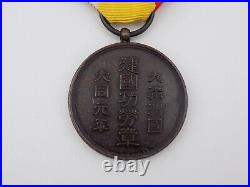
Original Imperial Japanese 1933 Manchukuo National Foundation Medal. Very nice original item. Instituted by the Japanese puppet government of Manchukuo in 1933 and presented to those who performed meritorious service in the foundation of the new nation. Blackened bronze with silvered characters, 30mm, on original ribbon with hook but missing the eyelet. Please feel free to ask any questions. We strive to satisfy our customers.

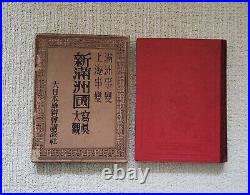
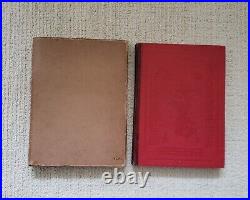
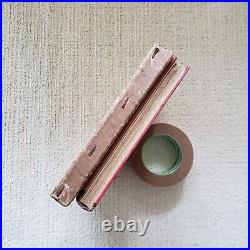
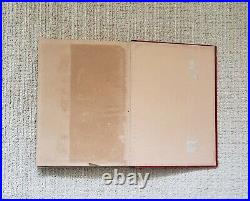
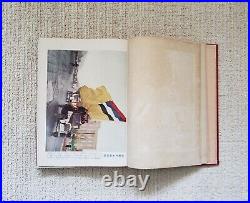
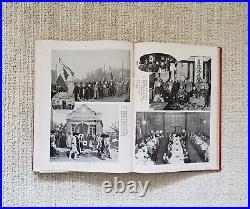
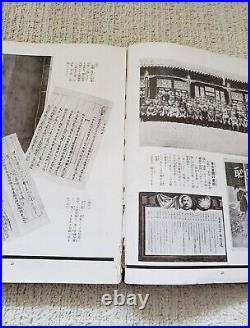
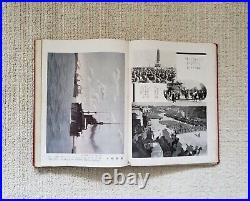
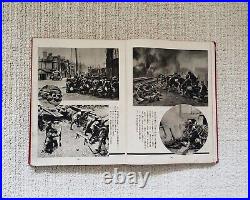
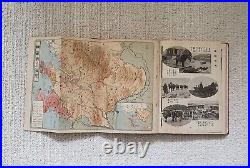
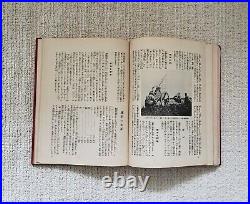
Japanese text / Si ze: 27cm x 20.5cm (Circa) / 160 + 84 pages.


100% ORIGINAL ISSUE PIECE. Argentina, Brazil, Chile, Colombia, Romania, Bulgaria, Mexico, China, Macau, Turkey, United Arab Emirates, Montenegro. CANADA, USA, UK, IRELAND, AUSTRIA, DENMARK, SWEDEN, NORWAY, FINLAND, GERMANY, FRANCE, BELGIUM, ITALY, SWITZERLAND, NETHERLANDS, LUXEMBOURG, AUSTRALIA, AND NEW ZEALAND. This item is in the category “Collectibles\Militaria\1919-38\Original Period Items”. The seller is “worldmedals” and is located in this country: CA. This item can be shipped to Canada, all countries in Europe, United States, Australia, Japan.


Japanese text / Si. Ze: 27cm x 20.5cm (Circa) / 160 + 84 pages. It could take longer depending on the. Condition is used with obvious wear, stain, small tear, etc. Slipcase also shows heavy wear due to the age. No return is accepted. I do not mark merchandise values below value or mark items as “gifts” – US and International government regulations prohibit such behavior. The police and the authorities. This item is in the category “Collectibles\Militaria\1919-38\Original Period Items”. The seller is “egy.pillanat” and is located in this country: JP. This item can be shipped worldwide.
- Theme: Militaria
- Original/Reproduction: Original
- Time Period Manufactured: 1919-38


Japanese text / Si. Ze: 27cm x 20.5cm (Circa) / 244 pages. It could take longer depending on the. The condition is used with obvious wear, stain, small tear, etc. No return is accepted. I do not mark merchandise values below value or mark items as “gifts” – US and International government regulations prohibit such behavior. The police and the authorities. The item “Manchukuo Manchuria Shanghai Incident Photo Book Imperial Army 1932″ is in sale since Wednesday, January 8, 2020. This item is in the category “Collectibles\Militaria\1919-38\Original Period Items”. The seller is “egy.pillanat” and is located in Japan. This item can be shipped worldwide.
- Original/Reproduction: Original