
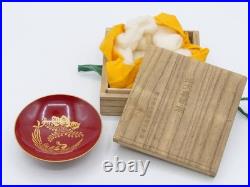
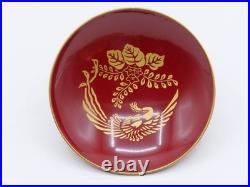
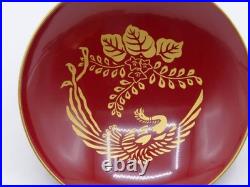
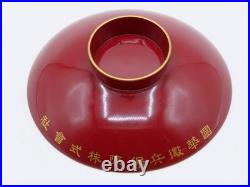
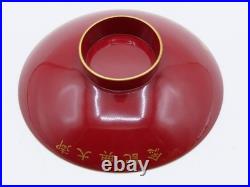
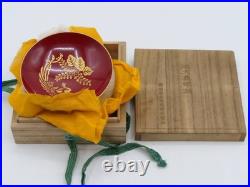
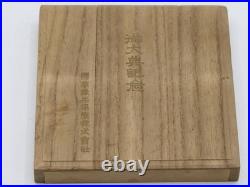
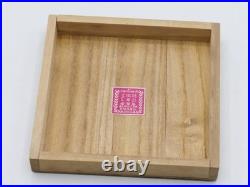

This is a prewar Japanese lacquer sake cup made to commemorate the Imperial Enthronement Ceremony, or “Grand Enthronement, ” of Emperor Hirohito. The cup is finished in deep red lacquer with a gold phoenix and floral design. The original wooden box also bears the same commemorative inscription and company name. Although the cup itself is not dated, its period can be identified through the history of the company. Was established in 1922 and ceased to exist under this name after its merger in 1941. The only Imperial Enthronement Ceremony held during that period was the enthronement of Emperor Hirohito in 1928. For this reason, this piece can be confidently attributed to the 1928 Imperial Enthronement celebrations. The most unusual aspect of this item is the company behind it. In prewar Japan, military conscription could have a significant financial impact on a young man and his family. This makes the cup more than simply a commemorative sake vessel. It represents an unusual intersection of Imperial ceremony, military conscription, private business, and everyday life in prewar Japan. Please note that this is not confirmed to be a military-issued sake cup. The original wooden box and wrapping cloth are included. The cup remains in attractive condition for its age, while the box shows age-related wear and cracking. Please examine all photographs carefully for condition. A fascinating piece of Japanese social history from an era when military conscription was closely connected with everyday civilian life. Own a Piece of History. International Buyers – Please Note.

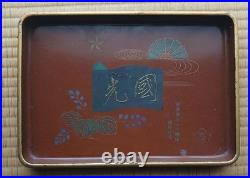
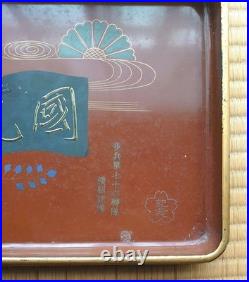
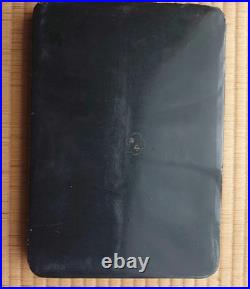
This is an original Japanese lacquer presentation tray associated with the 76th Infantry Regiment Machine Gun Unit of the Imperial Japanese Army. The front is decorated with a Japanese Army star, stylized floral and flowing-water motifs, and the large characters “Kokko” at the center. More importantly, the tray is clearly inscribed: “76th Infantry Regiment – Machine Gun Unit” “Commemorative” This makes the military connection unusually specific. Rather than being a generic Japanese Army souvenir, it can be tied directly to a particular regiment and even to its specialized machine gun unit. The 76th Infantry Regiment belonged to the Imperial Japanese Army’s 19th Division and was based in Ranam in northern Korea, then part of the Japanese Empire. The 19th Division was established as part of Japan’s military presence on the Korean Peninsula and was responsible for the strategically important northern region facing Manchuria and the Soviet Far East. During the later wartime period, elements of the division were transferred and reorganized as Japan’s military situation deteriorated. Within an infantry regiment, the machine gun unit provided concentrated firepower and required soldiers trained in the operation, maintenance, and coordinated use of heavy automatic weapons. The fact that this piece identifies the Machine Gun Unit specifically gives it considerably more historical character than a standard regimental souvenir. The reverse bears what appears to be the original owner’s surname: “Kobayashi” This personal name adds another layer of provenance and gives the object a direct human connection to the military organization named on the front. The tray itself is also a fine example of traditional Japanese lacquerware. Japanese lacquer objects were valued for their combination of beauty, light weight, and remarkable durability. Multiple layers of lacquer created a hard, protective surface, making lacquerware particularly suitable for commemorative and presentation pieces intended to be kept for many years. Presentation cups, trays, and similar lacquer objects were commonly produced in prewar Japan to commemorate military service, transfers, unit events, discharge, achievements, and other important occasions. Age-related scratches and surface wear are present, but they also give the piece the character expected of an authentic period object. With its combination of a named regiment, machine gun unit, traditional Japanese lacquerwork, and the possible original owner’s name, this is far more than decorative lacquerware-it is a surviving piece of one soldier’s military world. Own a Piece of History. International Buyers – Please Note.

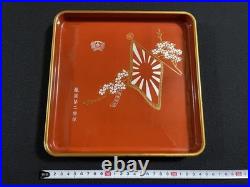
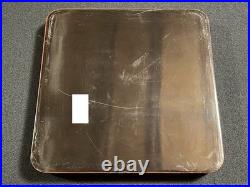
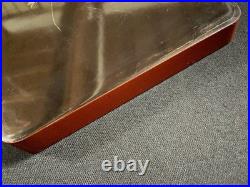
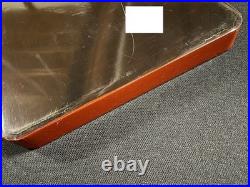
This is a remarkable commemorative lacquer tray associated with the 2nd Railway Regiment of the Imperial Japanese Army. On the left side of the tray, the unit name is clearly written in Japanese: “2nd Railway Regiment” The center features a large Imperial Japanese Army Rising Sun flag surrounded by cherry blossoms, with an Army star and a unit-related emblem above. Unlike ordinary infantry units, railway regiments were specialized technical units responsible for constructing, repairing, maintaining, and operating military railways. Their work made it possible to move troops, weapons, ammunition, food, and other supplies across long distances. The history of the 2nd Railway Regiment reaches back to 1908, when its predecessor unit was established at Tsudanuma in Chiba Prefecture. It was reorganized as the 2nd Railway Regiment in 1918. Its history crossed several major events in modern Japan. After the Great Kanto Earthquake of 1923, the unit participated in railway reconstruction work. In 1928, it was deployed during the Jinan Incident in China. Following the outbreak of the Second Sino-Japanese War in 1937, the regiment operated railways in North China and also participated in the Xuzhou Campaign. It later served in Manchuria and North China. Near the end of World War II, in 1945, the main body of the regiment was transferred to Sasebo in Kyushu, where it helped protect Japanese National Railways steam locomotives and railway operations. The regiment ended the war in Kyushu. In other words, the name preserved on this tray belonged to a unit whose history stretched from disaster relief and railway reconstruction in Japan to military railway operations on the Asian continent and finally the defense of Japan itself. The tray is also a beautiful example of the way traditional Japanese decorative arts were incorporated into military commemorative objects. The vivid vermilion surface, gold-colored border, cherry blossoms and elaborate flag design reflect the decorative tradition of Japanese lacquerware. Lacquerware had long been valued in Japan not only as practical tableware but also for ceremonial, presentation and commemorative purposes. This combination of military history, railway history and traditional Japanese craftsmanship makes the piece particularly interesting. Age-related scratches and wear are visible, especially on the reverse and around the edges, but the principal decoration and the inscription identifying the 2nd Railway Regiment remain clearly visible. Rather than representing only the men who fought at the front, this tray tells the story of the technical soldiers who built, repaired and operated the railways that kept an army moving. Own a Piece of History. International Buyers – Please Note.

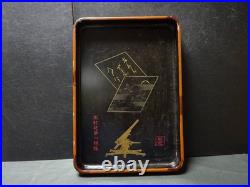
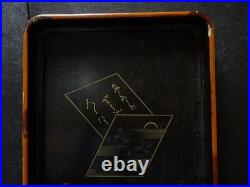
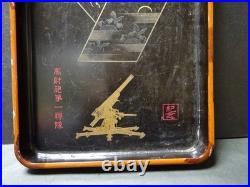
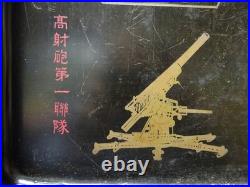
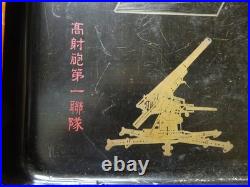
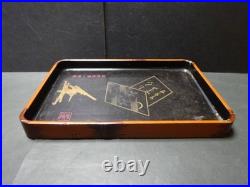
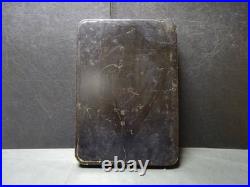
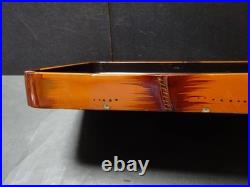
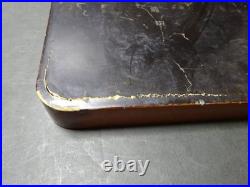
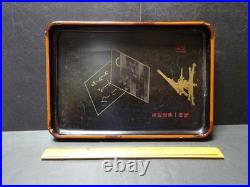
This is an original prewar Imperial Japanese Army commemorative lacquer tray associated with the 1st Anti-Aircraft Artillery Regiment. The front features a detailed gold-colored image of an anti-aircraft gun, together with the inscription: “1st Anti-Aircraft Artillery Regiment” The 1st Anti-Aircraft Artillery Regiment was established in 1925 and is regarded as the first permanent anti-aircraft artillery regiment of the Imperial Japanese Army. It was later stationed at Hamamatsu, an important military and aviation center. The regiment represents the early development of Japan’s organized ground-based air defense at a time when military aviation was rapidly becoming a major factor in warfare. An especially interesting feature is the Japanese inscription near the top: “Shikishima no Yamato-gokoro wo hito towa ba” This is the opening portion of a famous poem by the Edo-period scholar Motoori Norinaga: Asked what is the spirit of Japan, it is the fragrance of mountain cherry blossoms in the morning sun. The verse became strongly associated with ideas of Japanese identity in the prewar period. Its presence together with an anti-aircraft gun and military unit name makes this more than a decorative tray-it reflects the military culture and values of its era. The reverse is marked with the name: “Maeda” This was most likely the surname of the original owner or recipient, adding an individual human connection to the piece. Another particularly interesting point is that an example of a 1st Anti-Aircraft Artillery Regiment commemorative lacquer tray is preserved in an official Aichi Prefecture wartime-history collection, showing that this type of object is recognized today as material connected with Japan’s military history. The tray shows age-related wear, scratches, rubbing and other signs of use. Please carefully examine the photographs for condition. For collectors of Imperial Japanese Army militaria, artillery history, air-defense history, or Japanese wartime lacquerware, this is a distinctive piece combining unit identification, weapon imagery, traditional Japanese culture and the name of an individual owner. Own a Piece of History. International Buyers – Please Note.

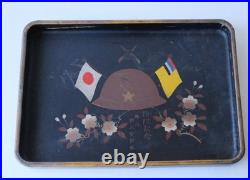
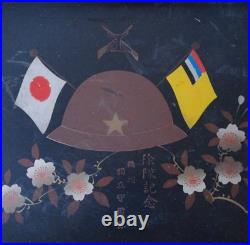
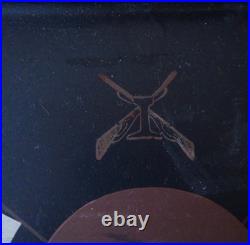
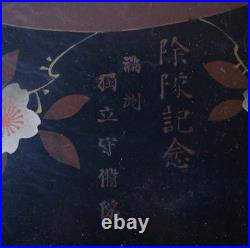
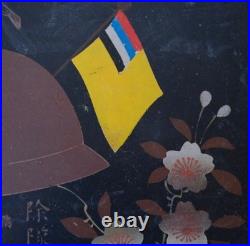
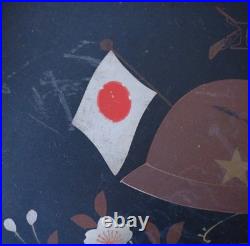
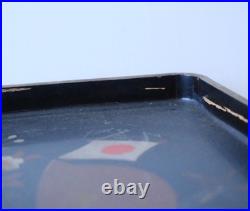
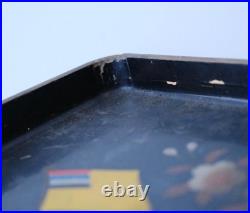
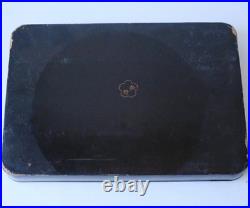
This is an original WWII Imperial Japanese “Discharge Commemorative” lacquer tray from the Manchuria Independent Garrison Unit. 30.5 × 21.5 cm. The tray features the Japanese national flag, the flag of Manchukuo, a military helmet, cherry blossoms, and crossed rifles. The center inscription reads. “Manchuria Independent Garrison Unit”. The Manchuria Independent Garrison Unit was a highly important military force responsible for protecting the South Manchuria Railway (Mantetsu), railway stations, bridges, and strategic facilities throughout Manchukuo. These troops were deeply connected to Japan’s control over Manchuria and served on the front line of the Japanese Empire’s continental expansion policy. During the 1930s-1945 period, they carried out security operations, anti-guerrilla activities, and military patrols across Manchuria. When the Soviet invasion of Manchuria began in August 1945, many of these units were overwhelmed and effectively disappeared during the collapse of Japanese control in the region. Because of this history, authentic artifacts related to the Manchuria Independent Garrison Unit are extremely scarce today. Especially rare are personalized discharge commemorative items like this example, which were privately owned rather than mass-issued military equipment. This is unquestionably a genuine wartime item. One particularly fascinating feature is the combination of the Japanese flag and the Manchukuo flag displayed side by side. This reflects the wartime ideology of “Japan-Manchukuo unity” and strongly captures the atmosphere of Imperial Japan’s presence in Manchuria. The reverse side bears the name “Yano” , which was likely the original owner – possibly the actual soldier who completed his military service and brought this tray home after serving in Manchuria. That personal connection gives the piece far more emotional and historical depth than an ordinary military souvenir. The tray itself is also a fine example of traditional Japanese lacquer craftsmanship. Even during wartime, Japanese commemorative objects often combined military symbolism with refined decorative artistry, and this piece beautifully reflects that tradition. Military helmet, cherry blossoms, Imperial Japanese flag, Manchukuo flag. This tray preserves the atmosphere of a vanished empire. Artifacts related to Manchukuo, Mantetsu, and Imperial Japanese occupation history have become increasingly sought after among international collectors in recent years. Shows age, scratches, lacquer wear, and signs of use consistent with age. Please check all photos carefully. Own a Piece of History. International Buyers – Please Note. Thank you for your understanding.

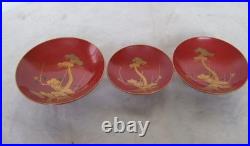
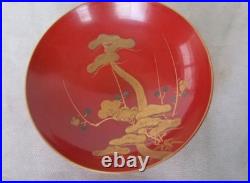
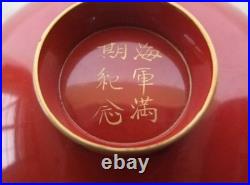
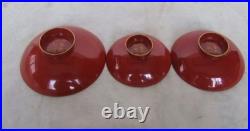
This is an original. Vintage Japanese lacquerware sake cup set. “Navy Service Completion Commemorative” item. During the pre-WWII Showa period. Inside the base of each cup, the original gold inscription reads. “Naval Service Completion Commemoration”. Indicating that this set was formally presented to commemorate the successful completion of naval duty. Historical Background (Easy to Understand). Compared to the Imperial Japanese Army, the. Japanese Navy had far fewer personnel. And naval service carried a significantly higher risk due to maritime operations. Completion commemorative items from the Navy are considered particularly scarce today. These objects were not everyday tableware. They were ceremonial items, created to. Mark survival, completion, and return. An important milestone in a sailor’s life. The Meaning of Sake Cups in Japanese Culture. In Japan, sake cups traditionally symbolize. Celebration of life milestones. Shared bonds and gratitude. Such cups were used during formal gatherings and commemorative occasions, rather than daily use. About Japanese Lacquerware. This set is finished in. Deep red natural lacquer with hand-applied gold decoration. Traditional Japanese lacquerware is known for. Aging beautifully over time. Because each piece requires skilled manual work. Authentic vintage lacquerware sets like this are increasingly difficult to find. Design & Set Details. Classic red lacquer finish with gold accents. Traditional auspicious pine and plum motifs. Three-piece graduated cup set. Intended for ceremonial and commemorative use. This is not simply a decorative antique. Reflecting Japanese cultural values of duty, completion, and gratitude – preserved in traditional lacquerware form. A meaningful piece for collectors of. Approximate 7-21days(To USA).

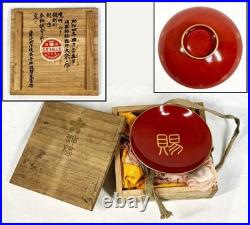
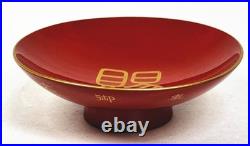
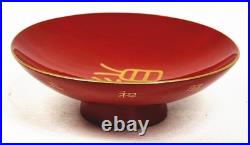
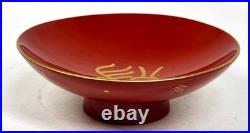
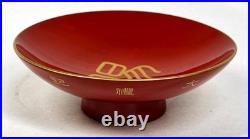
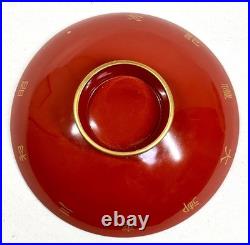
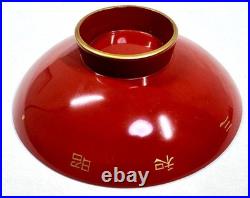
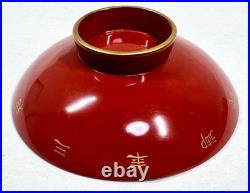
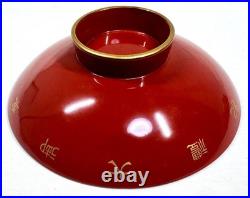
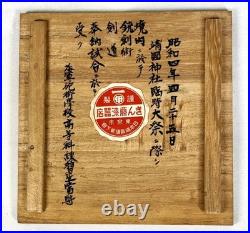
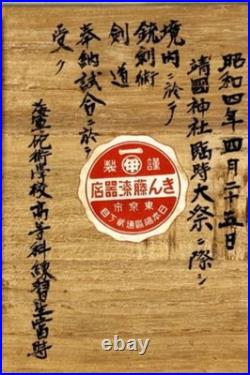
This is an original red lacquer ceremonial sake cup created to commemorate the Imperial Enthronement Ceremony (, Gotairai) of Emperor Showa (Hirohito) in 1928 (Showa 3). The inside of the cup features the bold character?? (“Tamawaru” – “Bestowed” or “Imperial Gift”), symbolizing honor and blessing. Around the outer rim, in gold lacquer, it reads. ? (“Commemorating the Imperial Enthronement Ceremony of Showa 3″). The cup is finished with a fine gilt rim. Box inscription (on the lid interior). The original wooden box has an important inscription, which connects this cup to a later historical event. Right column: Showa 4 (1929), April 25 – Yasukuni Shrine, on the occasion of the Temporary Grand Festival. Center column: Dedication of martial arts demonstrations (?) – bayonet drills and kendo matches were performed. Left column: Signed with affiliation/names (partially in cursive script, preserved as-is). The red circular seal is the mark of the original lacquerware shop. This means the cup, originally made for the 1928 Enthronement, was later dedicated or presented in 1929 at Yasukuni Shrine during a major festival, in connection with martial arts dedication ceremonies. This double provenance-Imperial and martial-greatly enhances its historical value. Who: The Japanese people, martial arts groups, and Shinto community honoring the Emperor. What: A commemorative lacquer sake cup celebrating the Showa Emperor’s enthronement and later used in a Yasukuni Shrine martial arts dedication. When: Cup produced in 1928 (Showa 3); box inscription dated 1929 (Showa 4). Where: The enthronement ceremonies were held in Kyoto; the dedication occurred at Yasukuni Shrine in Tokyo. Why: To celebrate the enthronement as a national event, and to dedicate martial arts performances to the spirits of the fallen. How: Such lacquer cups were used in ceremonial banquets and dedication rituals, then preserved in wooden boxes with inscriptions noting the occasion. Japanese lacquer (urushi) is made from the sap of the lacquer tree. It produces a hard, glossy, and durable coating admired for centuries. This cup uses red lacquer (shu-urushi) with gold-painted inscriptions and a gilt rim, typical of high-quality ceremonial vessels. Care: Avoid direct sunlight and alcohol cleaners. Simply wipe gently with a soft dry cloth. Imperial Enthronement + Yasukuni Shrine martial arts dedication – two major historical events connected in one artifact. Large bold character?? inside, symbolizing honor and Imperial blessing. Original inscribed box with provenance, making it valuable as both a ceremonial object and a historical document. Excellent for collectors of Japanese Imperial memorabilia, martial arts history, and Shinto-related artifacts. ? This is not just a sake cup, but a piece of Japanese history with strong connections to the Imperial Enthronement of Emperor Showa and the Yasukuni Shrine martial traditions of the early Showa period. Approximate 7-21days(To USA).

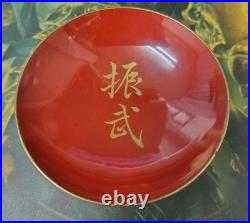
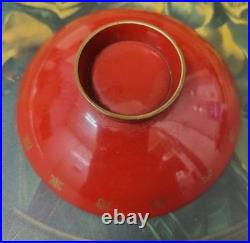
This is an original Imperial Japanese Army commemorative sake cup dating to 1931 (Showa 6). Around the rim, the following inscription is clearly written in Japanese. “Showa 6 – Imperial Japanese Army Special Grand Maneuvers”. What were the 1931 Army Special Grand Maneuvers? The Imperial Japanese Army Special Grand Maneuvers were large-scale, officially organized military exercises held periodically to test command structure, troop coordination, and national defense readiness. The 1931 maneuvers are particularly significant, as they were conducted in the same year as the Manchurian Incident, a turning point in East Asian history. These exercises were not ceremonial events, but serious preparations reflecting rising international tensions and Japan’s expanding military posture at the time. As a result, items related to the 1931 maneuvers are regarded today as important pre-war historical artifacts, rather than simple souvenirs. Meaning of the inscription ” (Shinbu)”. The center of the cup bears the gold-lettered phrase. This term can be translated as to inspire and uphold martial spirit. It was commonly used by the Imperial Japanese Army to express ideals of discipline, morale, and duty. Its presence strongly indicates that this cup was produced for an official military occasion, not for private or commercial sale. The special relationship between the Japanese Army and sake cups. In the Imperial Japanese Army, sake cups were deeply symbolic objects. They were used during. Rather than everyday drinkware, these cups served as ritual objects representing loyalty, unity, and remembrance. Commemorative cups bearing specific dates and events were typically distributed only to participants or officials, which makes surviving examples relatively scarce today. Japanese lacquer craftsmanship. This cup is finished in traditional Japanese lacquer (urushi). Japanese lacquerware is known for. Resistance to moisture and decay. Beautiful aging over time. Each piece was hand-coated in multiple layers, making true lacquer items difficult to mass-produce. Even military-issued lacquerware adhered to a certain quality standard, and many were lost or damaged during the war years. The remaining surface wear and aging visible today are consistent with an authentic pre-war lacquer piece and add to its historical character. Shows expected wear, scratches, and surface aging consistent with age. No major cracks or structural damage. This item is offered as a historical artifact, not as functional drinkware. An authentic 1931 Imperial Japanese Army commemorative lacquer sake cup, directly connected to a pivotal year in modern Japanese history. Highly suitable for collectors of. Imperial Japanese military memorabilia. Approximate 7-21days(To USA).