

WWII Imperial Japanese Navy Yokosuka Naval Training Photo Album 1928
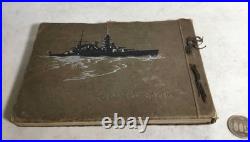
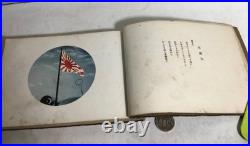
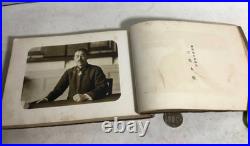
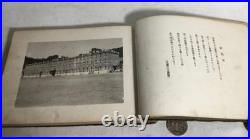
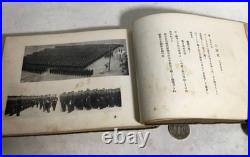
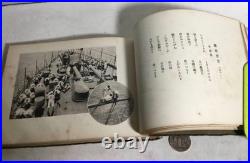
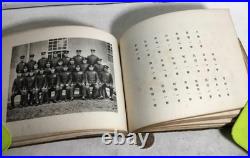
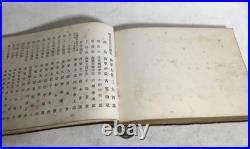
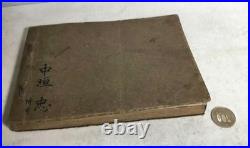

Own a Piece of History. This is an original non-commercial commemorative photo album titled. “1928 Fourth-Class Sailor Training Completion Memorial – Yokosuka Naval Training Corps”. Published in October 1928 (Showa 3). “Yokosuka Naval Training Corps Fourth-Class Sailor Memorial Album Committee, “. At the beginning of the album appears a portrait of. Who served as commander of the Yokosuka Naval Training Corps at the time. Mitsuya Shirou was an Imperial Japanese Navy officer who served aboard major warships including. Battleship Nagato (Vice Captain). Before becoming commander of Yokosuka Naval Training Corps. This gives the album a strong official and historical character rather than being merely a personal scrapbook. The back cover contains a handwritten ownership inscription. “Nakagaki Tadashi – Owner”. Believed to be the original sailor who actually trained at Yokosuka Naval Training Corps. These personal traces are highly valued among collectors because they connect the artifact directly to an individual sailor’s life. This is not simply a military photo album. It is a surviving personal relic from a young Japanese sailor before the Pacific War. Large military formation photographs. Officer and instructor portraits. Military songs and speeches. Rising Sun naval flag imagery. And many other fascinating scenes from early Showa-era Imperial Japanese Navy training life. What Was the Yokosuka Naval Training Corps? The Yokosuka Naval Training Corps was one of the most important training centers of the Imperial Japanese Navy. Young recruits from across Japan were sent here to receive. Before assignment to fleets and warships. This album captures the atmosphere of the Imperial Japanese Navy before the outbreak of the Pacific War. Why Is This Rare? Imperial Japanese Navy materials are significantly rarer than Army items today due to. Destruction of fleets during WWII. Postwar dismantling of the Navy. Limited survival of naval training materials. Albums from naval training corps were usually privately distributed to participants only. Making surviving copies extremely scarce. This example is especially desirable because it includes. Yokosuka Naval Training Corps connection. Captain Mitsuya Shirou portrait. Original handwritten owner identification. Together, these elements create a highly personal and historically important artifact. Used vintage condition with age wear, stains, foxing, scratches, and minor damage. Handwritten ownership inscription on rear cover. 15.2 × 21.6 cm. International Buyers – Please Note. Thank you for your understanding.

Polish Silver Ring Pilsudski 1930s Poland Western Europe
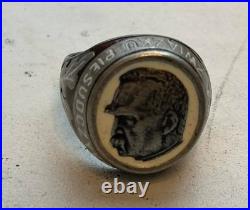
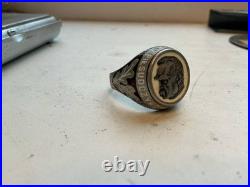
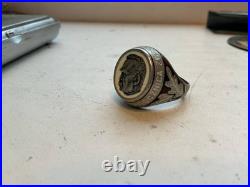
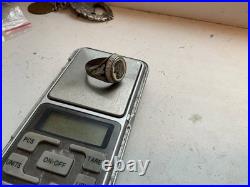
The Polish Silver Ring from the 1930s, originating from Poland in Western Europe, is a beautiful piece of jewelry made of silver. Although it is uncertified, this unique ring showcases the craftsmanship and history of Poland during that time period. Made with precision and elegance, this piece would make a stunning addition to any collection or a beautiful accessory for someone interested in Polish heritage.
Feldpost Sunday 32 Ww2 Militaria Unboxing German Winter Overboots And Captured Artillery Brass

Original Belgium order of Leopold Grand Cross Military Medal with palm
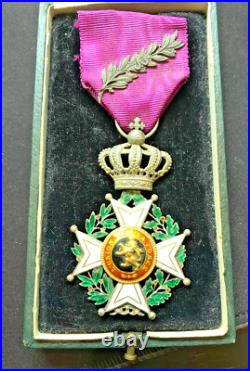
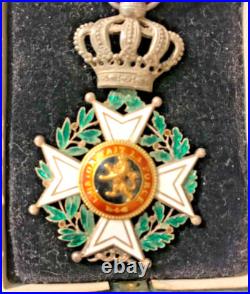
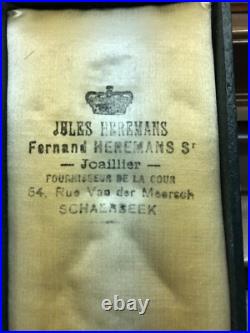
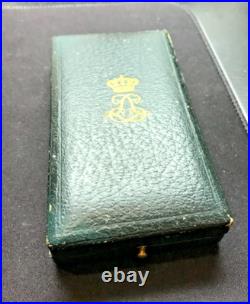
Original Belgium order of Leopold – Grand Cross Military Medal with palm. Comes in original box. Box has a smell. On sales of all items within Canada, regardless of exemption status. I will answer questions from Mondays to Fridays. M to 5 p.

WWII Imperial Japanese Army 6th Division Transport Troops Photo Album 1934
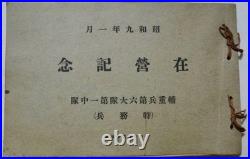
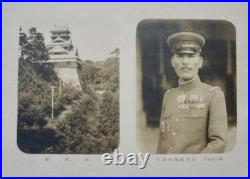
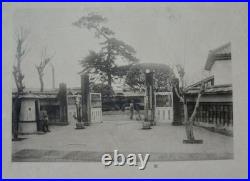
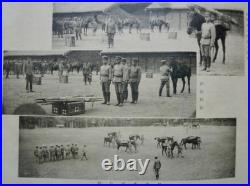
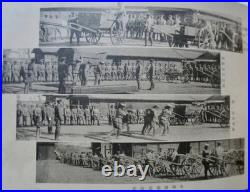
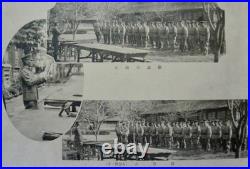
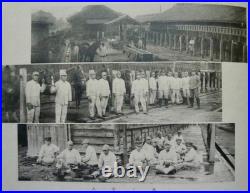
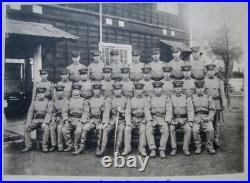
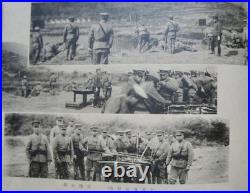
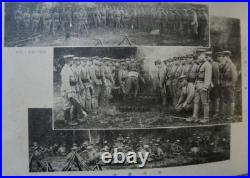
WWII Imperial Japanese Army Transport Troops Photo Album. 6th Division – 1934 (Showa 9). This original commemorative photo album was issued in 1934 for members of the. 6, 1st Company (Special Service Personnel). Of the Imperial Japanese Army. The opening pages include a portrait of Lieutenant General Sakaemon Sakamoto, commander of the 6th Division at the time. The 6th Division was one of the most famous divisions of the Imperial Japanese Army. Originally formed in Kumamoto in 1888, the division participated in numerous major conflicts including. The division later fought in China and ultimately in the Solomon Islands, where many of its soldiers suffered severe losses from starvation and disease after supply lines collapsed. What Makes This Album Unusual. Unlike most surviving Imperial Japanese Army photo albums, which focus on infantry units, this album documents a transport and logistics unit. The Imperial Japanese Army is widely known for placing relatively limited emphasis on logistics compared with other major armies of the period. As a result, surviving materials related to transport troops (Shichohei) are considerably less common than infantry-related items. This album provides a rare visual record of the soldiers responsible for moving food, ammunition, medical supplies, and equipment to the front lines. Roll calls and inspections. Horse grooming and care. Group photographs of personnel. Particularly noteworthy are the numerous photographs showing military horses, transport wagons, and logistical training activities. These images provide valuable insight into a rarely documented branch of the Japanese Army. The album captures military life during the relatively peaceful years between the Manchurian Incident and the outbreak of full-scale war in China. Imperial Japanese Army history. Logistics and supply operations. Rare unit photo albums. Shows age-related wear, staining, and storage marks consistent with age. Please examine all photographs carefully for condition details. A fascinating historical record documenting the often-overlooked soldiers who kept the Imperial Japanese Army moving. Own a Piece of History. International Buyers – Please Note. Thank you for your understanding.

Antique US Navy Chief Petty Officer Hat Badge Pin Back
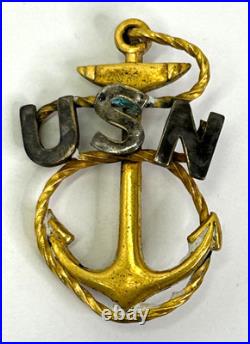
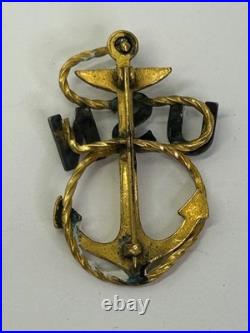
Antique US Navy Chief Petty Officer Hat Badge. It measures 1.75 inches long and is a pin back. Has a little corrosion, but still in great condition.

Order Red Banner RSFSR TRANSC UKR 1921-30 ANTONOV UPRISING Chemical Weapons R
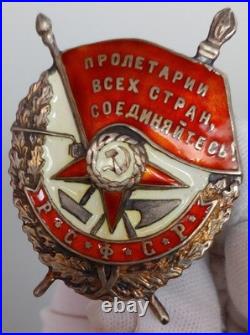
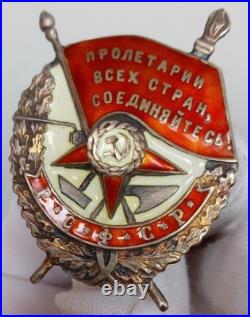
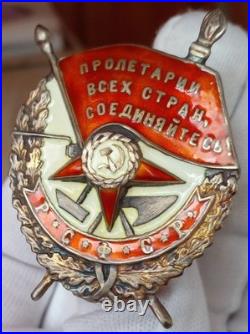
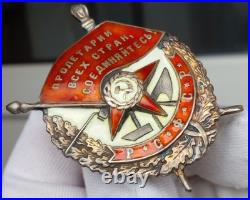
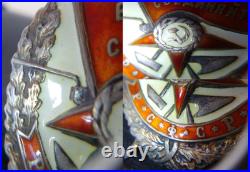
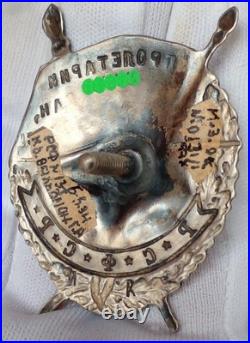
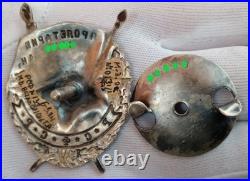
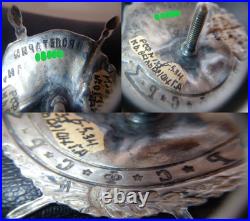
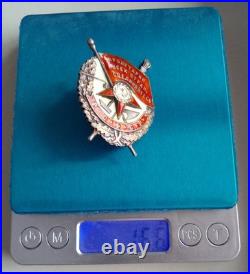
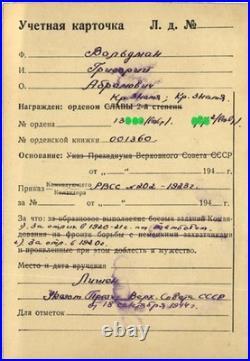
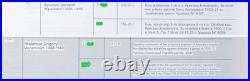
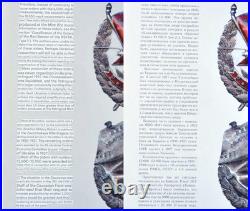
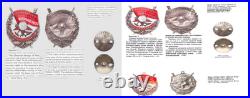
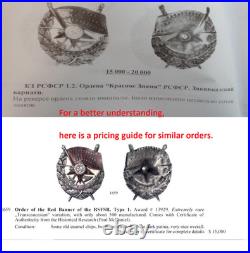

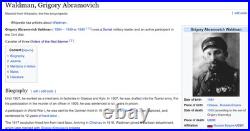
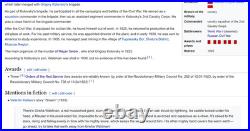
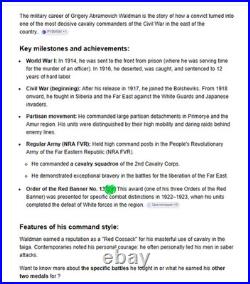
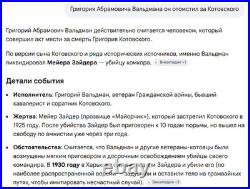
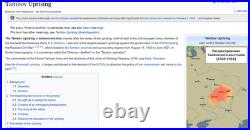
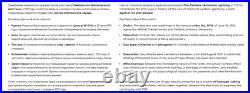
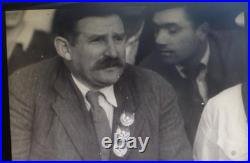
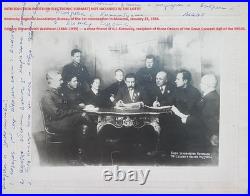
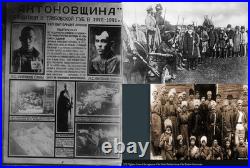
Order of the Red Banner of the RSFSR, so-called “TRANSCAUCASIAN OR UKRAINIAN, ” ATYPICAL TYPE (from the first 20 starting copies), outside the range from No. 13,599 to 13,010-13,029. THIS AWARD IS RELATED TO THE DIRECTIVE. Revolutionary MILITARY COUNCIL OF THE REPUBLIC OF THE RVSR No. 202 of December 31, 1923. FOR THE SUPPRESSION OF THE TAMBO (ANTONOV) UPRISING OF 1920-21. WHEN, FOR THE FIRST TIME IN HISTORY, CHEMICAL POISON WEAPONS WERE USED AGAINST CIVILIANS AND PEASANTS!!! The actual award ceremony took place in 1930, when the USSR celebrated the 10th anniversary of the creation of the First Cavalry Army. I WOULD ALSO LIKE TO NOTE THE SPECIAL SERVICES AND HEROISM OF THE AWARDED BROKER, G. SINCE he was the main organizer of the assassination of Meyer Seider, who shot Grigory Kotovsky in 1925. (TO WHOM ARE FAMILIAR WITH SOVIET HISTORIOGRAPHY, KOTOVSKY IS A LEGEND). Grigory Ivanovich Kotovsky (June 12 [24], 1881 – August 6, 1925) – Russian revolutionary, Soviet military and political figure, and hero of the Russian Civil War. He rose from a criminal in the Russian Empire to a member of the Union, Ukrainian, and Moldavian Central Executive Committees of the USSR. Member of the Revolutionary Military Council of the USSR. A legendary hero of Soviet folklore and literature. Silver, remnants of gilding, enamel, complex composite silhouette (counter-relief format) of a battle flag, engraved openwork oak leaves, smaller in size than the basic version 1.1. At the bottom of the reverse are the mintmaster’s initials I-K. A complete silver nut with a number, weight – 16.6 grams, nut weight – 5.9 grams. MUSEUM INVENTORY TAG WITH THE INSCRIPTION. Several examples are noted that differ in appearance from the majority of badges. The differences are clearly visible when comparing the elements of the semicircular wreath, the letters “????? ” on the red enamel ribbon, and a number of other details. The base of the order is thicker. The obverse design of this version of the order, unlike the first, has slight differences in. The oak wreath leaves are clearer and more detailed. The counter-relief on the reverse is also clearer. The reverses of the orders. Of this version differ in the clarity of the counter-relief. The lower part of the reverse is stamped with. Raised letters “? ” and? . These are most likely the initials of the minimaster who made the stamp for these orders. The orders of this version have the same types of silver washers and nuts with stamped markings as the orders of the first version. The number range for this version of the order is presumably between 13500 and 13999. The lowest known number is 13609, the highest is 13983. It should be noted that there are exceptions to this number range. Furthermore, each individual batch of 50 pieces out of 400 contains characteristic features. Leaf slits, the outline of a hammer and sickle, a more characteristic counter-relief reverse. Or smoothed without bulges, and the Münzmeister’s initials “I-K” and “I-N”. BIOGRAPHY OF THE KNIGHT. Recipient of three Orders of the Red Banner. Until 1907, he worked as a mechanic in factories in Odessa and Kyiv. In 1907, he was drafted into the Tsarist Army. For his participation in the murder of an officer in 1909, he was sentenced to six years in prison. He fought in World War I. In 1914, he was sent to the German front. In 1916, he deserted, was captured, and sentenced to 12 years of hard labor. The 1917 Revolution freed him from hard labor. Arriving in Chisinau, Waldman joined a partisan detachment in 1918, which later merged with Grigory Kotovsky’s brigade. As part of Kotovsky’s brigade, he participated in all the campaigns and battles of the Civil War. He was a squadron commander in the. Brigade, then an assistant. A regimental commander in Kotovsky’s 2nd Cavalry Corps. He was a close friend of the brigade commander. After the Civil War, ill-adapted to civilian life, he found himself out of work. Old place of work. For his past combat service, he was appointed director of the plant, and in early 1930, he was sent to America to study experience. In 1935, he managed peat mining in the village of Tugolessky Bor, Shatura District, Moscow Region. He was the main organizer of the murder of Meyer Seider, who shot Grigory Kotovsky in 1925. According to Kotovsky’s son, Waldman was executed in 1939, but no evidence has been found. The Tambov Uprising, or Antonovshchina (named after the leader of the uprising, chief of staff of the 2nd Insurgent Army, and a member of the party) The Antonov Rebellion Socialist Revolutionary A. Antonov’s rebellion was one of the largest peasant uprisings against the Russian Communist Party during the Russian Civil War, lasting in Tambov Governorate and surrounding regions from August 19, 1920, to June 1921. In Soviet historiography, it is sometimes referred to as the “Antonov Rebellion” or the Tambov Operation. The commander of the United Partisan Army and chairman of the Union of Working Peasants (STK) was Pyotr. Like the Kronstadt uprising, it largely contributed to the RCP’s decision to abandon the policy of War Communism and transition to the New Economic Policy (NEP). The use of chemical weapons against participants in the Tambov (Antonov) Uprising in 1921 is considered the first instance in history of the use of chemical warfare agents by a state against its own people. Key facts about this event. Order: The decision was enshrined in the famous. 0116 of June 12, 1921, signed by Mikhail Tukhachevsky and Vladimir Antonov-Ovseenko. Goal: To flush the rebels out of the dense forests where they were hiding and out of reach of conventional artillery and cavalry. Gas type: Chlorine and phosgene (in cylinders and chemical shells) were primarily used. Execution: Gas attacks were carried out between June and August 1921. In particular, shelling of forested areas near Lake Ramza has been documented. Effectiveness: Despite the terrifying nature of the order, the actual combat effect was limited due to poor personnel training, a shortage of ammunition, and weather conditions. However, the psychological impact on the peasants and families of the rebels was colossal. It is worth noting that the use of gas was accompanied by a system of hostage-taking and executions of civilians, which together enabled the Red Army to suppress the uprising by mid-1921. Archival and reference materials in electronic form!! ORDER WITH NO ANALOGUES!!! A COMPREHENSIVE EXPANDED EXAMINATION WAS CONDUCTED FOR THE ORDER!! MORE DETAILED INFORMATION CAN YOU RECEIVE IN PRIVATE BY CONTACTING ME WITH A PERSONAL QUESTION? IN THE INTERESTS OF THE CLIENT, FOR THE PURPOSE OF ANONYMITY, THE ORDER MARKING IS PARTIALLY HIDDEN. P/S FROM THE COLLECTION OF THE ALL-UNION MUSEUM!!

WWII Era Japanese Sword Exhibition Catalog 1935 Honma Junji Takashimaya
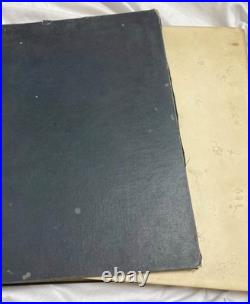
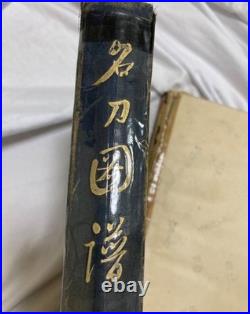
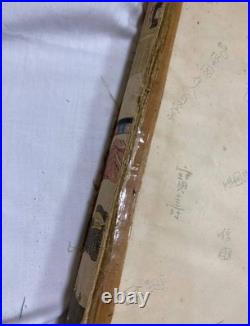
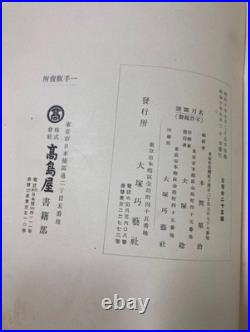
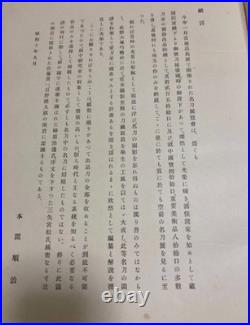
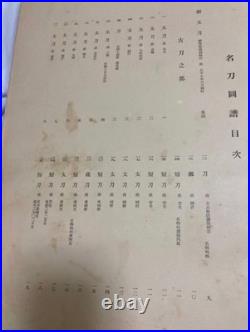
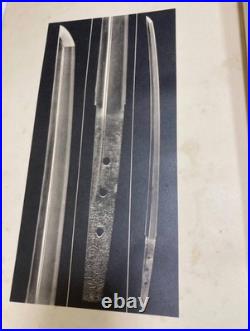
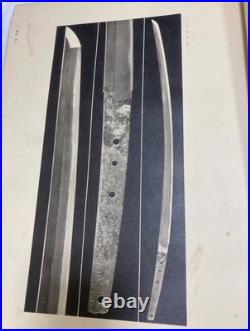
1935 Japanese Sword Exhibition Catalog (Meito Zufu). This is an original 1935 (Showa 10) Japanese sword reference book titled. “Meito Zufu” (Illustrated Catalog of Famous Japanese Swords). The book was published in conjunction with a major sword exhibition held at. Takashimaya Department Store in Tokyo. One of Japan’s most prestigious department stores during the prewar era. The catalog was compiled by. Who would later become one of the most influential scholars in the field of Japanese sword studies. Rather than being a simple exhibition guide, this work serves as a serious photographic reference documenting many famous historical Japanese swords using the advanced photographic techniques available at the time. Featured smiths and blades include examples attributed to renowned masters such as. And other celebrated swordsmiths whose works are considered important within Japanese sword history. Published in September 1935, this book reflects a period when interest in Japanese sword appreciation and preservation was rapidly growing throughout Japan. In the introduction, Honma Junji explains the purpose of using modern photography to accurately preserve and present the beauty and characteristics of famous blades. As a result, this volume is not only a sword catalog but also an important historical document representing prewar Japanese sword scholarship and collecting culture. For collectors of samurai swords, Japanese militaria, and prewar Japanese publications, it offers a fascinating glimpse into how important swords were studied and exhibited nearly a century ago. Spine shows significant wear and old repairs. Age-related stains, discoloration, foxing, and wear are present. Interior pages and photographic plates remain largely intact and readable. Please examine all photographs carefully before purchasing. Are increasingly difficult to find, particularly those connected to prewar sword exhibitions. This book documents the Japanese sword world before World War II and preserves photographs and information that were originally intended for serious collectors and enthusiasts of the era. A fascinating piece of Japanese sword history. Own a Piece of History. International Buyers – Please Note. Thank you for your understanding.

Original Wwii Usaaf 22nd Bomb Group Red Raiders 5 Th Aaf B-26 Patch
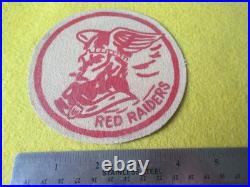

ORIGINAL WWII USAAF 22 ND BOMB GROUP 5 TH AAF B-26 OUTFIT, SILK SCREENED ON CANVAS USED 4 3/4 INCH SHOW USES AND WEAR AGE.