Order-Red-Banner-RSFSR-TRANSC-UKR-1921-30-ANTONOV-UPRISING-Chemical-Weapons-R-01-zz

Order Red Banner RSFSR TRANSC UKR 1921-30 ANTONOV UPRISING Chemical Weapons R

Order Red Banner RSFSR TRANSC UKR 1921-30 ANTONOV UPRISING Chemical Weapons R

Order Red Banner RSFSR TRANSC UKR 1921-30 ANTONOV UPRISING Chemical Weapons R
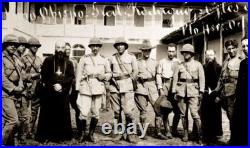
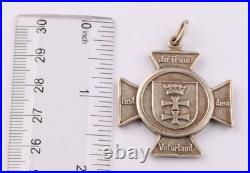
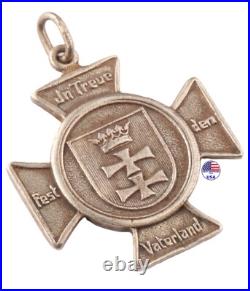
Order of the Red Banner of the RSFSR, so-called “TRANSCAUCASIAN OR UKRAINIAN, ” ATYPICAL TYPE (from the first 20 starting copies), outside the range from No. 13,599 to 13,010-13,029. THIS AWARD IS RELATED TO THE DIRECTIVE. Revolutionary MILITARY COUNCIL OF THE REPUBLIC OF THE RVSR No. 202 of December 31, 1923. FOR THE SUPPRESSION OF THE TAMBO (ANTONOV) UPRISING OF 1920-21. WHEN, FOR THE FIRST TIME IN HISTORY, CHEMICAL POISON WEAPONS WERE USED AGAINST CIVILIANS AND PEASANTS!!! The actual award ceremony took place in 1930, when the USSR celebrated the 10th anniversary of the creation of the First Cavalry Army. I WOULD ALSO LIKE TO NOTE THE SPECIAL SERVICES AND HEROISM OF THE AWARDED BROKER, G. SINCE he was the main organizer of the assassination of Meyer Seider, who shot Grigory Kotovsky in 1925. (TO WHOM ARE FAMILIAR WITH SOVIET HISTORIOGRAPHY, KOTOVSKY IS A LEGEND). Grigory Ivanovich Kotovsky (June 12 [24], 1881 – August 6, 1925) – Russian revolutionary, Soviet military and political figure, and hero of the Russian Civil War. He rose from a criminal in the Russian Empire to a member of the Union, Ukrainian, and Moldavian Central Executive Committees of the USSR. Member of the Revolutionary Military Council of the USSR. A legendary hero of Soviet folklore and literature. Silver, remnants of gilding, enamel, complex composite silhouette (counter-relief format) of a battle flag, engraved openwork oak leaves, smaller in size than the basic version 1.1. At the bottom of the reverse are the mintmaster’s initials I-K. A complete silver nut with a number, weight – 16.6 grams, nut weight – 5.9 grams. MUSEUM INVENTORY TAG WITH THE INSCRIPTION. Several examples are noted that differ in appearance from the majority of badges. The differences are clearly visible when comparing the elements of the semicircular wreath, the letters “????? ” on the red enamel ribbon, and a number of other details. The base of the order is thicker. The obverse design of this version of the order, unlike the first, has slight differences in. The oak wreath leaves are clearer and more detailed. The counter-relief on the reverse is also clearer. The reverses of the orders. Of this version differ in the clarity of the counter-relief. The lower part of the reverse is stamped with. Raised letters “? ” and? . These are most likely the initials of the minimaster who made the stamp for these orders. The orders of this version have the same types of silver washers and nuts with stamped markings as the orders of the first version. The number range for this version of the order is presumably between 13500 and 13999. The lowest known number is 13609, the highest is 13983. It should be noted that there are exceptions to this number range. Furthermore, each individual batch of 50 pieces out of 400 contains characteristic features. Leaf slits, the outline of a hammer and sickle, a more characteristic counter-relief reverse. Or smoothed without bulges, and the Münzmeister’s initials “I-K” and “I-N”. BIOGRAPHY OF THE KNIGHT. Recipient of three Orders of the Red Banner. Until 1907, he worked as a mechanic in factories in Odessa and Kyiv. In 1907, he was drafted into the Tsarist Army. For his participation in the murder of an officer in 1909, he was sentenced to six years in prison. He fought in World War I. In 1914, he was sent to the German front. In 1916, he deserted, was captured, and sentenced to 12 years of hard labor. The 1917 Revolution freed him from hard labor. Arriving in Chisinau, Waldman joined a partisan detachment in 1918, which later merged with Grigory Kotovsky’s brigade. As part of Kotovsky’s brigade, he participated in all the campaigns and battles of the Civil War. He was a squadron commander in the. Brigade, then an assistant. A regimental commander in Kotovsky’s 2nd Cavalry Corps. He was a close friend of the brigade commander. After the Civil War, ill-adapted to civilian life, he found himself out of work. Old place of work. For his past combat service, he was appointed director of the plant, and in early 1930, he was sent to America to study experience. In 1935, he managed peat mining in the village of Tugolessky Bor, Shatura District, Moscow Region. He was the main organizer of the murder of Meyer Seider, who shot Grigory Kotovsky in 1925. According to Kotovsky’s son, Waldman was executed in 1939, but no evidence has been found. The Tambov Uprising, or Antonovshchina (named after the leader of the uprising, chief of staff of the 2nd Insurgent Army, and a member of the party) The Antonov Rebellion Socialist Revolutionary A. Antonov’s rebellion was one of the largest peasant uprisings against the Russian Communist Party during the Russian Civil War, lasting in Tambov Governorate and surrounding regions from August 19, 1920, to June 1921. In Soviet historiography, it is sometimes referred to as the “Antonov Rebellion” or the Tambov Operation. The commander of the United Partisan Army and chairman of the Union of Working Peasants (STK) was Pyotr. Like the Kronstadt uprising, it largely contributed to the RCP’s decision to abandon the policy of War Communism and transition to the New Economic Policy (NEP). The use of chemical weapons against participants in the Tambov (Antonov) Uprising in 1921 is considered the first instance in history of the use of chemical warfare agents by a state against its own people. Key facts about this event. Order: The decision was enshrined in the famous. 0116 of June 12, 1921, signed by Mikhail Tukhachevsky and Vladimir Antonov-Ovseenko. Goal: To flush the rebels out of the dense forests where they were hiding and out of reach of conventional artillery and cavalry. Gas type: Chlorine and phosgene (in cylinders and chemical shells) were primarily used. Execution: Gas attacks were carried out between June and August 1921. In particular, shelling of forested areas near Lake Ramza has been documented. Effectiveness: Despite the terrifying nature of the order, the actual combat effect was limited due to poor personnel training, a shortage of ammunition, and weather conditions. However, the psychological impact on the peasants and families of the rebels was colossal. It is worth noting that the use of gas was accompanied by a system of hostage-taking and executions of civilians, which together enabled the Red Army to suppress the uprising by mid-1921. Archival and reference materials in electronic form!! ORDER WITH NO ANALOGUES!!! A COMPREHENSIVE EXPANDED EXAMINATION WAS CONDUCTED FOR THE ORDER!! MORE DETAILED INFORMATION CAN YOU RECEIVE IN PRIVATE BY CONTACTING ME WITH A PERSONAL QUESTION? IN THE INTERESTS OF THE CLIENT, FOR THE PURPOSE OF ANONYMITY, THE ORDER MARKING IS PARTIALLY HIDDEN. P/S FROM THE COLLECTION OF THE ALL-UNION MUSEUM!!
Order Red Banner RSFSR TRANSC UKR 1921-30 ANTONOV UPRISING Chemical Weapons R

WWII-Era-Japanese-Sword-Exhibition-Catalog-1935-Honma-Junji-Takashimaya-01-nbzw

WWII Era Japanese Sword Exhibition Catalog 1935 Honma Junji Takashimaya

WWII Era Japanese Sword Exhibition Catalog 1935 Honma Junji Takashimaya

WWII Era Japanese Sword Exhibition Catalog 1935 Honma Junji Takashimaya
1935 Japanese Sword Exhibition Catalog (Meito Zufu). This is an original 1935 (Showa 10) Japanese sword reference book titled. “Meito Zufu” (Illustrated Catalog of Famous Japanese Swords). The book was published in conjunction with a major sword exhibition held at. Takashimaya Department Store in Tokyo. One of Japan’s most prestigious department stores during the prewar era. The catalog was compiled by. Who would later become one of the most influential scholars in the field of Japanese sword studies. Rather than being a simple exhibition guide, this work serves as a serious photographic reference documenting many famous historical Japanese swords using the advanced photographic techniques available at the time. Featured smiths and blades include examples attributed to renowned masters such as. And other celebrated swordsmiths whose works are considered important within Japanese sword history. Published in September 1935, this book reflects a period when interest in Japanese sword appreciation and preservation was rapidly growing throughout Japan. In the introduction, Honma Junji explains the purpose of using modern photography to accurately preserve and present the beauty and characteristics of famous blades. As a result, this volume is not only a sword catalog but also an important historical document representing prewar Japanese sword scholarship and collecting culture. For collectors of samurai swords, Japanese militaria, and prewar Japanese publications, it offers a fascinating glimpse into how important swords were studied and exhibited nearly a century ago. Spine shows significant wear and old repairs. Age-related stains, discoloration, foxing, and wear are present. Interior pages and photographic plates remain largely intact and readable. Please examine all photographs carefully before purchasing. Are increasingly difficult to find, particularly those connected to prewar sword exhibitions. This book documents the Japanese sword world before World War II and preserves photographs and information that were originally intended for serious collectors and enthusiasts of the era. A fascinating piece of Japanese sword history. Own a Piece of History. International Buyers – Please Note. Thank you for your understanding.
WWII Era Japanese Sword Exhibition Catalog 1935 Honma Junji Takashimaya


US-Army-Indian-Campaign-Medal-Post-Indian-Wars-Service-Commemorative-01-jxfc

US Army Indian Campaign Medal Post-Indian Wars Service Commemorative

US Army Indian Campaign Medal Post-Indian Wars Service Commemorative

US Army Indian Campaign Medal Post-Indian Wars Service Commemorative
This is an authentic United States Army Indian Campaign Medal, initially authorized by the War Department via General Orders 12 in 1907 to recognize military service during the American Indian Wars spanning 1790 to 1891. This historic bronze decoration was retroactively issued to veterans and stands as a foundational piece of early 20th-century U. The bronze medallion remains in outstanding condition with a rich, uncleaned golden-bronze patina. The stamped lettering and micro-details of the horse, rider, and reverse military trophy remain crisp and sharp with minimal high-point wear. The original silk ribbon maintains bold coloration and tight weaves, free of significant rot, staining, or shredding. The top features a clean, rectangular white backing card used for clean preservation or showcase presentation. We always take plenty of photos and provide detailed descriptions of our items. Therefore, you are asked to please check ALL posted photos and review the Description Section before purchasing an item from our store. Before listing, we clean and inspect our items for neatness and accuracy. We know how important it is that your item arrive quickly and undamaged, so we will take great care in packing your items professionally and properly. You will never be disappointed.
US Army Indian Campaign Medal Post-Indian Wars Service Commemorative

Army-Yearbook-1937-Building-the-Wehrmacht-Olympia-1936-Mountain-Infantry-Flag-01-zdwr

Army Yearbook 1937 Building the Wehrmacht, Olympia 1936, Mountain Infantry, Flag

Army Yearbook 1937 Building the Wehrmacht, Olympia 1936, Mountain Infantry, Flag

Army Yearbook 1937 Building the Wehrmacht, Olympia 1936, Mountain Infantry, Flag
Year Book of the German Army. A nice copy of military force history! Included are building the Wehrmacht, the German Officer, New Buildings of the Army, The Armed Forces at the Olympics 1936, at the Mountain Infantry, War School, Wehrmacht in Nurnberg, Fight against Panzerwagen, Soldier and Worker, 20 years ago – the war year 1917, armament of other countries (France, Austria, England, Russia, Italy, USA), Flags of the Army, French Maginot Linie, Autumn maneuver 1936 and much more… Hardcover, Full Linen / Cloth. 144+ pages, text and pictures. Good exterior and fair interior. Spine faded, name on free front endpaper, foxing to prelims and some text pages, few pages with tears, else ok. All pages are complete and tight in the binding. Approx/Measurements: 7″ x 9-1/2″ 1.1 lbs.
Army Yearbook 1937 Building the Wehrmacht, Olympia 1936, Mountain Infantry, Flag

WWII-Imperial-Japanese-North-China-Garrison-Tianjin-Photo-Album-1928-01-kai

WWII Imperial Japanese North China Garrison Tianjin Photo Album 1928

WWII Imperial Japanese North China Garrison Tianjin Photo Album 1928

WWII Imperial Japanese North China Garrison Tianjin Photo Album 1928
Own a Piece of History. This is an original 1928 (Showa 3) “North China Garrison Commemorative” photo album created by the Japanese Tianjin Resident Association during the turbulent years before the Manchurian Incident and the full-scale Sino-Japanese War. Far more than a simple military album, this book documents the world of the Japanese community living in Tianjin, China, alongside the activities of the Imperial Japanese Army’s North China Garrison forces. What was the Tianjin Resident Association? The Tianjin Resident Association (Tianjin Kyoryumin-dan) was the governing organization of the Japanese settlement in Tianjin, China. At the time, many Japanese civilians lived in Tianjin, including. The association managed the Japanese community and worked closely with the Japanese military presence in North China. This makes the album historically important not only as a military record, but also as documentation of Imperial Japan’s overseas civilian society in China during the 1920s. What was the North China Garrison Army? The North China Garrison Army (China Garrison Army) was a permanent Japanese military force stationed in northern China after the Boxer Rebellion. Guarding railways and strategic interests. Maintaining influence in North China. The force later became one of the foundations of Japan’s expansion into China before the Second Sino-Japanese War. A rare “pre-war empire” historical document. One of the most fascinating aspects of this album is its connection to the political instability surrounding the assassination of Zhang Zuolin (Huanggutun Incident). Photographs of officers and garrison troops. Local Chinese street life. North China cultural scenes. The opening text discusses. Fear among Japanese residents. Deployment of Japanese troops. Worsening instability in North China. This gives the album an unusually raw “before the storm” atmosphere. Rather than documenting the war itself, it captures the fragile period just before Japan’s full expansion into China. The book includes personnel listings for members of the China Garrison Army, including. Colonel Washizu Enpei later promoted to Lt. Colonel Furushiro Taneshu later promoted to Lt. These names add additional historical significance for collectors and researchers. Why is this rare? Most surviving Japanese military albums from China date from after 1937, during the full-scale Sino-Japanese War. This album predates that era. Materials specifically tied to. Japanese civilian settlements in Tianjin. The North China Garrison Army. The Zhang Zuolin assassination period. Pre-Manchurian Incident North China. Are significantly harder to find today. Even rarer are examples that still contain. Political atmosphere of 1928 North China. This is essentially a surviving snapshot of Imperial Japan’s presence in North China before the collapse into full war. 19 × 13 cm. Shows age-related wear including stains, discoloration, scratches, creases, and minor damage consistent with age. Please check all photos carefully. International Buyers – Please Note. Thank you for your understanding.
WWII Imperial Japanese North China Garrison Tianjin Photo Album 1928

WWI-Photo-German-U-Boat-U-53-New-York-Harbor-1919-USS-Jacob-Jones-01-yudg

WWI Photo German U-Boat U-53 New York Harbor 1919 USS Jacob Jones

WWI Photo German U-Boat U-53 New York Harbor 1919 USS Jacob Jones

WWI Photo German U-Boat U-53 New York Harbor 1919 USS Jacob Jones
Post-WWI German U-Boat U-53 New York Harbor 1919. Original vintage photograph showing the Imperial German Navy submarine SM U-53 at New York Harbor after World War I, dated by comparison to the documented Bain/Navy image as New York, April 24, 1919. The image shows the long, low profile of the German U-boat at the surface, with crew visible on deck and harbor vessels in the background. SM U-53 was one of the most historically significant German submarines of World War I. The warship sunk was the American destroyer USS Jacob Jones, torpedoed by German U-53 on December 6, 1917, off the Isles of Scilly. This makes the image especially desirable for collectors of WWI naval history, U-boat material, Imperial German Navy photographs, and early submarine warfare. A scarce and historically important postwar view of a surrendered German U-boat in New York Harbor, connected to one of the best-known German submarine commanders and to the loss of USS Jacob Jones. Original vintage black-and-white photograph measuring approximately 2 3/4 x 4 1/2 inches. Reverse is blank except for a small handwritten number. Please review all photos for exact condition. Conflict: World War I. Country/Region: Germany / United States. Branch: Imperial German Navy / Kaiserliche Marine. Subject: German U-boat / submarine at New York Harbor. Location: New York Harbor / New York. Associated Commander: Hans Rose. Associated Event: Post-WWI surrendered German submarine. Original/Reproduction: Original vintage photograph / period print. 2 3/4 x 4 1/2 in.
WWI Photo German U-Boat U-53 New York Harbor 1919 USS Jacob Jones

WWII-Japanese-Anti-War-Proletarian-Army-Novel-Book-1930-Communist-01-ny

WWII Japanese Anti War Proletarian Army Novel Book 1930 Communist

WWII Japanese Anti War Proletarian Army Novel Book 1930 Communist

WWII Japanese Anti War Proletarian Army Novel Book 1930 Communist
Published in 1930 (Showa 5), this is a rare pre-war Japanese proletarian literature book titled. Army Disease (Gun Tai Byo). The book was published by Senkisha and marked as part of the “Japan Proletarian Writers League” series. As the name suggests, the Japan Proletarian Writers League was a communist-oriented writers’ organization that promoted anti-war and anti-military ideas during the early Showa period. This work focuses on themes such as. Psychological pressure inside the army. Poverty in rural farming communities. Exhaustion and suffering of soldiers. At the time, these themes were considered socially and politically sensitive. What makes this book especially important is its publication date. It was printed in 1930, before the Manchurian Incident (1931), during a brief period before militarism rapidly expanded across Japan. In the years that followed, anti-war thought and criticism of the military were increasingly suppressed, and many left-wing organizations and writers became targets under the Peace Preservation Laws. Because of this historical background, surviving publications like this are now quite scarce. Rather than just an old book, this is a surviving historical artifact from a period when alternative political and social ideas still openly existed in prewar Japan. The cover artwork is also striking, showing an exhausted soldier and rural imagery rather than heroic military propaganda imagery commonly seen in wartime publications. Printed: November 25, 1929. Fifth Edition Published: January 15, 1930. Showing that the book already had a readership at the time. An excellent item for collectors interested in. Communist / proletarian movements. Heavy age wear, stains, creases, edge wear, and paper aging consistent with its age of nearly 100 years. Own a Piece of History. International Buyers – Please Note. Thank you for your understanding.
WWII Japanese Anti War Proletarian Army Novel Book 1930 Communist

Vintage-1925-United-States-Military-Academy-West-Point-The-Howitzer-Year-Book-01-kdh

Vintage 1925 United States Military Academy West Point The Howitzer Year Book

Vintage 1925 United States Military Academy West Point The Howitzer Year Book

Vintage 1925 United States Military Academy West Point The Howitzer Year Book
The Vintage 1925 United States Military Academy West Point The Howitzer Year Book is an original period item with a militaria theme, focusing on the history and activities of the United States Military Academy at West Point. This collectible publication from 1925 provides a unique glimpse into the military academy’s traditions, training, and events during that time period, making it a valuable piece for collectors interested in military history and memorabilia. Book is in excellent shape. One page has come separate from the binding and there is some light foxing. There is some normal shelf wear to the cover. Please see photos for condition.
Vintage 1925 United States Military Academy West Point The Howitzer Year Book