
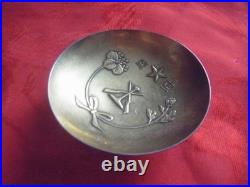
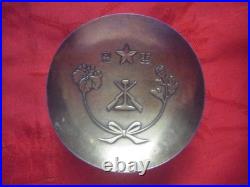
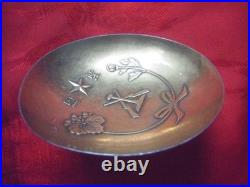
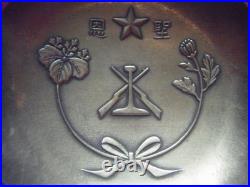
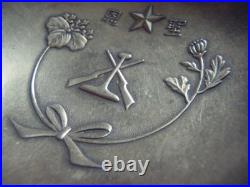
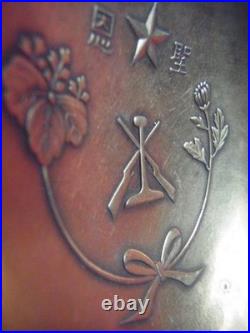
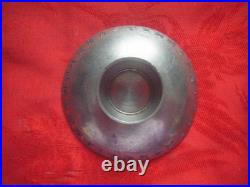
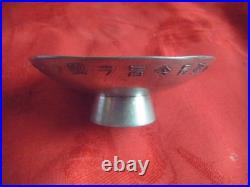
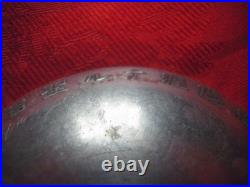
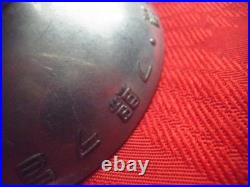

This is an original prewar Imperial Japanese Army Railway Regiment commemorative metal sake cup, dating to 1930. The center features the insignia of the Army Railway troops, together with an army star and decorative floral motifs. Above the design are the characters: “Seion” – Imperial Favor In this context, “Imperial Favor” refers to special grace or recognition granted by the Emperor. Around the rim is an inscription stating, in substance, that: In February 1930, an Imperial Aide-de-Camp was dispatched and a special Imperial message was conveyed. The exact wording of that message and the specific individual who received it are not currently known. However, the inscription itself clearly connects this cup to a specific event involving the Imperial household and the military unit. That makes this different from an ordinary discharge or service souvenir. It was made to commemorate a moment when the Imperial court formally acknowledged or addressed the unit. The Railway Regiment was a specialized branch of the Imperial Japanese Army responsible for military railway construction, operation, repair, and transport support. These troops worked behind the front lines to keep men, equipment, and supplies moving, making them an important but less visible part of the Army. This small cup therefore preserves several layers of history in one object: Imperial Japanese Army Railway Regiment Imperial Aide-de-Camp Imperial Favor 1930 military commemoration Approximate size: 75 mm diameter × 23 mm high The cup has a silver-colored metal exterior with a gold-colored interior finish. Age-related toning and wear are present, but the design and inscription remain clearly visible. Recommended for collectors of Imperial Japanese Army memorabilia, railway troops, military sake cups, prewar Japan, and Imperial military history. A small object marking a specific connection between the Imperial court and an Army technical unit nearly a century ago. Own a Piece of History. International Buyers – Please Note.

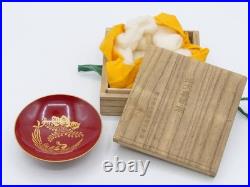
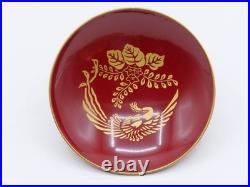
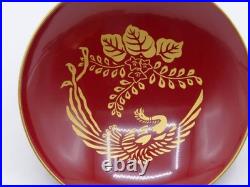
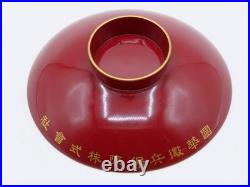
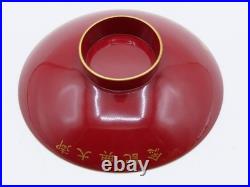
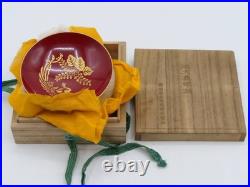
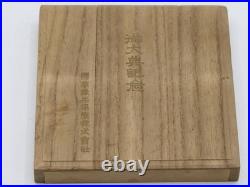
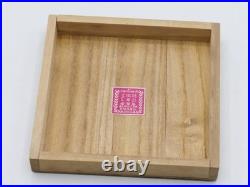
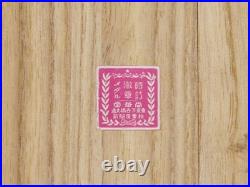
This is a prewar Japanese lacquer sake cup made to commemorate the Imperial Enthronement Ceremony, or “Grand Enthronement, ” of Emperor Hirohito. The cup is finished in deep red lacquer with a gold phoenix and floral design. The original wooden box also bears the same commemorative inscription and company name. Although the cup itself is not dated, its period can be identified through the history of the company. Was established in 1922 and ceased to exist under this name after its merger in 1941. The only Imperial Enthronement Ceremony held during that period was the enthronement of Emperor Hirohito in 1928. For this reason, this piece can be confidently attributed to the 1928 Imperial Enthronement celebrations. The most unusual aspect of this item is the company behind it. In prewar Japan, military conscription could have a significant financial impact on a young man and his family. This makes the cup more than simply a commemorative sake vessel. It represents an unusual intersection of Imperial ceremony, military conscription, private business, and everyday life in prewar Japan. Please note that this is not confirmed to be a military-issued sake cup. The original wooden box and wrapping cloth are included. The cup remains in attractive condition for its age, while the box shows age-related wear and cracking. Please examine all photographs carefully for condition. A fascinating piece of Japanese social history from an era when military conscription was closely connected with everyday civilian life. Own a Piece of History. International Buyers – Please Note.

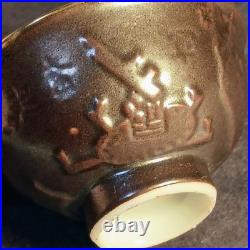
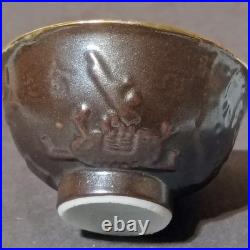
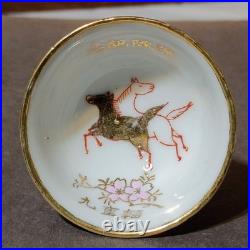
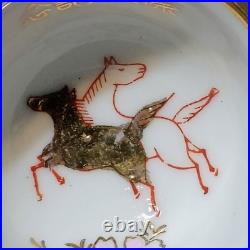
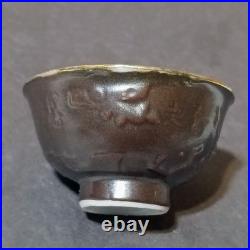
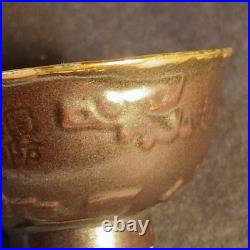
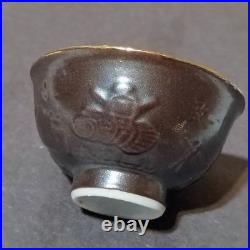
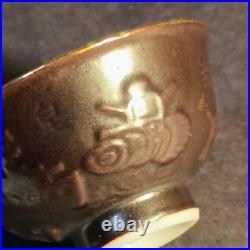
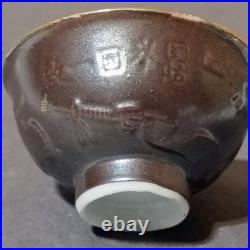
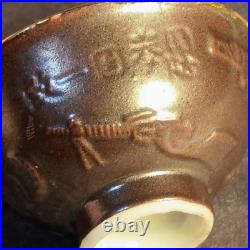
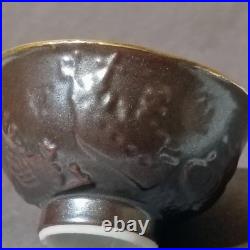
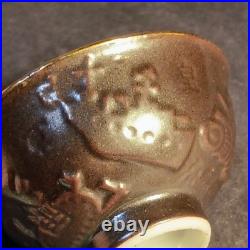
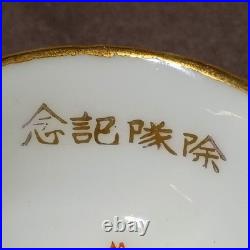
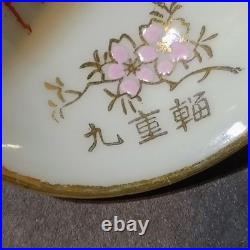
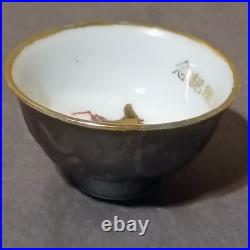
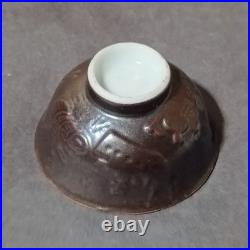
Bottom interior text reads as “9th Transport/Supply Corps”. Top interior text reads as “Discharge from military service commemoration”. This is the reference to the WW2 Japanese legend of giant crabs eating soldiers. This is a very unique design for an imperial Japanese commemorative cup. The text on the outside of the cup above the LMG is very hard to read. It appears to include , being “Japan-America” and is commonly used in WW2 phrases. Being “War against America”.

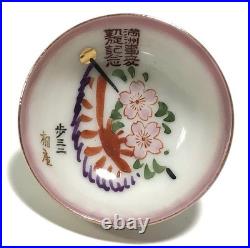
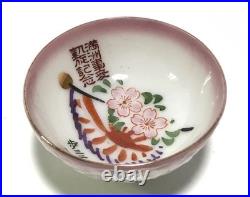
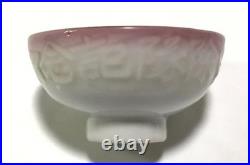
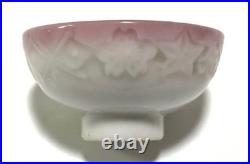
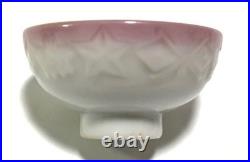
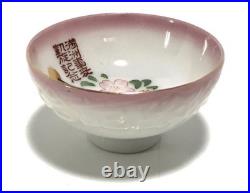
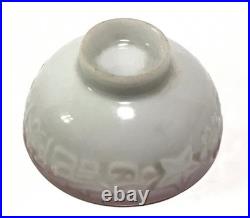
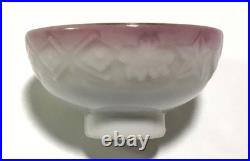
WWII Imperial Japanese Army Manchurian Incident Commemorative Military Sake Cup. Thank you for visiting. Imperial Japanese Store Kamikaze. This small porcelain military sake cup tells the story of one Japanese soldier who likely served during the. Unlike ordinary souvenirs, this cup preserves both military history and a personal milestone. Inside the cup are several important inscriptions. “Manchurian Incident Victory Return Commemoration”. Around the rim appears. The cup also bears. Which most likely refers to the. Of the Imperial Japanese Army. Another inscription appears to read. Although the characters are somewhat difficult to read, so this identification cannot be confirmed with certainty. What was the Manchurian Incident? The Manchurian Incident began in. Becoming one of the most significant events leading toward the Second Sino-Japanese War and eventually the Pacific War. Following the incident, Japanese forces occupied Manchuria and established the state of. For soldiers who participated, surviving the campaign and returning home safely was considered an important milestone worthy of commemoration. The 32nd Infantry Regiment. The inscription “Ho 32″ strongly suggests the. Although this cannot be stated with absolute certainty. The regiment was established in. And had a distinguished service history. The Second Sino-Japanese War. The Battle of Okinawa. During the Manchurian Incident, elements of the regiment participated in operations including the. The regiment later became well known for its determined resistance during the Battle of Okinawa, making it one of the better-known infantry regiments of the Imperial Japanese Army. The Story This Cup Tells. Reading the inscriptions together suggests a compelling story. Its owner most likely. Served with what was probably the 32nd Infantry Regiment. Participated in the Manchurian Incident. Completed his period of military service. And received this commemorative cup to celebrate both his return and his honorable discharge. Rather than commemorating a victory alone, this cup appears to celebrate the completion of an entire chapter in one soldier’s life. Military Sake Cups in Japanese Army Culture. Military sake cups were much more than drinking vessels. They were presented during important milestones such as enlistment, deployment, promotion, victory celebrations, safe return, and discharge from military service. Many were produced for only a single individual. As a result, they often preserve names, units, campaigns, and personal histories that would otherwise have been lost. Collectors often regard these cups as miniature military biographies preserved in porcelain. The cup features several symbolic military motifs. Cherry blossoms, representing the Japanese soldier. A bugle, symbolizing military ceremonies, mobilization, and victory celebrations. Decorative elements reflecting the patriotic aesthetic of pre-war Japan. 5.5 cm (2.2 inches). In diameter, it preserves an extraordinary amount of military history. 5.5 cm (2.2 in). This is more than a military sake cup. It is a surviving record of one soldier’s journey-from deployment during the Manchurian Incident to his safe return and discharge from military service. A remarkable piece of personal military history. Own a Piece of History. International Buyers – Please Note. Thank you for your understanding.

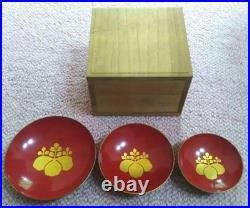
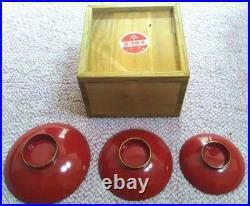
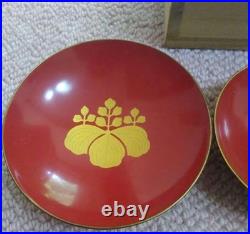
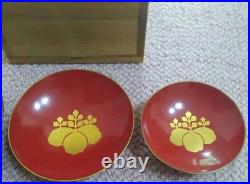
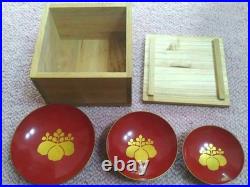
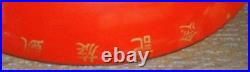
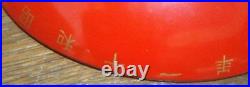
This is an original Imperial Japanese Army commemorative lacquer sake cup set. Dated May 1936 (Showa 11). Junior Officers and NCO Corps of the 18th Infantry Regiment. To commemorate their return (Victory/”Gaisen”) from military operations. Nearly 90 years old. The year 1936 was a crucial moment in pre-WWII Japan. The 18th Infantry Regiment had already served in the Sino-Japanese War. Russo-Japanese War, Jinan Incident, and later campaigns in China. Ultimately, the regiment was annihilated in the Pacific War. During the Battles of Saipan and Guam in 1944. This cup set represents the regiment in its active years. Before its final destruction. The Special Meaning of Sake Cups in the Japanese Army. In the Imperial Japanese military, sake cups were not casual tableware. They were used in. Pledges of loyalty. Farewell before battle. Drinking from the same cup symbolized shared fate. Sometimes literally life and death. Because of this ceremonial role. Military commemorative cups are often rarer than field equipment. They were not battlefield gear. They survived only if preserved intentionally. Three-piece graduated set (Large / Medium / Small). Gosan no Kiri (Paulownia Crest). A high-status emblem historically associated with the Japanese government and authority. Gold maki-e style decoration on deep red lacquer. The large cup bears gold inscription. 18th Infantry Regiment Junior Officers & NCO Corps. May 1936 Victory Commemoration. Original wooden storage box included. Cups: very good overall condition considering age. Box: exterior shows age-related wear; interior relatively clean. No original cushioning material was included. Why It Is Rare. Regiment name fully written. Exact date inscribed. Specific rank group (Junior Officers & NCO Corps). Complete 3-piece set. Pre-WWII Showa period original. Direct connection to a regiment later destroyed in the Pacific War. This is not just a military souvenir. It is a surviving ceremonial artifact tied to a real regiment. With a documented combat history ending in total loss. A tangible piece of Imperial Japanese military history. International Buyers – Please Note. Thank you for your understanding.

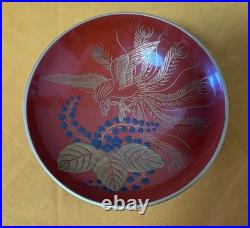
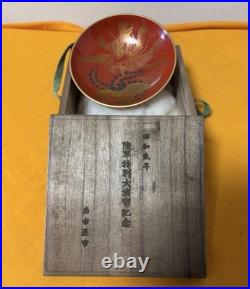
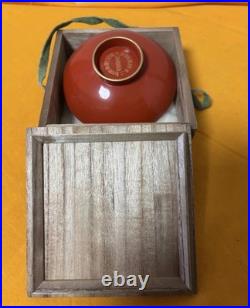
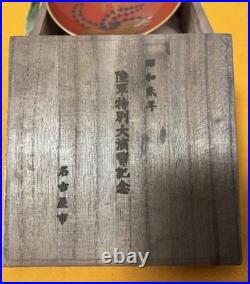
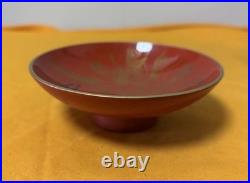
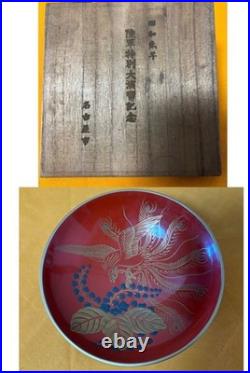
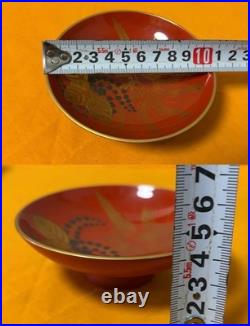
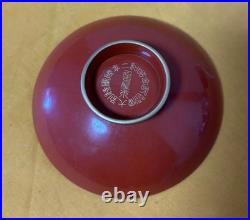
This is an original commemorative lacquer sake cup issued for the. Imperial Japanese Army Special Grand Maneuvers of Showa 2 (1927). Complete with original wooden storage box. Army Special Grand Maneuvers Commemoration. Cup Base (gold lettering). Showa 2 Special Grand Maneuvers Commemoration. The inscriptions clearly identify the historical event and place. What Were the “Special Grand Maneuvers”? The “Special Grand Maneuvers” were large-scale national military exercises conducted under the direct observation of the Emperor. Unlike ordinary field training, these were state-level demonstrations of military strength and modernization. The 1927 maneuvers were held in the Chukyo region (Nagoya area) and involved major Imperial Army divisions including. This cup was produced as an official commemorative item for that nationally significant event. Historical Context – 1927. 1927 was an early Showa period year, before the outbreak of full-scale war in China. Japan was in a phase of military modernization and expansion, but not yet in total war. Commemorative items from this era often show higher artistic refinement compared to later wartime mass production pieces. The Relationship Between the Japanese Military and Sake Cups. In Imperial Japan, sake cups were not merely drinking vessels. As such, military commemorative cups are important cultural artifacts reflecting the ceremonial traditions of the Imperial Army. Red lacquer ground with gold maki-e phoenix motif. The phoenix symbolizes honor, prosperity, and auspicious celebration. Paulownia leaves appear below, reinforcing the dignified and ceremonial tone. Elegant rather than militaristic in appearance. Traditional Japanese lacquerware is created by layering natural urushi lacquer multiple times to achieve durability and deep gloss. The gold maki-e decoration technique requires skilled craftsmanship and precision. This piece reflects the high-quality decorative standards of the early Showa period. (See photos for reference). Age-related wear, light storage marks, and natural patina consistent with its age. Maki-e decoration remains clear and well-preserved. Original wooden box included. A refined and historically documented pre-war Imperial Japanese Army commemorative piece. Own a Piece of History. International Buyers – Please Note. Thank you for your understanding.

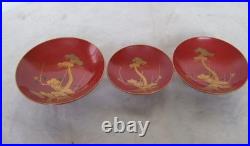
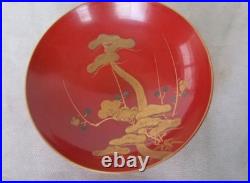
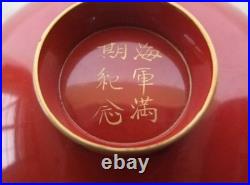
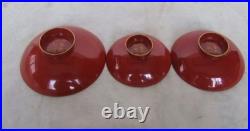
This is an original. Vintage Japanese lacquerware sake cup set. “Navy Service Completion Commemorative” item. During the pre-WWII Showa period. Inside the base of each cup, the original gold inscription reads. “Naval Service Completion Commemoration”. Indicating that this set was formally presented to commemorate the successful completion of naval duty. Historical Background (Easy to Understand). Compared to the Imperial Japanese Army, the. Japanese Navy had far fewer personnel. And naval service carried a significantly higher risk due to maritime operations. Completion commemorative items from the Navy are considered particularly scarce today. These objects were not everyday tableware. They were ceremonial items, created to. Mark survival, completion, and return. An important milestone in a sailor’s life. The Meaning of Sake Cups in Japanese Culture. In Japan, sake cups traditionally symbolize. Celebration of life milestones. Shared bonds and gratitude. Such cups were used during formal gatherings and commemorative occasions, rather than daily use. About Japanese Lacquerware. This set is finished in. Deep red natural lacquer with hand-applied gold decoration. Traditional Japanese lacquerware is known for. Aging beautifully over time. Because each piece requires skilled manual work. Authentic vintage lacquerware sets like this are increasingly difficult to find. Design & Set Details. Classic red lacquer finish with gold accents. Traditional auspicious pine and plum motifs. Three-piece graduated cup set. Intended for ceremonial and commemorative use. This is not simply a decorative antique. Reflecting Japanese cultural values of duty, completion, and gratitude – preserved in traditional lacquerware form. A meaningful piece for collectors of. Approximate 7-21days(To USA).

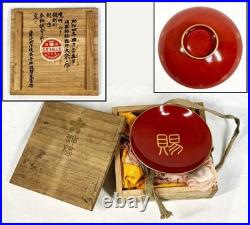
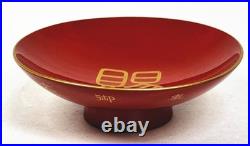
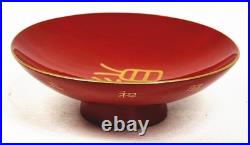
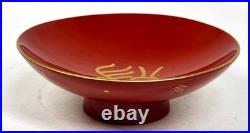
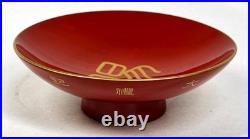
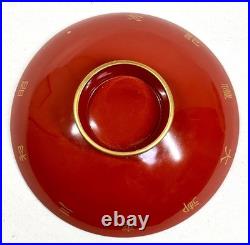
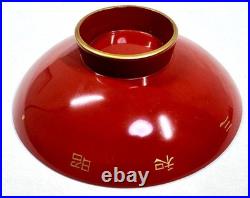
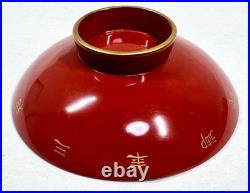
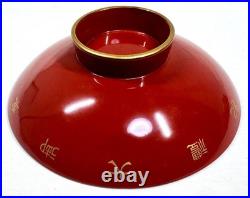
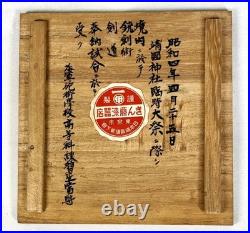
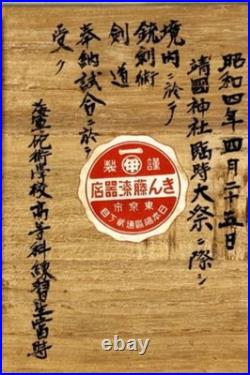
This is an original red lacquer ceremonial sake cup created to commemorate the Imperial Enthronement Ceremony (, Gotairai) of Emperor Showa (Hirohito) in 1928 (Showa 3). The inside of the cup features the bold character?? (“Tamawaru” – “Bestowed” or “Imperial Gift”), symbolizing honor and blessing. Around the outer rim, in gold lacquer, it reads. ? (“Commemorating the Imperial Enthronement Ceremony of Showa 3″). The cup is finished with a fine gilt rim. Box inscription (on the lid interior). The original wooden box has an important inscription, which connects this cup to a later historical event. Right column: Showa 4 (1929), April 25 – Yasukuni Shrine, on the occasion of the Temporary Grand Festival. Center column: Dedication of martial arts demonstrations (?) – bayonet drills and kendo matches were performed. Left column: Signed with affiliation/names (partially in cursive script, preserved as-is). The red circular seal is the mark of the original lacquerware shop. This means the cup, originally made for the 1928 Enthronement, was later dedicated or presented in 1929 at Yasukuni Shrine during a major festival, in connection with martial arts dedication ceremonies. This double provenance-Imperial and martial-greatly enhances its historical value. Who: The Japanese people, martial arts groups, and Shinto community honoring the Emperor. What: A commemorative lacquer sake cup celebrating the Showa Emperor’s enthronement and later used in a Yasukuni Shrine martial arts dedication. When: Cup produced in 1928 (Showa 3); box inscription dated 1929 (Showa 4). Where: The enthronement ceremonies were held in Kyoto; the dedication occurred at Yasukuni Shrine in Tokyo. Why: To celebrate the enthronement as a national event, and to dedicate martial arts performances to the spirits of the fallen. How: Such lacquer cups were used in ceremonial banquets and dedication rituals, then preserved in wooden boxes with inscriptions noting the occasion. Japanese lacquer (urushi) is made from the sap of the lacquer tree. It produces a hard, glossy, and durable coating admired for centuries. This cup uses red lacquer (shu-urushi) with gold-painted inscriptions and a gilt rim, typical of high-quality ceremonial vessels. Care: Avoid direct sunlight and alcohol cleaners. Simply wipe gently with a soft dry cloth. Imperial Enthronement + Yasukuni Shrine martial arts dedication – two major historical events connected in one artifact. Large bold character?? inside, symbolizing honor and Imperial blessing. Original inscribed box with provenance, making it valuable as both a ceremonial object and a historical document. Excellent for collectors of Japanese Imperial memorabilia, martial arts history, and Shinto-related artifacts. ? This is not just a sake cup, but a piece of Japanese history with strong connections to the Imperial Enthronement of Emperor Showa and the Yasukuni Shrine martial traditions of the early Showa period. Approximate 7-21days(To USA).

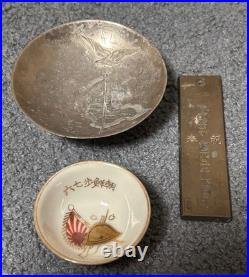
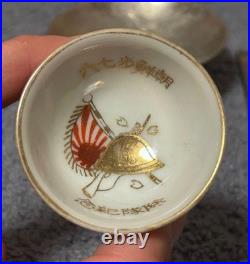
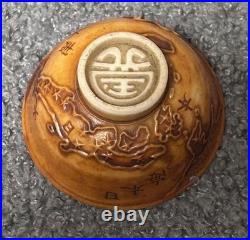
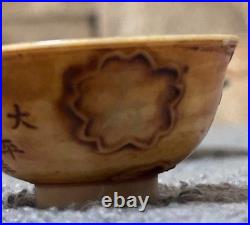
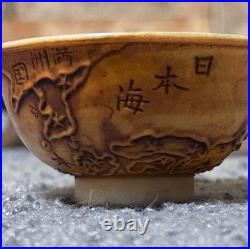
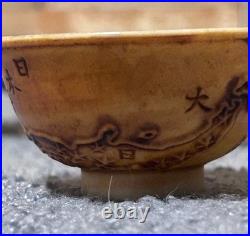
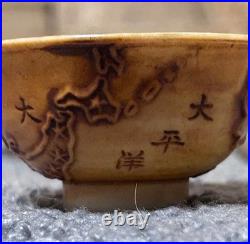
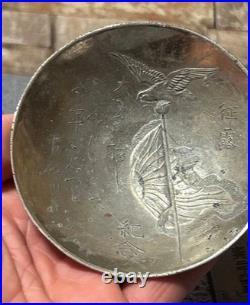
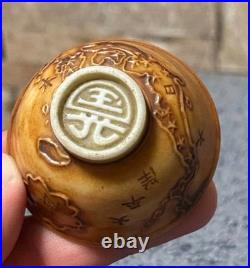
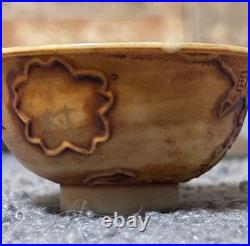
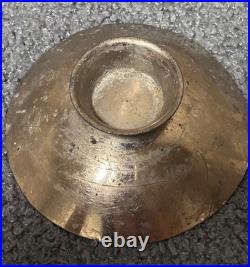
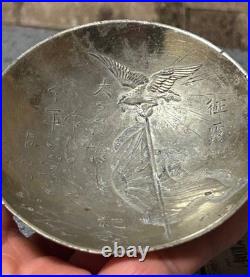
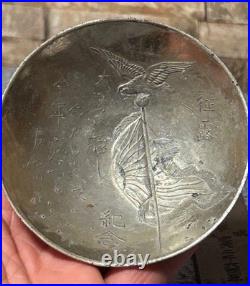
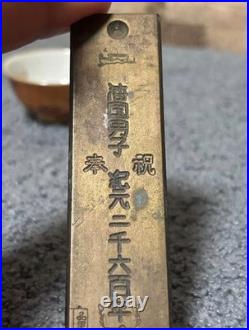
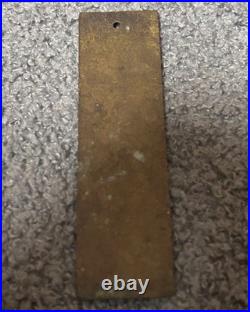
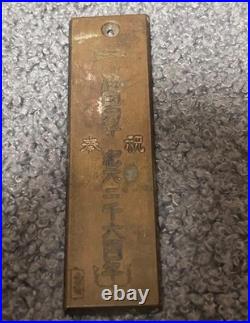
This is an original. Imperial Japanese Army commemorative set. Consisting of three historical items dating from the early 20th century to the pre-WW2 period. Each piece reflects a different phase of Japan’s modern military history and was produced as an actual commemorative item rather than for later decoration or reproduction. A heavy pewter sake cup decorated with an eagle and military banner motif. Inside the cup is an engraved. Having offered my life to the Emperor. I celebrate this day of honor. This inscription represents the voice of a. Commemorating survival and honor after the Russo-Japanese War rather than mourning the fallen. Such personalized poetic inscriptions are less common than standard issue victory cups. 2 Imperial Japanese Army – Korea. 78 Discharge Commemorative Sake Cup. Ceramic sake cup inscribed. “Korea – Infantry Regiment 78″. The lower design features a. Map motif extending from Japan toward Korea and Manchuria. Reflecting the geopolitical worldview of the period and Japan’s continental expansion. This cup is a valuable primary artifact documenting the everyday reality of Japanese soldiers stationed on the Korean Peninsula. 3 2600th Imperial Year Commemorative Brass Plaque (1940). Brass commemorative plaque engraved. “Commemoration of the 2600th Imperial Year”. Issued during nationwide celebrations in 1940 (Koki 2600), marking the mythical founding of Japan. Such items were produced for ceremonial and symbolic purposes across military and civil institutions. Together, these items illustrate. The Russo-Japanese War and its veterans. The Japanese Army’s presence in Korea. State ideology and national celebrations leading into WWII. This is not a decorative set, but a. Group of genuine historical artifacts. Reflecting how soldiers and institutions commemorated service, survival, and national identity. All items show expected age-related wear, surface scratches, and patina consistent with original period use. Please review photos carefully. Approximate 7-21days(To USA).

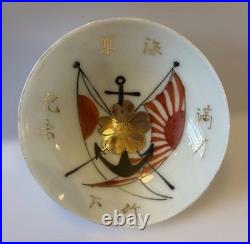
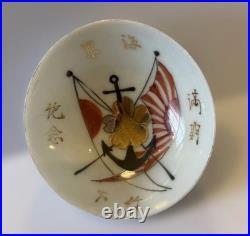
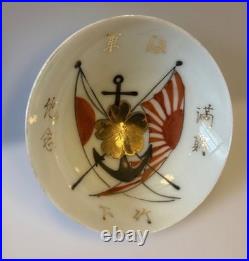
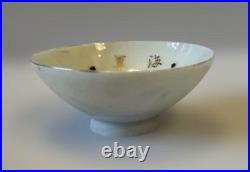
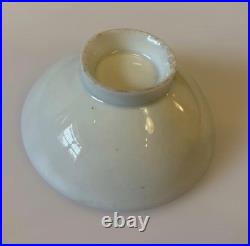
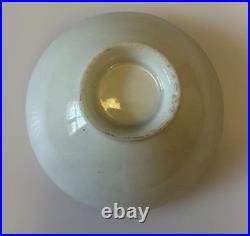
This is an original Imperial Japanese Navy ceremonial sake cup, produced during the Taisho to early Showa period (circa 1910s-1930s). The cup was presented to a Navy serviceman to commemorate the successful completion of his full term of military service. The following characters are written inside the cup in gold. (Imperial Japanese Navy). (Completion of service / full term). (“Otake” – a personal name). The presence of a personal name strongly suggests this cup was awarded to an individual sailor, making it more desirable than generic commemorative pieces. The interior features a classic Imperial Japanese Navy motif. Anchor – symbol of the Navy. Rising Sun flag – official national and military emblem of the period. Cherry blossom in gold gilt – representing honor, duty, and the fleeting nature of life. This combination is widely recognized as a formal Navy discharge commemorative design. Why Imperial Japanese Navy Items Are Rare. Compared to the Army, the Imperial Japanese Navy maintained only about one-tenth of the personnel strength. As a result, Navy commemorative items were produced in much smaller numbers, and surviving examples are significantly scarcer than Army equivalents. Named discharge cups like this one are especially difficult to find today. Cultural Significance of Sake Cups. In pre-war Japan, sake cups were not everyday tableware. They were used to mark important life milestones, including military enlistment, departure, return, and honorable discharge. This cup represents a deeply personal moment. The end of military duty and a safe return to civilian life – preserved in ceramic form. No cracks or major chips. Minor surface wear and light fading of gold due to age. Overall well-preserved for its period. Please refer to photos for details. A genuine historical artifact suitable for collectors of. Imperial Japanese Navy items, military memorabilia, pre-war Japanese ceramics, or Showa-era history. International Buyers – Please Note. Thank you for your understanding.