
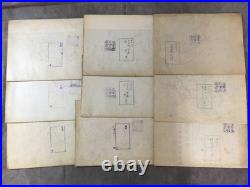
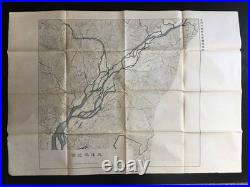
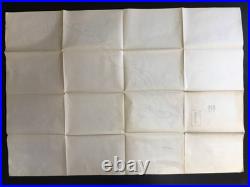
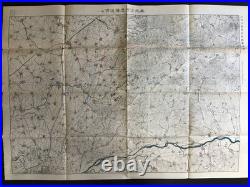
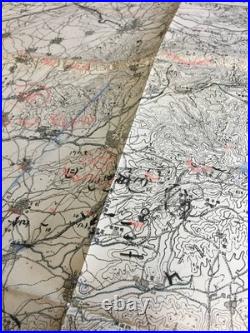
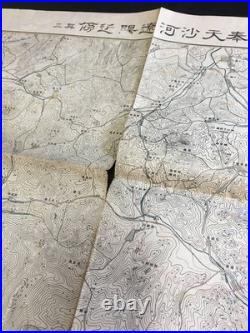
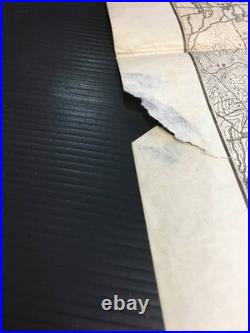

This is a set of nine large Japanese military maps connected to the official study of the Russo-Japanese War. The maps date from around 1931 (Showa 6) and are associated with the published Japanese war history of the Russo-Japanese War. What makes this set especially interesting is the presence of Imperial Japanese Army Infantry School library stamps. The Army Infantry School was a specialist institution for infantry tactics, training, and military study. These maps were therefore not simply decorative maps. They were the kind of material used to study terrain, past battles, troop movements, and tactical problems. The set includes areas connected with major Russo-Japanese War battlefields, including Mukden, Liaoyang, Shahe, Jiuliancheng, Telissu, Dashiqiao, and surrounding regions. For collectors who are not familiar with this period, the Russo-Japanese War was fought between Japan and the Russian Empire from 1904 to 1905, with some of the largest land battles taking place in Manchuria. These maps help make that history much easier to understand. Instead of seeing the war only as names and dates in a book, you can see the actual mountains, rivers, roads, railways, towns, and terrain over which the armies moved and fought. Several maps also contain red, blue, and black handwritten lines and annotations. These markings appear consistent with tactical or historical study, possibly indicating positions, routes, or battle lines. However, the person who made them and the exact date of the annotations cannot be confirmed. That uncertainty is important. What can be confirmed is that the maps carry Army Infantry School library markings, and the handwritten study marks add to the sense that these were working military reference materials rather than untouched collector pieces. Each map is large, approximately 78 × 110 cm / 30.7 × 43.3 in. Allowing the terrain to be studied in impressive detail. There is age-related toning, staining, fold wear, tears, and handwritten markings. Some maps have significant damage, so please examine the photographs carefully. A fascinating set for collectors of the Imperial Japanese Army, Russo-Japanese War, military cartography, Manchurian battlefields, infantry tactics, and military education. These are more than old maps. They are surviving tools for understanding how Japanese officers studied the battlefields of an earlier war. Own a Piece of History. International Buyers – Please Note.

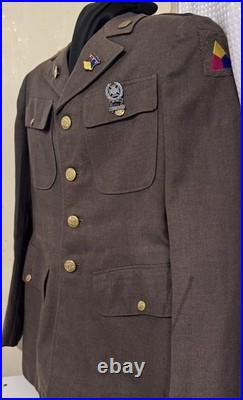
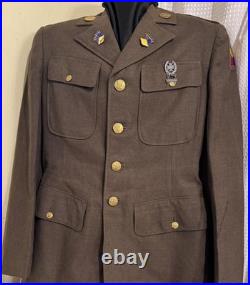
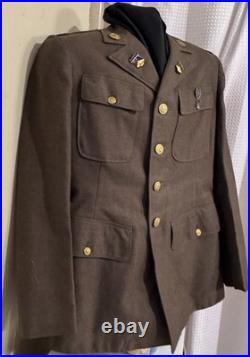
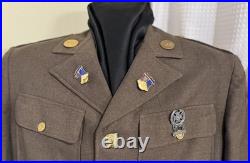
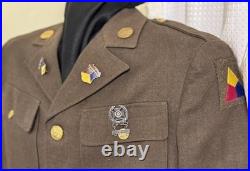
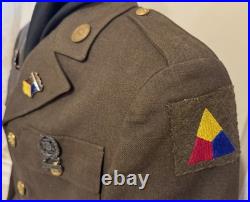
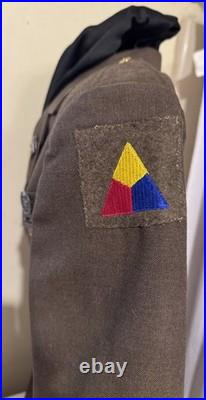
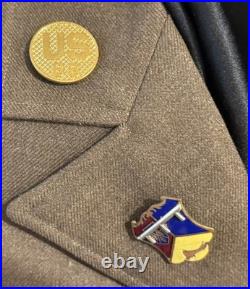
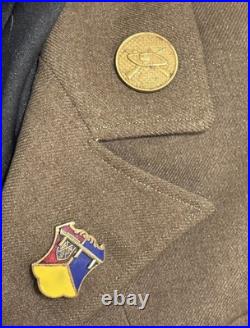
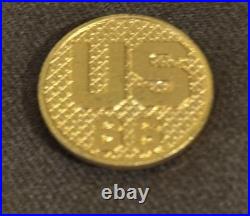
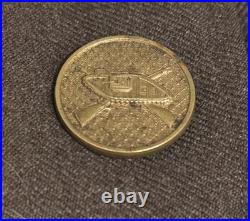
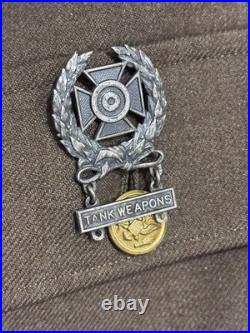
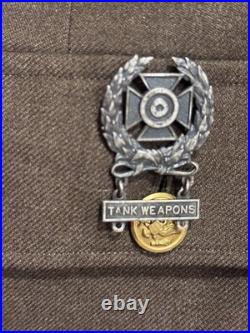
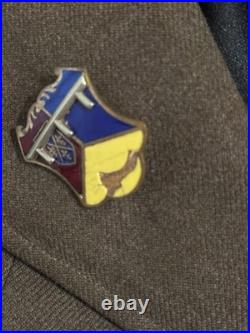
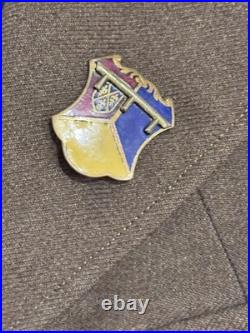
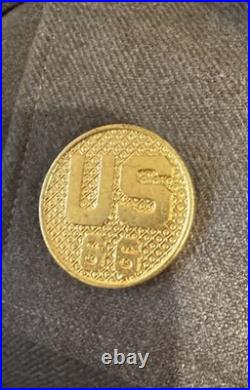
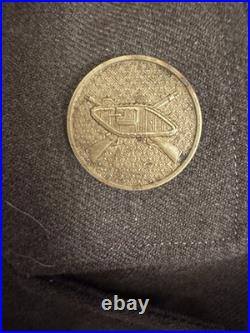
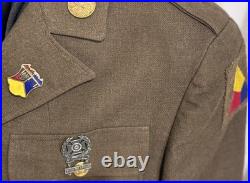
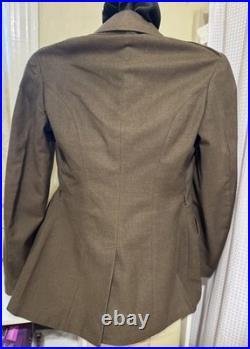
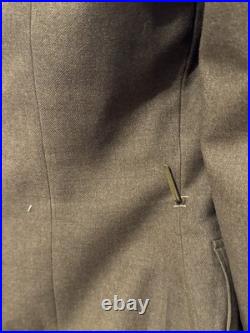
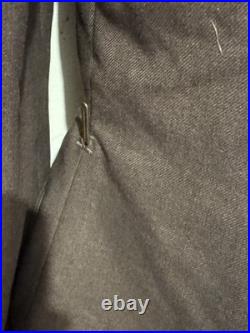
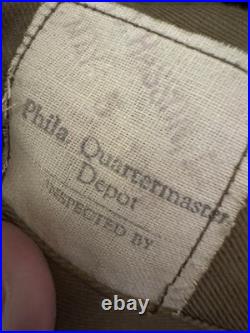
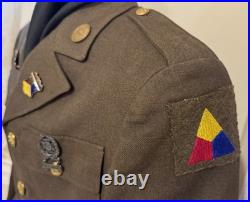
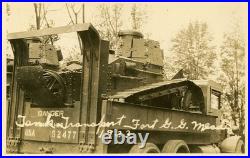
For your consideration is this museum quality Interwar Period M1926 Spec 8-31B Wool Service Coat Pvt 66th Infantry Regiment (light tanks) Make, Model, & Description: M1926 Spec 8-31B EM Service Coat; Museum quality piece made of whipcord wool. This coat has a four panel back w/ 2 belt hooks. This particular coat dates May 1935. This puts this piece right in the middle of its MFG window of 1933-37. The WWI Tank Corps SSI was worn by any of the old WWI Tank Corps units that was organized and redesignated Armored Infantry units after being trained at the Infantry Tank School at Camp Meade & later Fort Benning, GA. 1st Tank Regt was reorganized and redesignated as the 66th Infantry Regiment (Light Tanks) on October 25, 1932 at Camp Meade. COATS OVERALL CONDITION; PRE WWII MUSEUM QUALITY PIECE This coat is definitely a museum quality piece. Army, tracing its lineage back to the formation of the 301st Tank Battalion in World War I. 66th Infantry Regiment (light tanks) HISTORY 1918 through 1928 The lineage that led to the 66th Armor Regiment began in August 1918 when it was organized in France as provisional tank brigades, which underwent a series of redesignations and consolidations during the interwar period due to post-WWI legislative changes. Late 1920s: The unit maintained interwar structures until reorganized into the 1st Tank Regiment in 1929, paving the way for later armored designations before World War II. 66th Infantry Regiment (light tanks) HISTORY 1928 through 1940 Between 1928 and 1940, the unit that became the 66th Infantry Regiment (Light Tanks) underwent multiple re-designations due to the post-WWI abolition of the Tank Corps, eventually forming the core of the U. Army’s modern armored force. Due to legislative restrictions abolishing a separate tank branch, the unit received an infantry designation. On October 25, 1932, it was officially reorganized and redesignated as the 66th Infantry Regiment (Light Tanks). The headquarters company was temporarily inactivated on September 1, 1938, at Fort Meade. 1940: The headquarters company reactivated on January 10, 1940, at Fort Benning, Georgia. On July 15, 1940, the entire unit was converted, redesignated as the 66th Armored Regiment, and assigned to the newly formed 2nd Armored Division under Brigadier General George S. 1932 Infantry Tank School; ————– In 1932, the U. Key Events of 1932 and the Tank School Transition. Relocation to Fort Benning: After operating at Camp Meade since 1927 (following initial tank training presence established around 1919), the Tank School was moved to Fort Benning, Georgia, in 1932. Re-designation: By 1933, the program was formally re-designated as the Tank Section of the Infantry School. Unit Changes: Concurrently, the 1st Tank Regiment at Camp Meade was reorganized and redesignated as the 66th Infantry Regiment (Light Tanks) on October 25, 1932.

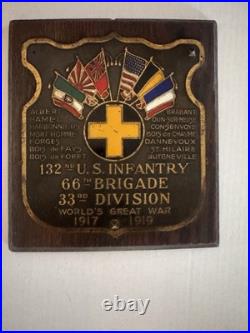
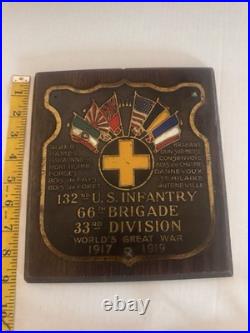
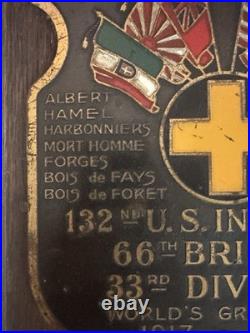
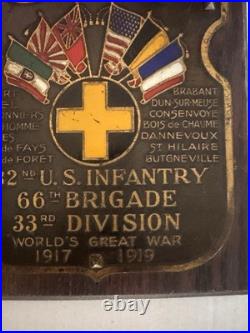
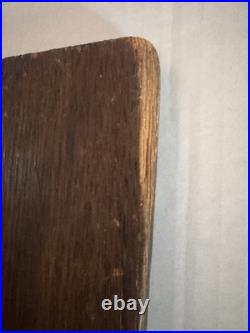
Army 132nd Infantry 66th Brigade 33rd Division Military Plaque. Please refer to photos for accurate visual condition. It does show some wear. And there is a chip out of the edge of the wood on one aide. Otherwise, it is in good vintage condition. A very cool piece of history.

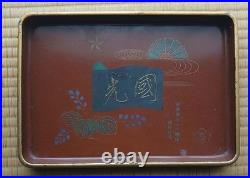
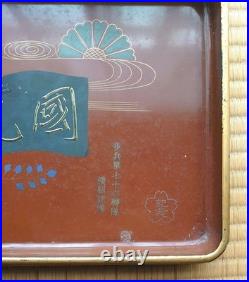
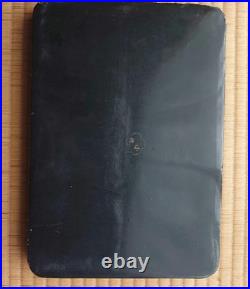
This is an original Japanese lacquer presentation tray associated with the 76th Infantry Regiment Machine Gun Unit of the Imperial Japanese Army. The front is decorated with a Japanese Army star, stylized floral and flowing-water motifs, and the large characters “Kokko” at the center. More importantly, the tray is clearly inscribed: “76th Infantry Regiment – Machine Gun Unit” “Commemorative” This makes the military connection unusually specific. Rather than being a generic Japanese Army souvenir, it can be tied directly to a particular regiment and even to its specialized machine gun unit. The 76th Infantry Regiment belonged to the Imperial Japanese Army’s 19th Division and was based in Ranam in northern Korea, then part of the Japanese Empire. The 19th Division was established as part of Japan’s military presence on the Korean Peninsula and was responsible for the strategically important northern region facing Manchuria and the Soviet Far East. During the later wartime period, elements of the division were transferred and reorganized as Japan’s military situation deteriorated. Within an infantry regiment, the machine gun unit provided concentrated firepower and required soldiers trained in the operation, maintenance, and coordinated use of heavy automatic weapons. The fact that this piece identifies the Machine Gun Unit specifically gives it considerably more historical character than a standard regimental souvenir. The reverse bears what appears to be the original owner’s surname: “Kobayashi” This personal name adds another layer of provenance and gives the object a direct human connection to the military organization named on the front. The tray itself is also a fine example of traditional Japanese lacquerware. Japanese lacquer objects were valued for their combination of beauty, light weight, and remarkable durability. Multiple layers of lacquer created a hard, protective surface, making lacquerware particularly suitable for commemorative and presentation pieces intended to be kept for many years. Presentation cups, trays, and similar lacquer objects were commonly produced in prewar Japan to commemorate military service, transfers, unit events, discharge, achievements, and other important occasions. Age-related scratches and surface wear are present, but they also give the piece the character expected of an authentic period object. With its combination of a named regiment, machine gun unit, traditional Japanese lacquerwork, and the possible original owner’s name, this is far more than decorative lacquerware-it is a surviving piece of one soldier’s military world. Own a Piece of History. International Buyers – Please Note.

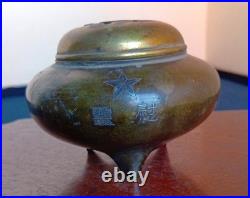
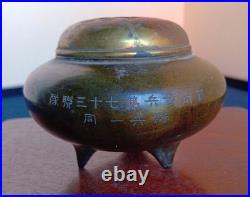
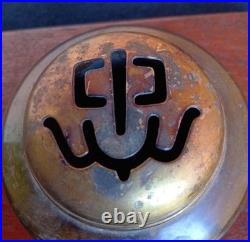
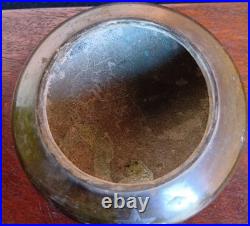
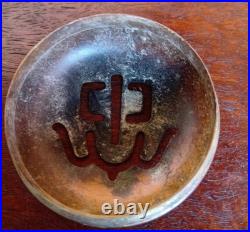
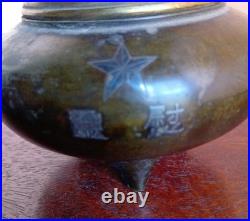
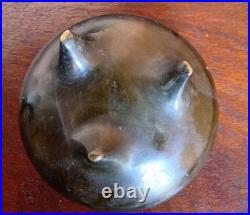
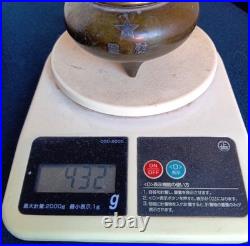
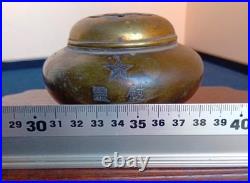
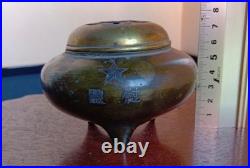
This original three-legged bronze incense burner (koro) is a memorial piece associated with the. Imperial Japanese Army’s 73rd Infantry Regiment. The front is decorated with a finely inlaid. Imperial Japanese Army five-pointed star. (Irei – Memorial to the Fallen). One particularly fascinating feature is the pierced design on the lid. Rather than a simple decorative pattern, it forms the character. (Chu – Loyalty). One of the central virtues emphasized within the Imperial Japanese Army. The lid itself therefore symbolizes loyalty while allowing incense smoke to escape during memorial ceremonies. The reverse is engraved. (“Ranan – 73rd Infantry Regiment – From All Officers and Soldiers”). This inscription identifies the incense burner as a memorial object presented by the officers and enlisted men of the 73rd Infantry Regiment. Unlike ordinary decorative incense burners, this piece was intended for. Such burners were placed on memorial altars where incense was offered to honor fallen comrades, making them deeply symbolic military remembrance objects rather than household ornaments. The 73rd Infantry Regiment was established in. In northern Korea today part of. , where it remained garrisoned for decades before being deployed overseas during World War II. The regiment participated in major campaigns including. The Battle of Lake Khasan. The Second Sino-Japanese War. The Luzon Campaign in the Philippines. Because this incense burner is engraved with. It was most likely produced while the regiment was stationed there, approximately. Between 1916 and 1944. Before its deployment to the Philippines. After Japan’s surrender, military memorial objects bearing unit names were among the items frequently destroyed, discarded, or confiscated during the Allied Occupation. In addition, artifacts connected with. Ranan-now located in present-day North Korea-are exceptionally difficult to trace today. For that reason, surviving pieces that clearly preserve the. Unit name, location, and memorial purpose. Are increasingly scarce and highly desirable to collectors of Imperial Japanese military history. A remarkable historical artifact that preserves the memory of one regiment and the soldiers who served within it. Own a Piece of History. International Buyers – Please Note. Thank you for your understanding.


This is an original. “Infantry Handbook (Hohei Suchi)”. An instructional manual prepared for soldiers of the Imperial Japanese Army. Rather than focusing on a single weapon or subject, this book served as a comprehensive guide covering the knowledge expected of every infantryman. One of its greatest features is the large number of detailed illustrations and colorful fold-out plates that make the contents easy to understand. Included are illustrations and explanations of. Type 38 Arisaka rifle construction and parts. Infantry equipment and field gear. Uniforms and methods of maintenance. Backpacks, canteens, mess kits, and personal equipment. Military rank insignia and branch badges. Decorations, medals, and ribbon bars. The Order of the Golden Kite. The Order of the Rising Sun. The Order of the Sacred Treasure. National flags, military colors, and regimental flags. Basic map reading and field movement. The beautifully printed color plates are especially impressive, illustrating uniforms, insignia, medals, decorations, and military flags in remarkable detail. Shortly after the Manchurian Incident, this manual reflects a period when the Imperial Japanese Army was rapidly expanding and training thousands of new soldiers. Books like this were carried or studied by recruits to learn the fundamentals of military service. The knowledge contained within would later be applied during the Second Sino-Japanese War and throughout the Pacific War. Today, manuals preserving their. Original color fold-out illustrations. Are becoming increasingly difficult to locate. For collectors of Japanese militaria, military uniforms, medals, or Arisaka rifles, this book offers an exceptional visual reference from the pre-war Imperial Japanese Army. Own a Piece of History. International Buyers – Please Note. Thank you for your understanding.


Year Book of the German Army. A nice copy of military force history! Included are building the Wehrmacht, the German Officer, New Buildings of the Army, The Armed Forces at the Olympics 1936, at the Mountain Infantry, War School, Wehrmacht in Nurnberg, Fight against Panzerwagen, Soldier and Worker, 20 years ago – the war year 1917, armament of other countries (France, Austria, England, Russia, Italy, USA), Flags of the Army, French Maginot Linie, Autumn maneuver 1936 and much more… Hardcover, Full Linen / Cloth. 144+ pages, text and pictures. Good exterior and fair interior. Spine faded, name on free front endpaper, foxing to prelims and some text pages, few pages with tears, else ok. All pages are complete and tight in the binding. Approx/Measurements: 7″ x 9-1/2″ 1.1 lbs.

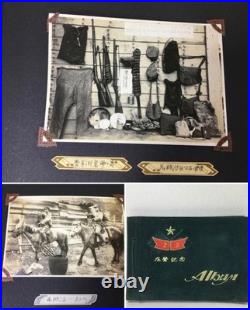
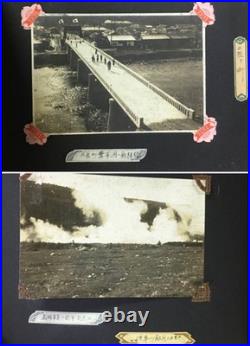
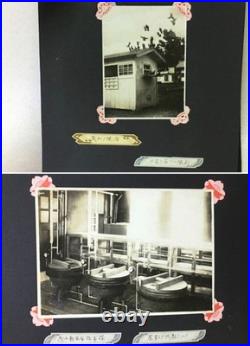
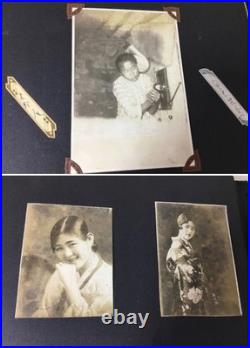
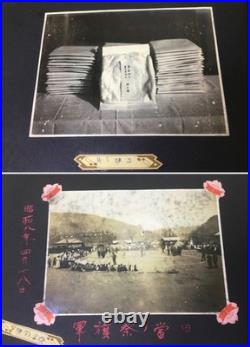
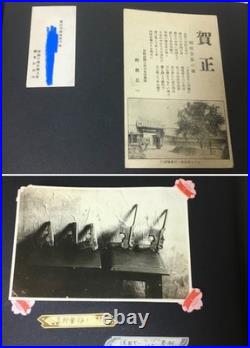
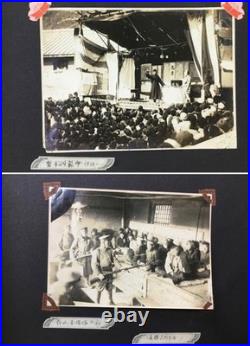
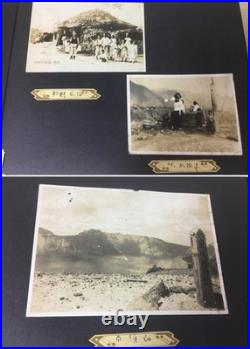
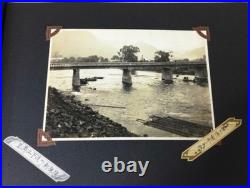
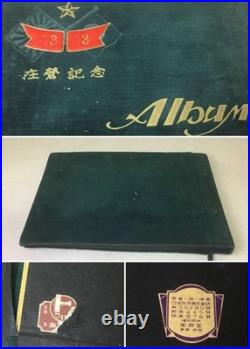
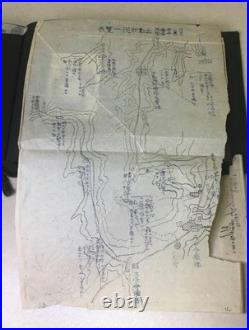
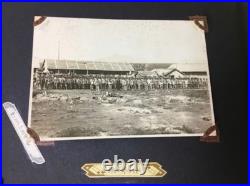
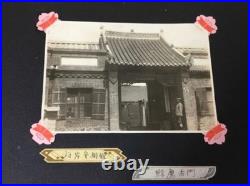
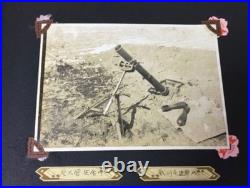
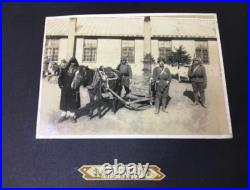
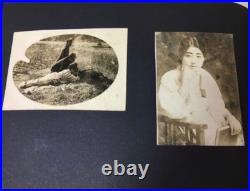
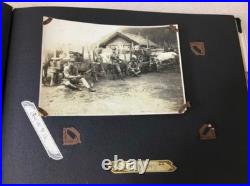
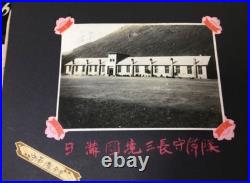
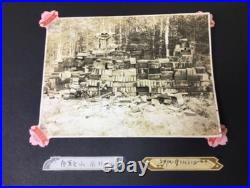
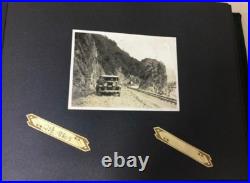
Rare pre-WWII Imperial Japanese Army “Zaiei Kinen” (Active Service Commemorative) photo album related to the 73rd Infantry Regiment. The cover features the red infantry branch collar insignia design with the number “73” and the words “Zaiei Kinen” (In Service Memorial). In the Imperial Japanese Army, red was the branch color of infantry units, and “73” generally refers to the 73rd Infantry Regiment. The 73rd Infantry Regiment was established in 1916 and stationed in Ranam, northern Korea, under the 19th Division. The regiment later participated in. The Battle of Lake Khasan. The Second Sino-Japanese War. WWII campaigns in the Philippines. And eventually ended the war in northern Luzon, Philippines. This album appears to date from around 1933 (Showa 8), shortly after the establishment of Manchukuo. The contents include many identified locations and captions such as. Mobilization / deployment status chart. The album contains approximately 41 photographs (various sizes), including. Horses and cavalry transport. Military facilities and guard posts. Mortar or artillery-related equipment. Korean and Manchurian local life. Public performances and gatherings. Rare operational deployment chart. What makes this album especially interesting is that it is not merely a military souvenir album. It documents daily life and military presence along the unstable frontier regions of Korea, Manchuria, and northern China during the early expansion period of the Japanese Empire. The included “deployment status chart” gives the album additional historical and archival significance. This is the kind of material that appeals not only to militaria collectors, but also researchers of. Some pages missing photographs. One deployment chart has tears. Please check the photos carefully for condition details. A powerful and atmospheric historical album from the forgotten frontiers of the Japanese Empire. Own a Piece of History. International Buyers – Please Note. Thank you for your understanding.

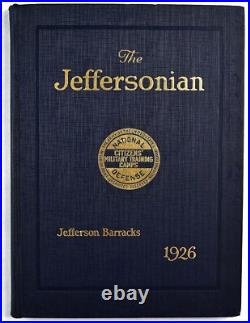
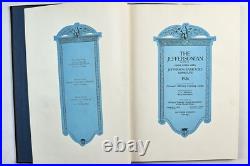
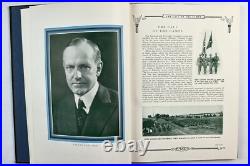
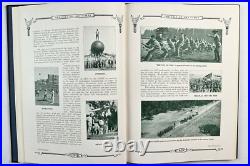
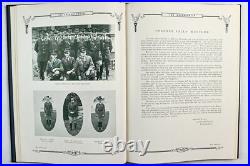
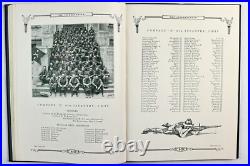
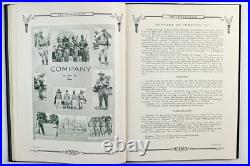
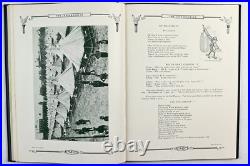
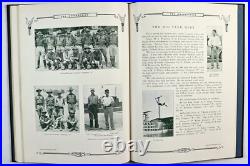
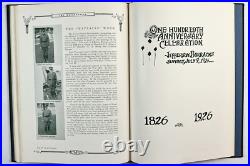


This listing is for the following original military history book. The item will be well packaged. We put effort into ensuring your item arrives safely! Powered by SixBit’s eCommerce Solution.
