
WWII Imperial Japanese Army 73rd Infantry Regiment Memorial Incense Burner
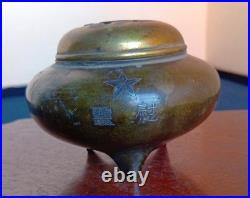
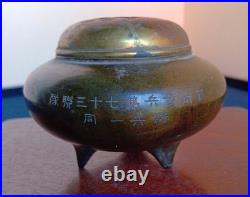
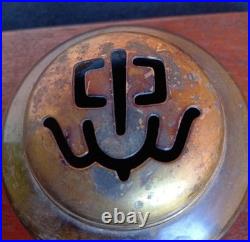
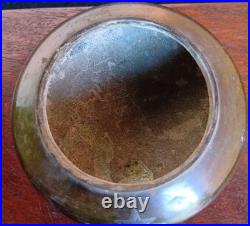
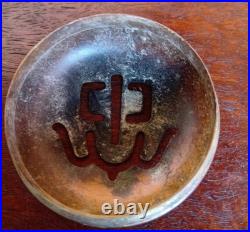
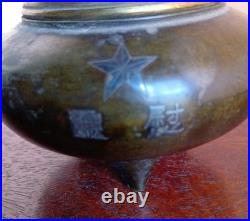
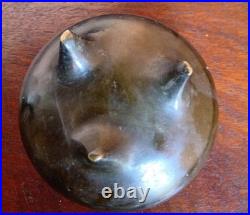
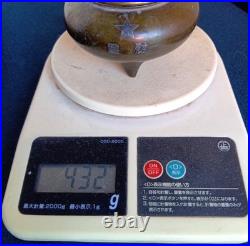
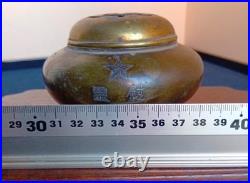
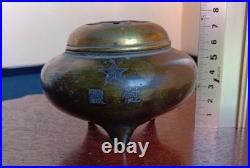

This original three-legged bronze incense burner (koro) is a memorial piece associated with the. Imperial Japanese Army’s 73rd Infantry Regiment. The front is decorated with a finely inlaid. Imperial Japanese Army five-pointed star. (Irei – Memorial to the Fallen). One particularly fascinating feature is the pierced design on the lid. Rather than a simple decorative pattern, it forms the character. (Chu – Loyalty). One of the central virtues emphasized within the Imperial Japanese Army. The lid itself therefore symbolizes loyalty while allowing incense smoke to escape during memorial ceremonies. The reverse is engraved. (“Ranan – 73rd Infantry Regiment – From All Officers and Soldiers”). This inscription identifies the incense burner as a memorial object presented by the officers and enlisted men of the 73rd Infantry Regiment. Unlike ordinary decorative incense burners, this piece was intended for. Such burners were placed on memorial altars where incense was offered to honor fallen comrades, making them deeply symbolic military remembrance objects rather than household ornaments. The 73rd Infantry Regiment was established in. In northern Korea today part of. , where it remained garrisoned for decades before being deployed overseas during World War II. The regiment participated in major campaigns including. The Battle of Lake Khasan. The Second Sino-Japanese War. The Luzon Campaign in the Philippines. Because this incense burner is engraved with. It was most likely produced while the regiment was stationed there, approximately. Between 1916 and 1944. Before its deployment to the Philippines. After Japan’s surrender, military memorial objects bearing unit names were among the items frequently destroyed, discarded, or confiscated during the Allied Occupation. In addition, artifacts connected with. Ranan-now located in present-day North Korea-are exceptionally difficult to trace today. For that reason, surviving pieces that clearly preserve the. Unit name, location, and memorial purpose. Are increasingly scarce and highly desirable to collectors of Imperial Japanese military history. A remarkable historical artifact that preserves the memory of one regiment and the soldiers who served within it. Own a Piece of History. International Buyers – Please Note. Thank you for your understanding.