
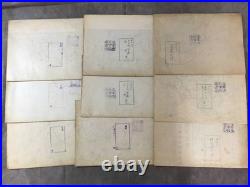
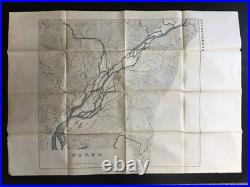

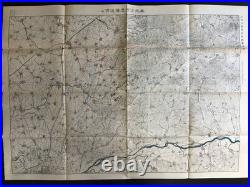
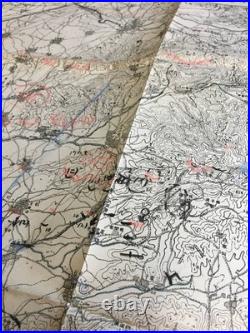
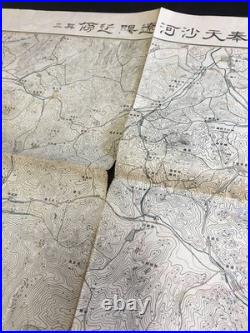
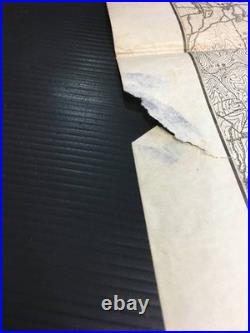

This is a set of nine large Japanese military maps connected to the official study of the Russo-Japanese War. The maps date from around 1931 (Showa 6) and are associated with the published Japanese war history of the Russo-Japanese War. What makes this set especially interesting is the presence of Imperial Japanese Army Infantry School library stamps. The Army Infantry School was a specialist institution for infantry tactics, training, and military study. These maps were therefore not simply decorative maps. They were the kind of material used to study terrain, past battles, troop movements, and tactical problems. The set includes areas connected with major Russo-Japanese War battlefields, including Mukden, Liaoyang, Shahe, Jiuliancheng, Telissu, Dashiqiao, and surrounding regions. For collectors who are not familiar with this period, the Russo-Japanese War was fought between Japan and the Russian Empire from 1904 to 1905, with some of the largest land battles taking place in Manchuria. These maps help make that history much easier to understand. Instead of seeing the war only as names and dates in a book, you can see the actual mountains, rivers, roads, railways, towns, and terrain over which the armies moved and fought. Several maps also contain red, blue, and black handwritten lines and annotations. These markings appear consistent with tactical or historical study, possibly indicating positions, routes, or battle lines. However, the person who made them and the exact date of the annotations cannot be confirmed. That uncertainty is important. What can be confirmed is that the maps carry Army Infantry School library markings, and the handwritten study marks add to the sense that these were working military reference materials rather than untouched collector pieces. Each map is large, approximately 78 × 110 cm / 30.7 × 43.3 in. Allowing the terrain to be studied in impressive detail. There is age-related toning, staining, fold wear, tears, and handwritten markings. Some maps have significant damage, so please examine the photographs carefully. A fascinating set for collectors of the Imperial Japanese Army, Russo-Japanese War, military cartography, Manchurian battlefields, infantry tactics, and military education. These are more than old maps. They are surviving tools for understanding how Japanese officers studied the battlefields of an earlier war. Own a Piece of History. International Buyers – Please Note.

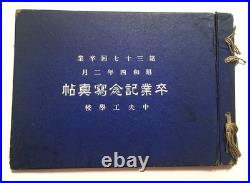
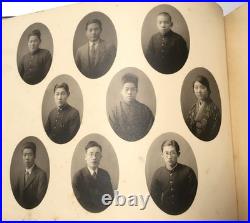
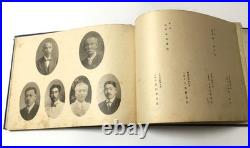
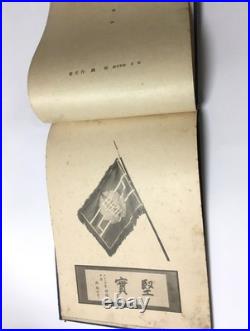
This is an original graduation commemorative photo album from Chuo Technical School in Tokyo, dated February 1929. Founded in 1909, Chuo Technical School trained practical engineers in fields such as architecture, machinery, electrical work, civil engineering, and surveying. Although it was a civilian technical school, these fields stood very close to Japan’s military, government, and industrial infrastructure during the prewar period. One particularly interesting feature is the portrait of the school’s principal, Rensaku Hayashi, a former Imperial Japanese Army Major General. This gives the album an unusual historical context. It is not a military academy album, but it shows how civilian technical education and the military world could overlap in prewar Japan. Skills such as surveying, civil engineering, construction, and mechanical engineering were essential not only to civilian development, but also to military logistics, fortifications, transport, and engineering units. The album contains portraits of faculty and students, group photographs, and a photograph of the school flag bearing the word “Kenjitsu, ” meaning “steadfast” or practical and sincere. These young men graduated in 1929, only two years before the Manchurian Incident. Many of them would go on to live and work through the period in which Japan rapidly expanded its heavy industry, infrastructure, and military mobilization. Rather than showing soldiers already at war, this album captures something earlier: the generation of young technical men who entered Japanese society just before the country moved into the turbulent 1930s and wartime era. There is age-related wear, staining, and deterioration around the binding. Please carefully examine the photographs for condition. Own a Piece of History. International Buyers – Please Note.

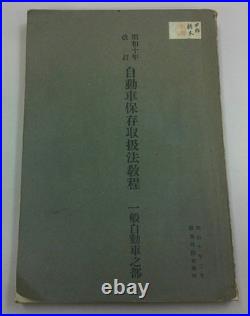

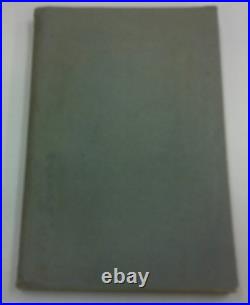
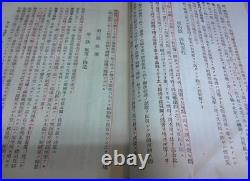
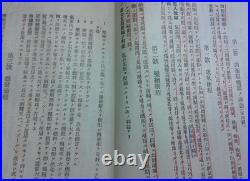
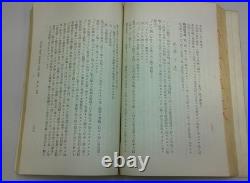
Official textbook of the Imperial Japanese Army Motor Vehicle School, used to train mechanics and drivers to keep army vehicles ready for combat. Covers the four-stroke engine cycle, ignition, fuel mixture, lubrication, cooling, inspection, storage, and troubleshooting. Many pages bear red pencil underlines from soldiers in training-adding authentic, lived history. Published in March 1935, just before the outbreak of the Second Sino-Japanese War, when the army was rapidly expanding its mechanization program. Compiled and distributed at the Imperial Japanese Army Motor Vehicle School, later circulated across units as the standard reference. As logistics shifted from horses to motor vehicles, maintaining trucks and cars became critical. Step-by-step diagrams and explanations show. Four-stroke function and why mixture/timing matter. Starting, warming up, and stopping procedures. Lubrication, cooling, and fuel system checks. Long-term storage and rust prevention. Early troubleshooting from symptoms like noise, heat, or exhaust color. 1935 (Showa 10) revised edition. Marked in red pencil (student notes). Age-related wear: foxing, fading, corner folds, binding stress (see photos). ? A rare, first-hand artifact of Japan’s military mechanization. Own a Piece of History. Approximate 7-21days(To USA).

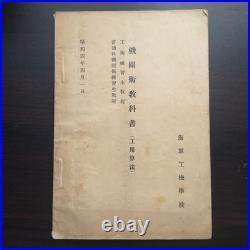
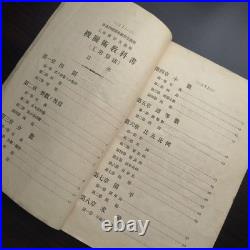
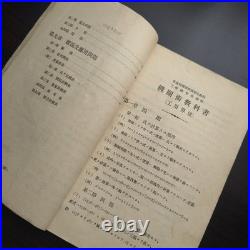
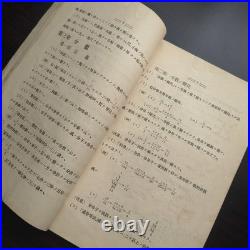
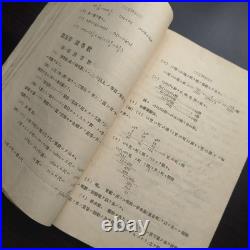
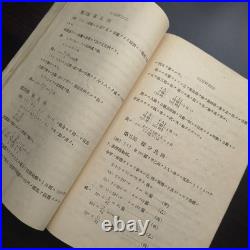
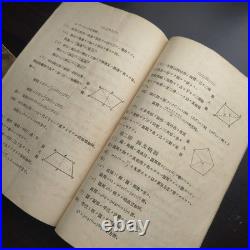
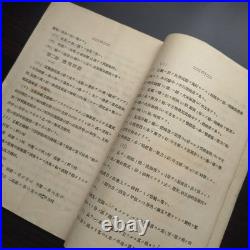
This is an original 1929 Imperial Japanese Navy engineering training textbook, titled Marine Engineering Textbook – Practical Mathematics, issued by the Imperial Japanese Navy Engineering School. The Navy Engineering School specialized in training the technical personnel who kept Japanese warships operating. Battleships and cruisers could not move on naval power alone-they depended on engineers and engine-room personnel capable of understanding and maintaining complex machinery. This textbook taught the practical mathematics required for naval engineering work. It begins with arithmetic, fractions, decimals, ratios, percentages, areas, and volumes, then applies these skills to technical problems involving subjects such as steam pressure, cylinders, pistons, horsepower, fuel, coal, displacement, speed, and cruising distance. In other words, this was not simply a school mathematics book. It shows how the Imperial Japanese Navy trained the men responsible for operating the machinery inside its warships. The cover is dated April 1, 1929 (Showa 4) and identifies the Imperial Japanese Navy Engineering School and its engineering training courses. The historical timing is particularly interesting. The Navy Engineering School was established as an independent institution in 1928 after being separated from the Naval Engineering College. This textbook therefore dates from one of the earliest years of the newly independent school. Why is it rare? Unlike commercially published books, this was a specialized internal training textbook intended for a limited group of Imperial Japanese Navy engineering trainees. Such technical educational materials were working documents rather than souvenirs intended to survive for generations. The Imperial Japanese Navy suffered catastrophic losses during WWII and was completely dissolved in 1945. Over the following decades, many of its internal textbooks, manuals, and training materials were discarded or dispersed. Nearly a century later, surviving examples provide an unusual window into a side of naval history that is often overlooked. This is not a book about famous admirals or naval battles. It is something more personal: the knowledge that ordinary technical personnel had to master before they could enter an engine room and help keep a Japanese warship moving. A fascinating piece for collectors of Imperial Japanese Navy militaria, naval engineering, military education, and original prewar technical documents. Own a Piece of History. International Buyers – Please Note.

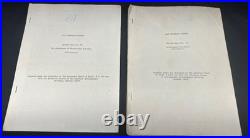
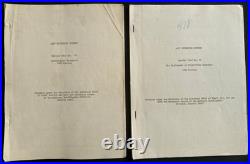
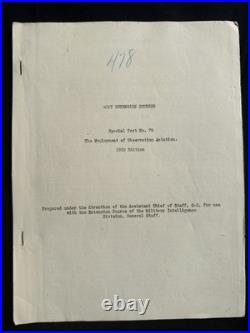
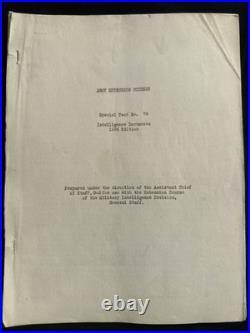

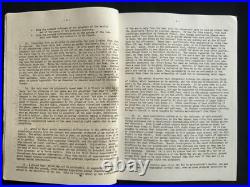
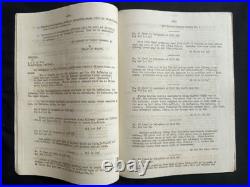
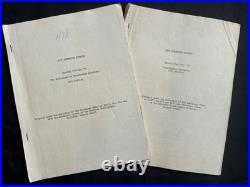
1932 1934 Army Intelligence Manuals Observation Aviation G-2 Military School.

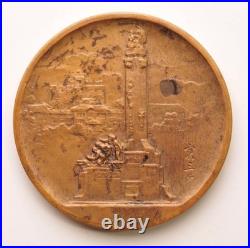
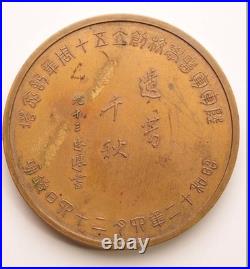
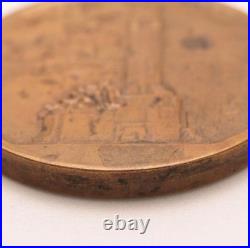
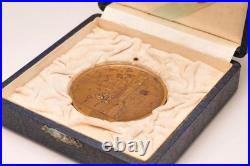
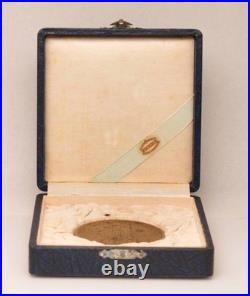
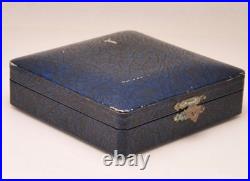
Original Imperial Japanese Army Medical School 50th Anniversary commemorative medal with its original presentation box. This large bronze medal was produced to commemorate the. 50th anniversary of the Imperial Japanese Army Medical School. One of Japan’s most important military medical institutions. The anniversary ceremony was held in. While the monument depicted on the medal was completed on. The obverse features a beautifully sculpted relief of the. Army Medical School Memorial Tower. Erected to celebrate the institution’s fiftieth anniversary. Near the base appears the signature. “Jitsuzo” (by sculptor Jitsuzo Hinago). One of Japan’s best-known medal and monument sculptors of the pre-war era. The reverse is engraved with. “Imperial Japanese Army Medical School 50th Anniversary”. “Memorial Tower Completed – June 26, 1937″. It also bears the inscription. “Iho Senshu” (Legacy for a Thousand Autumns). Together with a handwritten dedication. The Imperial Japanese Army Medical School served as the highest educational institution for military physicians, surgeons, medical officers, and medical researchers. Its graduates supported the Japanese Army through the First Sino-Japanese War, the Russo-Japanese War, World War I, and the years leading up to World War II. The campus was largely destroyed during the. Tokyo air raids of 1945. And the school was abolished after Japan’s surrender. Today, the former site is occupied by institutions such as Japan’s. National Institute of Infectious Diseases. Reflecting the location’s continued connection to medical research and public health. The site has also attracted historical interest because human remains discovered there after the war continue to be the subject of academic research, making the former Army Medical School an important location in both Japanese military and medical history. Original presentation box, and connection to one of Imperial Japan’s most significant military educational institutions, this is an outstanding historical artifact for collectors of Imperial Japanese militaria, military medicine, and medical history. Imperial Japanese Army Medical School 50th Anniversary Medal. Original presentation box included. Shows age-related wear, patina, and storage wear to both the medal and presentation box. Please examine all photographs carefully for condition details. Own a Piece of History. International Buyers – Please Note. Thank you for your understanding.

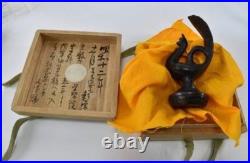
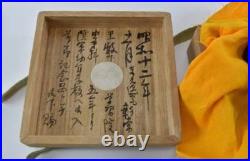

This is an authentic Imperial presentation gift (Onkashi) bestowed in November 1937 (Showa 12) to. To commemorate his entry from Gakushuin Middle School into the Imperial Japanese Army Cadet School. The original wooden storage box bears a handwritten inscription stating. Bestowed as a commemorative gift upon. On the occasion of his entry. From Gakushuin Middle School. Into the Army Cadet School. This inscription clearly documents the recipient, date, and purpose, confirming this item as a genuine, period Imperial gift rather than a later souvenir. The Imperial Japanese Army Cadet School was a highly selective pre-officer institution designed to train future army officers. Entry itself represented a decisive step toward a military career, especially significant for members of the Imperial family. Imperial presentation gifts of this type were not commercially produced, and examples with clear box inscriptions and provenance are uncommon on the international market. Original wooden box included. Age-appropriate wear consistent with the pre-war period. Please refer to photographs for details. This item is offered strictly as a historical artifact and archival material. It is not intended for political or ideological use. Approximate 7-21days(To USA).

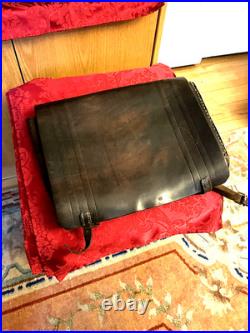
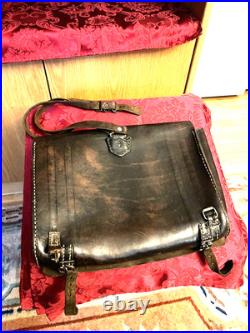
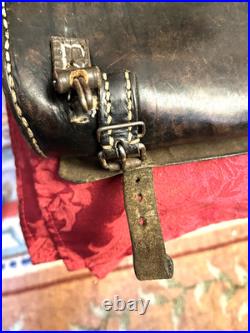
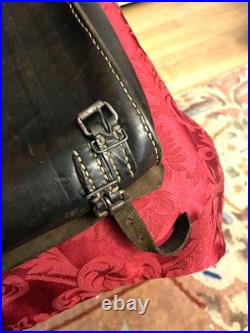
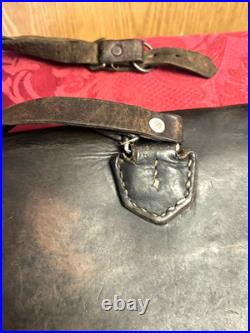
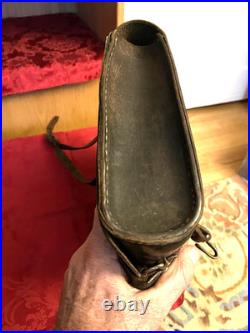
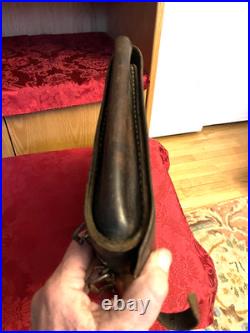
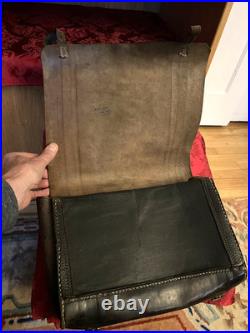
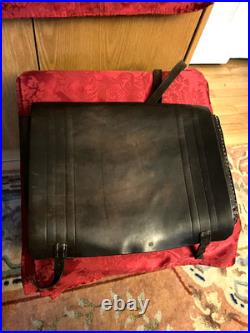
Pre-WW2 era German Youth school bag/backpack. Featured in movie “Tin Drum” (1979). Brown leather in excellent condition. Inside flap signed by German youth Alfred Hemmelsohn. This type of youth bag is EXTREMELY SCARCE!

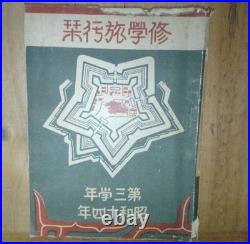
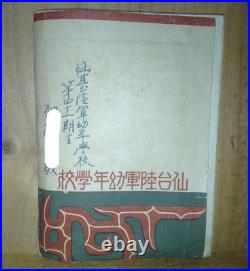

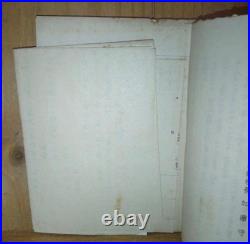
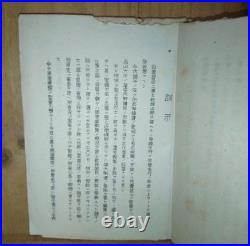
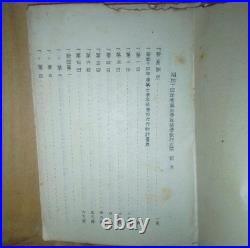
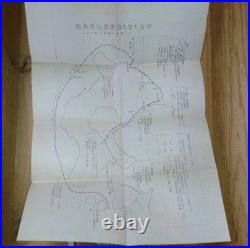
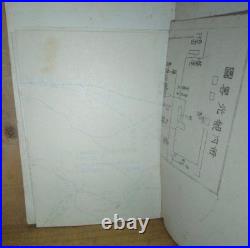
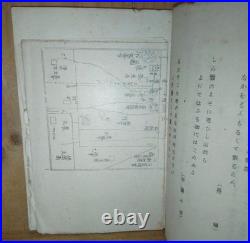
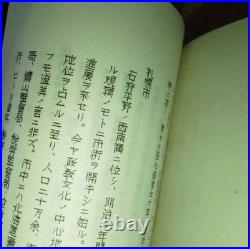
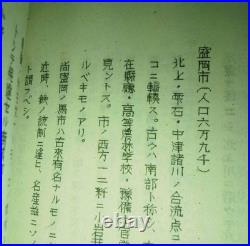
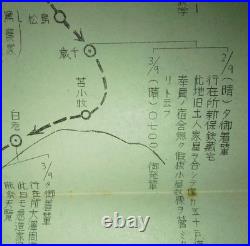
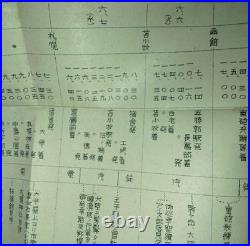
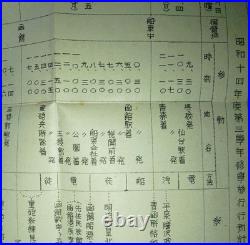
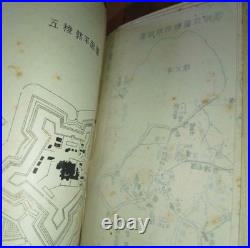
Original 1939 (Showa 14) guidebook. Used for an official school trip. By students of the. Sendai Imperial Japanese Army Cadet School. What does “school trip” mean here? Not a leisure or sightseeing trip. In prewar Japan, especially within military institutions, a “school trip” referred to a. Designed to train discipline, endurance. Geographical awareness, and group conduct. For Army Cadet Schools, such trips functioned as. What was the Sendai Army Cadet School? The Imperial Japanese Army Cadet Schools were. Established to educate boys selected to become future Army officers. Limited number of schools nationwide. Early military discipline and ideological education. Direct pipeline to higher military academies. Because of this system. Original materials actually used by cadets are scarce. Especially items documenting daily training and organized movement. (including coastal cities such as Hakodate and Sapporo). Detailed timetables, routes, lodging points, and maps. Clearly structured in a military, time-controlled format. This is not merely a booklet, but a. The mindset of Japan’s wartime preparatory system. Upper part of the cover. Multiple original maps and route documents are inserted. No major missing pages; contents remain readable. Please review all photos carefully due to the age of the material. An authentic prewar Japanese military education artifact. Imperial Army cadet training material. Dated 1939, just before full wartime escalation. Strong appeal to collectors of military, education, and social history. Approximate 7-21days(To USA).

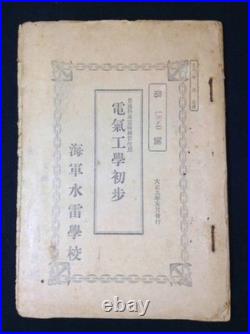
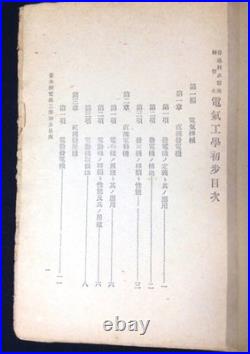
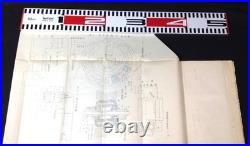
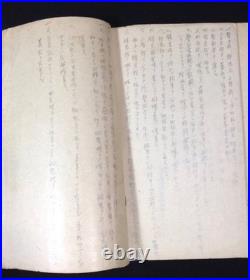
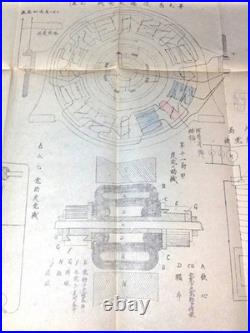
Here is an original Imperial Japanese Navy technical training manual. Issued for torpedo trainees at the Imperial Japanese Navy Torpedo School. Dated 1920 (Taisho 9). The Navy Torpedo School was responsible for training personnel in torpedo and naval mine operations – one of the most advanced weapon systems of its time. By 1920, Japan was rapidly expanding its naval power and modernizing its fleet with advanced electrical and mechanical systems. Electrical knowledge was essential for. Torpedo launch mechanisms. Naval mine systems. Shipboard motors and generators. This manual was created for trainees studying the fundamentals of electrical engineering necessary for naval weapon systems. Direct current generators. Electric motor principles. Structural diagrams and cross-sections. Coil and winding systems. Mechanical and electrical schematics. It includes fold-out technical diagrams showing detailed machine construction. This is not a commercial publication. It was an internal naval training document. Cover foxing and staining. General age wear and discoloration. Pencil markings and underlining. Damage on the final page. Overall fair condition for its age (over 100 years old). Please review photos carefully. This manual represents the technological foundation of the Imperial Japanese Navy during its expansion era – well before World War II. A rare Taisho-period naval technical document. Own a Piece of History. International Buyers – Please Note. Thank you for your understanding.