
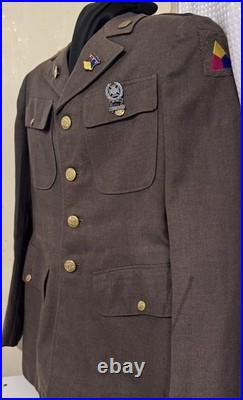
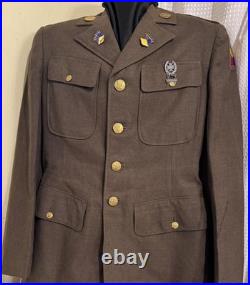
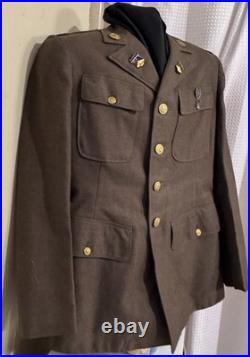
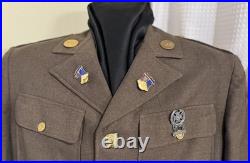
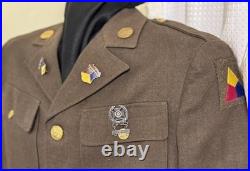
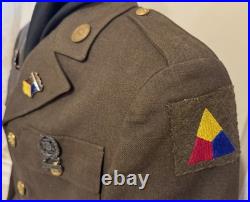
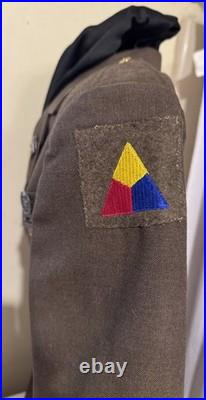
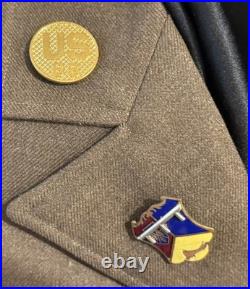
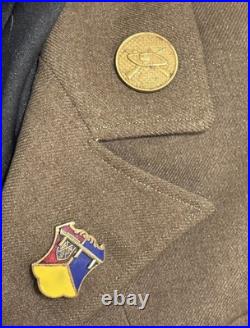
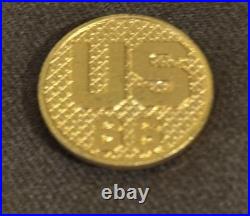
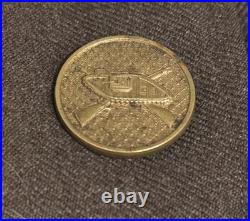
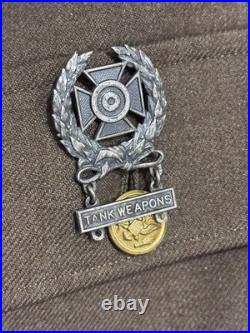
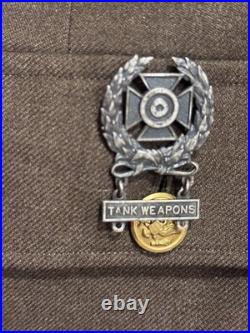
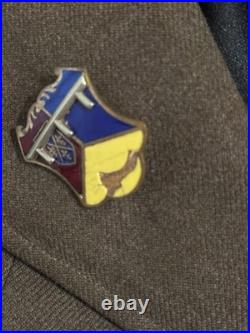
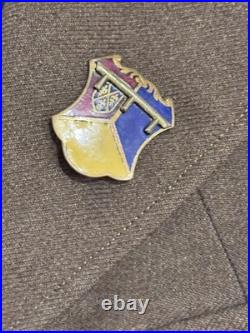
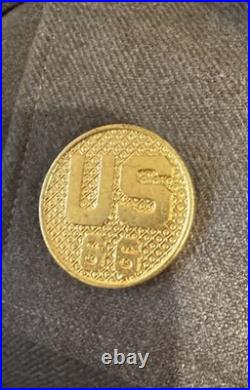
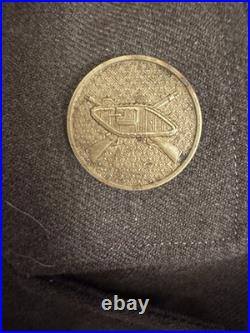
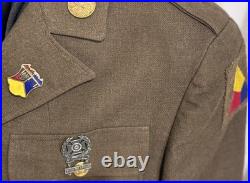
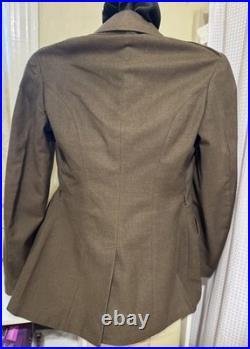
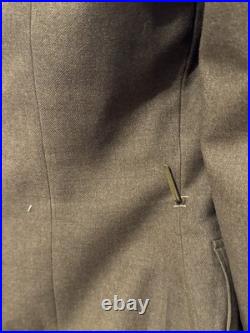
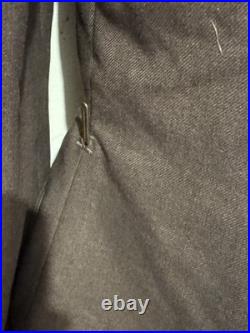
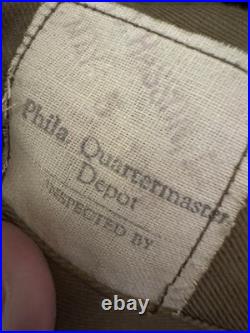
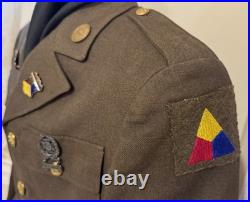
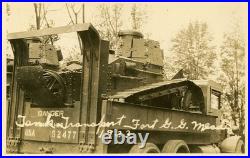

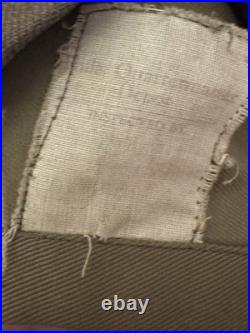
For your consideration is this museum quality Interwar Period M1926 Spec 8-31B Wool Service Coat Pvt 66th Infantry Regiment (light tanks) Make, Model, & Description: M1926 Spec 8-31B EM Service Coat; Museum quality piece made of whipcord wool. This coat has a four panel back w/ 2 belt hooks. This particular coat dates May 1935. This puts this piece right in the middle of its MFG window of 1933-37. The WWI Tank Corps SSI was worn by any of the old WWI Tank Corps units that was organized and redesignated Armored Infantry units after being trained at the Infantry Tank School at Camp Meade & later Fort Benning, GA. 1st Tank Regt was reorganized and redesignated as the 66th Infantry Regiment (Light Tanks) on October 25, 1932 at Camp Meade. COATS OVERALL CONDITION; PRE WWII MUSEUM QUALITY PIECE This coat is definitely a museum quality piece. Army, tracing its lineage back to the formation of the 301st Tank Battalion in World War I. 66th Infantry Regiment (light tanks) HISTORY 1918 through 1928 The lineage that led to the 66th Armor Regiment began in August 1918 when it was organized in France as provisional tank brigades, which underwent a series of redesignations and consolidations during the interwar period due to post-WWI legislative changes. Late 1920s: The unit maintained interwar structures until reorganized into the 1st Tank Regiment in 1929, paving the way for later armored designations before World War II. 66th Infantry Regiment (light tanks) HISTORY 1928 through 1940 Between 1928 and 1940, the unit that became the 66th Infantry Regiment (Light Tanks) underwent multiple re-designations due to the post-WWI abolition of the Tank Corps, eventually forming the core of the U. Army’s modern armored force. Due to legislative restrictions abolishing a separate tank branch, the unit received an infantry designation. On October 25, 1932, it was officially reorganized and redesignated as the 66th Infantry Regiment (Light Tanks). The headquarters company was temporarily inactivated on September 1, 1938, at Fort Meade. 1940: The headquarters company reactivated on January 10, 1940, at Fort Benning, Georgia. On July 15, 1940, the entire unit was converted, redesignated as the 66th Armored Regiment, and assigned to the newly formed 2nd Armored Division under Brigadier General George S. 1932 Infantry Tank School; ————– In 1932, the U. Key Events of 1932 and the Tank School Transition. Relocation to Fort Benning: After operating at Camp Meade since 1927 (following initial tank training presence established around 1919), the Tank School was moved to Fort Benning, Georgia, in 1932. Re-designation: By 1933, the program was formally re-designated as the Tank Section of the Infantry School. Unit Changes: Concurrently, the 1st Tank Regiment at Camp Meade was reorganized and redesignated as the 66th Infantry Regiment (Light Tanks) on October 25, 1932.

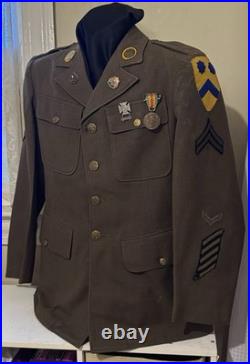
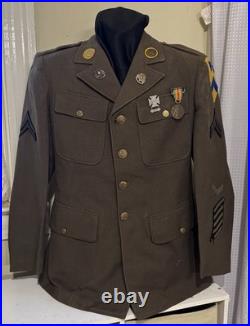
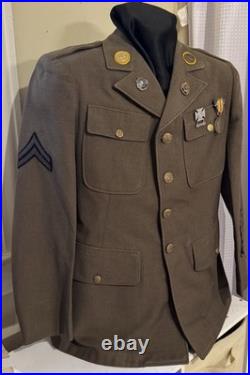
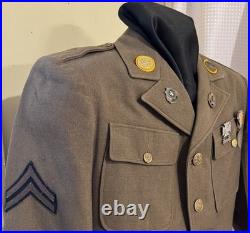
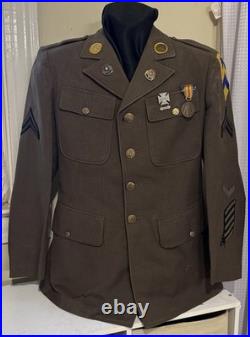
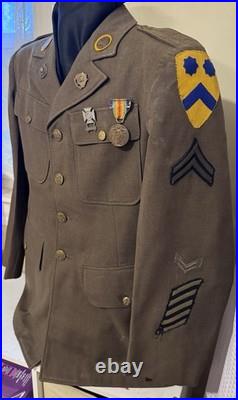
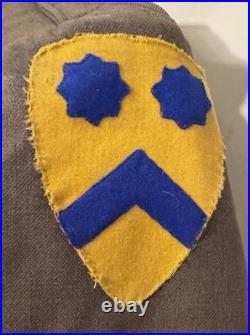
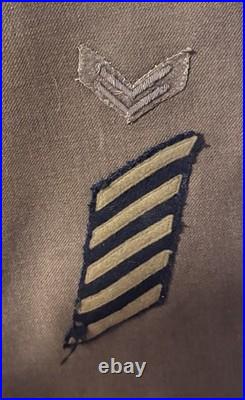
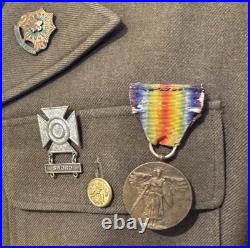
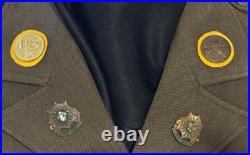
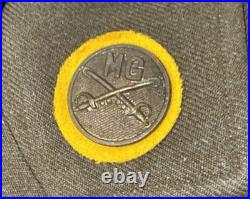
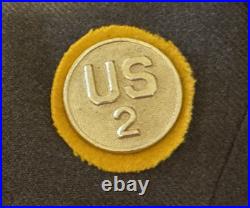
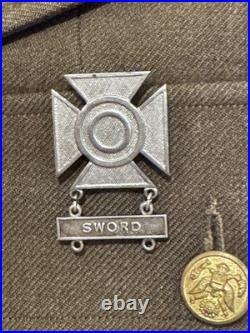
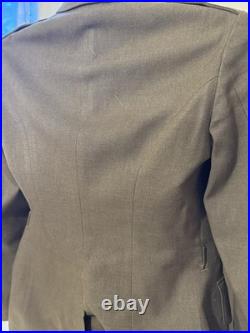
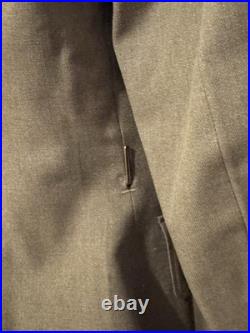
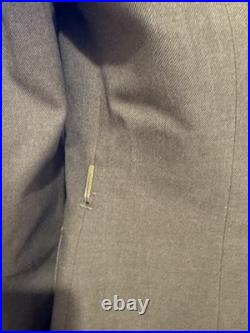
For your consideration is this Pre WWII M1926 Spec 8-31B Wool Service Coat Machine Gun Troop, 2nd Cavalry Regiment, 3rd Cavalry Brigade 2nd Cavalry Division Description: Design: A four-pocket olive-drab wool service coat featuring a notched lapel that could also be buttoned completely closed at the neck with a throat tab for winter weather. Timeline: Evolved from the original 1926 M1926 specification (Spec 8-31), transitioning through Spec 8-31A, updated to Spec 8-31B in 1933, and later succeeded by Spec 8-31C (1937) and Spec 8-31D (1940) leading into World War II. Material: Typically constructed of whipcord wool fabric with a cotton silk mix lining Usage: Widely worn by U. Army enlisted personnel during the interwar period from 1930 through 1933 alongside matching wool breeches, service caps, and wool shirts. Coat Contains. M1926 Spec 8-31B Wool Service Coat. M1926 Type II Collar Disc. “US 2″ Yellow Twill Disc. M1926 Type II Collar Disc. “MG Crossed Sabers” Yellow Twill Disc. 2nd U. Cavalry DI Screw Back x 2. Qualification Badge. SWORD (Sterling Silver). WWI Medal History of MG Tr, 2d Cavalry Regiment The Machine Gun Troop of the 2nd Cavalry Regiment was stationed at Fort Riley, Kansas, during the 1930s, maintaining horse-mounted machine gun capabilities before the U. Army transitioned toward mechanization. Garrison: Fort Riley, Kansas. Role: Provided heavy firepower (machine guns) to the horse cavalry regiment. Transition: In the early 1940s, as the U. Army reorganized and mechanized, traditional horse cavalry machine gun troops were phased out or restructured into modern mechanized reconnaissance and weapons units.


Pre WWII M1926 Spec 8-31A NCO Service Uniform 1st Cavalry Regt (Mechanized) 1935. This uniform was owned by a Cpl of the 1st Cavalry Regt, 7th Cavalry Brigade (Mechanized). This is a very rare find in that the uniform is completely corduroy. I have see this with WWI Army Breeches but I have never seen a tunic like this. It follows the M1926 Spec 8-31A EM Service Uniform in that it’s closer to a Melton Wool then the later revision of 1933 with the Spec 8-31B. This uniform dates between 1930 and 1933. The M1912 Garrison Belt is dated 1935. This uniform grouping includes. M1911 Service Hat, OD Wool Felt; Campaign. M1921 1st Cavalry Regt DI x 2; Screwback. M1921 1st Cavalry Regt DI; Pinback. Type II Collar Disk; 1st Regiment screwback. Type II Collar Disk; “A” Troop, Cavalry screwback. Purple Heart ribbon. Mexican Campaign ribbon. Campaign Cord; Cavalry Yellow (sewn on Campaign hat per Army Regulation). BOOTS, SHIRT, TIE; NOT INCLUDED. There is mothing on the back side of the “Montana” Hat. There is a repaired portion of torn material on the lower inside of the coat. This being said, this is a TRUE museum piece for the United States first modern Armored Cavalry Regiment. The 1st Cavalry Regiment set the stage for our Modern Tank force. The 1st Cavalry Regt, 7th Cavalry BDE Patch is made of a Twill Wool and is definitely a circa 1933 piece. This Corporal uniform shows involvement in WWI with a 6mn bullion overseas Chevron. It also shows that he had served 15 years by the time of this uniform. The Chevrons and service stripes are of the chain stitch type indicating that this was a dress uniform instead of a field piece. This uniform is a beautiful and completely rare piece made of corduroy. You may never see another like it. Unfortunately, it’s not identified. HISTORY OF 1st REGIMENT OF DRAGOONS. The 1st Cavalry Regiment is a United States Army regiment that has its antecedents in the early 19th century in the formation of the United States Regiment of Dragoons. To this day, the unit’s special designation is “First Regiment of Dragoons”. While they were the First Regiment of Dragoons another unit designated the 1st Cavalry Regiment was formed in 1855 and in 1861 was re-designated as the 4th Cavalry Regiment (units were renumbered based on seniority and it was the fourth oldest mounted regiment in active service). The First Dragoons became the 1st Cavalry Regiment since they were the oldest mounted regiment. SPANISH AMERICAN WAR through INTERWAR PERIOD. On 19 June 1899, the 1st Cavalry left Ft Robinson for Fort D. Russell, Wyoming and began thorough training for new recruits after a brief reorganization period. When the Boxer Rebellion began in China in August 1899, the US Army garrison in the Philippines was moved to Peking to relieve the surrounded legations there, and the 1st Cavalry was sent to the Philippines on 7 August, their horses following four days later. Arriving at Batangas, Luzon on 20 September, they moved to Santo Tomas just south of Manila. They busied themselves with scouting missions, escorting supplies, and patrolling the countryside and villages for guerrilla fighters. In October 1901, a group of insurgents stole some native supplies, so 20 troopers pursued them, reclaimed the goods, and burned the village they were found in, and on 22 October, Troop B captured 5 guerrillas on Mount Makiling. From 18 November-1 December, 35 troopers from the 1st Cavalry took part in the Mount San Cristobal Expedition, which destroyed an enemy supply cache. On 15 March 1902, Troop B killed 5 insurgents on Mount Makiling, and killed 4 more on 19 March. On 16 April, the leader of these guerrillas, General Malvar, surrendered, and hostilities ceased. The 1st Cavalry Regiment was sent back home, and arrived at their new post, Fort Clark, Texas, on 1 October 1903, where they remained for three years. After the 1906 San Francisco earthquake, 1st Cavalry troopers moved there to assist, and Troop B remained in San Francisco until 9 June 1907 before returning to Texas. A, B, D, and K Troops were stationed at the Presidio of San Francisco and later joined the rest of their regiment at the Presidio of Monterey until 1 August 1914. Moving to Southern California, the 1st Cavalry garrisoned San Ysidro in response to growing tensions south of the border in Mexico. On 24 August 1915, the regiment moved to Calexico, California to strengthen the border and defend against raids by the bandito, Pancho Villa. They remained guarding the border while General Pershing launched the Punitive Expedition and were still there when the US entered World War I. The 1st Cavalry did not participate in the First World War, but it remained guarding the border until 19 January 1923, when they went to Fort D. This was their last posting as horse cavalry, and during a parade on 14 December 1932, the troopers dismounted and passed in review, saluting their horses as they left them to become a mechanized unit. Moving to Fort Knox, Kentucky, the 1st Cavalry Regiment became the first mechanized unit in the United States Army, and was brigaded with the 13th Cavalry Regiment to form the 7th Cavalry Brigade (Mecz). In the summer of 1939, 7th Cavalry Brigade (Mecz) took part in the Plattsburgh Maneuvers and helped develop the Army’s first tactics for mechanized warfare. In the summer of 1940, the Louisiana Maneuvers convinced the Army of the need to form an armored force and the 1st Armored Division was founded on 15 July 1940. The 1st Cavalry Regiment was redesignated the 1st Armored Regiment that same day, and was assigned to the 1st Armored Brigade. It wouldn’t be long until America’s fledgling armored force would be tested in battle. The item “Pre WWII M1926 Spec 8-31A NCO Service Uniform 1st Cavalry Regt (Mecz) 1933″ is in sale since Wednesday, October 20, 2021. This item is in the category “Collectibles\Militaria\1919-38\Original Period Items”. The seller is “littlebelleblue” and is located in Chesnee, South Carolina. This item can be shipped to United States.