



This is a cohesive collection of approximately 20+ original typed/printed memos, general orders, special orders, training memoranda, and demonstration narratives from the summer training season (April-July 1934) at Fort Sam Houston and Camp Bullis, Texas. Focuses on the 9th Infantry Regiment (part of the historic “Indianhead” 2nd Infantry Division) and includes Organized Reserve Corps O. Integration, battalion defense/attack demos, rifle firing schedules, command post exercises, and full-year training programs e. April 4: Field Exercise – War Strength Battalion in Defense (4 pages). June 23 & 30: General Orders with detailed annual training programs (7-8 pages each). July 13: Infantry Battalion Reinforced in Attack demos (narrative + situation/orders, 7 pages total). Training Memos and firing schedules. Undated: Troop Leading Advance Guard demo (3 pages). These primary source documents provide rare insight into interwar U. Army “war preparation” training during the Great Depression era-small-unit tactics, live-fire, reserve mobilization, and maneuvers that influenced WWII doctrines. Scarce material outside major archives; not mass-printed manuals but unit-specific ephemera. Perfect for historians, 2nd Division/9th Infantry collectors, Texas military history enthusiasts, or interwar militaria specialists. Questions welcome-happy to provide additional photos/scans of specific items!

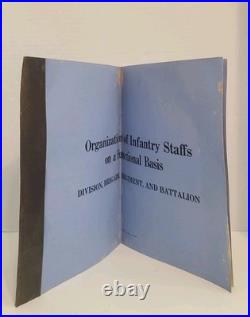




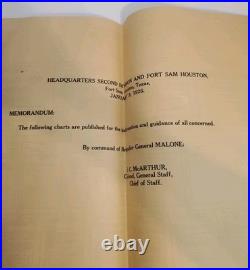

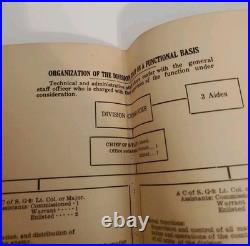
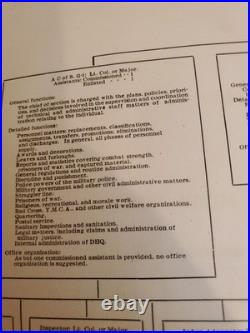
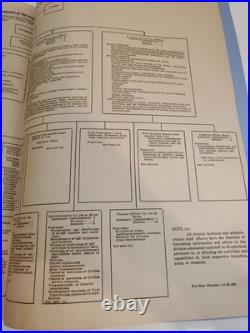
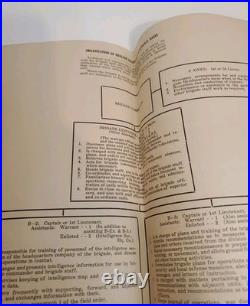
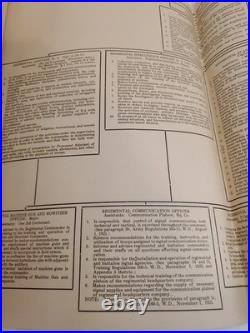
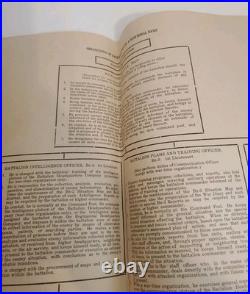
Up for sale is a scarce, original 1926 military training booklet produced at Fort Sam Houston, Texas (imprint: Fort Sam Houston -1-9-26; -500). Dated January 9, 1926, this large-format pamphlet (4 pages of content plus title spread) features detailed organizational charts and functional breakdowns of infantry staffs across division, brigade, regiment, and battalion levels. Printed on heavy blue paper, it includes intricate flowcharts detailing staff roles e. Chief of Staff, G-1 through G-4 sections, Adjutant, Intelligence, Supply, Plans & Training Officers, personnel counts (commissioned, warrant, enlisted), general/detailed functions, assistants, and notes on operations, training, logistics, and more. This reflects the U. Army’s interwar reorganization of infantry doctrine post-WWI, making it a valuable piece for military history.

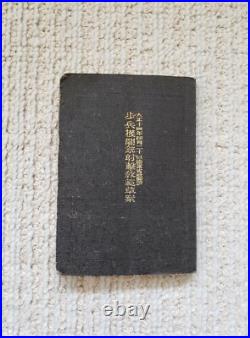
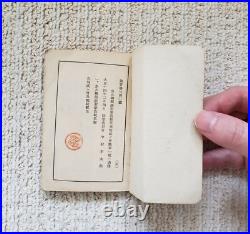
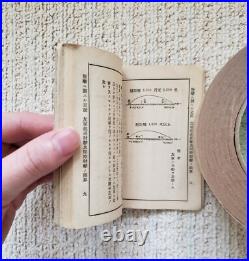
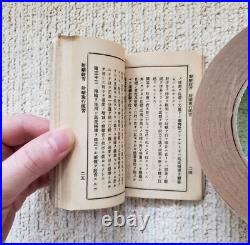
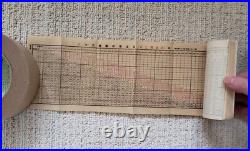
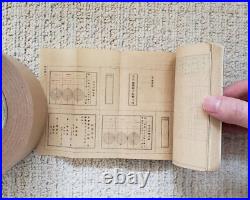
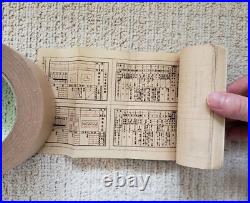
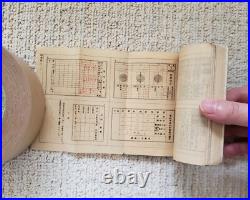
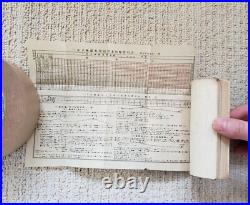
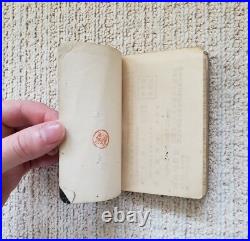
Japanese text / Size: 7.4cm x 10.8cm (Circa) / 92 pages + folded illustrations. It could take longer depending on the. Condition is used with obvious wear, stain, tear on folded pages, underlinings, etc. No return is accepted. Required paperwork when necessary or fails to. I do not mark merchandise values below value or mark items as “gifts” – US and International government regulations prohibit such behavior. Police and other authorities.

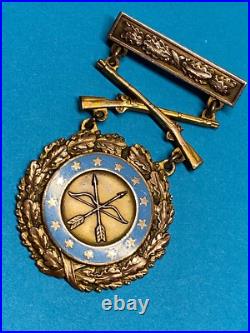
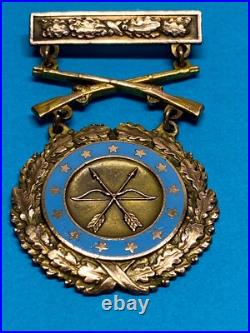
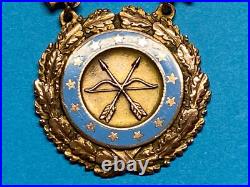
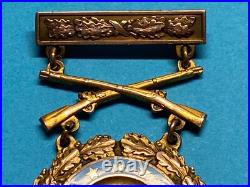
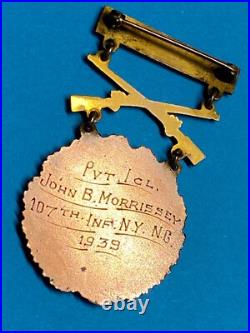
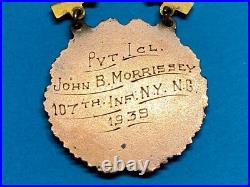
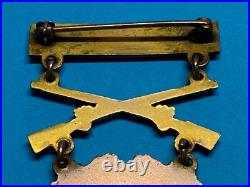
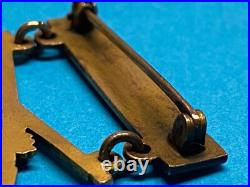
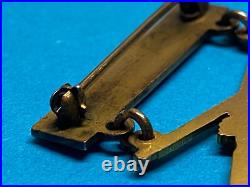
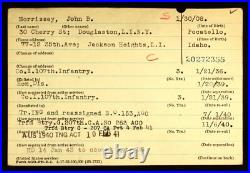
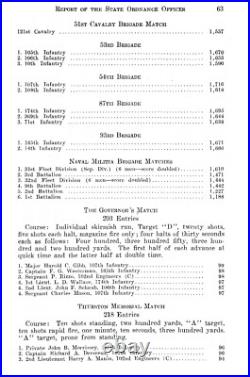
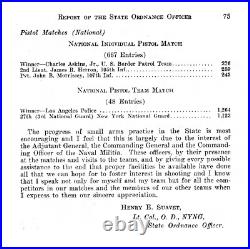
1938, ARMY LEVEL PRIZE, BRONZE, RIFLE COMPETITION, INFANTRY, NAMED, w/RESEARCH. This 1939 Infantry Army Level Prize for Rifle Competition was awarded to Private First Class John B. Morrissey, Company I, 107. SGT Morrissey was born on 30 January, 1908, Pocatello, Idaho. SGT Morrissey enlisted on 21 January 1936. When John Bacon Morrissey was born on January 30, 1908, in Pocatello, Idaho, his father, Harry, was 30 and his mother, Florence, was 23. He had two sons and two daughters with Anna R Morrissey. He died on February 3, 1982, in Aberdeen, Maryland, at the age of 74. These interwar Army marksmanship badges are highly sought after among collectors. We will include printed copies of the research artifacts. We are limited to 12 images, so there are more artifacts than what is displayed here. This Army level prize consists of three parts. Top bar that indicated either Army level or Corps / department level competition and served as a brooch to affix the assembled device to the uniform. The top bar is squared ended and ornamented with oak leaves, and was always worn with this bronze clasp and an enameled planchet prior to WWII. The top bar or brooch is a pin back with a functional rotating clasp closure. The second portion consists of an intermediate clasp of crossed arms to indicate the type of weapon that was used to earn the award rifle, pistol, or, soon thereafter, automatic weapons. In this case it has crossed rifles. The third, lower piece is a planchet, that when enameled, told the arm or the type of service, in this case, blue for Infantry. The central design is a bow and a pair of arrows. The planchet consists of three concentric designs. 0625 in diameter, displays a compound bow and two crossed arrows, a symbol of marksmanship. Outside of that is a center ring, 015 in width, which displays 13 stars. An oak-leaf wreath executed in bronze surrounds the entire design, making the planchet 1-1/2 in width. The combatant arms had bronze stars with the ring enameled in blue for Infantry. They would be responsible to send the package to you.

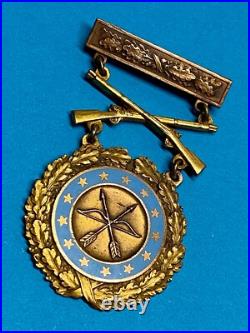
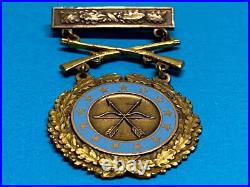
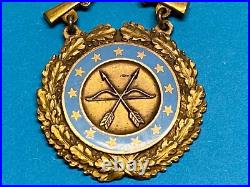
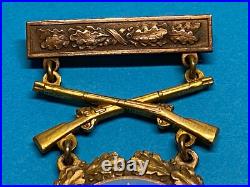
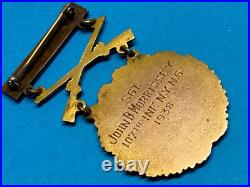
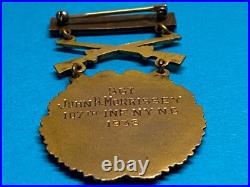
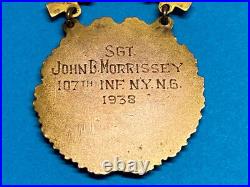
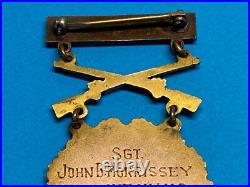
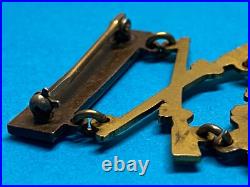
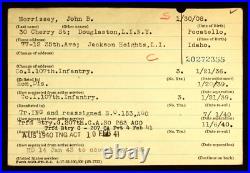
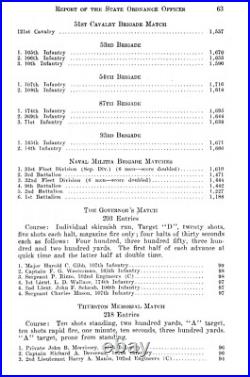
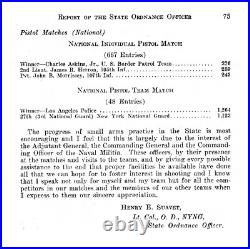
1938, ARMY LEVEL PRIZE, BRONZE, RIFLE COMPETITION, INFANTRY, NAMED, w/RESEARCH. This 1938 Infantry Army Level Prize for Rifle Competition was awarded to SGT John B. Morrissey, Company I, 107. SGT Morrissey was born on 30 January, 1908, Pocatello, Idaho. SGT Morrissey enlisted on 21 January 1936. When John Bacon Morrissey was born on January 30, 1908, in Pocatello, Idaho, his father, Harry, was 30 and his mother, Florence, was 23. He had two sons and two daughters with Anna R Morrissey. He died on February 3, 1982, in Aberdeen, Maryland, at the age of 74. These interwar Army marksmanship badges are highly sought after among collectors. We will include printed copies of the research artifacts. This Army level prize consists of three parts. Top bar that indicated either Army level or Corps / department level competition and served as a brooch to affix the assembled device to the uniform. The top bar is squared ended and ornamented with oak leaves, and was always worn with this bronze clasp and an enameled planchet prior to WWII. The top bar or brooch is a pin back with a functional rotating clasp closure. The second portion consists of an intermediate clasp of crossed arms to indicate the type of weapon that was used to earn the award rifle, pistol, or, soon thereafter, automatic weapons. In this case it has crossed rifles. The third, lower piece is a planchet, that when enameled, told the arm or the type of service, in this case, blue for Infantry. The central design is a bow and a pair of arrows. The planchet consists of three concentric designs. 0625 in diameter, displays a compound bow and two crossed arrows, a symbol of marksmanship. Outside of that is a center ring, 015 in width, which displays 13 stars. An oak-leaf wreath executed in bronze surrounds the entire design, making the planchet 1-1/2 in width. The combatant arms had bronze stars with the ring enameled in blue for Infantry. They would be responsible to send the package to you.

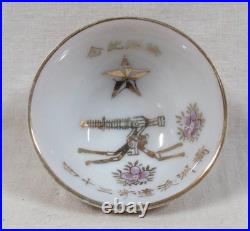

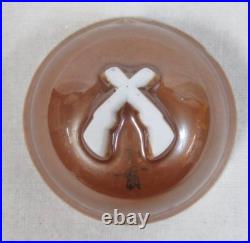
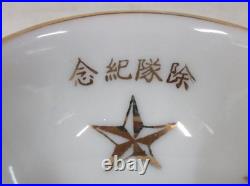
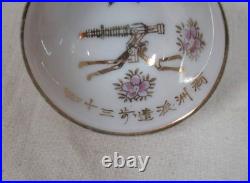
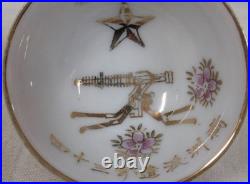
Original Pre-WW2 Imperial Japanese Army Sake Cup – Manchuria Expedition 34th Infantry Regiment, Machine Gun Design, Helmet Shape, Gold Trim. This rare commemorative sake cup was presented to a soldier of the 34th Infantry Regiment of the Imperial Japanese Army upon his discharge after service in Manchuria. The 34th Infantry Regiment, part of the 6th Division (Kumamoto Division), was originally formed in the Meiji period. During the early 1930s, this regiment was sent to Manchuria as part of Japan’s expanding continental operations following the Mukden Incident (1931). After returning home, soldiers who completed their mission were honored with these beautifully crafted commemorative cups, symbolizing their safe return and loyal service. ? Design & Symbolism. Gold Imperial Army Star – the emblem of the Japanese Army. Heavy Machine Gun – representing the regiment’s combat role. Cherry Blossoms – symbolizing bravery and transient life. Helmet-style shape with crossed rifles in relief, a rare and highly collectible design among military sake cups. These cups were not just souvenirs – they were symbols of pride, brotherhood, and survival. Soldiers and their families would toast with them to celebrate the end of service and safe return home. 5.5 cm diameter. Design: Gold-painted Imperial Star, machine gun, and cherry blossoms. Shape: Helmet type, crossed rifles in relief on the base. Condition: Excellent for age; minor wear to gold trim, no cracks or chips. ? Collector’s Note. This cup captures the spirit of prewar Japan – military pride combined with refined craftsmanship. It is not only a wartime relic but also a beautiful artifact of the human stories behind the Manchurian campaign. A valuable piece for collectors of Japanese militaria, early Showa porcelain, or anyone studying Imperial Japanese history. International Buyers – Please Note. Thank you for your understanding.


US Army Officer Bag with stenciled unit markings. Era likely WWI Features: Sturdy canvas with leather bottom reinforcement Metal hardware with hooks for attaching to other field gear. Multiple internal dividers/pockets (likely for maps, documents, or small gear). Large flap with unit stencil and strap/buckle closure. Condition Heavy wear, field soiling, and staining (especially on the leather bottom). Rust/patina on metal hooks. Structurally intact (straps, stitching, and internal compartments all appear solid).


This is an original interwar 2nd division patch not to be confused with a WW1 5th marine patch of similar design. Patch was acquired a couple years ago by a 2nd Division collector on the US militaria forum. Patch does not glow under UV light.


The product is an original 1926 training regulations manual from the Army War Department, focusing on cavalry, infantry, and animal training. This vintage item provides a unique insight into military practices during that era in the United States. With a militaria theme, this collectible piece is a valuable addition for those interested in historical military documents and artifacts. Used condition, generally good shape.
