
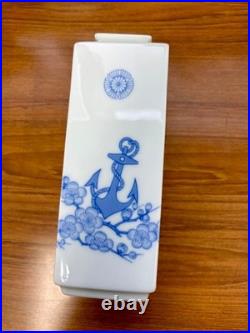
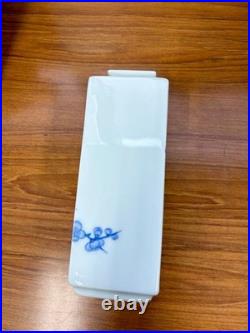
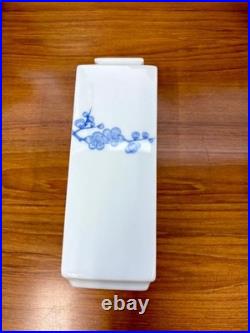
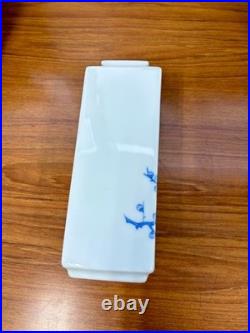
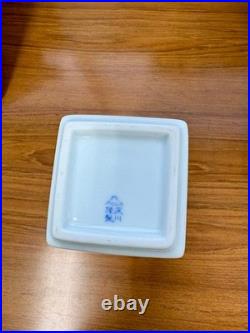
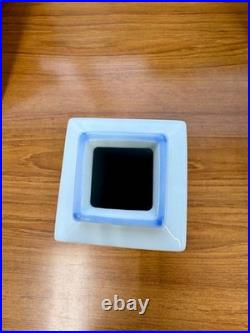

This is a prewar Japanese porcelain vase made by Fukagawa Seiji, closely associated with the Imperial Japanese Navy and the Imperial Household. The front is decorated in underglaze blue with a large Imperial Japanese Navy anchor, plum blossoms, and above them the royal crest of the Takamatsu-no-miya branch of the Imperial Family. The Takamatsu-no-miya family was one of the branches of Japan’s Imperial Household, and Prince Takamatsu himself served as an officer in the Imperial Japanese Navy. Rather than going too deeply into his personal history, the important point here is the unusual combination of an Imperial-family crest and a naval anchor on the same piece. The maker is also highly significant. Fukagawa Seiji, founded in 1894 in Arita, became one of Japan’s most prestigious porcelain manufacturers. It won a gold medal at the 1900 Paris Exposition and later became an official supplier to the Imperial Household. The underside of this vase bears the Fukagawa Seiji maker’s mark. Fukagawa also had a documented connection with the Imperial Japanese Navy. In 1916, the company became a designated Navy factory and supplied tableware for naval officers. In 1942, it was further designated as a Navy-supervised factory, producing and supplying specialized tableware and military-use ceramics. This makes Fukagawa more than simply a famous porcelain maker: during the prewar and wartime period, it had an official manufacturing relationship with the Imperial Japanese Navy. No original box or supporting provenance documents are included with this piece, but the combination of: Imperial-family crest Imperial Japanese Navy anchor Fukagawa Seiji maker’s mark makes it a particularly interesting example of Japanese military and Imperial-era porcelain. I have not found evidence that Fukagawa continued as an official designated supplier to Japan’s postwar Self-Defense Forces. Its strongest documented military connection belongs to the era of the Imperial Japanese Navy. A small porcelain vase, but one that brings together three powerful elements of prewar Japan: the Imperial Household, the Navy, and one of Japan’s most prestigious porcelain makers. Own a Piece of History. International Buyers – Please Note.

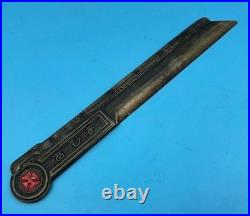
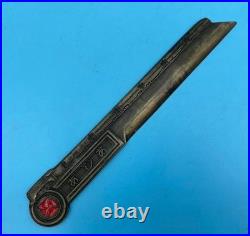
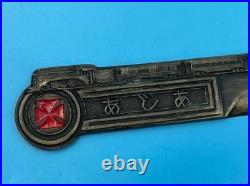
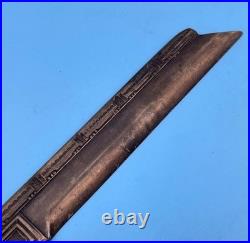
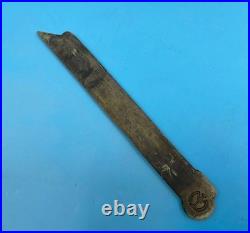
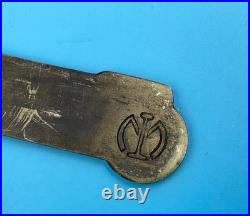
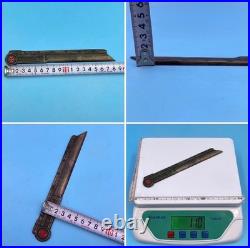
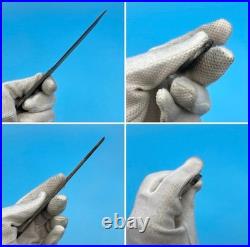
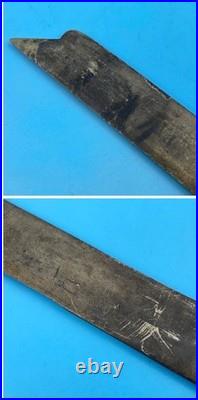
Rare commemorative paper knife issued by the South Manchuria Railway Company (Mantetsu) during the 1930s, celebrating the legendary express train “Asia” (Ajia-go) – the flagship of Japan’s imperial railway network in Manchukuo. Made of solid brass, beautifully engraved with the relief of the Asia Express locomotive, the train name “??? , ” and the red Mantetsu company crest. The reverse side also bears the official logo mark. 19 cm in length, 110 g in weight. Some age patina and wear, consistent with its age. Founded in 1906 after the Russo-Japanese War, the South Manchuria Railway (SMR) was far more than a transport company – it was the economic and military backbone of Japan’s control over Manchuria. Mantetsu managed railways, mines, cities, and intelligence networks, serving both civilian and military logistics. The Asia Express, inaugurated in 1934, represented the peak of Japanese engineering in the prewar era. Running between Dalian, Mukden (Shenyang), and Harbin, it featured streamlined design, air conditioning, and luxurious interiors. The train became a symbol of imperial prestige and modern power, used by military officers and diplomats as a moving showcase of empire. This paper knife embodies that historical moment – where technology, propaganda, and military ambition converged in Japan’s expansion across Asia. A rare collectible for historians and railway or militaria collectors alike. Own a piece of history. International Buyers – Please Note. Thank you for your understanding.


This is from a set the government had discarded that was ostensibly the original artwork for the designing of the crests for the 48 State National Guard units and our associated territories. They are all original watercolors on board and are in varying condition and the time frame they were done was the 1920’s to the 1940’s and the dates are in the corners with the sign off of the relevant officer of the quartermaster general’s office. These are one of a kind design proofs for the State Guard unit crests and are extremely well done and executed. I do not know who this artist is. This design was approved by the Quartermaster’s department in 1924. It is in good condition with minor corner wear. The size is about 8″ x 10″. I focus on happy repeat customers and love what I do and try to ensure all customers are happy. I do not stay glued to my computer and have a real job so please do not expect instantaneous answers. I specialize in paper, photos, coins and militaria. I sell about anything except reproductions. If it is not old, I say so. If there is a defect, I also say so. You can always learn more in this business. If I make a mistake, and we all do, I will take responsibility for it and you can return the item.


Outstanding ORIGINAL 1930’s example of this very difficult to find DUI. 28th Division Pennsylvania National Guard Aviation Section. This design was approved in 1931 and being hallmarked by noted Philadelphia jeweler, S. Eby, it dates from the 1930’s. Extremely high quality, as Eby was known for first rate insignia. Enamel is perfect (the photo picks up some strange glare). Has screw post and original nut. Also identified as the 103rd Observation Squadron during WW2.


This is from a set the government had discarded that was ostensibly the original artwork for the designing of the crests for the 48 State National Guard units and our associated territories. They are all original watercolors on board and are in varying condition and the time frame they were done was the 1920’s to the 1940’s and the dates are in the corners with the sign off of the relevant officer of the quartermaster general’s office. These are one of a kind design proofs for the State Guard unit crests and are extremely well done and executed. I do not know who this artist is. This design was approved by the Quartermaster’s Department in 1926. It is in good condition with minor corner wear. The size is about 8″ x 10″. I focus on happy repeat customers and love what I do and try to ensure all customers are happy. I do not stay glued to my computer and have a real job so please do not expect instantaneous answers. I specialize in paper, photos, coins and militaria. I sell about anything except reproductions. If it is not old, I say so. If there is a defect, I also say so. You can always learn more in this business. If I make a mistake, and we all do, I will take responsibility for it and you can return the item.


DUI approved 10 February 1925. Location France Field, Canal Zone. The badge was redesignated for the 6th Bomb Gp 4 February 1943. Old pre-WW2 Regular Army. Not hallmarked; pinback fastener the badge on the left has the early thick, very heavy drop-in pinback, the badge on the right has a normal size drop-in pinback. Genuine, not a restrike. I will accept a return within 7 days from receipt if there is an error in the description which significantly affects the value. This is in conformance with U.


Old pre-WW2 Regular Army. This design was only used May-September 1928! Not hallmarked; screwback fastener. Genuine, not a restrike.


Old pre-WW2 Regular Army. Not hallmarked; screwback fastener. It looks like the screw post was reglued; but this DI is quite rare in any condition. Genuine, not a restrike. I will accept a return within 7 days from receipt if there is an error in the description which significantly affects the value. This is in conformance with U.


Old pre-WW2 Regular Army. Not hallmarked; screwback fastener, the tiny pointy bit is missing from the bottom of the back of the badge Genuine, not a restrike. I will accept a return within 7 days from receipt if there is an error in the description which significantly affects the value. This is in conformance with U.


This is from a set the government had discarded that was ostensibly the original artwork for the designing of the crests for the 48 State National Guard units and our associated territories. They are all original watercolors on board and are in varying condition and the time frame they were done was the 1920’s to the 1940’s and the dates are in the corners with the sign off of the relevant officer of the quartermaster general’s office. These are one of a kind design proofs for the State Guard unit crests and are extremely well done and executed. I do not know who this artist is. This design was approved by the Quartermaster’s department in 1924. It is in good condition with minor corner wear. The size is about 8″ x 10″. I focus on happy repeat customers and love what I do and try to ensure all customers are happy. I do not stay glued to my computer and have a real job so please do not expect instantaneous answers. I specialize in paper, photos, coins and militaria. I sell about anything except reproductions. If it is not old, I say so. If there is a defect, I also say so. You can always learn more in this business. If I make a mistake, and we all do, I will take responsibility for it and you can return the item.