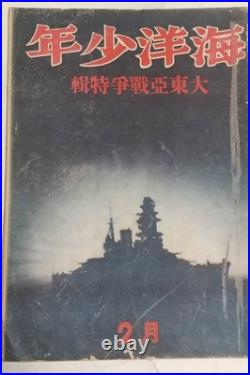
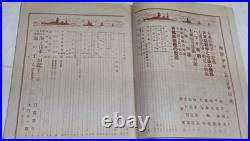
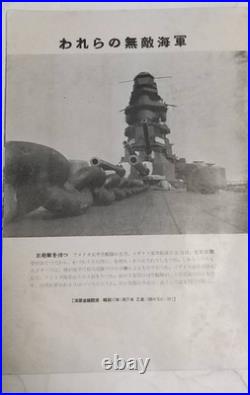
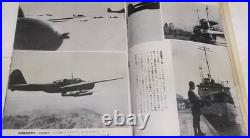
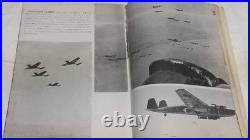
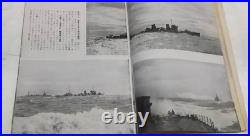
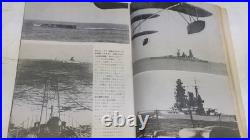
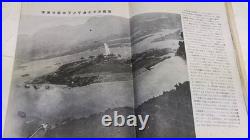
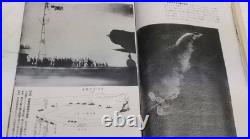
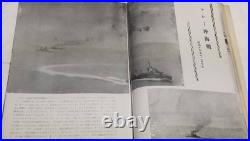

This is the February 1942 issue of Kaiyo Shonen (“Ocean Youth”), a wartime magazine for Japanese youth. It features a special edition on the Greater East Asia War, published just weeks after the attack on Pearl Harbor (Dec 7, 1941) and the Battle of Malaya (Dec 10, 1941). Inside are photographs, articles, and diagrams covering the Japanese Navy’s early war victories and the state of the U. Several pages bear the credit “Provided by the Navy Ministry, ” showing that the content relied on official photographs and reports. Compiled by the editors of Kaiyo Shonen, aimed at young readers in wartime Japan. Much of the visual material came from Imperial Japanese Navy propaganda sources, making this a genuine piece of period reporting and education. Published in February 1942, right after Japan’s surprise victories at Pearl Harbor and Malaya. This magazine was created for wartime reporting and youth indoctrination. Today it serves as a valuable historical primary source, showing how news, images, and narratives were presented to the Japanese public at the beginning of the Pacific War. Richly illustrated with black-and-white photo spreads of warships, aircraft, officers, and battle diagrams. “The Battle of Malaya”. Pacific Fleet Before Annihilation. This issue allows you to see the war as it was reported in Japan at the time. Own a piece of history – ideal for collectors, researchers, museums, or educational use. Approximate 7-21days(To USA).

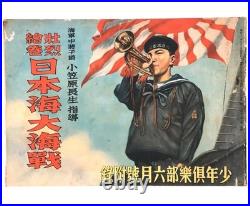
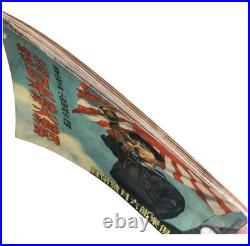
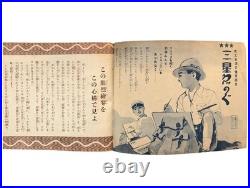
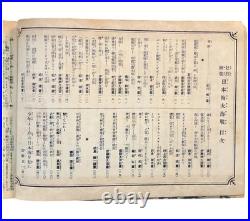
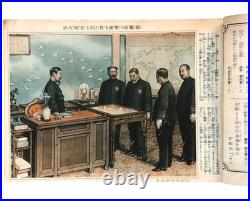
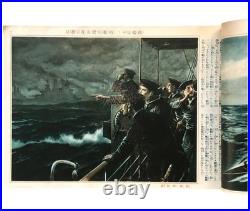
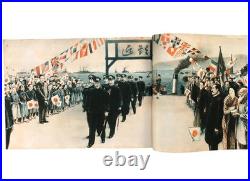
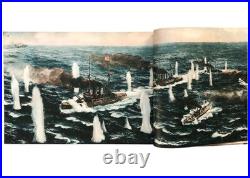
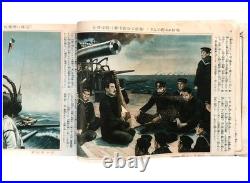
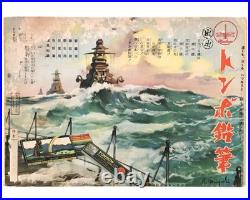
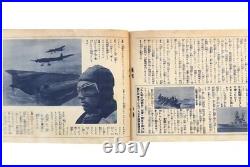
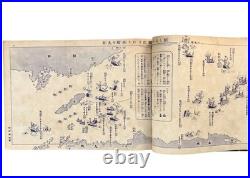
What: A 1937 (Showa 12) supplement to Shonen Club by Kodansha, vividly illustrating the Russo-Japanese War’s decisive Battle of Tsushima (Battle of the Japan Sea). Filled with dramatic color spreads, fleet charts, heroic episodes, and military songs, it was produced as clear wartime propaganda to inspire loyalty in young readers. When: Covers the battle of May 27-28, 1905. Published 32 years later in 1937, as Japan entered the escalation of the Sino-Japanese conflict. Where: The naval battle was fought in the Tsushima Strait, where Admiral Togo’s Combined Fleet defeated Russia’s Baltic Fleet. Why: To pass on the national victory myth to the next generation, reinforcing the Navy’s prestige and patriotic sentiment. 1937 marked the rise of militarism and mass propaganda campaigns through magazines, posters, and songs. 19×27cm, 48 pages, richly illustrated. Includes panoramic battle scenes, fleet deployment maps, and text aimed at youth. Condition: aged paper, wear, foxing, edge fray; intact and readable (see photos). A rare survivor of 1930s Japanese militarist culture-valuable both as children’s media and as a window into wartime propaganda. Own a Piece of History. Approximate 7-21days(To USA).

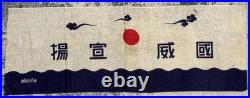
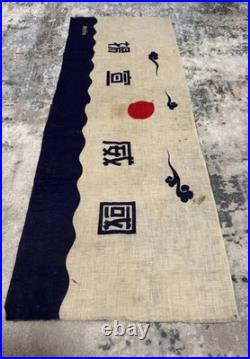
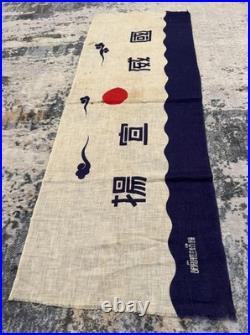
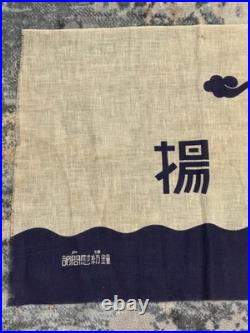
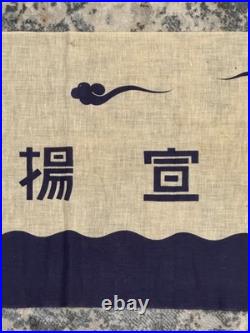
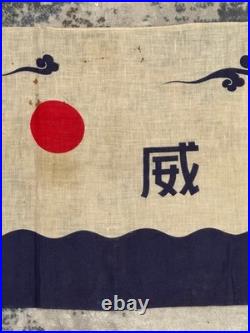
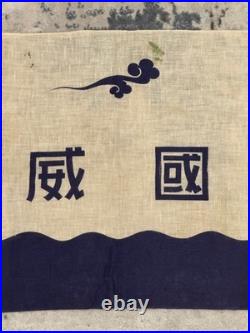
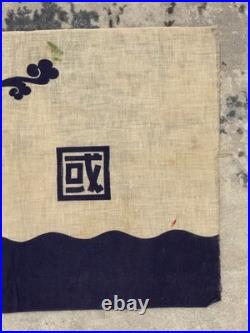
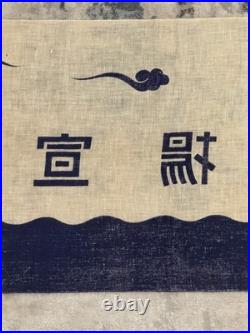
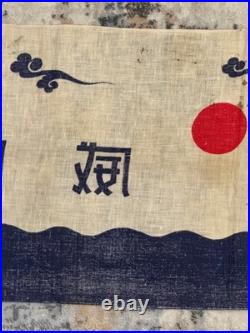
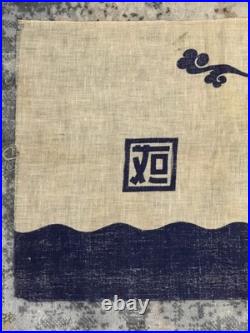
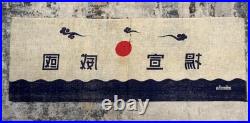
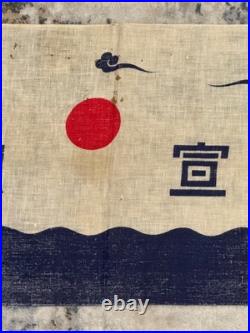
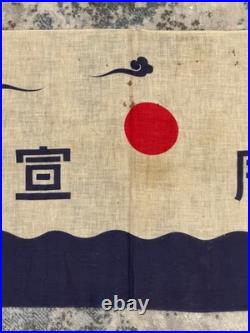
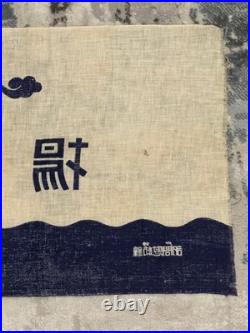
? English meaning: Raise and proclaim the nation’s might/prestige. ” or more naturally: “Promote and declare national strength. Character-by-character. To raise, lift up, promote. To proclaim, announce. Power, might, prestige. Nation / country The red circle represents the sun, commonly associated with Japan. This kind of phrase is often used on decorative banners, martial/heritage items, or nationalist-style art, rather than an official national flag.

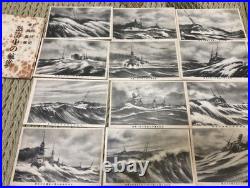
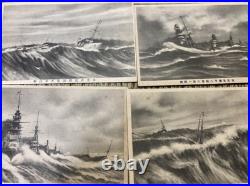
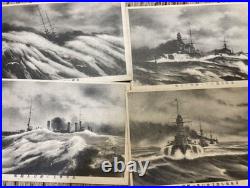
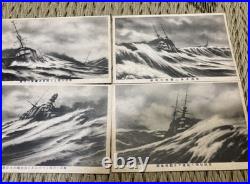
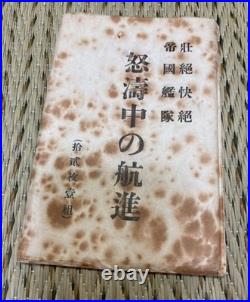
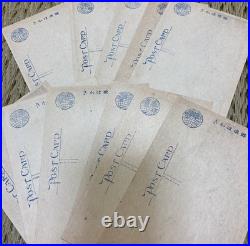
A complete set of 12 pre-WWII Imperial Japanese Navy propaganda art postcards titled “Voyage in Angry Waves” (?), housed in the original sleeve. Each postcard vividly depicts battleships, cruisers, and destroyers plowing through stormy seas, symbolizing the Navy’s strength and indomitable spirit. Printed in the late 1930s, these cards are an example of military art and wartime propaganda, created to inspire pride and resilience among the Japanese public. The set remains unused, with postcard backs marked POST CARD / Made in Japan. A rare and valuable historical artifact reflecting the aesthetics and propaganda of Japan’s naval expansion era. Approximate 7-21days(To USA).

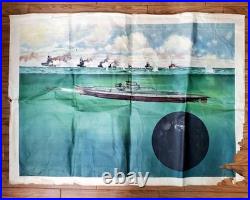
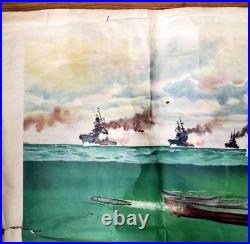
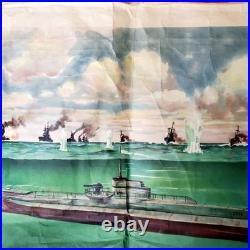
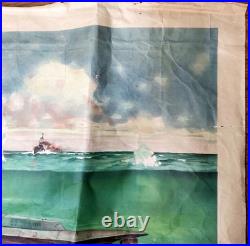
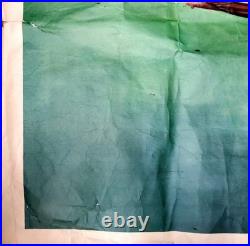
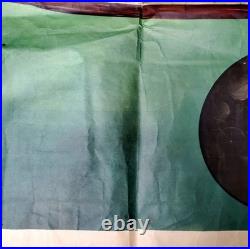
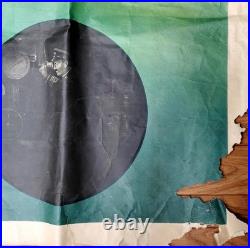
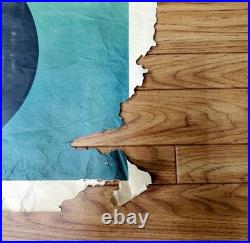
Thank you for viewing my listing. This is an original wartime large-format poster issued during the Pacific War, depicting an Imperial Japanese Navy submarine launching a torpedo attack against an enemy fleet. These colorful printed illustrations were used for military education, naval facility displays, and wartime propaganda, and surviving examples are extremely scarce today. Wartime naval posters of this type served as visual tools to communicate battle situations, strengthen morale, and promote the technological strength of the Imperial Navy. The composition-showing the submarine beneath the surface, the torpedo wake, surface fleet under fire, and an inset circle showing the interior view of the submarine’s control room-is typical of early-Showa naval propaganda art. Because such materials were printed in limited quantities and heavily used, intact originals rarely appear on the market. This poster has been stored for decades and shows significant age-related damage. Large tears and missing sections along the edges. Creases, folds, stains, discoloration. Paper deterioration typical of wartime prints. Please inspect all photos carefully. Despite the damage, it remains a valuable historical and display-grade artifact of Imperial Japanese Navy wartime visual culture. Why Collectors Value This Piece. Submarine-related naval artwork is among the most sought-after wartime themes. The large size and bold composition make it ideal for display. Authentic WWII propaganda materials are increasingly hard to find. A dramatic “salvaged from the past” appearance that some collectors prefer. If you collect Imperial Japanese Navy artifacts, wartime printed materials, or submarine history, this is a rare opportunity to own an original piece. Please feel free to ask if you have any questions. Approximate 7-21days(To USA).

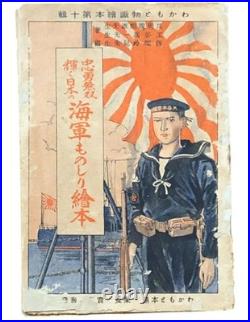
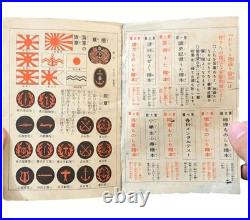
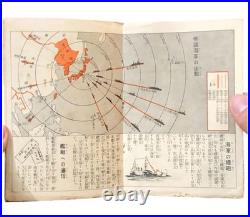
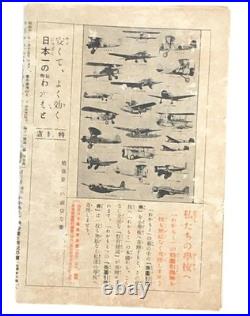
What: An illustrated children’s introduction to the Imperial Japanese Navy. Who: Published in 1938 by a wartime educational press, aimed at schools and young readers. When: Showa 13 (1938), during the height of the Sino-Japanese War, when total war mobilization influenced all aspects of society. Where: Produced in Japan, focusing on East Asia and the Pacific region. Why: Designed to inspire loyalty, pride, and fascination with the Navy among children-serving as clear wartime propaganda and a tool of national education. How: Richly illustrated with detailed diagrams, silhouettes of naval aircraft, full-color operational maps, and icon charts for easy learning. Condition: Shows age-related wear, discoloration, and small tears, but no missing pages. Please check photos for details. Collectible Value: A rare example of pre-WWII Japanese propaganda for children, combining education and ideology in one book. Own a piece of history-this volume captures the spirit and messaging of 1930s Japan. Approximate 7-21days(To USA).

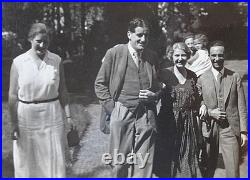
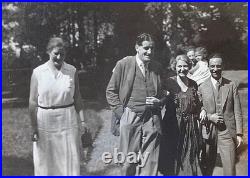
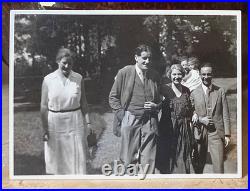
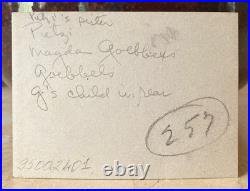
WW2 GERMAN PROPAGANDA MINISTER WITH FAMILY & ERNST “PUTZI” HANFSTAENGL PHOTO c1933. PERSONAL ONE OF A KIND FAMILY PHOTO OF THE WW2 GERMAN PROPAGANDA MINISTER WITH FAMILY MEMBERS ALONG WITH ERNST “PUTZI” HANFSTAENGL WITH A FAMILY MEMBER. ID’d PHOTO c1933. WW2 German politician and philologist who was the. (district leader) of Berlin, chief propagandist. For the National Socialist Party, and then WW2 German. Minister of Propaganda from 1933 to 1945. 1975 was a German American businessman and close friend and confidant of the WW2 German leader. He helped to finance the publication of. WW2 German leader’s. And the National Socialist’s official. Newspaper “People’s Observer”. Participating in the failed Munich Beer Hall Putsch Nov. Hanfstaengl briefly fled to Austria, while the injured WW2 German leader. Sought refuge in Hanfstaengl’s home in Uffing, outside. Putzi eventually fell out of favour with. And defected from Germany to the United States about 1933. He later worked for the WW2 U. PERIOD PENCILED ID’d ON THE REVERSE (L to R). Putzi’s Sister – Putzi – Magda Goebbels – Goebbels – G’s (Goebbels) child in rear. PENCILED INVENTORY NUMBERS ON THE REVERSE. VERY SHARP FOCUS AND VERY FINE CONTRAST. DIMENSIONS: 3 3/16″ x 2 3/8″. THESE ARE NOT A REPRODUCTIONS OR A COPIES.

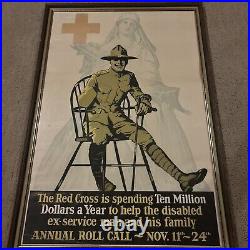
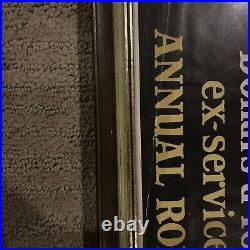
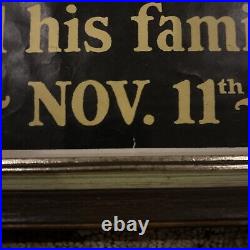
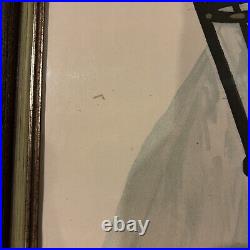
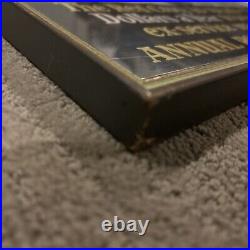
Post WWI Propaganda Poster. Measuring 30″ x 20″ this is a fantastic vibrant World War One veteran poster produced for the Red Cross Roll Call, Nov. Has been professionally framed. Artist: Jean-Louis Forain It reads: The Red Cross is spending ten million dollars a year to help the disabled ex-service man and his family. Annual Roll Call, Nov. 11th24th It features a full color disabled soldier holding a cane and sitting in a chair while shadow of a Red Cross nurse looks onward in the background. Red Cross cross in upper left hand corner. There is some discoloration, edge wear and other damage from display and age. With frame, measures 21.5in x 32in.

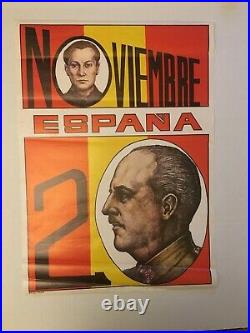
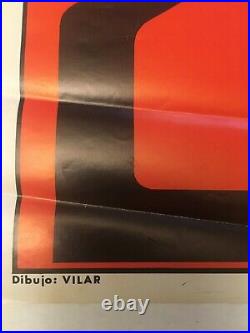
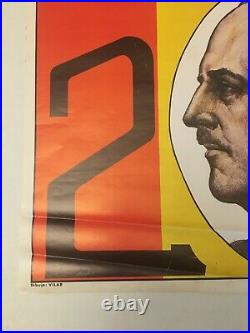
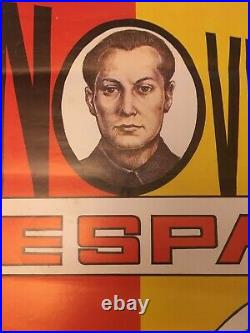
Original Spanish Civil War Propaganda Poster: 2 November, Francisco Franco and most likely Enrique Lister. During Spanish Civil War, The Nationalists reached Madrid in early November 1936 by approaching it from the north along the Corunna Road and the west by the Extremadura Road. On 29th of October, a Republican counterattack by the 5th (communist) regiment under Enrique Lister was beaten off at Parla. On November 2nd, Brunete fell to the Nationalists, leaving their troops at the western suburb of Madrid. The battle ended in a stalemate but was a tactical victory for the Spanish National Forces. Dimensions: 24.5 X 17.5. Good for a vintage poster, few creases, rolled poster. The item “Original Spanish Civil War Propaganda Poster 2 November Francisco Franco” is in sale since Monday, March 22, 2021. This item is in the category “Collectibles\Militaria\1919-38\Original Period Items”. The seller is “suumciugue” and is located in Middle Village, New York. This item can be shipped to United States.
- Modified Item: No
- Featured Refinements: Spanish Civil War
- Country/Region of Manufacture: Spain
- Original/Reproduction: Original