
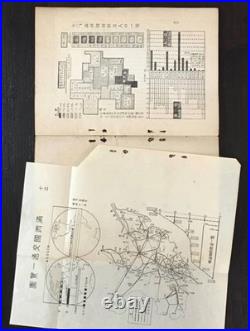
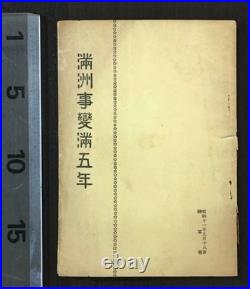
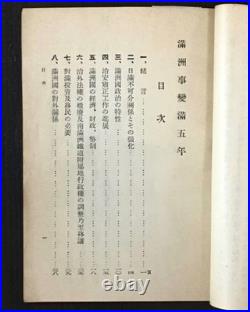
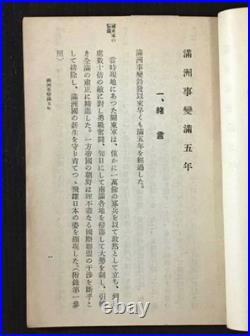
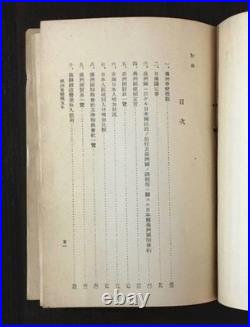
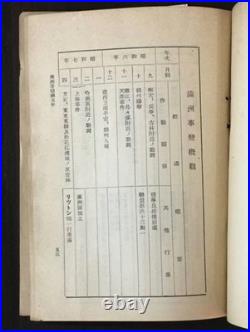
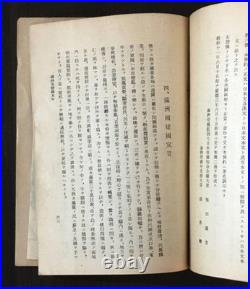

This is an original. 1936 publication issued by the Imperial Japanese Army Ministry. “Five Years Since the Manchurian Incident”. It was published on. Exactly five years after the beginning of the Manchurian Incident in 1931. The Manchurian Incident led to the expansion of Japanese military control in northeastern China and, in 1932, to the establishment of. This book was created by the Japanese Army to review what had happened during those five years and to explain how Manchuria had changed militarily, politically, economically, and logistically. What Happened After the Fighting? The book covers subjects including. The course of the Manchurian Incident. The establishment of Manchukuo. Relations between Japan and Manchukuo. Security operations and military control. Japanese settlement in Manchuria. Finance, industry, and natural resources. Railways and transportation networks. What makes this publication especially interesting is that it does not stop with the fighting itself. It shows what came afterward: railways were expanded, companies were organized, resources were moved, and administrative systems were built. In other words, this is a Japanese Army record of. How military conquest was followed by the construction of a political, economic, and transportation system in Manchuria. The book also includes a. Foldout map showing the transportation network of Manchukuo. In such a vast territory, railways were far more than ordinary civilian transportation. They moved troops, weapons, food, coal, agricultural products, industrial materials, and other strategic supplies. The railway network therefore supported both economic development and military logistics, making it one of the key systems behind Japanese control of Manchuria. A State That Existed for Only 13 Years. Manchukuo was established in 1932 and disappeared in 1945 after Japan’s defeat in World War II. It existed for only about. During that short period, a large political and economic system was created across what is now northeastern China under strong Japanese military and political influence. This book was published while Manchukuo still existed and was only a few years old. It is not a later history book. It is a contemporary primary source showing. How the Imperial Japanese Army itself presented the first five years of the Manchurian Incident and the creation of Manchukuo. This is an original period publication from approximately 90 years ago. The cover and pages show age-related toning, foxing, stains, rubbing, creases, and wear to the edges. The foldout map may also show folds, small tears, or other age-related wear. Please examine all photographs carefully for the exact condition and contents. From the military actions of 1931 came railways, corporations, cities, and eventually an entire state. This book preserves the early history of a country that existed for only thirteen years. Own a Piece of History. International Buyers – Please Note. Thank you for your understanding.

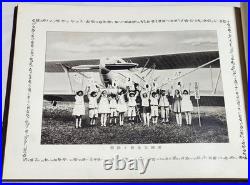
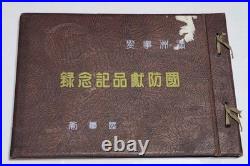
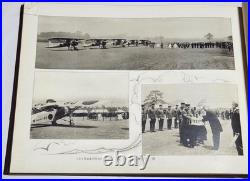
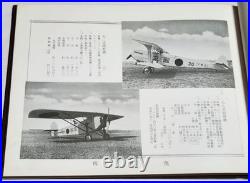
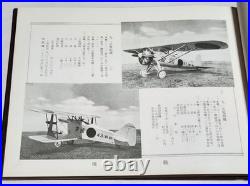
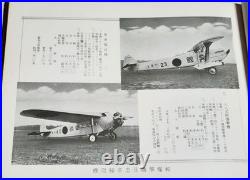
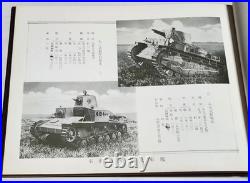
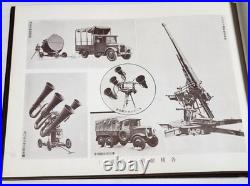
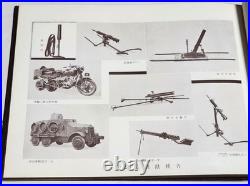
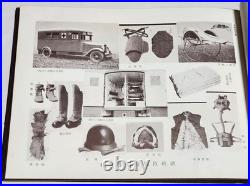
1933 “National Defense Donation Commemorative Album” – an extremely rare Imperial Japanese Army photo book documenting tanks, aircraft, artillery, vehicles, and military equipment during the Manchurian Incident era. This volume functions as a complete visual catalog of IJA equipment in 1933, containing numerous official photographs, specifications, and operational scenes. A valuable primary-source reference for collectors and researchers. Contents / Examples Included. Type 93 Reconnaissance Aircraft. Type 88 Recon Aircraft. Light bomber, medical evacuation aircraft, training aircraft. (Each with technical tables and field photos). Armored & Motor Vehicles. Type 89 Medium Tank. Type 94 Armored Car. Military trucks, towing vehicles. Artillery & Infantry Weapons. Mortars and grenade launchers. Medical & Cold-Weather Equipment. Anti-cold clothing / boots. This book is essentially a 1933 Imperial Japanese Army weapon catalog, produced with official photographs-highly valuable for historians, militaria collectors, or museum research. About the “National Defense Donation Movement”. However, the core of the book is the extensive photographic documentation of IJA weapons and vehicles. Due to age, the book has visible wear. Surface damage on cover. Wrinkles or paper warping. Please check all photos carefully. A highly significant and hard-to-find 1933 military photographic record. Rare opportunity to own an original pre-WW2 Japanese Army equipment catalog. International Buyers – Please Note. Thank you for your understanding.

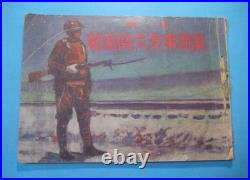
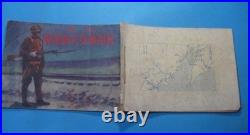
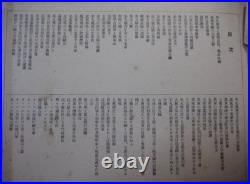
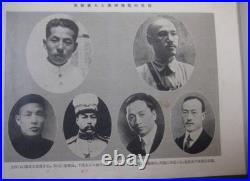
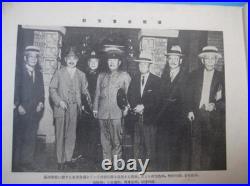
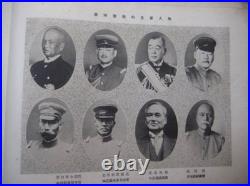
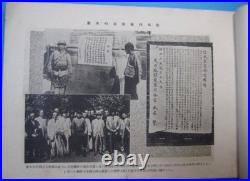
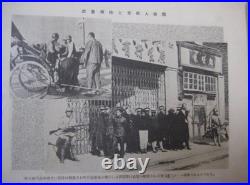
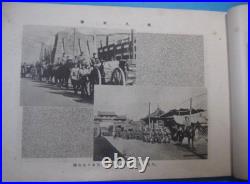
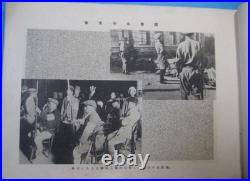
Original 1931 “Special Pictorial Record of the Manchurian Incident”. Early Showa-era photo album. Documenting the outbreak of the. The turning point that marked the beginning of Japan’s continental expansion and ultimately led to the Second Sino-Japanese War. Mukden (Liutiaohu) Railway Explosion. On September 18, 1931, near Shenyang (formerly Mukden). The Imperial Japanese Army’s Kwantung forces used this event as a pretext to launch a full-scale occupation of. Within a few months, Japan had seized major cities such as Mukden, Changchun, Harbin, and Jinzhou. This military operation shocked the international community and became a. Major prelude to World War II in Asia. ? About This Book. Provides a vivid photographic record of the campaign. Frontline scenes from Mukden, Jinzhou, Harbin, and other key locations. Portraits of leading Japanese and Chinese military and political figures. Japanese Army troop movements, artillery units, and occupation forces. Civilian life and reconstruction efforts after occupation. Detailed “Map of the Manchurian Situation” and “Japan-China War Map” on the back cover. The album serves as both a historical and visual document of early Showa Japan’s military expansion and propaganda photography. The photo portraits include. Key Imperial Japanese Army commanders. Members of the Japanese cabinet during the incident. Chinese Nationalist figures and regional leaders of Manchuria. These images collectively illustrate the. Political and military structure surrounding the 1931 Manchurian Incident. Making this album a unique record of both sides. Unlike later wartime propaganda books, this volume was produced. Immediately after the outbreak. Of the Manchurian Incident. It preserves the atmosphere and perspective of the time, offering researchers and collectors a. First-hand visual account of Japan’s early expansionism. The origins of the Sino-Japanese War. Showa-era propaganda and photojournalism. Imperial Japanese Army operations in Manchuria. Tokushu Manshu Jihen Dai Shashincho. (“Special Pictorial Record of the Manchurian Incident”). 26 × 19 cm. (cover wear, light stains, minor binding looseness). Pages remain well preserved for its age. ? Collector’s Note. A highly valuable artifact of pre-war Japanese photojournalism. Ideal for historians, collectors, and institutions interested in. Imperial Japan, military history, and early 1930s East Asia. Such complete and well-preserved copies rarely appear on the market. Manchurian Incident, Mukden, 1931, Imperial Japanese Army, Kwantung Army, Pre-WW2 Japan, Showa 6, Manchuria, China, Japanese Military Photo Album, Mukden Incident, Rare Historical Document, Propaganda Book, East Asia War History. Approximate 7-21days(To USA).

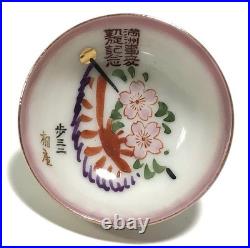
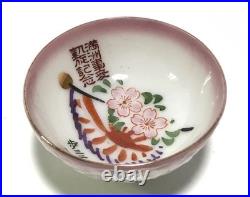
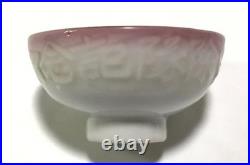
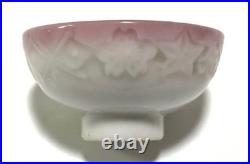
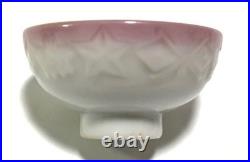
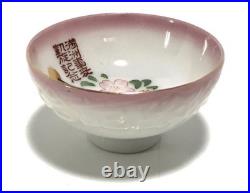
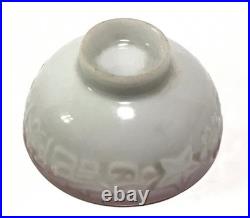
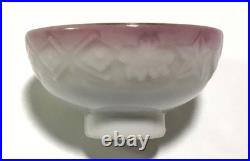
WWII Imperial Japanese Army Manchurian Incident Commemorative Military Sake Cup. Thank you for visiting. Imperial Japanese Store Kamikaze. This small porcelain military sake cup tells the story of one Japanese soldier who likely served during the. Unlike ordinary souvenirs, this cup preserves both military history and a personal milestone. Inside the cup are several important inscriptions. “Manchurian Incident Victory Return Commemoration”. Around the rim appears. The cup also bears. Which most likely refers to the. Of the Imperial Japanese Army. Another inscription appears to read. Although the characters are somewhat difficult to read, so this identification cannot be confirmed with certainty. What was the Manchurian Incident? The Manchurian Incident began in. Becoming one of the most significant events leading toward the Second Sino-Japanese War and eventually the Pacific War. Following the incident, Japanese forces occupied Manchuria and established the state of. For soldiers who participated, surviving the campaign and returning home safely was considered an important milestone worthy of commemoration. The 32nd Infantry Regiment. The inscription “Ho 32″ strongly suggests the. Although this cannot be stated with absolute certainty. The regiment was established in. And had a distinguished service history. The Second Sino-Japanese War. The Battle of Okinawa. During the Manchurian Incident, elements of the regiment participated in operations including the. The regiment later became well known for its determined resistance during the Battle of Okinawa, making it one of the better-known infantry regiments of the Imperial Japanese Army. The Story This Cup Tells. Reading the inscriptions together suggests a compelling story. Its owner most likely. Served with what was probably the 32nd Infantry Regiment. Participated in the Manchurian Incident. Completed his period of military service. And received this commemorative cup to celebrate both his return and his honorable discharge. Rather than commemorating a victory alone, this cup appears to celebrate the completion of an entire chapter in one soldier’s life. Military Sake Cups in Japanese Army Culture. Military sake cups were much more than drinking vessels. They were presented during important milestones such as enlistment, deployment, promotion, victory celebrations, safe return, and discharge from military service. Many were produced for only a single individual. As a result, they often preserve names, units, campaigns, and personal histories that would otherwise have been lost. Collectors often regard these cups as miniature military biographies preserved in porcelain. The cup features several symbolic military motifs. Cherry blossoms, representing the Japanese soldier. A bugle, symbolizing military ceremonies, mobilization, and victory celebrations. Decorative elements reflecting the patriotic aesthetic of pre-war Japan. 5.5 cm (2.2 inches). In diameter, it preserves an extraordinary amount of military history. 5.5 cm (2.2 in). This is more than a military sake cup. It is a surviving record of one soldier’s journey-from deployment during the Manchurian Incident to his safe return and discharge from military service. A remarkable piece of personal military history. Own a Piece of History. International Buyers – Please Note. Thank you for your understanding.

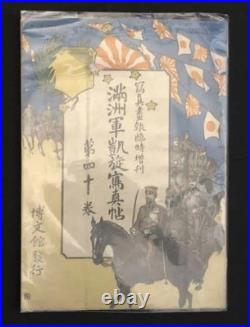
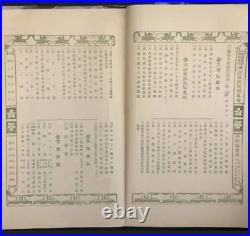
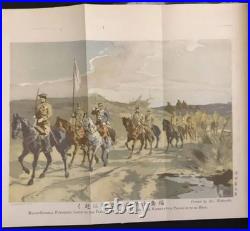
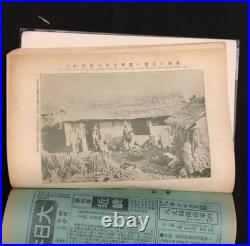
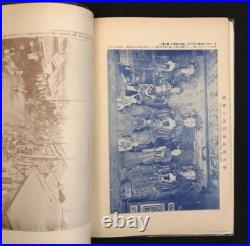
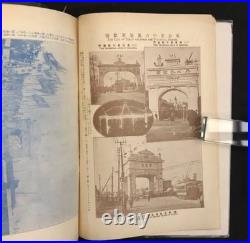
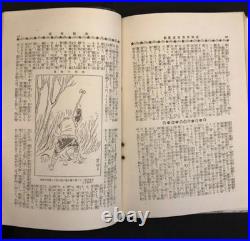
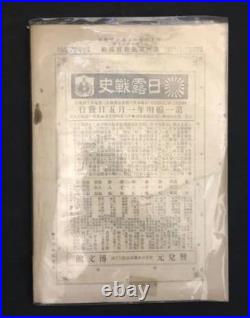
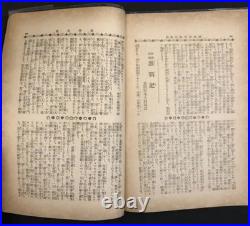
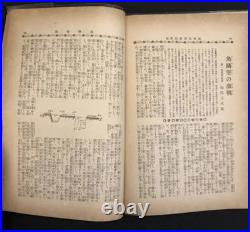
This is the “Manchurian Army Victory Photo Album” Vol. 40, published in 1906 by Hakubunkan as a special issue of the Shashin Gaho (Pictorial Magazine). About the Russo-Japanese War. It marked the first time an Asian power defeated a European empire in modern warfare, and had a major impact on world history. The “Manchurian Army” refers to the Japanese Army forces dispatched to Manchuria (present-day Northeast China), where they fought decisive battles such as the Siege of Port Arthur and the Battle of Mukden. Contents of this Album. Includes a vivid color lithograph frontispiece depicting Major General Fukushima and troops marching in triumph. Rich with battlefield photographs, illustrations, soldiers’ accounts, and war reports, vividly recording the atmosphere of the era. This album served as both a commemorative publication of Japan’s victory and a record for the home front. Today, it remains an invaluable historical reference for collectors and researchers of the Russo-Japanese War and modern Japanese military history. Approximate 7-21days(To USA).

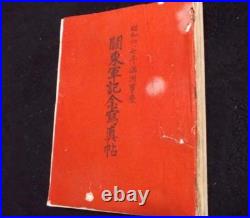
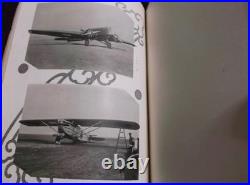
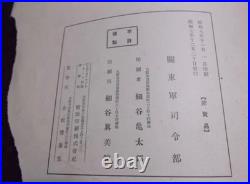
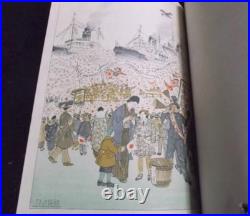
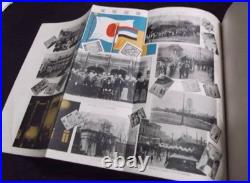
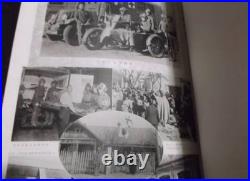
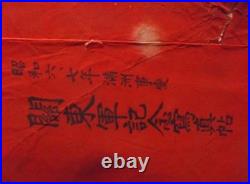
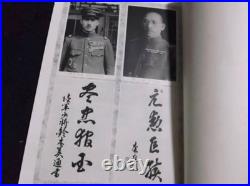
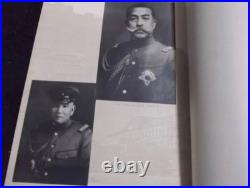
Rare historical photo album documenting the early period of the Manchurian Incident. The book was issued by the Kwantung Army Headquarters, the Japanese Imperial Army force stationed in Manchuria (northeastern China). Rather than a commercial publication, this type of book was typically produced for military personnel or related officials as a commemorative historical record. The Kwantung Army was one of the most influential military forces of Imperial Japan. Originally established to protect Japanese interests and the South Manchuria Railway, it later became the main military force involved in the events that triggered the Manchurian Incident in 1931. The Manchurian Incident marked a major turning point in East Asian history. Following the conflict, Japan established the state of Manchukuo, and the region became a central stage for the political and military developments that eventually led to the Second World War in Asia. Contents of the Book. This album contains many photographs and illustrations documenting that period, including. Portraits of senior Japanese military commanders. Military operations and units of the Kwantung Army. Military vehicles and medical units. Scenes from cities and daily life in Manchuria. Early Japanese military aircraft. Public ceremonies and historical events. The book is a large-format photo album approx. 31 cm with many photographic plates. Why This Book Is Rare. After World War II, during the Allied occupation of Japan under GHQ, large quantities of wartime materials were confiscated or destroyed. Military publications, aviation-related documents, and wartime records were especially affected. Additionally, Japan was prohibited from manufacturing aircraft for several years after the war. Because of this, many pre-war Japanese military and aviation publications did not survive, making original photo albums from this era increasingly scarce today. Cover wear and stains. Minor damage consistent with age. Please review the photos carefully for details. Large photo album format. International Buyers – Please Note. Thank you for your understanding.

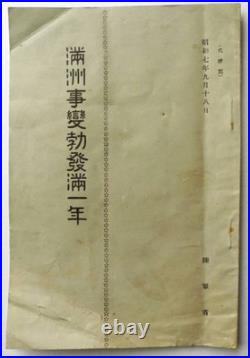
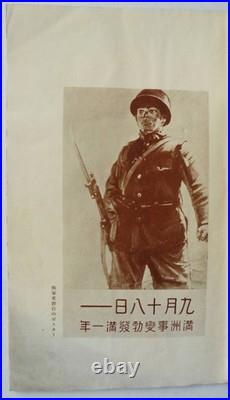
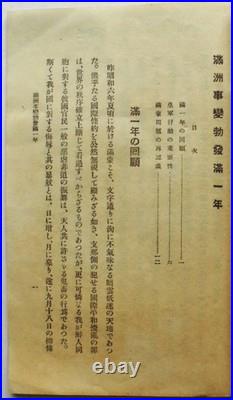
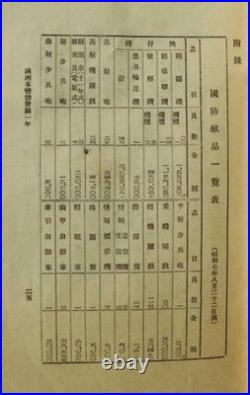
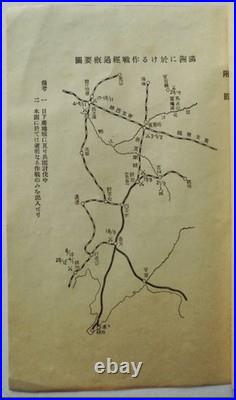
Published by the Imperial Japanese Army Ministry on September 18, 1932, this booklet commemorates the first anniversary of the Manchurian Incident. It reviews the military operations, highlights the “importance of the Emperor’s Army actions, ” and re-emphasizes the so-called Manchuria-Mongolia problem. Operational overview map of campaigns in Manchuria. Table of national defense contributions (donations & equipment). Propaganda photo/poster illustrations (commemorating “9.18”). The Manchurian Incident (Mukden Incident) began on September 18, 1931, near Mukden (Shenyang), when the South Manchuria Railway was sabotaged. The Japanese Kwantung Army used this as a pretext to occupy Manchuria, leading to the establishment of Manchukuo in 1932. The League of Nations condemned Japan’s actions, eventually prompting Japan’s withdrawal from the League in 1933. Interior pages are well preserved, with age toning, stains, and wear on the cover (see photos). No major tears or missing pages detected. A rare official Army Ministry publication, reflecting the narrative Japan promoted at the time. Own a piece of history. Approximate 7-21days(To USA).

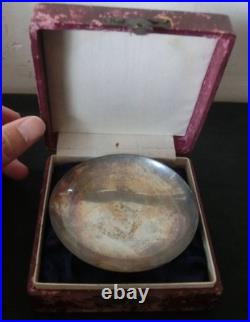
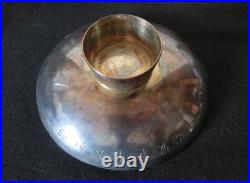
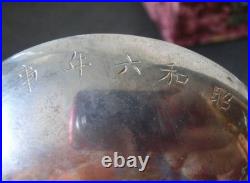
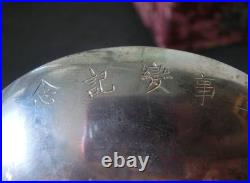
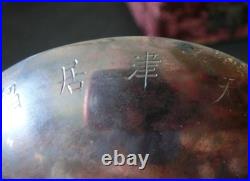
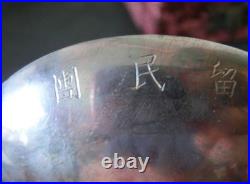
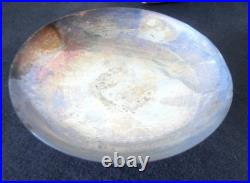
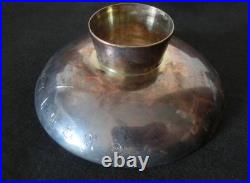
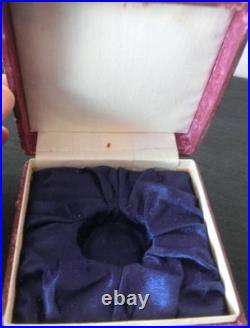
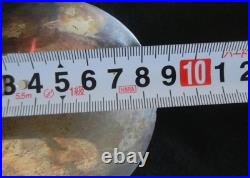
The rim of the cup is engraved with: Silver Cup – Commemoration of the 1931 Incident – Japanese Residents’ Association in Tianjin. The “Incident” of Showa 6 (1931) refers to the Manchurian Incident, a turning point in world history. 1?? What is it? This is a silver ceremonial sake cup, produced by the Japanese Residents’ Association in Tianjin, China, to commemorate the outbreak of the Manchurian Incident. Comes with its paulownia wood presentation box. A rare artifact reflecting its era. On September 18, 1931, the Mukden (Liutiaohu) Incident triggered the full-scale occupation of Manchuria by the Kwantung Army. At a time when the world was shaken by the Great Depression, Japan sought resources and territorial expansion on the Asian continent. The inscription mentions Tianjin, which at the time was home to a Japanese settlement. Many Japanese nationals lived there, making it a center for commerce and diplomacy. The residents there commissioned this cup to celebrate and remember Japan’s military success. It was created and distributed by the Japanese Residents’ Association of Tianjin, a self-governing body of Japanese expatriates. This organization supported the lives of the Japanese community abroad while aligning with Japan’s national policies. In Japanese culture, the sake cup (sakazuki) has never been just a drinking vessel. Samurai pledging brotherhood and loyalty. Prayers for victory and prosperity. Commemoration of great events and milestones. Thus, this silver cup is not a mere souvenir. It is a symbol of solidarity, representing how the Japanese residents in Tianjin aligned themselves with Japan’s military actions and engraved their role in history. It was most likely financed through contributions from the residents’ association, with production numbers being very limited. Due to wartime destruction and the postwar chaos, very few of these survive today. Items directly tied to the Manchurian Incident are especially valuable as historical artifacts. This silver commemorative cup was made by Japanese expatriates in Tianjin to mark the beginning of the Manchurian Incident in 1931. It embodies early Showa-era international relations, the presence of Japanese overseas communities, and the cultural symbolism of the sake cup in Japan. In other words, it is a piece of history you can hold in your hands. A valuable addition to historical collections. A primary source for research on the Manchurian Incident or early Showa foreign policy. A cultural symbol of the Japanese relationship with the sake cup. Approximate 7-21days(To USA).

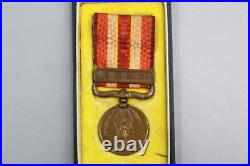
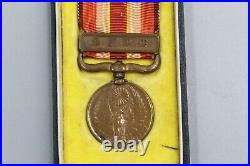
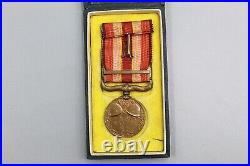
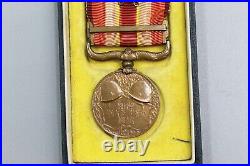
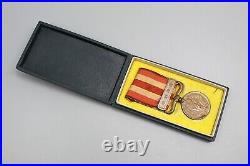
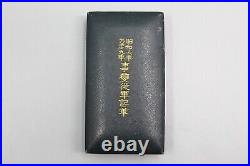
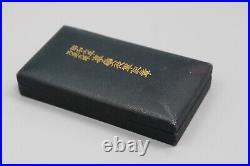
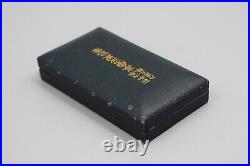
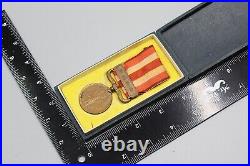
Japanese 1931-34 Manchurian Incident War Medal in case. Medal has the original ribbon with hook and eye attachment. On the bar is written “Military Medal of Honor” reading from right to left. Medal is in hard-shelled box of issue with recessed portion for the medal and golden kanji on top of case. Worn and used condition. The ribbon is decorated with the shade vine of Seocho, which appears in “Kojiki”, to express the honor of the incident. The crimson color means the intense loyalty, the red sincerity of the Yamato people and the Japanese flag and the yellow color means the birth (of the Nation) of Manchuria.

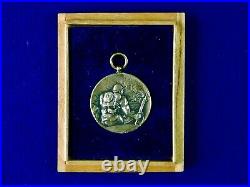
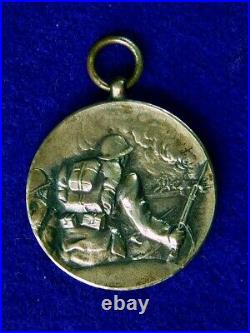
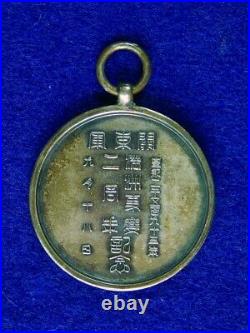
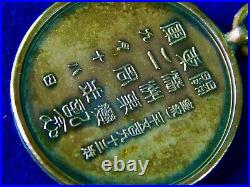
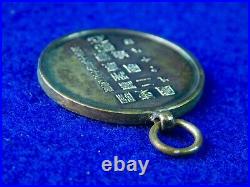
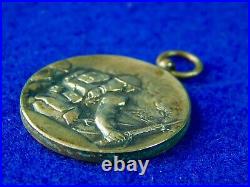
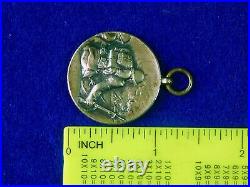
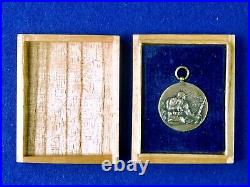
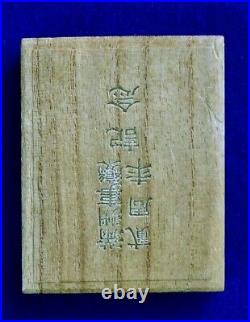
Japanese Japan Pre WW2 Kwantung Army Manchurian Incident Medal Order Badge Box. Original Japanese Pre WW2 Kwantung Army Manchurian Incident Anniversary Medal. If you have any questions please feel free to contact me. DO NOT DUPLICATE OR COPY! This item is in the category “Collectibles\Militaria\1919-38\Original Period Items”. The seller is “hennadiy2006″ and is located in this country: US. This item can be shipped worldwide.