
WWII Imperial Japanese Army 2nd Railway Regiment Lacquer Tray Rising Sun
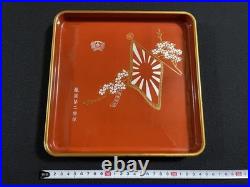
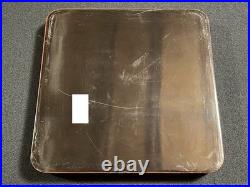
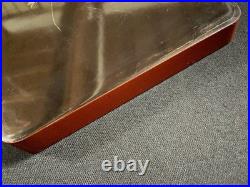
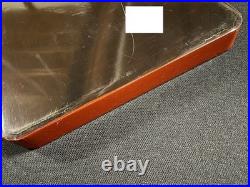
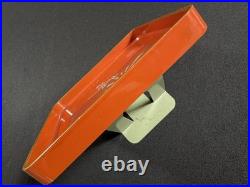

This is a remarkable commemorative lacquer tray associated with the 2nd Railway Regiment of the Imperial Japanese Army. On the left side of the tray, the unit name is clearly written in Japanese: “2nd Railway Regiment” The center features a large Imperial Japanese Army Rising Sun flag surrounded by cherry blossoms, with an Army star and a unit-related emblem above. Unlike ordinary infantry units, railway regiments were specialized technical units responsible for constructing, repairing, maintaining, and operating military railways. Their work made it possible to move troops, weapons, ammunition, food, and other supplies across long distances. The history of the 2nd Railway Regiment reaches back to 1908, when its predecessor unit was established at Tsudanuma in Chiba Prefecture. It was reorganized as the 2nd Railway Regiment in 1918. Its history crossed several major events in modern Japan. After the Great Kanto Earthquake of 1923, the unit participated in railway reconstruction work. In 1928, it was deployed during the Jinan Incident in China. Following the outbreak of the Second Sino-Japanese War in 1937, the regiment operated railways in North China and also participated in the Xuzhou Campaign. It later served in Manchuria and North China. Near the end of World War II, in 1945, the main body of the regiment was transferred to Sasebo in Kyushu, where it helped protect Japanese National Railways steam locomotives and railway operations. The regiment ended the war in Kyushu. In other words, the name preserved on this tray belonged to a unit whose history stretched from disaster relief and railway reconstruction in Japan to military railway operations on the Asian continent and finally the defense of Japan itself. The tray is also a beautiful example of the way traditional Japanese decorative arts were incorporated into military commemorative objects. The vivid vermilion surface, gold-colored border, cherry blossoms and elaborate flag design reflect the decorative tradition of Japanese lacquerware. Lacquerware had long been valued in Japan not only as practical tableware but also for ceremonial, presentation and commemorative purposes. This combination of military history, railway history and traditional Japanese craftsmanship makes the piece particularly interesting. Age-related scratches and wear are visible, especially on the reverse and around the edges, but the principal decoration and the inscription identifying the 2nd Railway Regiment remain clearly visible. Rather than representing only the men who fought at the front, this tray tells the story of the technical soldiers who built, repaired and operated the railways that kept an army moving. Own a Piece of History. International Buyers – Please Note.