

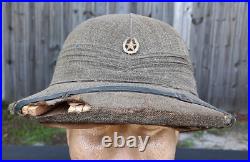
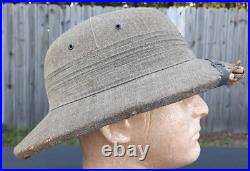
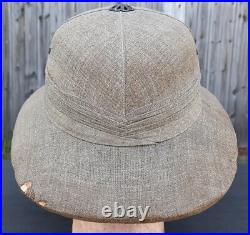
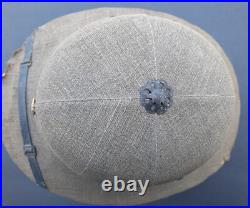
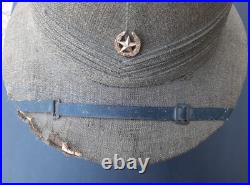
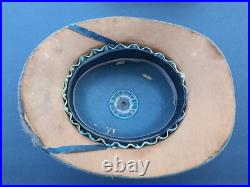

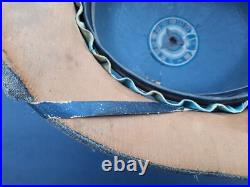
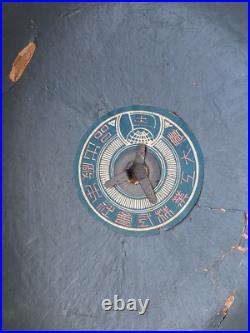
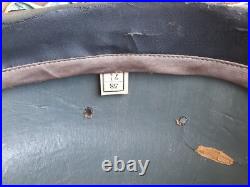
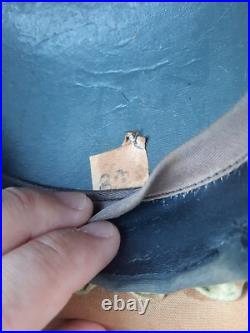

Antique original Chinese made pith helmet, otherwise known as a sun helmet. The brim is fabric covered cork and does have some damage. I would consider the entire helmet to be very very fragile. The paper manufacturers tag inside is similar to tags found in Japanese helmets. The label reads which roughly translates to Produced by the factory of Guangda Industrial Co. I do not know exactly when the helmet was produced, who would have worn it, and whether it is a military helmet or not. The closest match I have found online was described as a Chinese made helmet for use in Imperial Japan. This helmet appears to fit the same description, but I consider it to be an unknown as I have no proof that it was used by Japan and unknown year of manufacture. Photographed in natural daylight. Photos may not accurately represent actual colors. Photos are of actual items you will receive. Please see photos for condition. I can send more photos if needed. Please keep an eye on my other listings to see more rare patches, helmets, and other military collectibles for sale. If you need more pictures, just ask.

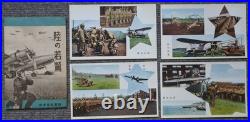
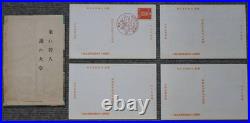
This is an original pre-war Japanese military aviation postcard set titled “Young Eagles of the Army”, issued by the Imperial Japanese Army Aviation Headquarters. The original envelope is clearly printed with: “Young Eagles of the Army” “Army Aviation Headquarters” In addition, all four postcards in the set also carry the title Young Eagles of the Army. This is important because these are not simply unrelated aviation photographs gathered together later. They were produced as a unified set under the authority of the Imperial Japanese Army Aviation Headquarters, giving them a strong connection to the official promotion and recruitment activities of Japanese Army aviation. The Army Aviation Headquarters was established in 1925 as the central organization responsible for major aspects of Japanese Army aviation, including aircraft administration, technical development, training, supply, and airfield-related matters. It continued to operate until the dissolution of the Japanese Army in 1945. What makes this set especially interesting is the combination of early military uniforms and biplane aircraft visible in the photographs. The soldiers appear to wear uniforms of the older Type 45 style or a closely related pattern, while the aircraft shown are from the earlier generation of Japanese Army aviation, when biplanes were still common. Taken together with the fact that the publisher is identified as the Army Aviation Headquarters, these details strongly suggest that the images represent the early development period of Imperial Japanese Army aviation, likely around the late 1920s to early 1930s. The exact publication year cannot be confirmed from the photographs alone, so I prefer not to state a precise date without documentary evidence. However, the uniforms, aircraft, and official issuing organization provide valuable clues to the period. The phrase “Young Eagles” was used in Japan to evoke young aviators and aspiring military airmen. In modern terms, this set can be understood as a kind of military aviation recruitment and promotional material. It presented young Japanese men with a new and exciting image of military service: flying aircraft, working around airplanes, training with aviation units, and becoming part of Japan’s rapidly developing military air arm. The photographs are also valuable because they do not show aircraft alone. They include mechanics, ground personnel, unit formations, training scenes, and aircraft on the ground, giving a broader picture of how an aviation unit actually functioned. Today, collectors are much more familiar with later Japanese aircraft such as the Zero or the Hayabusa. These postcards represent an earlier and less commonly seen chapter – the period when Japanese military aviation was still transitioning from biplanes toward the modern air forces of the 1930s and 1940s. Paper promotional material was never intended to survive for generations. The fact that the original Army Aviation Headquarters envelope and all four matching postcards remain together as a set adds considerably to its historical appeal. It would make an excellent piece for collectors interested in Japanese military aviation, early aircraft, military recruitment, uniform history, or pre-war Japanese visual culture. This is more than simply a group of old postcards. It is a small surviving record of the era when Japan was still building its military air arm – and of how that new world of aviation was presented to the young men expected to join it. Please review the photographs carefully for age-related toning, staining, wear, and other signs of age. Own a Piece of History. International Buyers – Please Note.

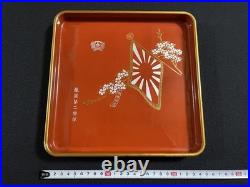
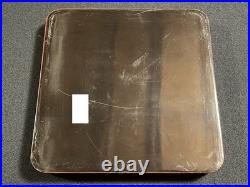
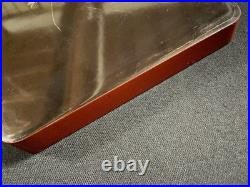
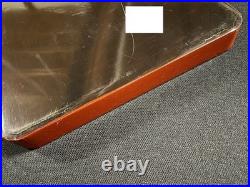
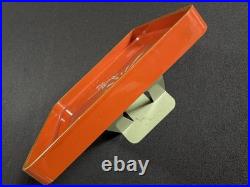
This is a remarkable commemorative lacquer tray associated with the 2nd Railway Regiment of the Imperial Japanese Army. On the left side of the tray, the unit name is clearly written in Japanese: “2nd Railway Regiment” The center features a large Imperial Japanese Army Rising Sun flag surrounded by cherry blossoms, with an Army star and a unit-related emblem above. Unlike ordinary infantry units, railway regiments were specialized technical units responsible for constructing, repairing, maintaining, and operating military railways. Their work made it possible to move troops, weapons, ammunition, food, and other supplies across long distances. The history of the 2nd Railway Regiment reaches back to 1908, when its predecessor unit was established at Tsudanuma in Chiba Prefecture. It was reorganized as the 2nd Railway Regiment in 1918. Its history crossed several major events in modern Japan. After the Great Kanto Earthquake of 1923, the unit participated in railway reconstruction work. In 1928, it was deployed during the Jinan Incident in China. Following the outbreak of the Second Sino-Japanese War in 1937, the regiment operated railways in North China and also participated in the Xuzhou Campaign. It later served in Manchuria and North China. Near the end of World War II, in 1945, the main body of the regiment was transferred to Sasebo in Kyushu, where it helped protect Japanese National Railways steam locomotives and railway operations. The regiment ended the war in Kyushu. In other words, the name preserved on this tray belonged to a unit whose history stretched from disaster relief and railway reconstruction in Japan to military railway operations on the Asian continent and finally the defense of Japan itself. The tray is also a beautiful example of the way traditional Japanese decorative arts were incorporated into military commemorative objects. The vivid vermilion surface, gold-colored border, cherry blossoms and elaborate flag design reflect the decorative tradition of Japanese lacquerware. Lacquerware had long been valued in Japan not only as practical tableware but also for ceremonial, presentation and commemorative purposes. This combination of military history, railway history and traditional Japanese craftsmanship makes the piece particularly interesting. Age-related scratches and wear are visible, especially on the reverse and around the edges, but the principal decoration and the inscription identifying the 2nd Railway Regiment remain clearly visible. Rather than representing only the men who fought at the front, this tray tells the story of the technical soldiers who built, repaired and operated the railways that kept an army moving. Own a Piece of History. International Buyers – Please Note.

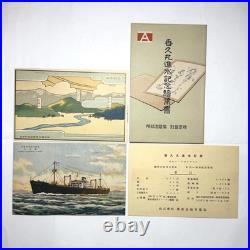
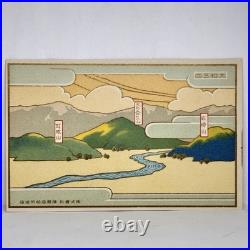
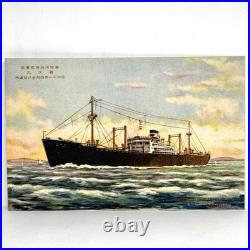
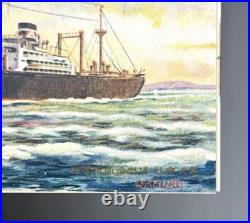
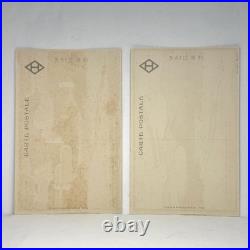

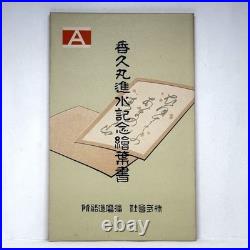
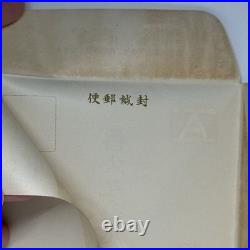
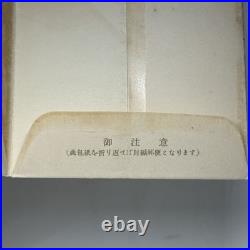
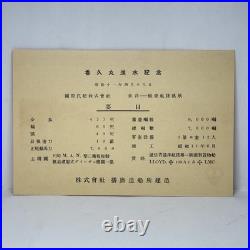
This is an original prewar Japanese commemorative postcard set issued for the launch of the Kagu Maru on April 18, 1936, at the Harima Shipbuilding Works. What makes this set particularly fascinating is what happened to Kagu Maru after these postcards were produced. At the time of her launch in 1936, Kagu Maru was not yet a naval vessel. Following the outbreak of the Second Sino-Japanese War, however, she was requisitioned by the Imperial Japanese Navy in 1937 and converted into an auxiliary seaplane tender. Kagu Maru subsequently operated with Japanese naval aviation forces in China, carrying reconnaissance seaplanes and supporting operations including the campaigns around Jiujiang and Hankow. Her story ultimately ended on November 4, 1944, when she was attacked and sunk by U. Navy submarines off the Philippines. The original envelope is especially noteworthy. It is printed: “Kagu Maru Launch Commemorative Postcards” Harima Shipbuilding Co. The accompanying specification card is headed “Kagu Maru Launch Commemoration” and dated April 18, 1936. One postcard presents a color illustration of Kagu Maru at sea. It remains a small archival record of the vessel’s birth. In 1937, she became an Imperial Japanese Navy auxiliary seaplane tender. By 1944, after years of wartime service, she lay beneath the sea. Own a Piece of History. International Buyers – Please Note.

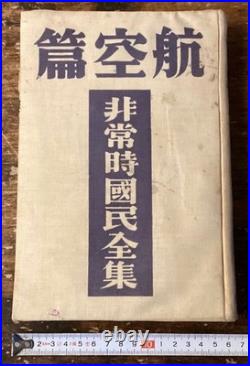
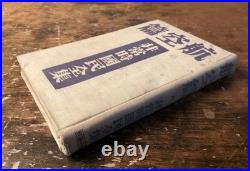
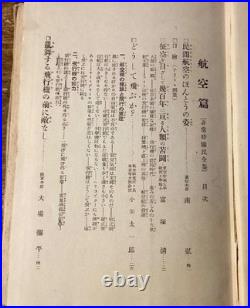
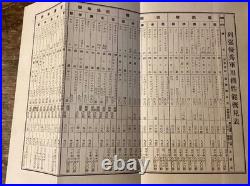
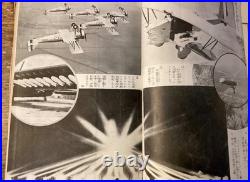
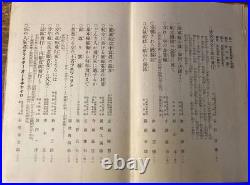
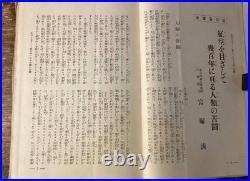
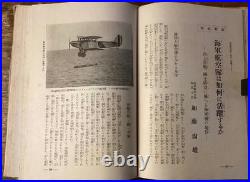
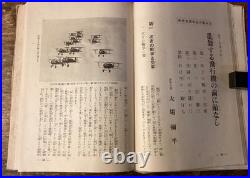
This is an original 1934 publication titled. “Aviation Volume – National Emergency Encyclopedia” . Published during the early years of Japan’s rapid military aviation expansion, this book was intended to educate the general public about aviation, air power, and the future of warfare. Unlike modern history books, this volume was written. Before World War II. Allowing readers to see aviation through the eyes of people living in the 1930s. Imperial Japanese Navy Air Forces. Bombers and fighter aircraft. Future air warfare concepts. Civil aviation and military aviation. One particularly interesting section is. “How the Imperial Japanese Navy Air Force Operates”. Commander Naoo Kato of the Imperial Japanese Navy Air Headquarters. Providing a rare contemporary perspective on how naval aviation was viewed before the Pacific War. The book also contains numerous photographs and illustrations of aircraft, aerial operations, bombing concepts, and military aviation developments from around the world. What makes this volume especially fascinating is its date. The Second Sino-Japanese War. The Mitsubishi A6M Zero fighter. In other words, this book captures a moment when military aviation was still developing and the future of air warfare remained uncertain. Following Japan’s defeat in 1945, many military and aviation-related publications were destroyed, confiscated, or discarded during the Occupation period. As a result, surviving pre-war aviation references such as this have become increasingly difficult to find. An excellent piece for collectors of. Imperial Japanese Navy memorabilia. A remarkable glimpse into how people imagined the future of air power before World War II changed history forever. Own a Piece of History. International Buyers – Please Note. Thank you for your understanding.

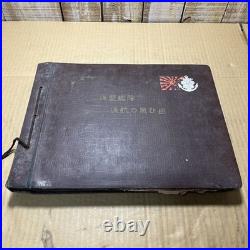
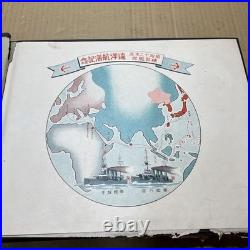
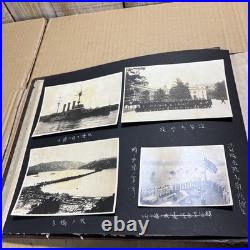
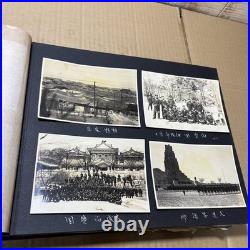
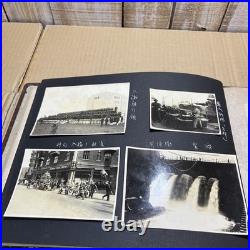
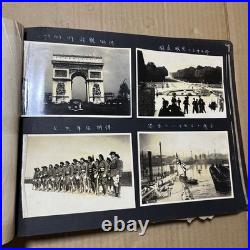
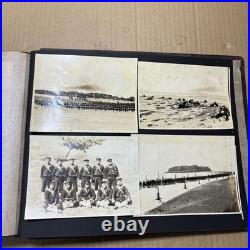
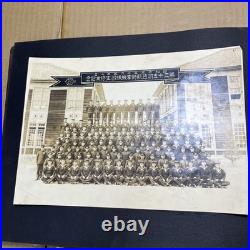
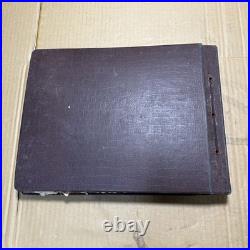
This is an original 1935 Imperial Japanese Navy photo album documenting a long-distance training cruise of the Japanese Navy Training Fleet. The cover is titled Memories of the Training Fleet Long-Distance Cruise. Inside are numerous original photographs showing Japanese naval personnel, warships, training activities, formations, ports of call, and scenes from the voyage. The album also contains a striking color route illustration depicting the training cruise. The Final Step Before Becoming a Naval Officer The Imperial Japanese Navy Training Fleet was not simply a unit for training ordinary sailors. Graduates of the Imperial Japanese Naval Academy and other naval officer schools entered the fleet as officer candidates, receiving practical instruction aboard operational warships before becoming commissioned naval officers. In other words, these cruises represented one of the final stages in the transformation from naval academy student to Imperial Japanese Navy officer. This 1935 Training Fleet included graduates of the 62nd class of the Imperial Japanese Naval Academy, together with graduates of the Naval Engineering and Paymaster schools. A Generation on the Eve of War What makes this album particularly fascinating is its date. These young men were photographed in 1935, only six years before Japan entered the Pacific War. The photographs therefore preserve something more personal than battles or famous warships: a generation of young naval officers at the beginning of their careers, before the war that would transform both their lives and the Japanese Navy. Some photographs also depict overseas locations and travel scenes that may relate to other voyages or visits. Not every photograph can be conclusively identified as having been taken during the same 1935 cruise. Complete original Navy albums with identifiable historical context are therefore much harder to encounter than ordinary Japanese military photographs. This is especially desirable because it is not a commercially produced photo book. It is a privately assembled period album containing actual photographs and handwritten captions. There is only one album exactly like this. Age-related wear, staining, deterioration to the album pages, binding wear, and other signs of age are present. Please examine the photographs carefully for condition and contents. Own a Piece of History. International Buyers – Please Note.

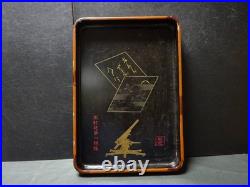
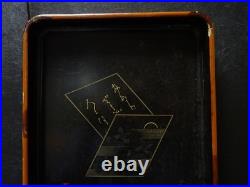
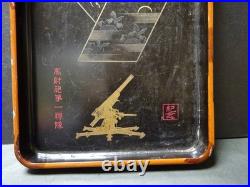
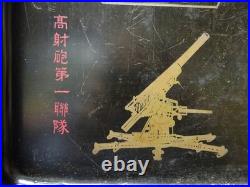
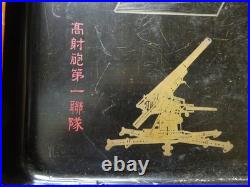
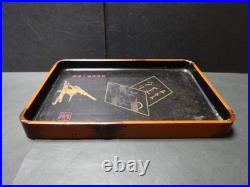
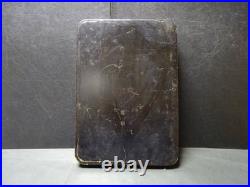
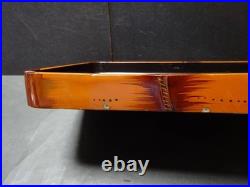
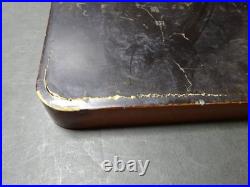
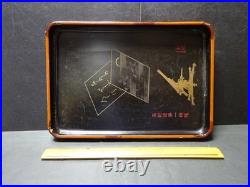
This is an original prewar Imperial Japanese Army commemorative lacquer tray associated with the 1st Anti-Aircraft Artillery Regiment. The front features a detailed gold-colored image of an anti-aircraft gun, together with the inscription: “1st Anti-Aircraft Artillery Regiment” The 1st Anti-Aircraft Artillery Regiment was established in 1925 and is regarded as the first permanent anti-aircraft artillery regiment of the Imperial Japanese Army. It was later stationed at Hamamatsu, an important military and aviation center. The regiment represents the early development of Japan’s organized ground-based air defense at a time when military aviation was rapidly becoming a major factor in warfare. An especially interesting feature is the Japanese inscription near the top: “Shikishima no Yamato-gokoro wo hito towa ba” This is the opening portion of a famous poem by the Edo-period scholar Motoori Norinaga: Asked what is the spirit of Japan, it is the fragrance of mountain cherry blossoms in the morning sun. The verse became strongly associated with ideas of Japanese identity in the prewar period. Its presence together with an anti-aircraft gun and military unit name makes this more than a decorative tray-it reflects the military culture and values of its era. The reverse is marked with the name: “Maeda” This was most likely the surname of the original owner or recipient, adding an individual human connection to the piece. Another particularly interesting point is that an example of a 1st Anti-Aircraft Artillery Regiment commemorative lacquer tray is preserved in an official Aichi Prefecture wartime-history collection, showing that this type of object is recognized today as material connected with Japan’s military history. The tray shows age-related wear, scratches, rubbing and other signs of use. Please carefully examine the photographs for condition. For collectors of Imperial Japanese Army militaria, artillery history, air-defense history, or Japanese wartime lacquerware, this is a distinctive piece combining unit identification, weapon imagery, traditional Japanese culture and the name of an individual owner. Own a Piece of History. International Buyers – Please Note.

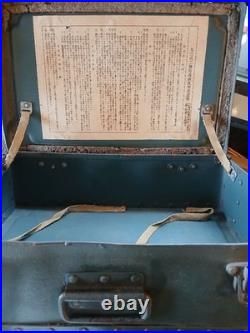
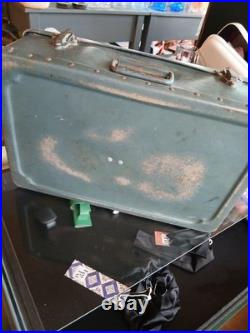
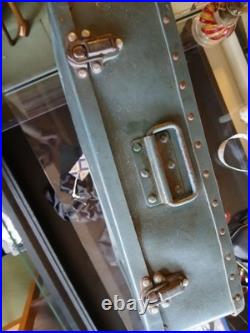
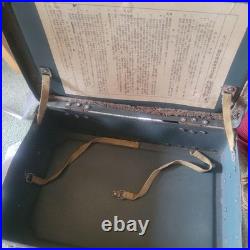
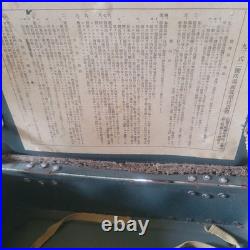
This is an original WWII-era Imperial Japanese Navy carrying case for the Type 93 No. Important: The gas mask itself is NOT included. This listing is for the original carrying/storage case only. One of the most interesting features is the original instruction sheet attached inside the lid, titled Instructions for the Type 93 No. 2 Gas Mask, Type 4. Its survival inside the original case makes this a particularly interesting historical reference piece. The Type 93 gas mask was protective equipment used by the Imperial Japanese Navy. Such equipment was intended not only as protection against chemical warfare agents, but also for hazardous conditions that could occur aboard warships and at naval installations, including smoke and potentially harmful fumes resulting from fires, explosions, shelling, or bombing. This case was specifically designed for the storage and transportation of that protective equipment. It is constructed as a sturdy military carrying case and still retains internal fabric straps. The original Japanese instruction sheet remains attached to the inside of the lid. While Japanese Army equipment survives in relatively large quantities, original Imperial Japanese Navy equipment is generally encountered less frequently. Specialized accessories such as dedicated gas-mask cases are also often separated from their original equipment over the decades. For collectors of Japanese naval militaria, the surviving original instruction sheet is an especially attractive feature. The case shows significant age and service wear, including paint loss, scratches, surface rust, staining, and general deterioration consistent with an approximately 90-year-old military item. The instruction sheet also shows age-related wear. Gas mask, filter canister, and other equipment are NOT included. Only the carrying case shown in the photographs is included. An interesting original piece for collectors of Imperial Japanese Navy equipment, WWII Japanese militaria, naval equipment, and historical military artifacts. International Buyers – Please Note.

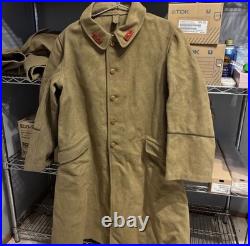
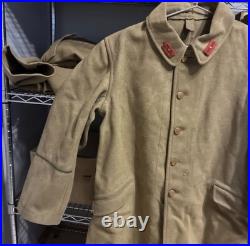
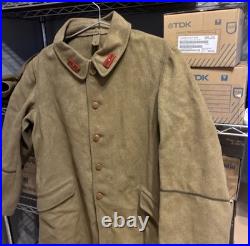
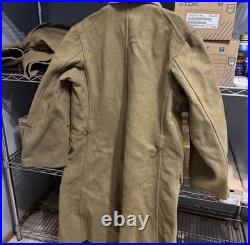
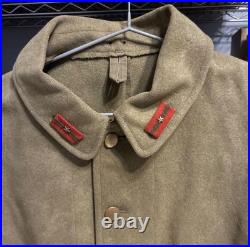
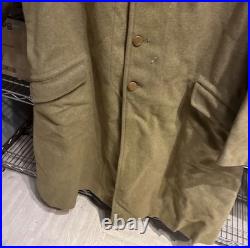
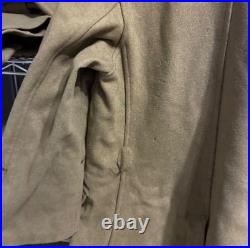
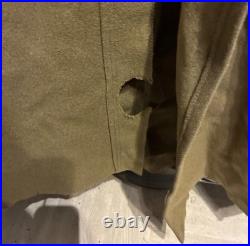
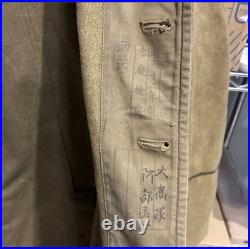
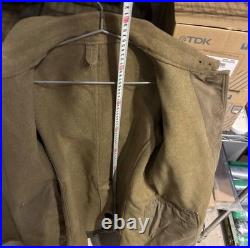
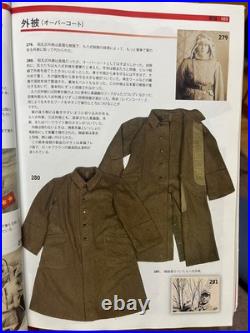
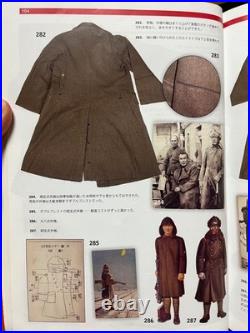
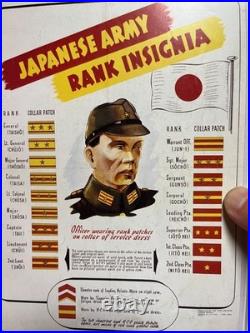
This is an original. Imperial Japanese Army Type 5 (Showa Type 5) wool greatcoat. The collar insignia identifies the original owner as a. A non-commissioned officer (NCO) responsible for leading small units and training soldiers in the Imperial Japanese Army. 1937 marked the beginning of the Second Sino-Japanese War, when Japan began its large-scale military campaign in China. This greatcoat was manufactured during that pivotal year and represents an authentic piece of early WWII Japanese military history. Unlike the later Type 98 greatcoat, the Type 5 model was made from thick, high-quality wool and offered excellent protection against severe winter conditions. Because it was expensive to manufacture, it was eventually replaced by a simpler and more economical design, making surviving Type 5 examples increasingly desirable among collectors today. Original Arsenal and Issue Markings. The inside of the coat still retains several original Japanese arsenal and inspection markings. Manufactured in Showa 12 (1937). Main Arsenal Inspection Passed. Even more importantly, the interior also bears hand-written ownership markings. “Abe Juichi” . These original handwritten inscriptions connect the coat to the individual soldier who once wore it, transforming it from a military uniform into a tangible piece of personal history. Original Type 5 Imperial Japanese Army greatcoat. Original Corporal (NCO) collar insignia attached. Original arsenal stamps and handwritten name remain visible. Moth damage, small holes, stains, and signs of age are present. Please examine all photographs carefully for condition. Considering that this coat is nearly 90 years old, it remains an impressive surviving example of an early Imperial Japanese Army winter uniform. Military uniforms with a confirmed production year, original arsenal markings, rank insignia, and a named owner are becoming increasingly difficult to find. An excellent addition for WWII militaria collectors, museums, reenactors, or anyone interested in Imperial Japanese Army history. Own a Piece of History. International Buyers – Please Note. Thank you for your understanding.

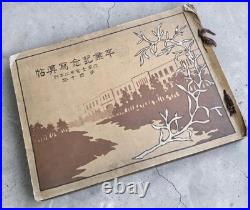
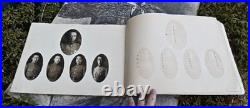
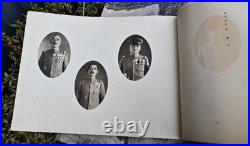
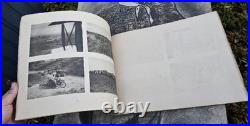
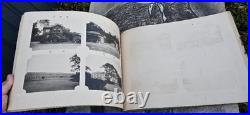
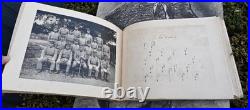
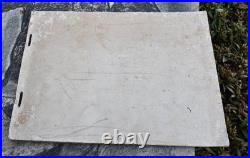
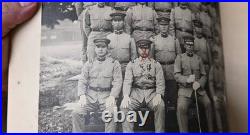
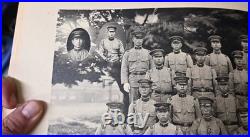
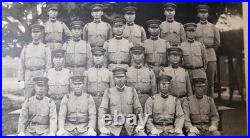
This original graduation photo album was published in. July 1928 (Showa 3). To commemorate the graduation of the. 40th Class of the Imperial Japanese Army Academy. The institution responsible for educating many of Japan’s future military officers. Far more than a simple graduation album, this is an outstanding primary historical document that captures the education of officers who would later shape some of the most significant events in modern Japanese history. The album contains numerous photographs of cadets, instructors, academy buildings, training grounds, military exercises, aircraft, vehicles, and detailed roster pages listing the names of each company and platoon. Among the graduates recorded in this album are officers who later participated in what is known in Japan as the. In 1936 that profoundly influenced Japanese politics and accelerated the growing influence of the military before World War II. The roster also includes. Who later played an important role inside the Japanese Army during the final days of World War II by helping coordinate internal discussions surrounding Japan’s acceptance of the Potsdam Declaration. Another fascinating feature is the inclusion of Chinese military students studying at the academy, providing valuable insight into military exchanges between Japan and China during the late 1920s. The photographs beautifully preserve the appearance of young cadets before they entered history-showing uniforms, field exercises, academy life, military facilities, and the atmosphere of one of Japan’s most prestigious military institutions. For collectors of Imperial Japanese military history, military academies, original photographs, and prewar Japan, this album offers exceptional research value as an authentic primary source rather than a retrospective publication. It is rare to find an original academy graduation album whose members can later be connected to such historically significant events. A remarkable opportunity to own an authentic piece of prewar Japanese military history. Own a Piece of History. International Buyers – Please Note. Thank you for your understanding.