
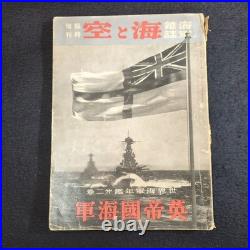
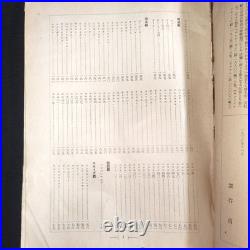
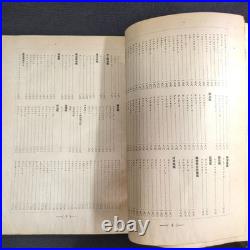
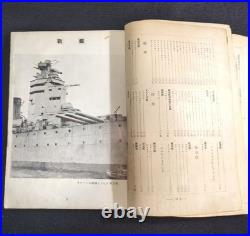
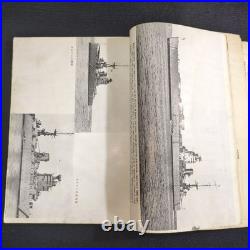
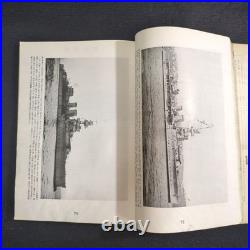
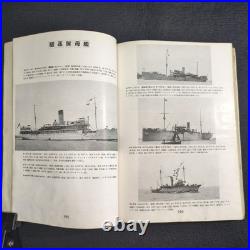
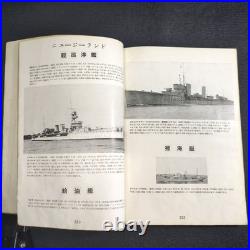
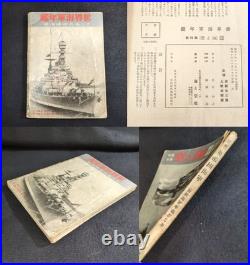

Published in Japan in 1935, this is a special issue of the prewar naval magazine Umi to Sora (“Sea and Sky”), titled: World Naval Yearbook, Vol. An important point is that this was not an official Imperial Japanese Navy publication. However, it was far more serious than an ordinary hobby book. The publisher, Umi to Sora-sha, specialized in naval and aviation subjects and produced the long-running prewar magazine Umi to Sora. Its publications covered Japanese and foreign navies, warships, aircraft, naval technology, and strategy, and were aimed at readers with a serious interest in military and naval affairs. In other words, this was a professional Japanese naval reference publication intended for knowledgeable readers, enthusiasts, students, researchers, and people connected with the maritime and military world. The year 1935 gives the book additional historical interest. At that time, Britain still possessed one of the world’s most powerful navies. Japan and Britain had once been allies, but by the 1930s their strategic relationship had changed dramatically. This book therefore preserves a fascinating prewar perspective: How did Japanese naval specialists and readers view the Royal Navy before Britain became Japan’s wartime enemy? Only about six years after this volume was published, Japan and Britain would be at war across the Pacific and Southeast Asia. That makes this more than simply an old warship photo book. It is a period Japanese reference source documenting how the Royal Navy was studied and presented in prewar Japan. The cover prominently features the British naval ensign and a battleship, making the subject immediately recognizable to Royal Navy and naval-history collectors. 19 × 25.5 cm Pages: 229 Condition shows age-related wear, toning, staining, and damage to the cover and spine consistent with a publication approximately 90 years old. A strong historical piece for collectors of Royal Navy history, Imperial Japanese naval history, prewar military publications, warship photography, and international naval studies. Own a Piece of History. International Buyers – Please Note.

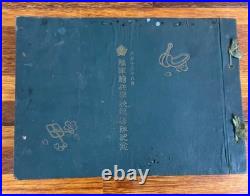
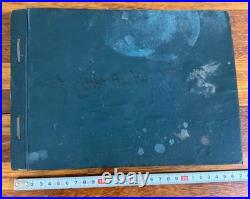
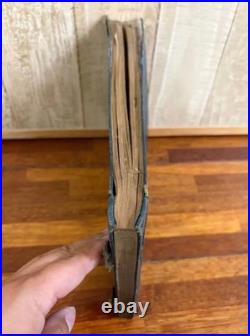
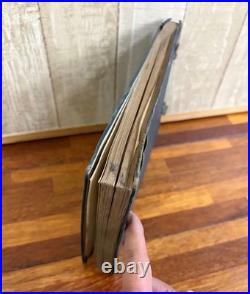
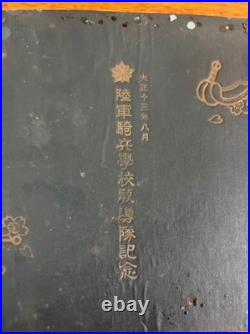
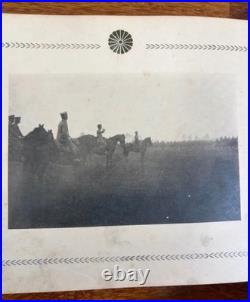
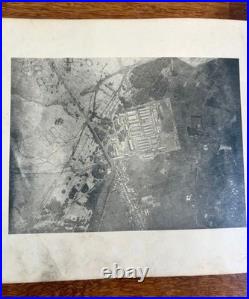
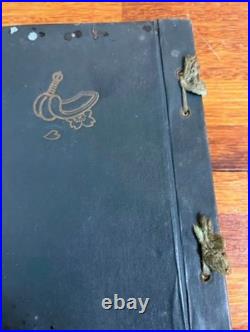
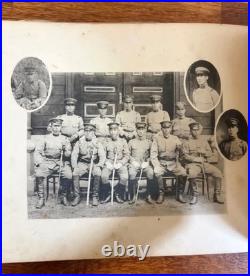
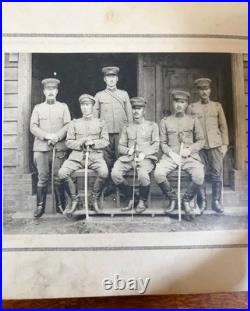
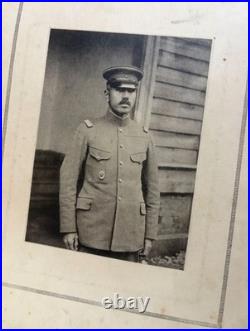
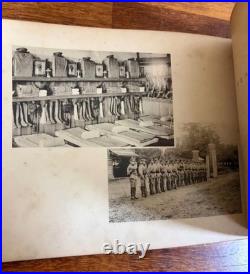
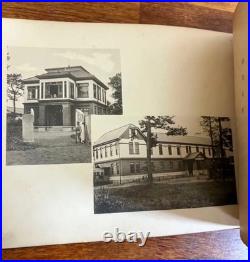
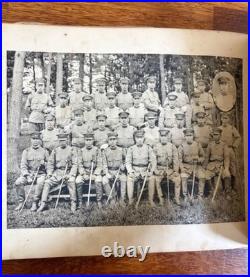
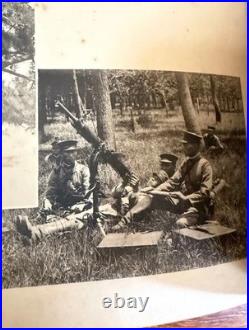
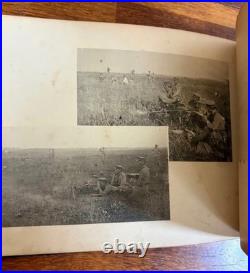
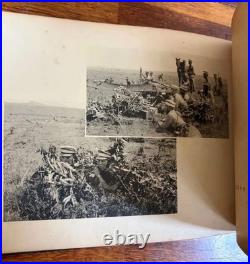
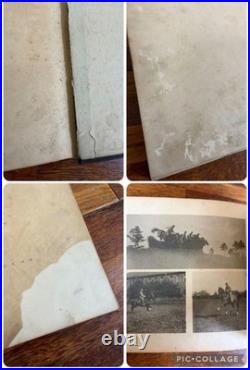
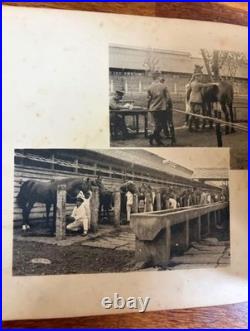
This original commemorative photo album was issued in August 1924 (Taisho 13) by the Imperial Japanese Army Cavalry School Training Unit. The cover is titled. “Commemoration of the Army Cavalry School Training Unit – August 1924″. And preserves a remarkable visual record of one of the most prestigious military training institutions of pre-war Japan. Unlike ordinary soldier portraits, this album documents the daily operations and training environment of the Cavalry School itself. Horse inspection and veterinary activities. Stables and horse management facilities. Field exercises and tactical instruction. School buildings and administrative facilities. One particularly interesting aspect is the inclusion of machine gun training alongside traditional cavalry instruction. Following the lessons of World War I, military forces around the world were attempting to adapt cavalry doctrine to modern warfare. This album captures that transitional period when horse-mounted units still existed, yet increasingly trained alongside modern weapons and battlefield tactics. The album therefore provides not only a record of Japanese cavalry, but also a glimpse into the transformation of military doctrine during the interwar period. Japanese cavalry units would eventually disappear with mechanization, making surviving materials from this era increasingly desirable among military historians and collectors. Condition shows age-related wear, staining, and cover deterioration consistent with nearly 100 years of age. A highly informative and visually impressive reference piece for collectors of Imperial Japanese Army memorabilia, cavalry history, and early twentieth-century military photography. Original 1924 Imperial Japanese Army photo album. Army Cavalry School Training Unit issue. Mounted cavalry training photographs. Machine gun and field exercise images. Stable and horse management scenes. Officer and instructor portraits. Pre-WWII military education material. Approximately 100 years old. Valuable military history reference. No political endorsement or ideological support is intended. International Buyers – Please Note. Thank you for your understanding.

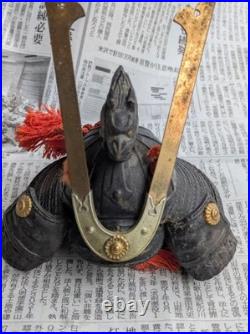
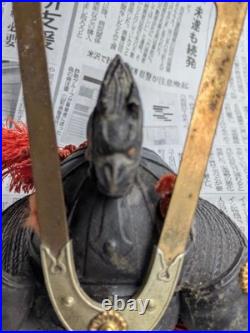
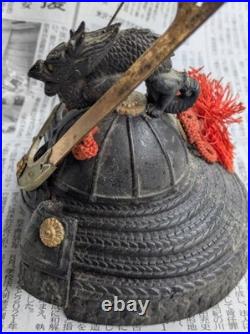
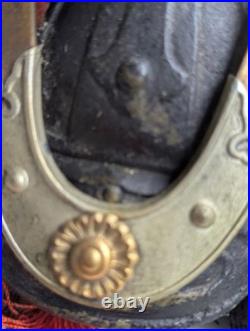
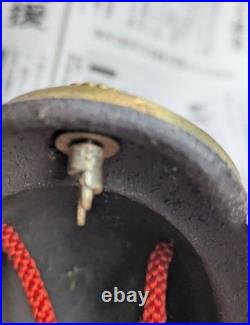
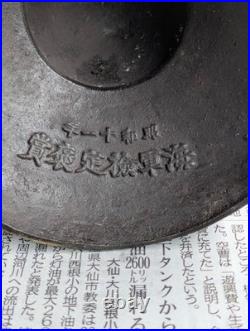
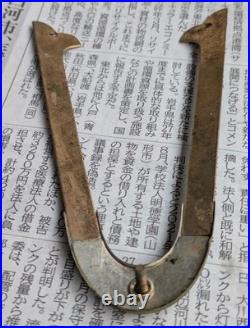
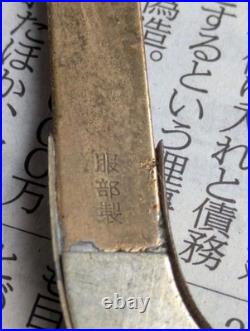
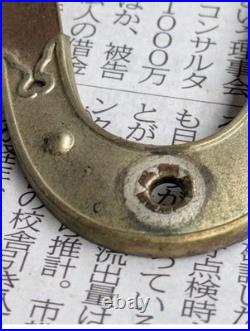
This is a rare Imperial Japanese Navy award piece dating from 1936. Inside the helmet is the inscription. “1936 – Imperial Japanese Navy Skill Examination Award”. The Japanese Navy conducted examinations to evaluate professional military skills required of its personnel. This was not an ordinary souvenir distributed to every sailor. Pieces such as this were presented as awards to a limited number of servicemen who demonstrated particularly strong ability and achieved excellent results. The object is designed in the form of a traditional Japanese. Samurai helmet, or kabuto. The type of protective armor historically worn by Japan’s warrior class. It features large decorative horns at the front, known as. A three-dimensional dragon ornament at the top, and metal fittings inspired by traditional Japanese military symbolism. Please note that this is. Not a full-size wearable helmet. It is a heavy metal miniature display piece made specifically as a commemorative award. Giving it a surprisingly substantial feel for its size. One of the metal fittings is marked. The Hattori name is historically associated with Kintaro Hattori, founder of Hattori Clock Shop, the company that eventually developed into the internationally known. Kintaro Hattori also established Seikosha, an important predecessor in the history of Seiko manufacturing. However, the “Hattori Made” marking alone is not sufficient to state with certainty that this piece was manufactured directly by Hattori Clock Shop, so this connection is noted only as historical context. What makes this piece especially interesting is the combination of. Imperial Japanese Navy provenance, an exact year, an official skill-award inscription, traditional samurai imagery, and a maker’s mark. It is a fascinating example of how the Imperial Japanese Navy combined modern military professionalism with older Japanese warrior symbolism. Approximately 90 years ago, this was given to a serviceman whose technical ability had been officially recognized by the Navy. Age-related wear, surface oxidation, scratches and other signs of use are present. Please examine the photographs carefully for condition. Own a Piece of History. Approximate 7-21days(To USA and Europe).

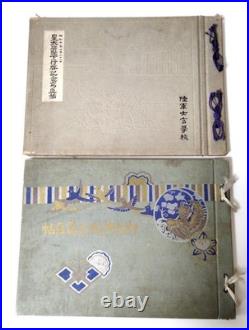
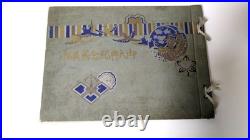
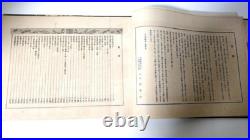
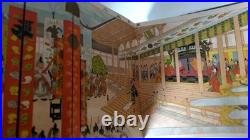
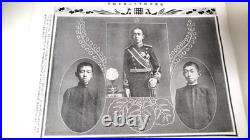
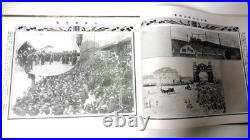
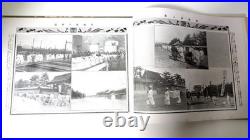
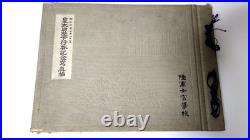
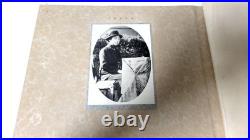
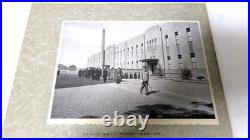
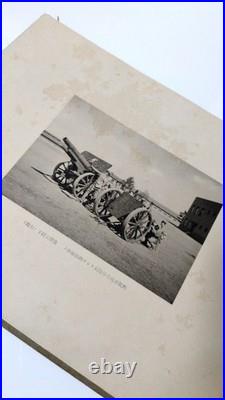
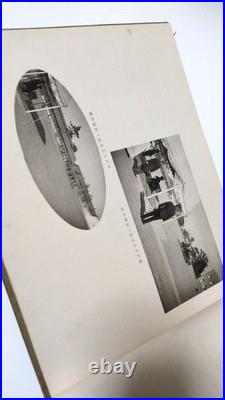
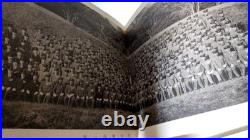
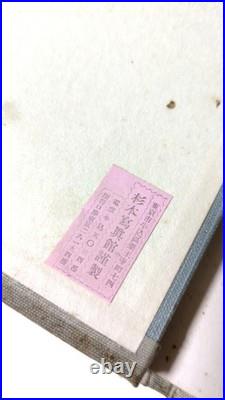
A rare two-volume set of prewar Japanese commemorative photo albums connected with the Imperial Family and the Imperial Japanese Army. The first volume is a 1915 commemorative album for the enthronement ceremonies of Emperor Taisho. It records court ceremonies, imperial processions, public celebrations, and other official events surrounding the accession of the new emperor. The decorative binding and color ceremonial illustrations also make it an attractive example of early 20th-century Japanese publishing. The second volume is a 1935 commemorative photo album produced for a visit by Empress Teimei to the Imperial Japanese Army Academy. This album is especially interesting from a militaria perspective. It includes photographs of the academy grounds, buildings, artillery, military formations, and large groups of officer cadets. The Imperial Japanese Army Academy was one of the principal institutions responsible for training future Army officers. This makes the album more than simply a royal commemorative item-it is also a visual record of Japanese officer education during the prewar period. The Army Academy volume appears to have been created specifically to commemorate this official visit rather than for ordinary commercial sale. Materials of this type were typically distributed within a limited institutional circle, making surviving examples much less common than standard published books. Taken together, these two albums offer an unusual view of Imperial ceremony, military education, and the relationship between the Imperial Family and the Army across two decades of prewar Japan. The albums show age-related wear, toning, staining, rubbing and other signs of use consistent with items approximately 90-110 years old. Please review the photographs carefully for condition. A strong historical set for collectors of Imperial Japanese militaria, Army Academy material, royal commemorative items, prewar photography and Japanese military history. Own a Piece of History. International Buyers – Please Note.

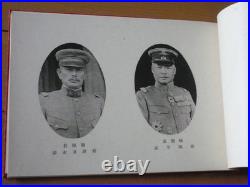
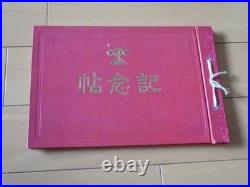
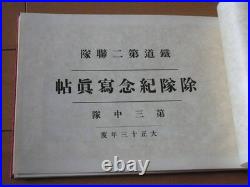
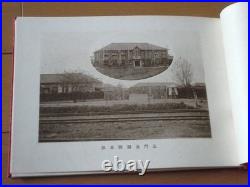
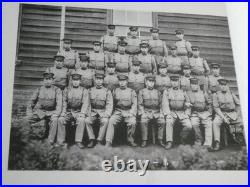
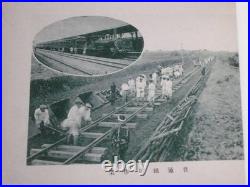
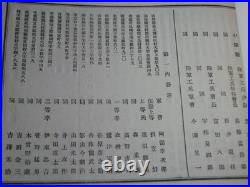
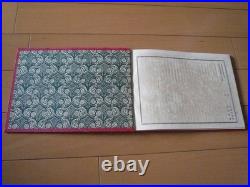
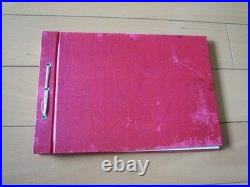
This is an original 1924 commemorative discharge photo album from the 3rd Company, 2nd Railway Regiment of the Imperial Japanese Army. The title page reads: “2nd Railway Regiment Commemorative Discharge Photo Album 3rd Company Taisho 13 [1924]” Unlike an ordinary personal photo album, this is a unit-specific historical record in which the regiment, company, and year are clearly identified. Two Senior Army Officers At the beginning of the album are portrait photographs of two senior officers: Division Commander Morinari Morioka Later reached the rank of General in the Imperial Japanese Army Regimental Commander Teijiro Niihara Later reached the rank of Major General in the Imperial Japanese Army These portraits are followed by photographs of the 3rd Company, military facilities, railway operations, and rosters identifying members of the unit. What Was an Imperial Japanese Army Railway Regiment? The Railway Regiments were specialized Imperial Japanese Army units responsible for military railway construction, repair, operation, and transportation. Railways were essential for moving troops, ammunition, food, equipment, and other military supplies. Railway troops could also be tasked with dismantling or destroying railway infrastructure when required. The 2nd Railway Regiment was based at Tsudanuma in Chiba Prefecture and would later serve in railway operations on the Asian continent. This album dates from 1924, well before the regiment’s later large-scale wartime deployments, making it particularly interesting as a record of the unit during the interwar period. Railway Soldiers at Work One of the most fascinating photographs is captioned: “Ordinary Railway Operations” It shows numerous soldiers working directly on railway tracks, with a steam locomotive and passenger cars visible in the same scene. It is an excellent visual record of what these specialized soldiers actually did. The album also contains a unit personnel roster, recording names, ranks, and other information about the soldiers. Together, the photographs and roster preserve not only the identity of the unit, but also the commanding officers, ordinary soldiers, military facilities, and actual railway work associated with it. A Record from 1924 The 2nd Railway Regiment also participated in railway restoration work following the Great Kanto Earthquake of 1923. This album was produced the following year, in 1924. In later years the regiment would be deployed to China, including operations connected with the Jinan Incident and the Second Sino-Japanese War. The men pictured here therefore belong to an earlier chapter in the history of a unit that would later become deeply involved in Japan’s military railway operations overseas. Swords and medals often receive the most attention from militaria collectors, but armies could not function without logistics. Troops, weapons, ammunition, food, and equipment all had to move. The Railway Regiments were among the specialized units responsible for making that movement possible. Nearly a century later, this album still preserves the faces and names of the officers and soldiers who served there, the facilities they used, and even the railway work they performed. There is age-related wear, staining, discoloration, and rubbing to the covers and pages. Please examine the photographs carefully for the condition and contents. An unusual original historical record documenting the Imperial Japanese Army’s 2nd Railway Regiment through its commanders, soldiers, facilities, personnel roster, and military railway operations. Own a Piece of History. International Buyers – Please Note.

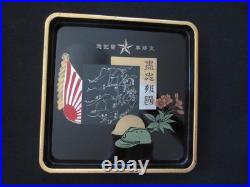
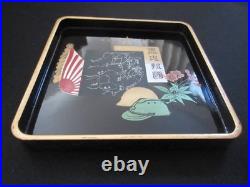
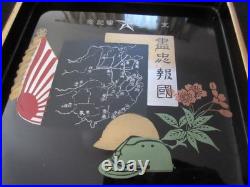

Japanese Wartime Lacquer Tray – China Incident Commemorative This is a Japanese commemorative lacquerware tray dating from the prewar or wartime period. The front features striking military imagery including a Rising Sun flag, a map of China, military helmets, flowers, and a five-pointed star. At the top are the Japanese words China Incident Commemoration. ” The “China Incident was the term commonly used in Japan at the time for the conflict with China that began in 1937 and developed into the Second Sino-Japanese War. Another inscription reads “Jinchu Hokoku” – Devote one’s loyalty in service to the nation. This phrase was widely used in wartime Japan and reflected the strong emphasis placed on loyalty, duty, and national service. Japanese Lacquerware Japan has a centuries-old tradition of fine lacquerware. Japanese lacquer pieces are admired for their deep glossy surfaces, durability, careful craftsmanship, and decorative techniques developed over generations. What makes this tray especially interesting is the combination of traditional Japanese decorative craftsmanship with unmistakably wartime imagery. It shows how military culture was not confined to uniforms, weapons, or the battlefield. It also entered ordinary objects used and displayed in Japanese homes. The Name “Sasamoto” The reverse is marked “Sasamoto” in Japanese. Although its exact meaning cannot be confirmed, the manner in which it is written suggests that it may be the name of the original owner rather than a maker’s mark. If so, it gives this piece an additional human connection – a wartime object once kept in the home of a person or family named Sasamoto. Condition There are scratches, surface wear, staining, and some losses around the edges consistent with age. Please examine all photographs carefully for the exact condition. More than simply a military souvenir, this tray preserves a glimpse of everyday life and social values in wartime Japan. History does not survive only in weapons and battlefields. Sometimes it survives quietly in an object that once sat inside someone’s home. Own a Piece of History. International Buyers – Please Note.

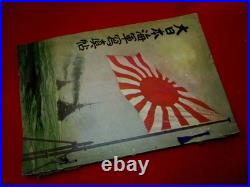
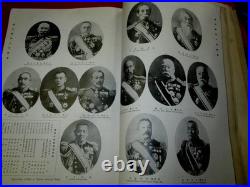
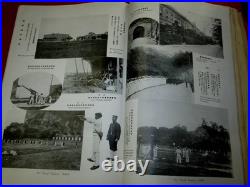
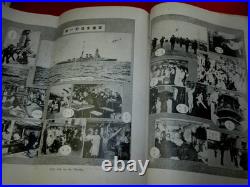
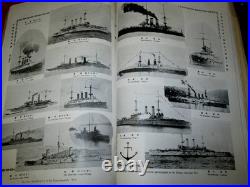
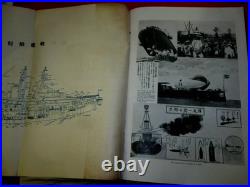
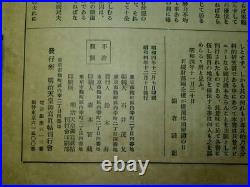
Published in 1929 (Showa 4), this large-format Japanese photo album presents a remarkable visual record of the Imperial Japanese Navy before World War II. This is much more than a simple collection of old photographs. Among the pages are photographs of important Japanese warships associated with the Russo-Japanese War and the development of the modern Japanese fleet, including Mikasa, Asahi, Shikishima, and Fuji. The album also contains portraits of senior naval figures, views of the Naval Gunnery School, diagrams and photographs relating to naval guns and shells, and scenes showing daily life aboard Japanese warships. One particularly interesting feature is the use of English captions on a number of pages, making the contents much easier to understand for collectors outside Japan. The book was issued by the Meiji Emperor Photo Album Publication Association. Records for this title are also preserved in Japanese institutional collections, confirming that this was a genuine prewar publication rather than a later retrospective reproduction. When opened, the pages provide a much more impressive viewing experience than a typical small-format military book. For a modern collector, this album offers something especially valuable: a look at how the Japanese Navy presented itself during the interwar period, only a little more than a decade before the Pacific War. Age-related toning, spotting, rubbing, stains, and general wear are present. Please examine the photographs carefully for condition. An excellent historical reference for collectors of Japanese naval history, warships, Russo-Japanese War material, naval uniforms, gunnery, and prewar military photography. Own a Piece of History. International Buyers – Please Note.

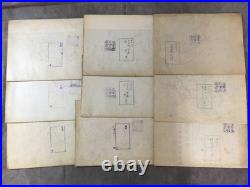
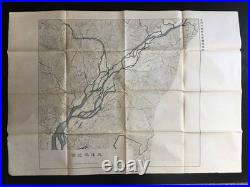
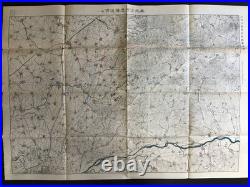
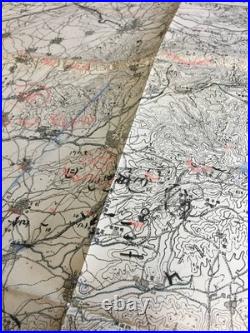
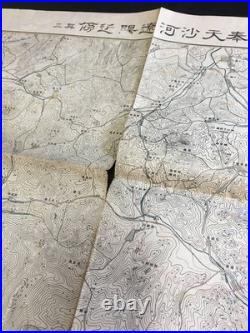
This is a set of nine large Japanese military maps connected to the official study of the Russo-Japanese War. The maps date from around 1931 (Showa 6) and are associated with the published Japanese war history of the Russo-Japanese War. What makes this set especially interesting is the presence of Imperial Japanese Army Infantry School library stamps. The Army Infantry School was a specialist institution for infantry tactics, training, and military study. These maps were therefore not simply decorative maps. They were the kind of material used to study terrain, past battles, troop movements, and tactical problems. The set includes areas connected with major Russo-Japanese War battlefields, including Mukden, Liaoyang, Shahe, Jiuliancheng, Telissu, Dashiqiao, and surrounding regions. For collectors who are not familiar with this period, the Russo-Japanese War was fought between Japan and the Russian Empire from 1904 to 1905, with some of the largest land battles taking place in Manchuria. These maps help make that history much easier to understand. Instead of seeing the war only as names and dates in a book, you can see the actual mountains, rivers, roads, railways, towns, and terrain over which the armies moved and fought. Several maps also contain red, blue, and black handwritten lines and annotations. These markings appear consistent with tactical or historical study, possibly indicating positions, routes, or battle lines. However, the person who made them and the exact date of the annotations cannot be confirmed. That uncertainty is important. What can be confirmed is that the maps carry Army Infantry School library markings, and the handwritten study marks add to the sense that these were working military reference materials rather than untouched collector pieces. Each map is large, approximately 78 × 110 cm / 30.7 × 43.3 in. Allowing the terrain to be studied in impressive detail. There is age-related toning, staining, fold wear, tears, and handwritten markings. Some maps have significant damage, so please examine the photographs carefully. A fascinating set for collectors of the Imperial Japanese Army, Russo-Japanese War, military cartography, Manchurian battlefields, infantry tactics, and military education. These are more than old maps. They are surviving tools for understanding how Japanese officers studied the battlefields of an earlier war. Own a Piece of History. International Buyers – Please Note.

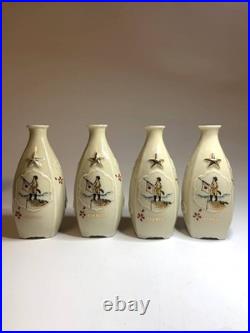
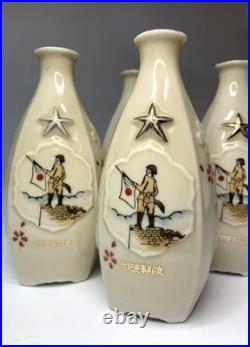
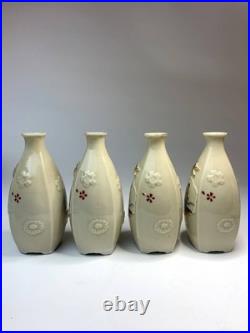
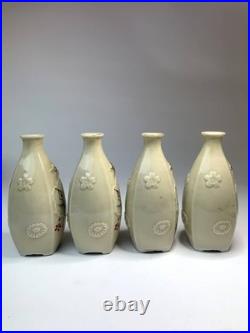
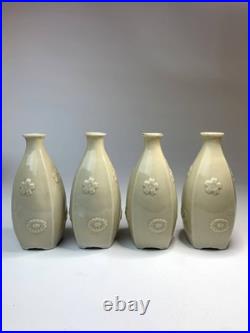
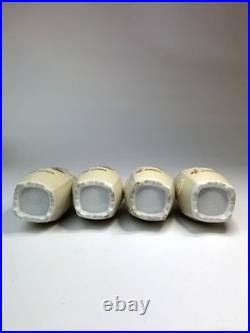
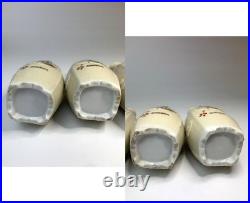
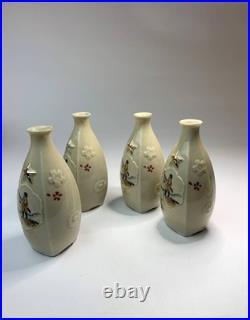
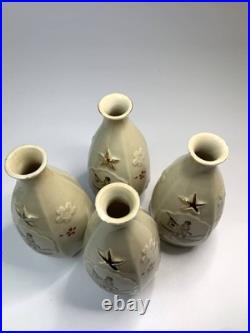
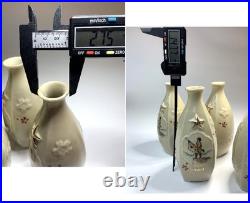
This is a matching set of four prewar Japanese military commemorative sake bottles made in connection with the Second Sino-Japanese War, known in contemporary Japan as the China Incident. These are often referred to as military sake bottles-ceramic vessels produced for military celebrations, departures, homecomings, unit events, and other commemorative occasions. They were not merely tableware; they served as personal souvenirs tied to a specific moment in a soldier’s service. Each bottle features a highly symbolic military design: A Japanese soldier holding the national flag The Imperial Japanese Army star emblem Cherry blossom decoration The inscription “China Incident Commemoration” The China Incident began in 1937 and became the major conflict between Japan and China before and during World War II. What makes this set especially appealing is that all four matching bottles have survived together. Single military sake bottles are not difficult to encounter, but complete matching groups are much less commonly found. As a set, they give a much stronger sense of how these pieces may originally have been displayed or used at a commemorative gathering. The design is also immediately understandable even for collectors who are new to Japanese militaria. The soldier, flag, army star, and cherry blossoms create a very visual snapshot of Japanese military culture in the late 1930s. The bottles remain in attractive condition for their age. There is some wear to the gilt decoration, along with kiln-related marks, glaze irregularities, and crazing consistent with period ceramic production. Please examine the photographs carefully for condition. More than decorative ceramics, these are surviving examples of how military service and wartime memory entered everyday life in prewar Japan. A strong display set for collectors of Japanese militaria, wartime ceramics, China Incident material, or historical military souvenirs. Own a Piece of History. International Buyers – Please Note.

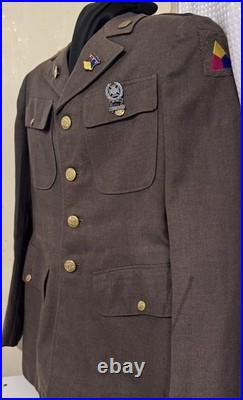
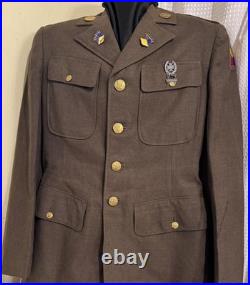
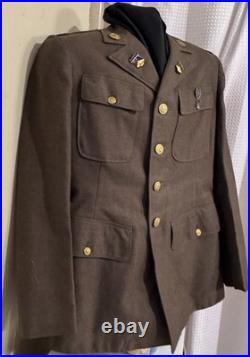
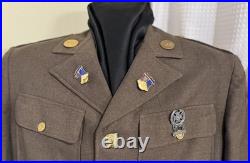
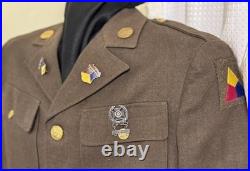
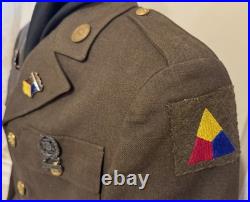
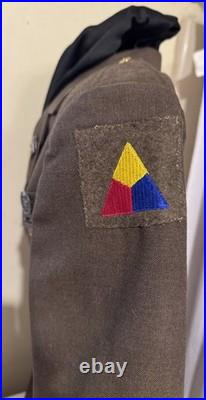
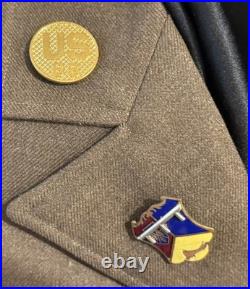
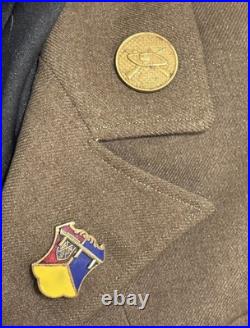
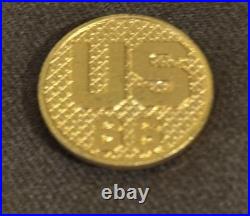
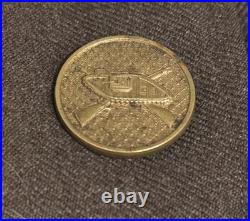
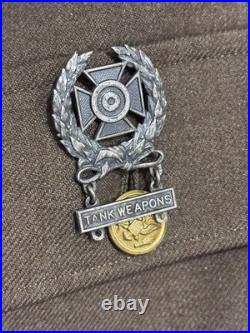
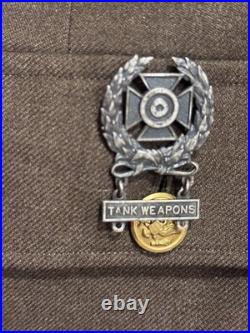
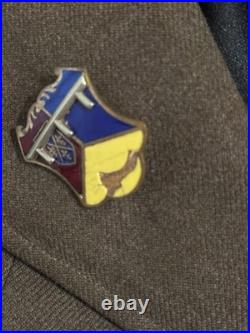
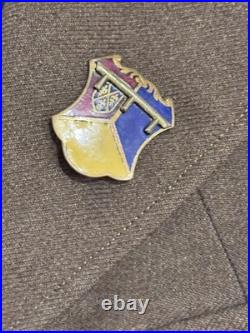
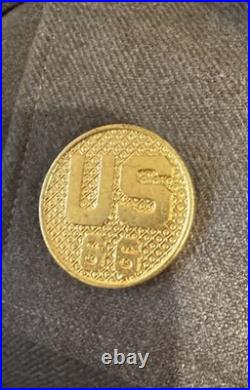
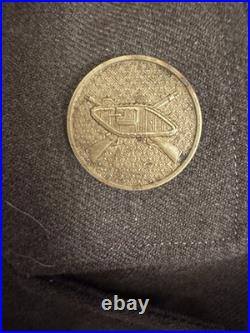
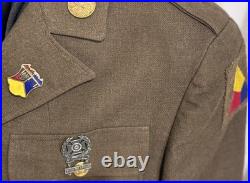
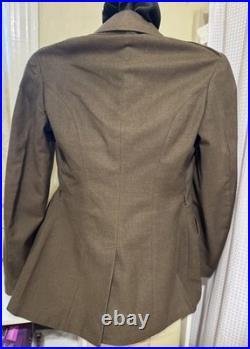
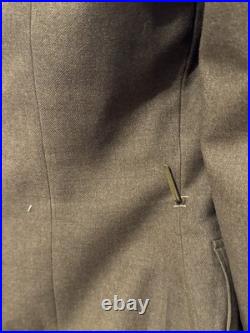
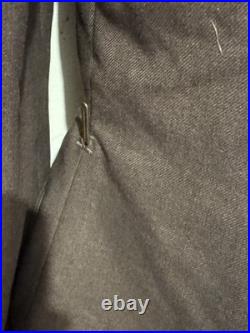
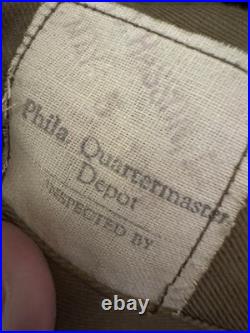
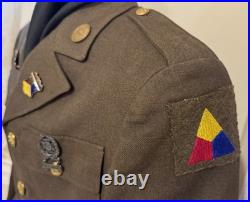
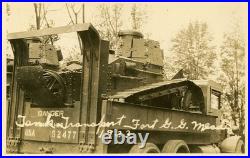
For your consideration is this museum quality Interwar Period M1926 Spec 8-31B Wool Service Coat Pvt 66th Infantry Regiment (light tanks) Make, Model, & Description: M1926 Spec 8-31B EM Service Coat; Museum quality piece made of whipcord wool. This coat has a four panel back w/ 2 belt hooks. This particular coat dates May 1935. This puts this piece right in the middle of its MFG window of 1933-37. The WWI Tank Corps SSI was worn by any of the old WWI Tank Corps units that was organized and redesignated Armored Infantry units after being trained at the Infantry Tank School at Camp Meade & later Fort Benning, GA. 1st Tank Regt was reorganized and redesignated as the 66th Infantry Regiment (Light Tanks) on October 25, 1932 at Camp Meade. COATS OVERALL CONDITION; PRE WWII MUSEUM QUALITY PIECE This coat is definitely a museum quality piece. Army, tracing its lineage back to the formation of the 301st Tank Battalion in World War I. 66th Infantry Regiment (light tanks) HISTORY 1918 through 1928 The lineage that led to the 66th Armor Regiment began in August 1918 when it was organized in France as provisional tank brigades, which underwent a series of redesignations and consolidations during the interwar period due to post-WWI legislative changes. Late 1920s: The unit maintained interwar structures until reorganized into the 1st Tank Regiment in 1929, paving the way for later armored designations before World War II. 66th Infantry Regiment (light tanks) HISTORY 1928 through 1940 Between 1928 and 1940, the unit that became the 66th Infantry Regiment (Light Tanks) underwent multiple re-designations due to the post-WWI abolition of the Tank Corps, eventually forming the core of the U. Army’s modern armored force. Due to legislative restrictions abolishing a separate tank branch, the unit received an infantry designation. On October 25, 1932, it was officially reorganized and redesignated as the 66th Infantry Regiment (Light Tanks). The headquarters company was temporarily inactivated on September 1, 1938, at Fort Meade. 1940: The headquarters company reactivated on January 10, 1940, at Fort Benning, Georgia. On July 15, 1940, the entire unit was converted, redesignated as the 66th Armored Regiment, and assigned to the newly formed 2nd Armored Division under Brigadier General George S. 1932 Infantry Tank School; ————– In 1932, the U. Key Events of 1932 and the Tank School Transition. Relocation to Fort Benning: After operating at Camp Meade since 1927 (following initial tank training presence established around 1919), the Tank School was moved to Fort Benning, Georgia, in 1932. Re-designation: By 1933, the program was formally re-designated as the Tank Section of the Infantry School. Unit Changes: Concurrently, the 1st Tank Regiment at Camp Meade was reorganized and redesignated as the 66th Infantry Regiment (Light Tanks) on October 25, 1932.