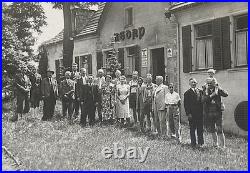
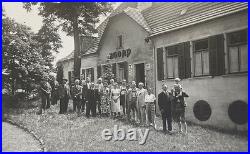
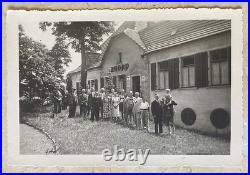
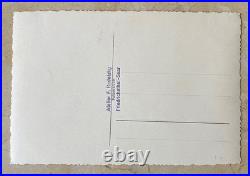

PRE-WW2 GERMAN NATIONAL SOCIALIST LOCAL HEADQUARTERS 1941 PHOTO POSTCARD RPPC. WW2 GERMAN NATIONAL SOCIALIST LOCAL HEADQUARTERS IN FRIEDRICHSTHAL (SAAR) IN THE REGIONALVERBAND SAARBRÜCKEN DISTRICT OF SAARLAND, GERMANY. A LARGE (NS DA P) SIGN HANGS OUT FRONT WITH BUREAUCRATS AND LOCAL CIVILIAN MEMBERS WITH TRADITIONAL DRESS POSING FOR THIS PHOTO c1940. VERY SHARP FOCUS WITH VERY FINE CONTRAST. PHOTOGRAPHER HAND STAMPED IMPRINT ON THE REVERSE. DIMENSIONS: 3 1/4″ x 5 1/4″. THIS IS NOT A REPRODUCTION OR A COPY.

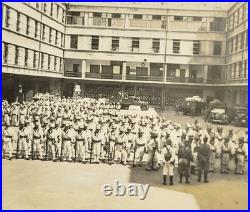
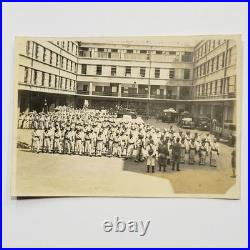
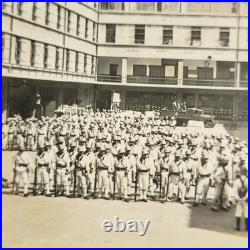
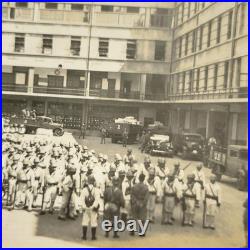
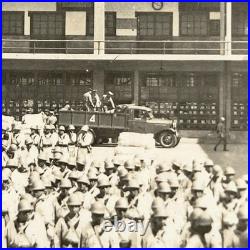
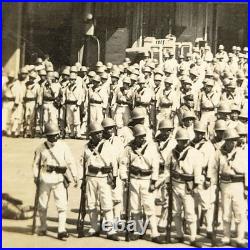
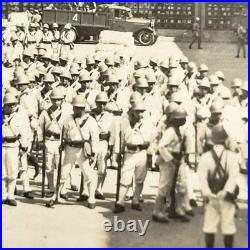
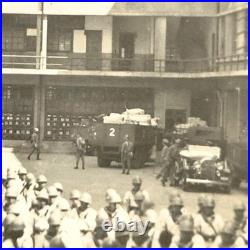
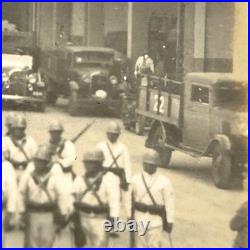
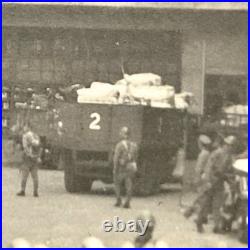
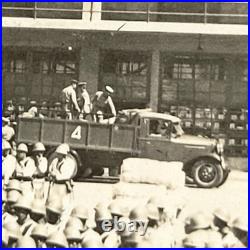
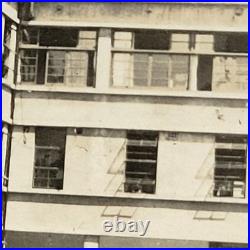
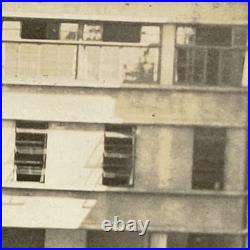
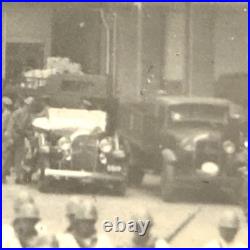
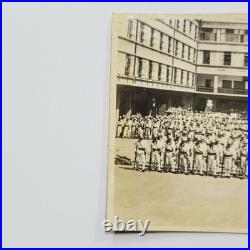
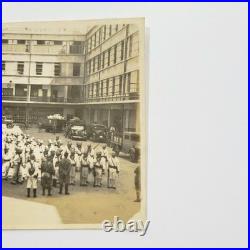
Taminato Incident Japanese Navy Shanghai Headquarters Photo 1936 IJN. Size: approximately 4.4 inches by 3.1 inches. This original photograph shows Japanese Navy Special Naval Landing Force troops assembled in formation inside a courtyard in Shanghai during the period of heightened military activity following the 1936 Taminato Incident. The multi story buildings, trucks, and the armored vehicles marked with the number 2 and 4 create a strong impression of an SNLF headquarters or staging area. The uniforms and equipment match known Japanese naval infantry gear from the mid 1930s, and the scene reflects organized reinforcement activity during a moment of increased Japanese military presence. The Taminato Incident, known in Japanese sources as the and also referred to as the , occurred on September 23 1936 when sailors from the cruiser Izumo were shot in broad daylight in the Hongkou district. Seaman Tomomitsu Taminato died of his wounds, and the event immediately intensified Japanese naval operations in the International Settlement. Historical accounts describe the rapid arrival of SNLF reinforcements, expanded patrols and a significant increase in Japanese naval infantry presence throughout Hongkou. This photograph fits well within that documented response, showing a large formation of troops and vehicles plausibly preparing for deployment or coordination. The Taminato Incident became one of the major prewar flashpoints in Shanghai, intensifying Japanese security measures in the International Settlement and contributing to the rising political and military tensions that eventually led to the outbreak of the 1937 Battle of Shanghai. Photographs of SNLF reinforcement activity from this period are scarce, and very few private images survive that show the buildup of Japanese forces in the months following the incident. The courtyard formation seen here is not represented in publicly available archives or indexed listings, adding to the rarity of this example. This image comes from a private album that included other photographs directly tied to the Taminato Incident, such as the transfer of Taminato’s coffin from the Izumo and scenes from his funeral. The presence of those related images strongly supports the identification of this photo as part of the same sequence of events. As a result, this photograph stands as an uncommon and historically valuable record of Japanese naval infantry reinforcement activity in Shanghai during a critical moment of escalating Sino-Japanese tensions. This is a compelling and name rich example of SNLF operations in Shanghai, showing a large formation of Japanese naval infantry and vehicles during one of the key prewar flashpoints in the International Settlement. Those most interested in this photo. Collectors of IJN and SNLF military photography. Historians researching the Taminato Incident and prewar Shanghai tensions. Scholars studying Japanese naval infantry operations in treaty port China. Researchers focused on Hongkou district military activity in the 1930s. Archivists documenting Sino Japanese conflict escalation prior to 1937. Collectors of rare reinforcement or mobilization scenes in wartime contexts. Enthusiasts of cruiser Izumo and its historical role in Shanghai. Please inspect the pictures, as they give the best representation of condition. May have discoloring, edge or corner wear, marks, creases, fading, smudges, corner or edge bends, tears, or corners missing.

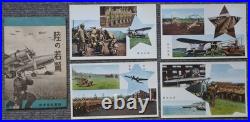
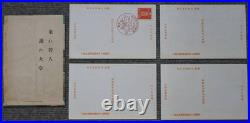
This is an original pre-war Japanese military aviation postcard set titled “Young Eagles of the Army”, issued by the Imperial Japanese Army Aviation Headquarters. The original envelope is clearly printed with: “Young Eagles of the Army” “Army Aviation Headquarters” In addition, all four postcards in the set also carry the title Young Eagles of the Army. This is important because these are not simply unrelated aviation photographs gathered together later. They were produced as a unified set under the authority of the Imperial Japanese Army Aviation Headquarters, giving them a strong connection to the official promotion and recruitment activities of Japanese Army aviation. The Army Aviation Headquarters was established in 1925 as the central organization responsible for major aspects of Japanese Army aviation, including aircraft administration, technical development, training, supply, and airfield-related matters. It continued to operate until the dissolution of the Japanese Army in 1945. What makes this set especially interesting is the combination of early military uniforms and biplane aircraft visible in the photographs. The soldiers appear to wear uniforms of the older Type 45 style or a closely related pattern, while the aircraft shown are from the earlier generation of Japanese Army aviation, when biplanes were still common. Taken together with the fact that the publisher is identified as the Army Aviation Headquarters, these details strongly suggest that the images represent the early development period of Imperial Japanese Army aviation, likely around the late 1920s to early 1930s. The exact publication year cannot be confirmed from the photographs alone, so I prefer not to state a precise date without documentary evidence. However, the uniforms, aircraft, and official issuing organization provide valuable clues to the period. The phrase “Young Eagles” was used in Japan to evoke young aviators and aspiring military airmen. In modern terms, this set can be understood as a kind of military aviation recruitment and promotional material. It presented young Japanese men with a new and exciting image of military service: flying aircraft, working around airplanes, training with aviation units, and becoming part of Japan’s rapidly developing military air arm. The photographs are also valuable because they do not show aircraft alone. They include mechanics, ground personnel, unit formations, training scenes, and aircraft on the ground, giving a broader picture of how an aviation unit actually functioned. Today, collectors are much more familiar with later Japanese aircraft such as the Zero or the Hayabusa. These postcards represent an earlier and less commonly seen chapter – the period when Japanese military aviation was still transitioning from biplanes toward the modern air forces of the 1930s and 1940s. Paper promotional material was never intended to survive for generations. The fact that the original Army Aviation Headquarters envelope and all four matching postcards remain together as a set adds considerably to its historical appeal. It would make an excellent piece for collectors interested in Japanese military aviation, early aircraft, military recruitment, uniform history, or pre-war Japanese visual culture. This is more than simply a group of old postcards. It is a small surviving record of the era when Japan was still building its military air arm – and of how that new world of aviation was presented to the young men expected to join it. Please review the photographs carefully for age-related toning, staining, wear, and other signs of age. Own a Piece of History. International Buyers – Please Note.

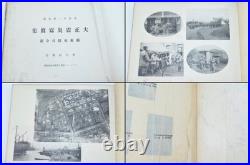
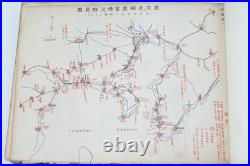
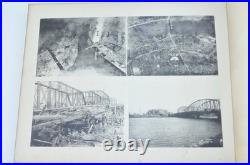
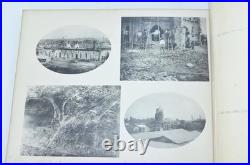
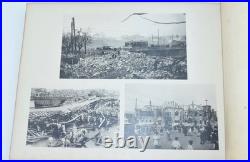
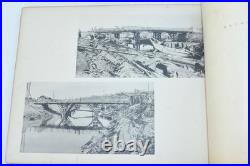
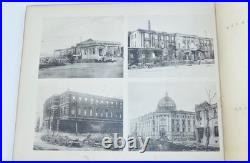
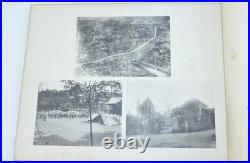
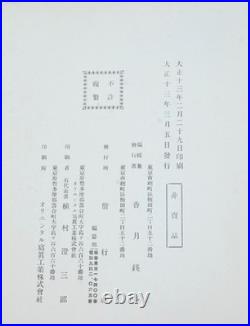
This is an official photo album documenting the Great Kanto Earthquake of 1923. Compiled by the Kanto Martial Law Headquarters and published in March 1924. The Great Kanto Earthquake struck Tokyo, Kanagawa, and surrounding regions on September 1, 1923, causing massive destruction and loss of life. Following the disaster, martial law was declared, and the Japanese Army assumed responsibility for security, relief, and administrative control of the affected areas. This album was produced as an official record for military and government use, not for public sale. Contents and Historical Significance. Devastated urban areas and burned districts. Collapsed government buildings, banks, railways, and bridges. Aerial and elevated views of destruction. Emergency camps, recovery efforts, and infrastructure damage. Maps illustrating damage distribution. The inclusion of aerial photography and systematic documentation indicates that this album was created for administrative, planning, and military analysis, rather than for commercial or commemorative purposes. This album was issued by Kaikosha, an organization established for Imperial Japanese Army officers. Kaikosha functioned as an officers’ association, publishing official materials and also supplying military uniforms and equipment exclusively for officers. Its involvement confirms the official and restricted nature of this publication. There is noticeable wear, staining, and deterioration consistent with age (damaged condition). However, photographs, maps, and text remain largely legible, and the album retains its value as a primary historical source. This is not a general photo book, but a rare, non-commercial military document recording one of Japan’s most significant natural disasters and the army’s role in urban emergency governance. Highly suitable for collectors of. Disaster and urban studies. Military and administrative history. Early 20th-century photographic archives. Approximate 7-21days(To USA).

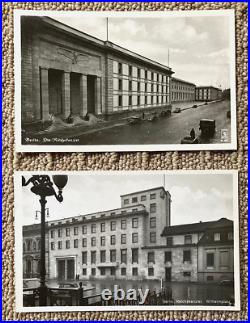
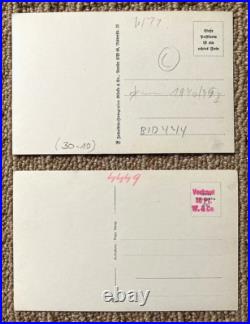
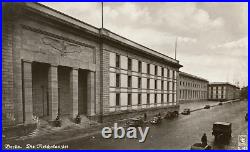
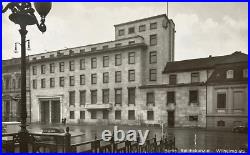
(2) WW2 GERMAN HEADQUARTERS (NEW REICHSCHANCELLERY) RPPC PHOTO POSTCARDS. (2) WW2 GERMAN HEADQUARTERS (NEW REICHSCHANCELLERY) MAIN ENTRANCES – RPPC PHOTO POSTCARDS. In late January 1938, The WW2 German leader officially assigned his favorite architect, to build the New Reichs Chancellery, requesting that the building be completed within 1 year. It was the official residence, where the WW2 German leader lived in the so-called. The New Chancellery had a large garden area, with the underground Furherbunker known commonly as. PERIOD CAPTIONED IN THE LOWER NEGATIVE. SHARP FOCUS WITH VERY FINE CONTRAST ON EACH. THESE ARE NOT REPRODUCTIONS OR A COPIES.

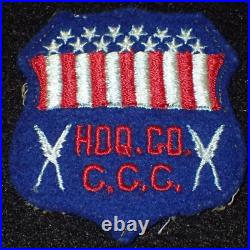

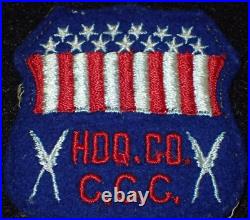
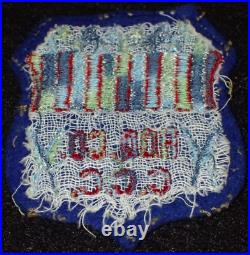

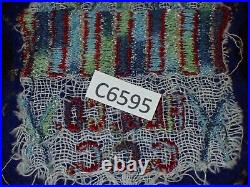
1930s US CCC Civilian Conservation Corp Headquarters Hdq. 1930s United States C. Civilian Conservation Corp Headquarters Hdq. SSI Shoulder Patch Wool and Cotton Embroidered, Good Issued. Condition as Photographed with light wear and uniform removed as seen – An Exceptional Period Piece to Add to Any CCC Collection or Display. Recent Estate Acquisition & Presented as Acquired, Scarce. Check back often – we search estates and sources across the world to bring a fine selection of militaria. Please review all photos for details regarding the condition of the item listed – further condition information will be included in the listing as is relevant, if you need additional photographs or have questions regarding the condition please do not hesitate to ask. I describe all items to the best of my ability – please do not hesitate to ask any and all questions prior to the close of the listing. Mistakes very rarely occur – however if one does please rest assured that it will be corrected. International Buyers are Welcome!

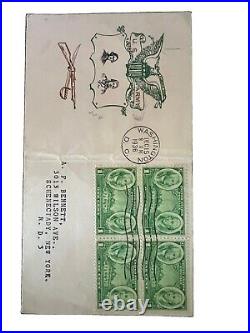
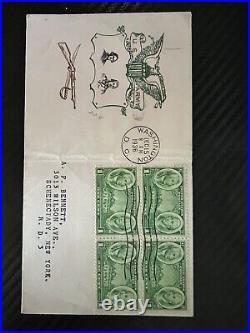
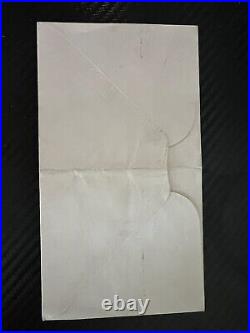
One-Cent Army Stamp 1936. Official US ARMY Headquarters Letter. This item is in the category “Collectibles\Militaria\1919-38\Original Period Items”. The seller is “pa.rparo.wtwzeio” and is located in this country: US. This item can be shipped to United States.
- Original/Reproduction: Original
- Theme: Militaria
- Time Period Manufactured: 1919-38
- Country/Region of Manufacture: United States
- Modified Item: No


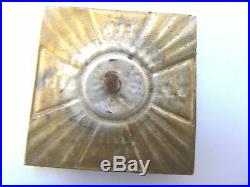
#901 POLAND POLISH HEADQUARTERS COMMAND POLISH ARMY EAST, 1918, Silver gilt worn to bronze, Plain screw back disk, very rare. The free listing tool. The item “#901 POLAND POLISH ARMY LWOW EAST HEADQUARTERS COMMAND BADGE, 1918″ is in sale since Sunday, March 27, 2016. This item is in the category “Collectibles\Militaria\1919-38\Original Period Items”. The seller is “polishmilitaria” and is located in Fort Lauderdale, Florida. This item can be shipped worldwide.
- Country//Region of Manufacture: Poland
- Country/Region of Manufacture: Poland