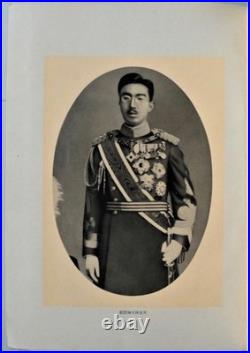
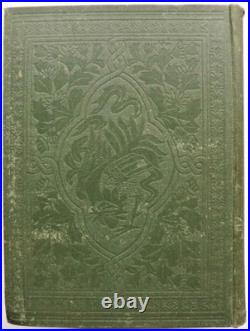
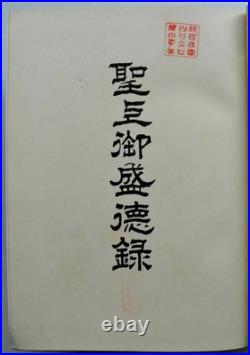
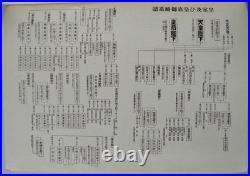
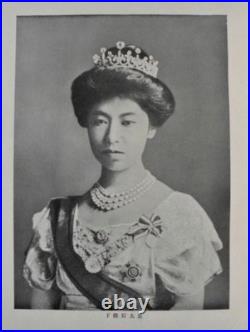
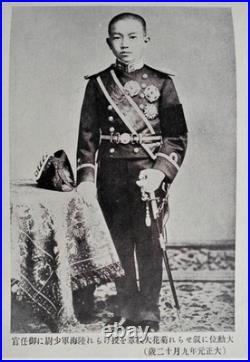
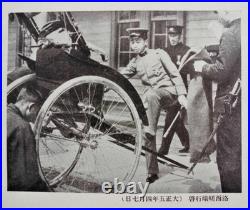
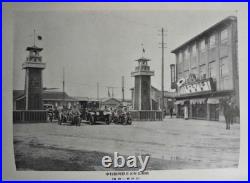
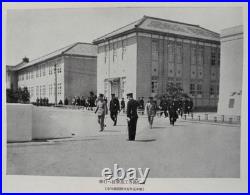
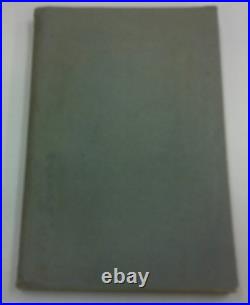
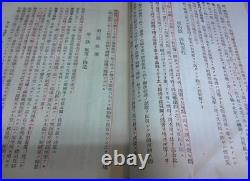
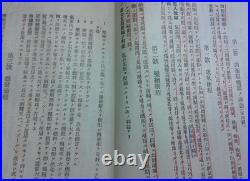
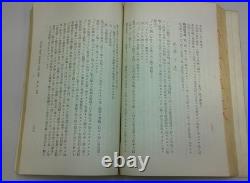
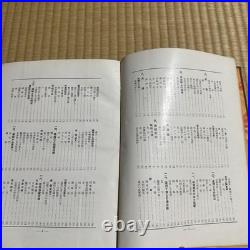
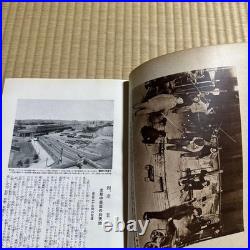
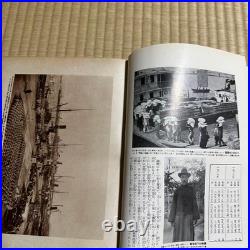
1931 “Seijo Goseitoku Roku”. Official Record of Emperor Hirohito (Showa Emperor). 1150 pages – Large Format – Photo Rich Volume. Published in 1931 (Showa 6). This is a substantial official compilation documenting the life of Emperor Hirohito from birth through approximately age 31. The book was published in 1931 – the year of the Manchurian Incident – a turning point when Imperial Japan began its expansion toward full-scale war. It was produced not as a casual biography, but as a state-sponsored record intended for. Influential regional figures. Its purpose was to present a structured image of the Emperor as head of state under the Meiji Constitution. At that time, the Emperor legally held supreme command authority over the Imperial Army and Navy. This makes the volume significant not only as an imperial biography, but as documentation of how pre-WWII Japan formally constructed and disseminated the public image of its sovereign. Constitutional sovereign of Imperial Japan. Holder of supreme military command authority. Central figure during World War II. His historical responsibility and role in wartime decision-making remain subjects of academic debate. This book reflects the official portrayal of him prior to the escalation of the Pacific War. Early life and imperial lineage charts. Formal military portraits. Scientific research (marine biology). Extensive photographic documentation. This is a primary source for researchers studying. Pre-WWII Japanese state ideology. Imperial propaganda development. 26cm x 19.5cm x 9cm. Age-related toning and wear. Structurally solid for its age. This is not a modern reprint. It is an original pre-WWII state publication – a substantial and historically significant document. International Buyers – Please Note. Thank you for your understanding.
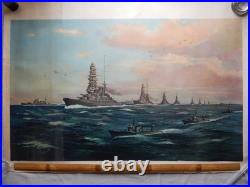
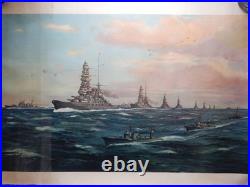
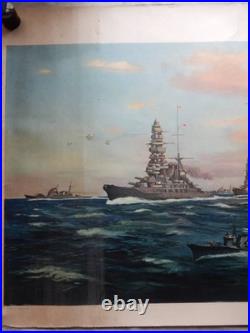
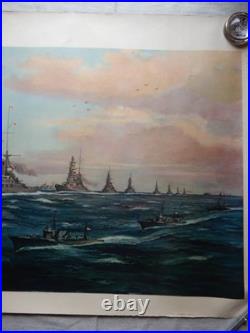
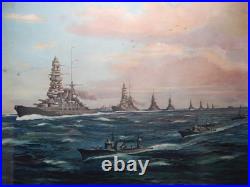
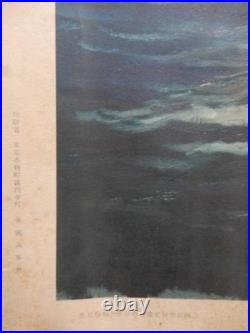
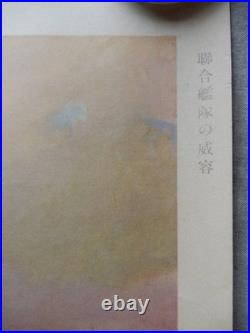
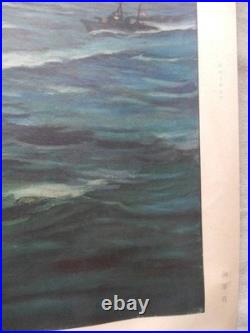
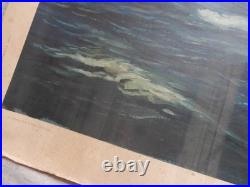
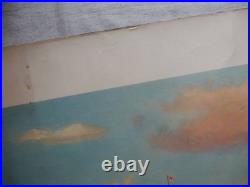
This is a large prewar Japanese naval color print titled “The Majesty of the Combined Fleet”, issued by the Imperial Japanese Navy Ministry in May 1935. The artwork presents the Combined Fleet as a powerful unified force: large battleships advancing in formation, destroyers cutting across the foreground, and aircraft flying overhead. Rather than portraying a single vessel, the composition was designed to express the scale, strength, and prestige of the Imperial Japanese Navy as a whole. The right margin is printed with: “The Majesty of the Combined Fleet” “May 1935″ “Navy Ministry” Additional printing information in the margin includes references to the printer in Uchisaiwaicho, Kojimachi Ward, Tokyo, and Teikoku Kaigun-sha. The date is especially important. This was published in 1935, six years before the Pacific War began, during a period when Japan still maintained a large and highly visible battle fleet. The image reflects how the Imperial Japanese Navy wished to present the Combined Fleet to the public: battleships at the center, supported by destroyers and naval aviation. At approximately 108 × 78 cm, this is a very large display piece with considerably more visual impact than ordinary wartime prints or postcards. There are age-related stains, discoloration, folds, edge wear, and other signs of use and storage. Please examine the photographs carefully for condition. More than simply a naval illustration, this is a surviving piece of prewar Japanese naval visual culture, showing how the Combined Fleet was represented at the height of its prestige. Own a Piece of History. International Buyers – Please Note.
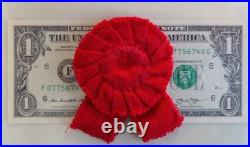
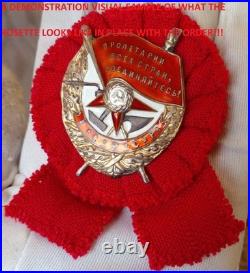
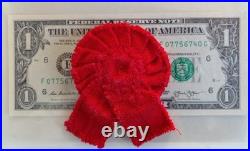
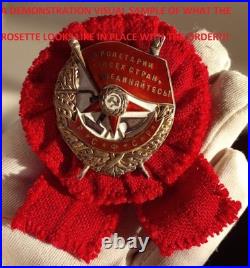
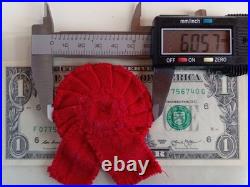
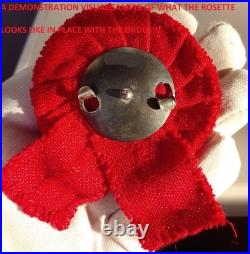
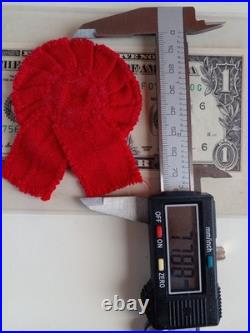
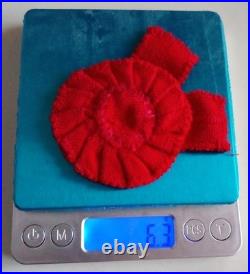
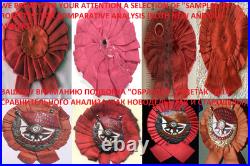
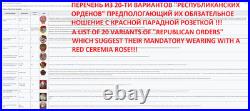
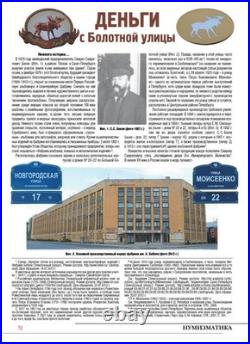
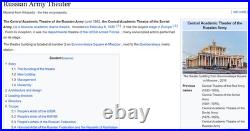
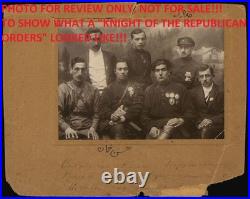
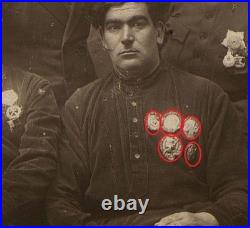
AFTER THE OPENING OF THE “Central Academic Theater of the Soviet Army” in 1930, THEY WERE ACTIVELY USED AS REQUISITES AND DOCTORATIONS FOR ARMY PERFORMANCES, AS WELL AS FOR THE CASTING OF MILITARY- HISTORICAL CHARACTERS IN CINEMA. AFTER CONDUCTING ABOUT 18 MONTHS OF ANALYSIS AND DELVE INTO THE SUBJECT, I CAN SAY THAT ABOUT 12 MODEL TYPES OF ROSETTES HAVE BECOME KNOWN (WITH MANY NUANCES OF SHIELD, PAINTING, FABRIC BASE VARIATIONS, CENTRAL CORE FILLING OPTIONS, “CUSHIONS, ” “SAND, ” “SEN, ” AND FELT). A MOIRÉ ROSETTE WAS AN ESSENTIAL TRIBUT OF ABOUT 20 REPUBLICAN ORDERS, NOT COUNTING THE NUMEROUS AWARD BADGES OF “RED COMMANDERS, ” “PARTISANS, ” WARRIORS. ” “REVOLUTIONS ACTUALLY FROM 1918 TO 1930!! WEIGHT 6.3 GRAMS. It consisted of a red (OCHER) (MOIRE) fabric rosette with a hole in the center. Worn directly under the badge of the order. The badge was secured with a pin through the rosette, the sealing plate, and the clamping nut, which ensured the badge was securely fastened to the knight’s clothing. The rosette consisted of a lining of red fabric (usually cloth or silk). Which was placed under the badge of the order itself. Shape: Round or slightly oval. Material: Red fabric, often broadcloth. Purpose: Served as a base for attaching the order and emphasized its appearance, creating a contrast with clothing. Attachment: The order had a screw (threaded pin) on the back that passed through the clothing and rosette and was secured with a nut. When awarding the Order of the Red Banner, the knight was presented with a red moiré rosette along with the order, which was placed under the order when attaching it to clothing. The order on this rosette, reminiscent of a red carnation (by the way, one of the original versions of the order’s appearance) looked even more beautiful. But the rosette quickly frayed and got dirty, especially in combat conditions, and its appearance became unsightly. In connection with this, from the mid-1920s, rosettes under orders gradually fell out of use. On April 17, 1933, guided by the general provisions on orders of the USSR, approved by the resolution of the Central Executive Committee and the Council of People’s Commissars of the USSR of April 30, 1930, People’s Commissar for Military and Naval Affairs, Chairman of the Revolutionary Military Council of the USSR K. Voroshilov, by his order No. 58, abolished the wearing of orders of the USSR and Union republics by the rank and file and command staff of the Red Army rosettes, or red bows… A “PHALERISTI” WHO VALUES THE AUTHENTICITY AND COMPLETENESS OF THE RECONSTRUCTION WILL ADD “PARADE ROSETTES” TO HIS COLLECTION OF ORDERS AND BADGES!! I’LL BE HAPPY TO ANSWER YOUR QUESTIONS!! FOR PARTICULARLY INTERESTED “PHALERISTI COLLECTORS, ” THERE IS AN ADDITIONAL QUANTITY.
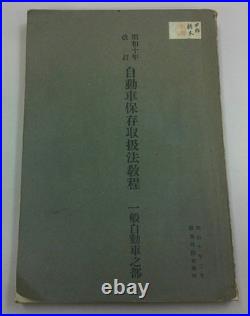
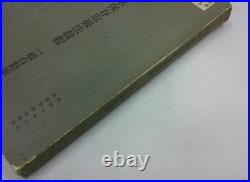
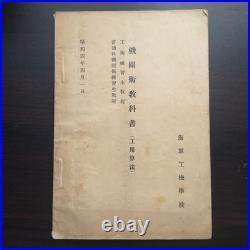
Official textbook of the Imperial Japanese Army Motor Vehicle School, used to train mechanics and drivers to keep army vehicles ready for combat. Covers the four-stroke engine cycle, ignition, fuel mixture, lubrication, cooling, inspection, storage, and troubleshooting. Many pages bear red pencil underlines from soldiers in training-adding authentic, lived history. Published in March 1935, just before the outbreak of the Second Sino-Japanese War, when the army was rapidly expanding its mechanization program. Compiled and distributed at the Imperial Japanese Army Motor Vehicle School, later circulated across units as the standard reference. As logistics shifted from horses to motor vehicles, maintaining trucks and cars became critical. Step-by-step diagrams and explanations show. Four-stroke function and why mixture/timing matter. Starting, warming up, and stopping procedures. Lubrication, cooling, and fuel system checks. Long-term storage and rust prevention. Early troubleshooting from symptoms like noise, heat, or exhaust color. 1935 (Showa 10) revised edition. Marked in red pencil (student notes). Age-related wear: foxing, fading, corner folds, binding stress (see photos). ? A rare, first-hand artifact of Japan’s military mechanization. Own a Piece of History. Approximate 7-21days(To USA).
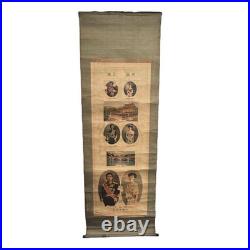
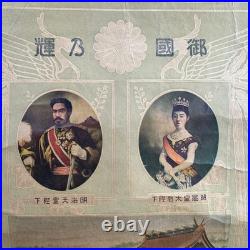
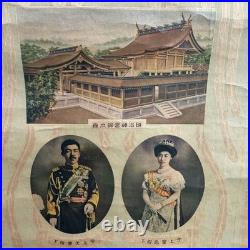
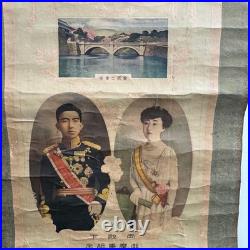
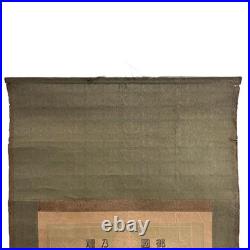
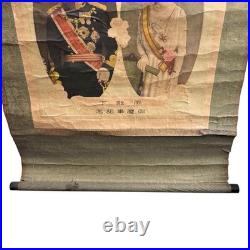
This large antique Japanese hanging scroll commemorates an important moment in the life of Crown Prince Hirohito, who would later become Emperor Showa of Japan. At the bottom are portraits of Crown Prince Hirohito and Princess Nagako, the future Emperor Showa and Empress Kojun. Beneath their portraits appears the Japanese inscription: Commemorating the Auspicious Occasion of Their Imperial Highnesses This inscription is an important clue to the historical context of the piece. Crown Prince Hirohito married Princess Nagako on January 26, 1924, during Japan’s Taisho era. Hirohito was still a young Crown Prince, approximately three years before he ascended the throne and became the emperor whose reign would encompass World War II and Japan’s postwar transformation. The scroll presents much more than the young couple. Its imagery includes: Emperor Meiji and Empress Shoken Meiji Shrine Nijubashi Bridge at the Imperial Palace Crown Prince Hirohito and Princess Nagako The Imperial chrysanthemum crest and decorative phoenix motifs At the top appears the phrase , approximately meaning The Glory of the Nation. The composition is particularly interesting from a historical perspective. Emperor Meiji and Empress Shoken appear above the Meiji Shrine and Imperial Palace imagery, while the young Crown Prince and his bride appear below. It visually connects the Meiji imperial generation with the next generation of Japan’s Imperial Family. Today, Hirohito is inevitably associated with some of the most consequential events of the 20th century: the rise of militarized Japan, the Pacific War, Japan’s defeat in 1945, and the country’s remarkable postwar transformation. But this scroll captures an earlier moment. The war was still far in the future. Hirohito was not yet Emperor. It comes from a Japan celebrating the marriage of its young Crown Prince and his future Empress. That contrast is what makes this piece especially fascinating. Measuring approximately 150 cm (59 in) long and 51 cm (20 in) wide, it is a substantial display piece as well as an artifact of Japanese imperial and social history. The scroll shows significant age-related wear, including creases, wrinkles, discoloration, fading, stains, and other deterioration. Please examine all photographs carefully. These signs of age are consistent with an object that has survived for approximately a century. Dating Note: Based on the portraits and the inscription commemorating an auspicious occasion involving the Crown Prince and Princess, this piece is believed to relate to their 1924 marriage. However, no clearly visible production date or publisher’s mark has been confirmed, so the exact year of manufacture cannot be guaranteed. More than simply an old Japanese decorative scroll, this is a surviving image of Hirohito before he became Emperor – at the beginning of a life that would become inseparable from modern Japanese history. Own a Piece of History. International Buyers – Please Note.
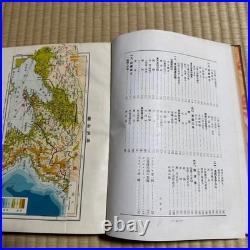
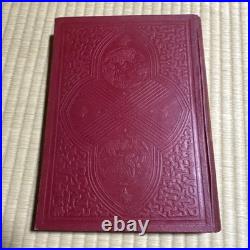
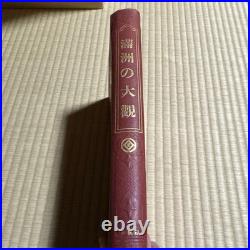
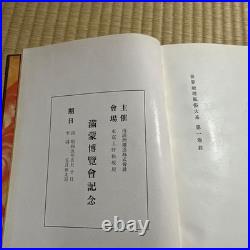
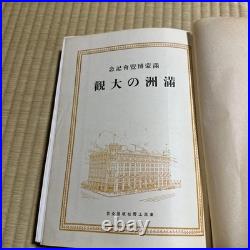
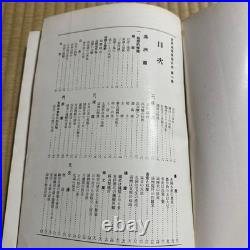
This is an original 1930 Japanese photo and geography book titled “A Grand View of Manchuria”, published to commemorate the Manchuria-Mongolia Exposition held in Tokyo. The book clearly identifies: “Sponsored by the South Manchuria Railway Company” “Venue: Matsuzakaya, Ueno, Tokyo” “Commemorating the Manchuria-Mongolia Exposition” The exposition was held from May 10 to May 19, 1930, and was designed to introduce Manchuria to the Japanese public through displays of its cities, industries, transportation, resources, and regional development. The key institution behind this publication was the South Manchuria Railway Company, commonly known as Mantetsu. Despite its name, Mantetsu was far more than a railway company. It operated railways, mines, ports, hotels, urban development projects, industrial facilities, and extensive research organizations. It functioned as a powerful semi-governmental enterprise closely tied to Japan’s expansion on the Asian continent and to the political and military system surrounding Manchuria. Because of its extraordinary economic and political reach, Mantetsu has often been compared to a Japanese version of the East India Company. This book therefore offers more than a simple travel view of Manchuria. Inside are extensive photographs and articles covering places such as Dairen, Port Arthur, Mukden, Changchun, Harbin, Fushun, and the regions along the South Manchuria Railway network. Railways, ports, industry, cities, landscapes, and local people are all presented through the perspective of prewar Japan. The volume also includes a color map of Manchuria, providing a valuable visual record of how the region was geographically understood and presented in Japan at the time. The date 1930 is especially important. The Mukden Incident would begin the following year in 1931, and the state of Manchukuo would be established in 1932. This means the book was produced before Manchukuo existed, only one year before the political and military situation in Manchuria changed dramatically. It is not a military manual, but it preserves the world that existed immediately before the Manchurian Incident: the South Manchuria Railway, Japan’s growing continental ambitions, and the public image of Manchuria presented to people in Tokyo. In that sense, it offers a rare look at the civilian, economic, and propagandistic side of the history that soon became a military crisis. Nearly a century ago, visitors in Tokyo opened this book and looked toward Manchuria as a land of railways, industry, resources, and opportunity. One year later, that same region became the center of an international conflict. Own a Piece of History. International Buyers – Please Note.
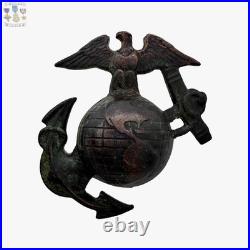
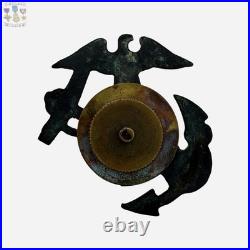
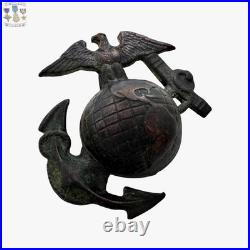
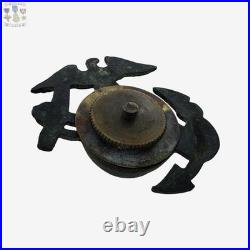
ORIGINAL 1930’S UNITED STATES MARINE CORPS ENLISTED EAGLE GLOBE ANCHOR HAT/CAP INSIGNIA, 1-5/8 INCH X 1-1/2 INCH, SCREW-BACK. The Globe-and-Anchor Cap Device is worn on the cap of the Marine Corps dress uniform. The globe on the U. Marine emblem signifies continuing historical service in any part of the world. The eagle represents the United States. The anchor, which dates back to the founding of the Corps in 1775, acknowledges the naval tradition of the Marines and their continual service under the command of the Department of the Navy. Please let me know if there’s anything else I can do for you!
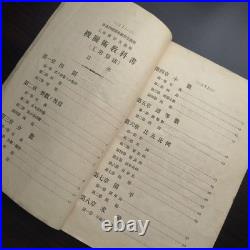
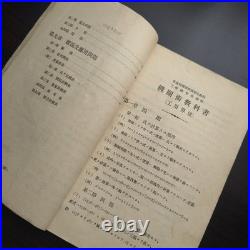
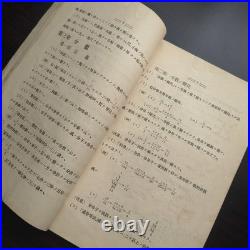
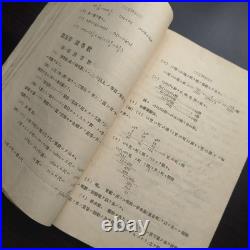
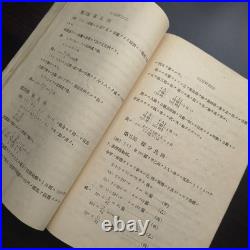
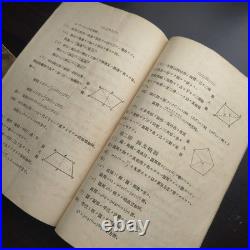
This is an original 1929 Imperial Japanese Navy engineering training textbook, titled Marine Engineering Textbook – Practical Mathematics, issued by the Imperial Japanese Navy Engineering School. The Navy Engineering School specialized in training the technical personnel who kept Japanese warships operating. Battleships and cruisers could not move on naval power alone-they depended on engineers and engine-room personnel capable of understanding and maintaining complex machinery. This textbook taught the practical mathematics required for naval engineering work. It begins with arithmetic, fractions, decimals, ratios, percentages, areas, and volumes, then applies these skills to technical problems involving subjects such as steam pressure, cylinders, pistons, horsepower, fuel, coal, displacement, speed, and cruising distance. In other words, this was not simply a school mathematics book. It shows how the Imperial Japanese Navy trained the men responsible for operating the machinery inside its warships. The cover is dated April 1, 1929 (Showa 4) and identifies the Imperial Japanese Navy Engineering School and its engineering training courses. The historical timing is particularly interesting. The Navy Engineering School was established as an independent institution in 1928 after being separated from the Naval Engineering College. This textbook therefore dates from one of the earliest years of the newly independent school. Why is it rare? Unlike commercially published books, this was a specialized internal training textbook intended for a limited group of Imperial Japanese Navy engineering trainees. Such technical educational materials were working documents rather than souvenirs intended to survive for generations. The Imperial Japanese Navy suffered catastrophic losses during WWII and was completely dissolved in 1945. Over the following decades, many of its internal textbooks, manuals, and training materials were discarded or dispersed. Nearly a century later, surviving examples provide an unusual window into a side of naval history that is often overlooked. This is not a book about famous admirals or naval battles. It is something more personal: the knowledge that ordinary technical personnel had to master before they could enter an engine room and help keep a Japanese warship moving. A fascinating piece for collectors of Imperial Japanese Navy militaria, naval engineering, military education, and original prewar technical documents. Own a Piece of History. International Buyers – Please Note.
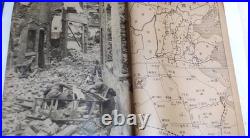
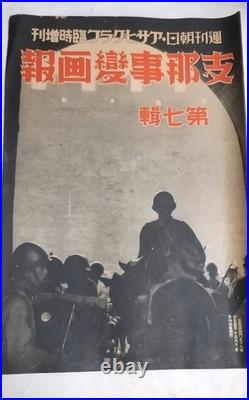
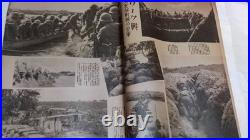
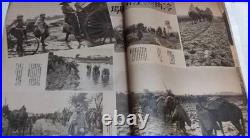
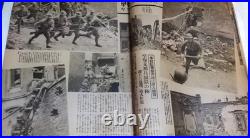
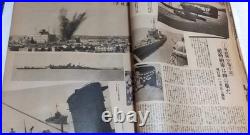
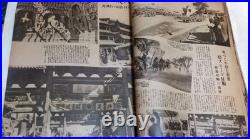
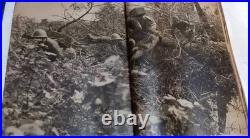
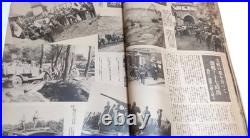
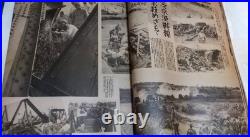
This is Pictorial Report of the China Incident, No. 7 (1937) – an exceptional, large-format wartime photo journal documenting the early stages of the Shanghai and North China campaigns. Featured inside are powerful original photographs of. The Battle of Hongkou – brutal street-to-street fighting. Creek operations and river-crossing assaults. Imperial Japanese Navy actions around Shanghai. Rapid cavalry and motorized advances across the North China plain. Front-line trenches, supply routes, and ammunition transport missions. A detailed military map of the North China theater. These pictorial magazines were produced only in limited wartime runs, and surviving copies with intact photos & maps are now extremely scarce. The visual intensity-soldiers fighting in rubble, advancing through waterlogged fields, naval aviation over Shanghai-captures the atmosphere of 1937 better than any modern history book. For researchers, collectors, and museums, this is a valuable primary source that preserves the imagery of the Second Sino-Japanese War in real time. Own a piece of history-an authentic wartime record that has survived for nearly nine decades. International Buyers – Please Note. Thank you for your understanding.