
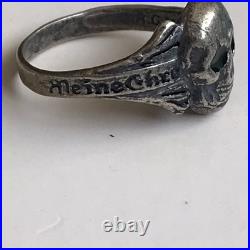
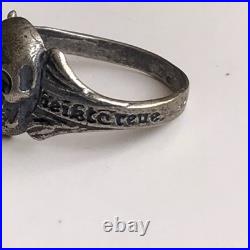
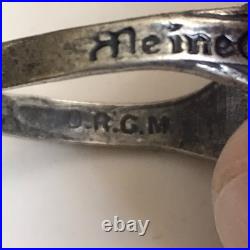
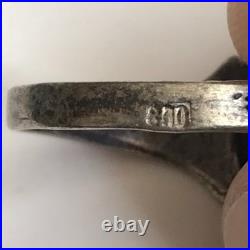
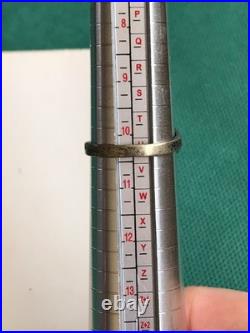
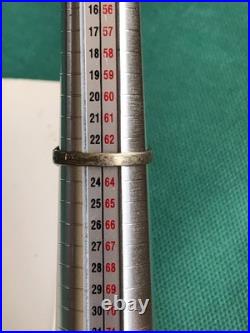
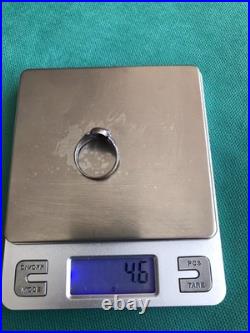
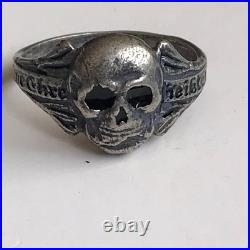
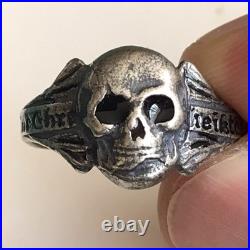

A silver ring from World War I. A great addition to your collection.

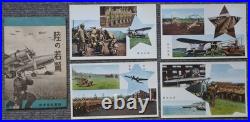
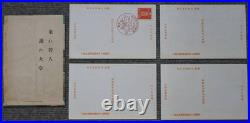
This is an original pre-war Japanese military aviation postcard set titled “Young Eagles of the Army”, issued by the Imperial Japanese Army Aviation Headquarters. The original envelope is clearly printed with: “Young Eagles of the Army” “Army Aviation Headquarters” In addition, all four postcards in the set also carry the title Young Eagles of the Army. This is important because these are not simply unrelated aviation photographs gathered together later. They were produced as a unified set under the authority of the Imperial Japanese Army Aviation Headquarters, giving them a strong connection to the official promotion and recruitment activities of Japanese Army aviation. The Army Aviation Headquarters was established in 1925 as the central organization responsible for major aspects of Japanese Army aviation, including aircraft administration, technical development, training, supply, and airfield-related matters. It continued to operate until the dissolution of the Japanese Army in 1945. What makes this set especially interesting is the combination of early military uniforms and biplane aircraft visible in the photographs. The soldiers appear to wear uniforms of the older Type 45 style or a closely related pattern, while the aircraft shown are from the earlier generation of Japanese Army aviation, when biplanes were still common. Taken together with the fact that the publisher is identified as the Army Aviation Headquarters, these details strongly suggest that the images represent the early development period of Imperial Japanese Army aviation, likely around the late 1920s to early 1930s. The exact publication year cannot be confirmed from the photographs alone, so I prefer not to state a precise date without documentary evidence. However, the uniforms, aircraft, and official issuing organization provide valuable clues to the period. The phrase “Young Eagles” was used in Japan to evoke young aviators and aspiring military airmen. In modern terms, this set can be understood as a kind of military aviation recruitment and promotional material. It presented young Japanese men with a new and exciting image of military service: flying aircraft, working around airplanes, training with aviation units, and becoming part of Japan’s rapidly developing military air arm. The photographs are also valuable because they do not show aircraft alone. They include mechanics, ground personnel, unit formations, training scenes, and aircraft on the ground, giving a broader picture of how an aviation unit actually functioned. Today, collectors are much more familiar with later Japanese aircraft such as the Zero or the Hayabusa. These postcards represent an earlier and less commonly seen chapter – the period when Japanese military aviation was still transitioning from biplanes toward the modern air forces of the 1930s and 1940s. Paper promotional material was never intended to survive for generations. The fact that the original Army Aviation Headquarters envelope and all four matching postcards remain together as a set adds considerably to its historical appeal. It would make an excellent piece for collectors interested in Japanese military aviation, early aircraft, military recruitment, uniform history, or pre-war Japanese visual culture. This is more than simply a group of old postcards. It is a small surviving record of the era when Japan was still building its military air arm – and of how that new world of aviation was presented to the young men expected to join it. Please review the photographs carefully for age-related toning, staining, wear, and other signs of age. Own a Piece of History. International Buyers – Please Note.

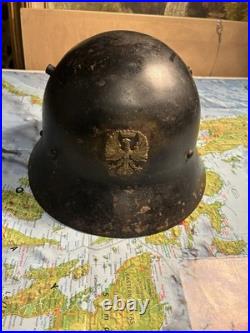
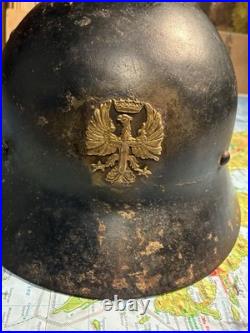
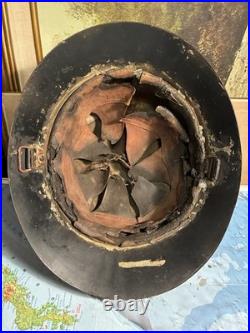
Spanish civil war military helmet. Czech made with front emblem and liner.

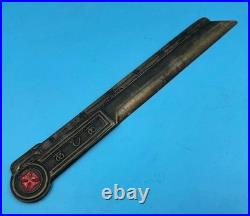
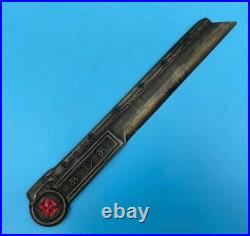
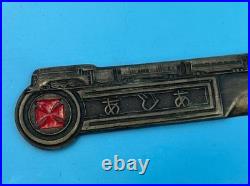
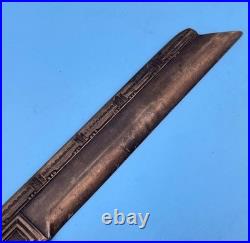
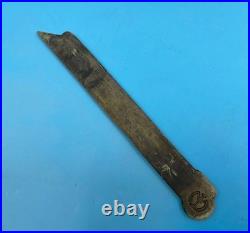
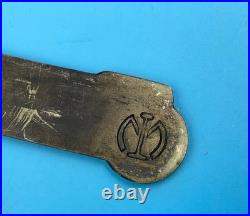
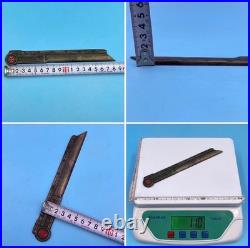
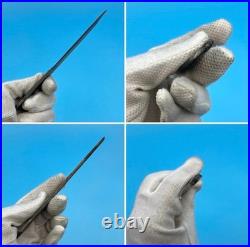
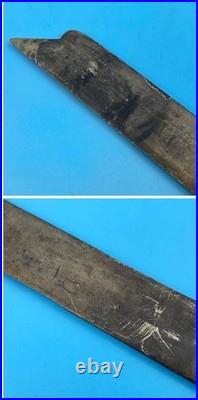
Rare commemorative paper knife issued by the South Manchuria Railway Company (Mantetsu) during the 1930s, celebrating the legendary express train “Asia” (Ajia-go) – the flagship of Japan’s imperial railway network in Manchukuo. Made of solid brass, beautifully engraved with the relief of the Asia Express locomotive, the train name “??? , ” and the red Mantetsu company crest. The reverse side also bears the official logo mark. 19 cm in length, 110 g in weight. Some age patina and wear, consistent with its age. Founded in 1906 after the Russo-Japanese War, the South Manchuria Railway (SMR) was far more than a transport company – it was the economic and military backbone of Japan’s control over Manchuria. Mantetsu managed railways, mines, cities, and intelligence networks, serving both civilian and military logistics. The Asia Express, inaugurated in 1934, represented the peak of Japanese engineering in the prewar era. Running between Dalian, Mukden (Shenyang), and Harbin, it featured streamlined design, air conditioning, and luxurious interiors. The train became a symbol of imperial prestige and modern power, used by military officers and diplomats as a moving showcase of empire. This paper knife embodies that historical moment – where technology, propaganda, and military ambition converged in Japan’s expansion across Asia. A rare collectible for historians and railway or militaria collectors alike. Own a piece of history. International Buyers – Please Note. Thank you for your understanding.

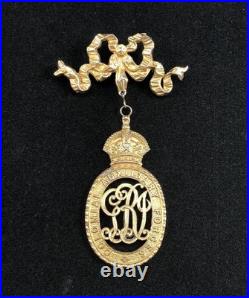
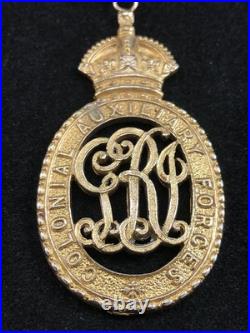
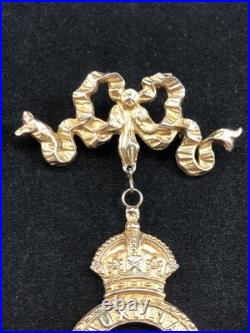
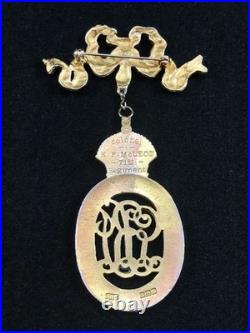
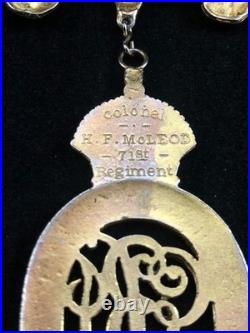
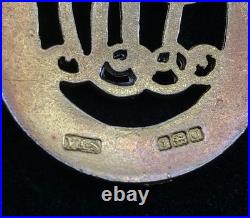
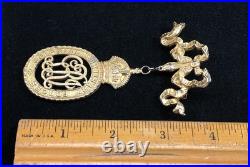
Inscribed Colonel HF McLeod 71st regiment. Made in Birmingham with date letter of 1910.

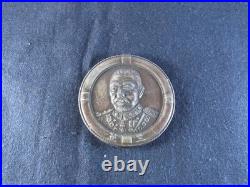
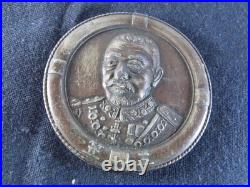
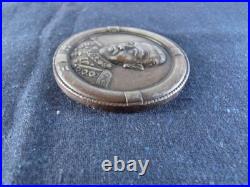
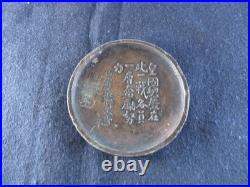
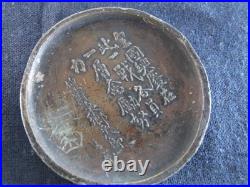
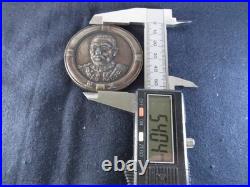
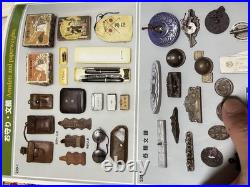
This is an antique Japanese naval commemorative metal paperweight featuring Admiral Heihachiro Togo, one of the most famous figures in Imperial Japanese naval history. The front shows a relief portrait of Admiral Togo in full military uniform and decorations. The reverse carries an even more historically significant inscription: The fate of the Empire depends upon this battle. Let every man do his utmost. ” followed by: “Count Heihachiro Togo. ” The original Japanese reads: “?????? This message is closely associated with the opening of the Battle of Tsushima, the decisive naval engagement of the Russo-Japanese War. In May 1905, Russia’s Baltic Fleet-after sailing thousands of miles from Europe-approached Japanese waters for what would become one of the most famous naval battles of the early 20th century. Waiting for it was the Japanese Combined Fleet under Admiral Togo. His flagship was Mikasa. The resulting battle ended in a devastating defeat for the Russian fleet and transformed Togo into an internationally known naval commander. That is what makes the combination on this paperweight so powerful: Admiral Togo. And the famous words associated with the Battle of Tsushima. This is not simply a portrait souvenir. It preserves, in one small object, three symbols of one of the most important moments in modern Japanese naval history. Another important point is that the same type of Togo paperweight appears in the Japanese militaria reference book Imperial Japanese Army & Navy 2, in the section titled Amulets and Paperweights. The present piece itself does not bear a manufacturing date, so its exact production year cannot be confirmed. However, the appearance of the same type in a specialist Japanese militaria reference is an important reference point when evaluating this piece as a period military commemorative item. Togo remained a national naval hero in prewar Japan, and the Battle of Tsushima continued to hold enormous symbolic importance within Japanese naval culture long after 1905. Weapons tell us how battles were fought. Objects like this show us how those battles were remembered. The surface shows age-related wear, oxidation, discoloration, scratches, and other signs of age. Please examine the photographs carefully for the exact condition. For collectors interested in Admiral Togo, Battleship Mikasa, the Battle of Tsushima, the Russo-Japanese War, and Imperial Japanese Navy history, this is a particularly evocative commemorative piece. Own a Piece of History. International Buyers – Please Note.

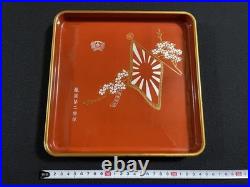
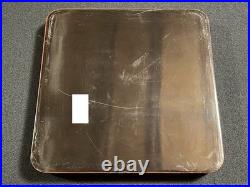
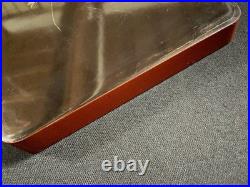
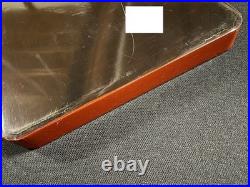
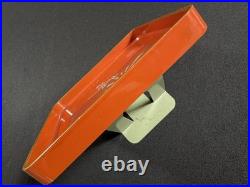
This is a remarkable commemorative lacquer tray associated with the 2nd Railway Regiment of the Imperial Japanese Army. On the left side of the tray, the unit name is clearly written in Japanese: “2nd Railway Regiment” The center features a large Imperial Japanese Army Rising Sun flag surrounded by cherry blossoms, with an Army star and a unit-related emblem above. Unlike ordinary infantry units, railway regiments were specialized technical units responsible for constructing, repairing, maintaining, and operating military railways. Their work made it possible to move troops, weapons, ammunition, food, and other supplies across long distances. The history of the 2nd Railway Regiment reaches back to 1908, when its predecessor unit was established at Tsudanuma in Chiba Prefecture. It was reorganized as the 2nd Railway Regiment in 1918. Its history crossed several major events in modern Japan. After the Great Kanto Earthquake of 1923, the unit participated in railway reconstruction work. In 1928, it was deployed during the Jinan Incident in China. Following the outbreak of the Second Sino-Japanese War in 1937, the regiment operated railways in North China and also participated in the Xuzhou Campaign. It later served in Manchuria and North China. Near the end of World War II, in 1945, the main body of the regiment was transferred to Sasebo in Kyushu, where it helped protect Japanese National Railways steam locomotives and railway operations. The regiment ended the war in Kyushu. In other words, the name preserved on this tray belonged to a unit whose history stretched from disaster relief and railway reconstruction in Japan to military railway operations on the Asian continent and finally the defense of Japan itself. The tray is also a beautiful example of the way traditional Japanese decorative arts were incorporated into military commemorative objects. The vivid vermilion surface, gold-colored border, cherry blossoms and elaborate flag design reflect the decorative tradition of Japanese lacquerware. Lacquerware had long been valued in Japan not only as practical tableware but also for ceremonial, presentation and commemorative purposes. This combination of military history, railway history and traditional Japanese craftsmanship makes the piece particularly interesting. Age-related scratches and wear are visible, especially on the reverse and around the edges, but the principal decoration and the inscription identifying the 2nd Railway Regiment remain clearly visible. Rather than representing only the men who fought at the front, this tray tells the story of the technical soldiers who built, repaired and operated the railways that kept an army moving. Own a Piece of History. International Buyers – Please Note.

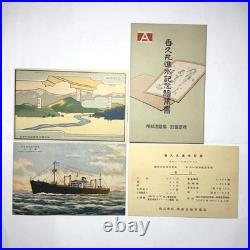
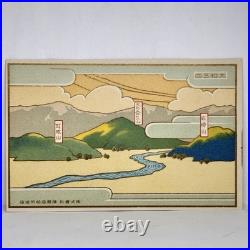
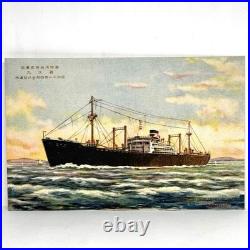
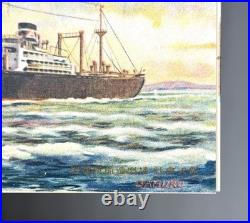

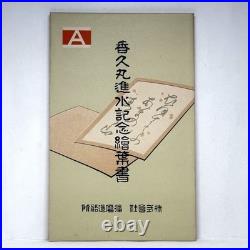
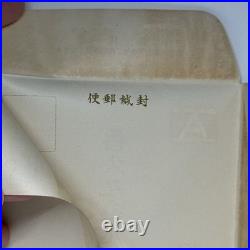
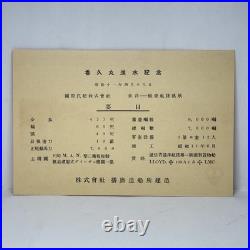
This is an original prewar Japanese commemorative postcard set issued for the launch of the Kagu Maru on April 18, 1936, at the Harima Shipbuilding Works. What makes this set particularly fascinating is what happened to Kagu Maru after these postcards were produced. At the time of her launch in 1936, Kagu Maru was not yet a naval vessel. Following the outbreak of the Second Sino-Japanese War, however, she was requisitioned by the Imperial Japanese Navy in 1937 and converted into an auxiliary seaplane tender. Kagu Maru subsequently operated with Japanese naval aviation forces in China, carrying reconnaissance seaplanes and supporting operations including the campaigns around Jiujiang and Hankow. Her story ultimately ended on November 4, 1944, when she was attacked and sunk by U. Navy submarines off the Philippines. The original envelope is especially noteworthy. It is printed: “Kagu Maru Launch Commemorative Postcards” Harima Shipbuilding Co. The accompanying specification card is headed “Kagu Maru Launch Commemoration” and dated April 18, 1936. One postcard presents a color illustration of Kagu Maru at sea. It remains a small archival record of the vessel’s birth. In 1937, she became an Imperial Japanese Navy auxiliary seaplane tender. By 1944, after years of wartime service, she lay beneath the sea. Own a Piece of History. International Buyers – Please Note.

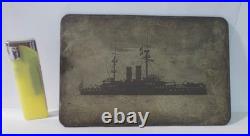
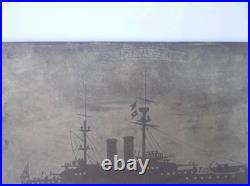
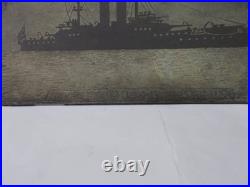
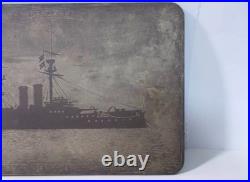
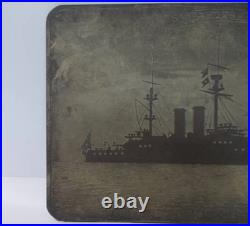
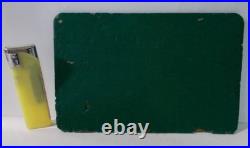
Original metal commemorative plaque for the preservation of the Imperial Japanese battleship. The plaque shows the battleship Mikasa, with the inscription. At the top and. “Preservation Commemoration, October 20, 1926″. Mikasa was the flagship of Admiral Heihachiro Togo during the Battle of Tsushima in 1905, one of the most famous naval battles of the Russo-Japanese War. After being removed from active service under the Washington Naval Treaty, Mikasa faced the possibility of dismantling. This plaque is not simply a battleship souvenir. It represents the moment when Japan chose to preserve Mikasa as history. Today, Mikasa still survives in Yokosuka as one of the world’s most important preserved warships and the only surviving pre-dreadnought battleship. Shows age-related patina, wear, discoloration, and surface oxidation. Please review all photos carefully. Own a Piece of History. Approximate 7-21days(To USA).

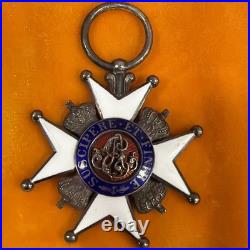
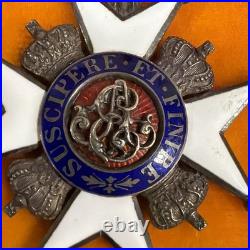
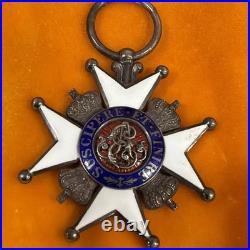
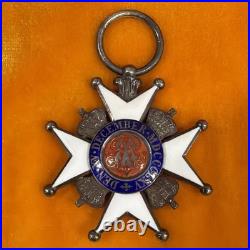
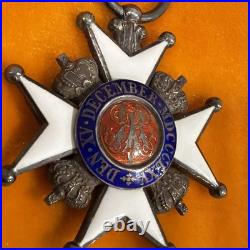
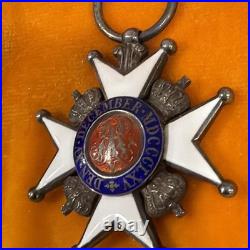
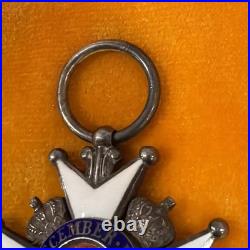
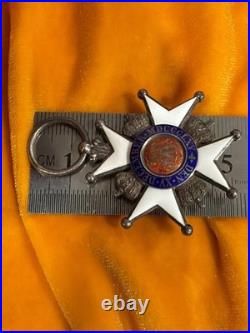
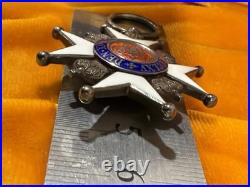
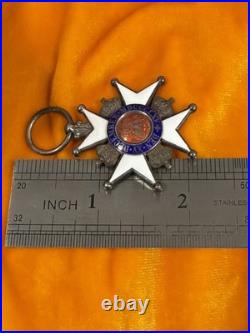
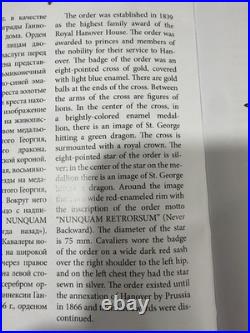
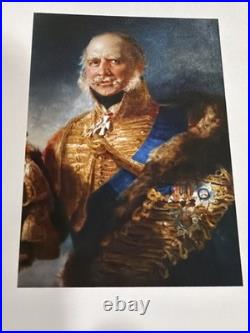
Germany / HANNOVER 1839. The product is an original. Order of ERNST AUGUSTUS. Instituted in Hannover / Germany on Dec. 15 1839 (Discontinued in 1866). This collectible item falls under the theme of Militaria and is a rare piece from the period of 1839 -1866. The fact that it was discontinued in 1866 adds to its historical significance and appeal to collectors interested in military history and memorabilia from this time period. I combine domestic and.