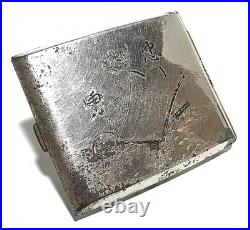
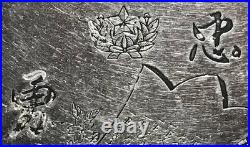
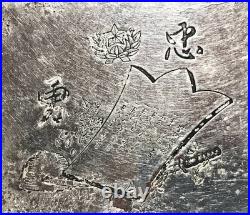
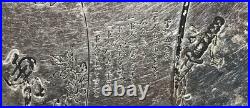
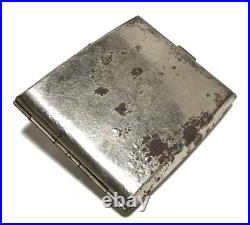
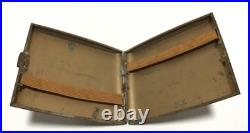
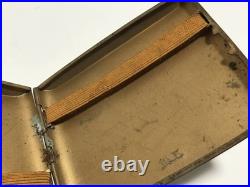
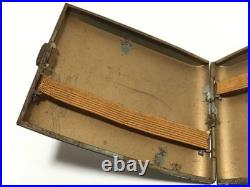
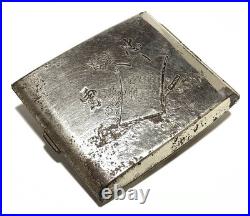
This is a prewar Imperial Japanese Army metal cigarette case associated with the Imperial Guard Division, one of the most prestigious formations of the former Japanese Army. At the top of the front is the distinctive Imperial Guard Division emblem, rather than a generic Army star. Large characters on either side read: – Loyalty – Valor Below the emblem is a design based on a commemorative plaque associated with Army Commemoration Day, and within the plaque are the Five Principles of the Imperial Rescript to Soldiers and Sailors. The Imperial Rescript to Soldiers and Sailors was issued by Emperor Meiji in 1882 and became one of the central foundations of military education in prewar Japan. Its five principal virtues were: Loyalty, Courtesy, Valor, Faithfulness, and Frugality. These principles were repeatedly taught to Japanese soldiers and sailors as the moral standards expected of military personnel. The combination of the Imperial Guard Division emblem, the words “Loyalty” and “Valor, ” and the Five Principles of the Imperial Rescript gives this small personal item unusually strong historical character. The Imperial Guard Division had its roots in the forces responsible for protecting the Emperor and the Imperial Palace. The original Guards Division organization was reorganized during World War II, and the Imperial Japanese Army itself ceased to exist following Japan’s surrender in 1945. The Imperial Rescript likewise lost its role as a military code with the dissolution of the armed forces. Cigarettes were also closely connected with everyday military life. A metal cigarette case was both a practical personal accessory and something a serviceman could carry in his uniform pocket. The original retaining straps remain inside the case. Approximate size: 7.5 × 9 × 1.5 cm The surface shows age-related wear, rust, scratches, and loss of plating. These signs of use are part of the object’s nearly century-old character. This is not simply a cigarette case. It is a small surviving object that preserves the symbols, values, and everyday material culture of Japan’s prewar military world. Own a Piece of History. International Buyers – Please Note.
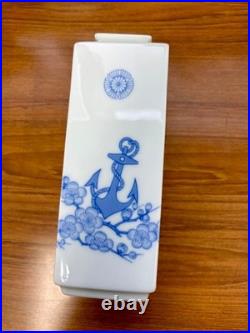
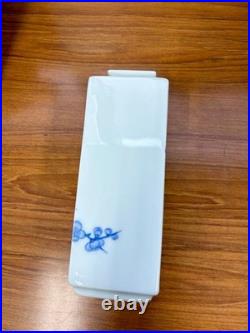
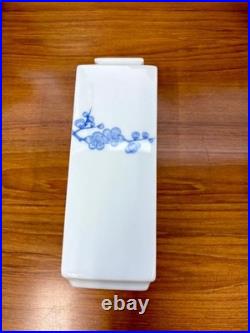
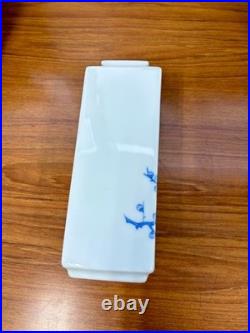
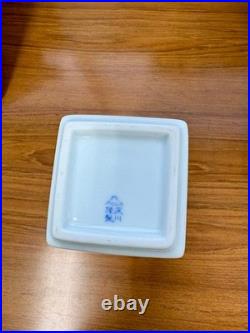
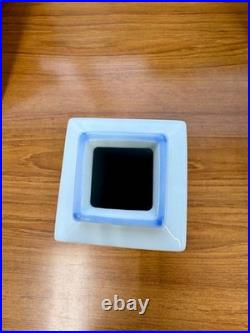
This is a prewar Japanese porcelain vase made by Fukagawa Seiji, closely associated with the Imperial Japanese Navy and the Imperial Household. The front is decorated in underglaze blue with a large Imperial Japanese Navy anchor, plum blossoms, and above them the royal crest of the Takamatsu-no-miya branch of the Imperial Family. The Takamatsu-no-miya family was one of the branches of Japan’s Imperial Household, and Prince Takamatsu himself served as an officer in the Imperial Japanese Navy. Rather than going too deeply into his personal history, the important point here is the unusual combination of an Imperial-family crest and a naval anchor on the same piece. The maker is also highly significant. Fukagawa Seiji, founded in 1894 in Arita, became one of Japan’s most prestigious porcelain manufacturers. It won a gold medal at the 1900 Paris Exposition and later became an official supplier to the Imperial Household. The underside of this vase bears the Fukagawa Seiji maker’s mark. Fukagawa also had a documented connection with the Imperial Japanese Navy. In 1916, the company became a designated Navy factory and supplied tableware for naval officers. In 1942, it was further designated as a Navy-supervised factory, producing and supplying specialized tableware and military-use ceramics. This makes Fukagawa more than simply a famous porcelain maker: during the prewar and wartime period, it had an official manufacturing relationship with the Imperial Japanese Navy. No original box or supporting provenance documents are included with this piece, but the combination of: Imperial-family crest Imperial Japanese Navy anchor Fukagawa Seiji maker’s mark makes it a particularly interesting example of Japanese military and Imperial-era porcelain. I have not found evidence that Fukagawa continued as an official designated supplier to Japan’s postwar Self-Defense Forces. Its strongest documented military connection belongs to the era of the Imperial Japanese Navy. A small porcelain vase, but one that brings together three powerful elements of prewar Japan: the Imperial Household, the Navy, and one of Japan’s most prestigious porcelain makers. Own a Piece of History. International Buyers – Please Note.
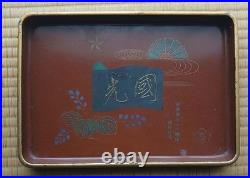
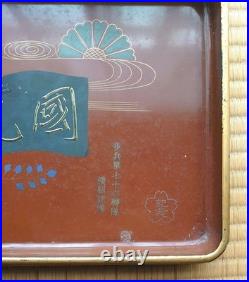
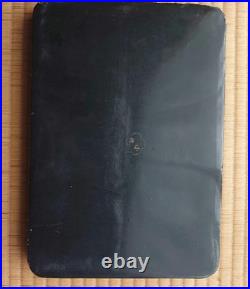
This is an original Japanese lacquer presentation tray associated with the 76th Infantry Regiment Machine Gun Unit of the Imperial Japanese Army. The front is decorated with a Japanese Army star, stylized floral and flowing-water motifs, and the large characters “Kokko” at the center. More importantly, the tray is clearly inscribed: “76th Infantry Regiment – Machine Gun Unit” “Commemorative” This makes the military connection unusually specific. Rather than being a generic Japanese Army souvenir, it can be tied directly to a particular regiment and even to its specialized machine gun unit. The 76th Infantry Regiment belonged to the Imperial Japanese Army’s 19th Division and was based in Ranam in northern Korea, then part of the Japanese Empire. The 19th Division was established as part of Japan’s military presence on the Korean Peninsula and was responsible for the strategically important northern region facing Manchuria and the Soviet Far East. During the later wartime period, elements of the division were transferred and reorganized as Japan’s military situation deteriorated. Within an infantry regiment, the machine gun unit provided concentrated firepower and required soldiers trained in the operation, maintenance, and coordinated use of heavy automatic weapons. The fact that this piece identifies the Machine Gun Unit specifically gives it considerably more historical character than a standard regimental souvenir. The reverse bears what appears to be the original owner’s surname: “Kobayashi” This personal name adds another layer of provenance and gives the object a direct human connection to the military organization named on the front. The tray itself is also a fine example of traditional Japanese lacquerware. Japanese lacquer objects were valued for their combination of beauty, light weight, and remarkable durability. Multiple layers of lacquer created a hard, protective surface, making lacquerware particularly suitable for commemorative and presentation pieces intended to be kept for many years. Presentation cups, trays, and similar lacquer objects were commonly produced in prewar Japan to commemorate military service, transfers, unit events, discharge, achievements, and other important occasions. Age-related scratches and surface wear are present, but they also give the piece the character expected of an authentic period object. With its combination of a named regiment, machine gun unit, traditional Japanese lacquerwork, and the possible original owner’s name, this is far more than decorative lacquerware-it is a surviving piece of one soldier’s military world. Own a Piece of History. International Buyers – Please Note.
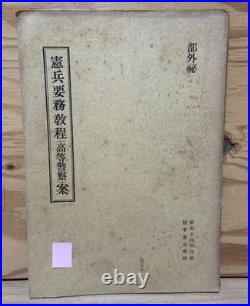
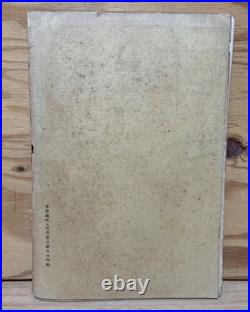
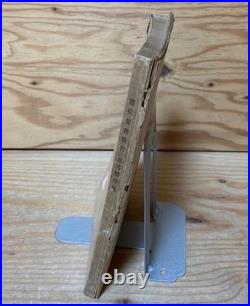
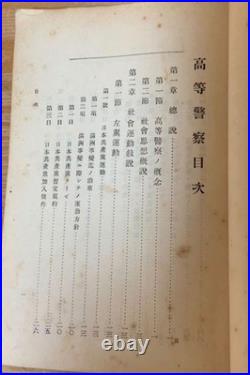
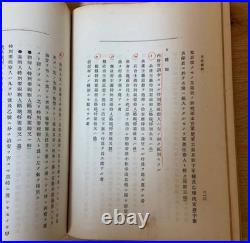
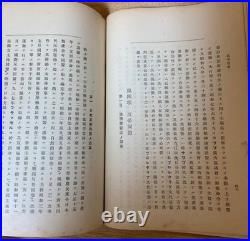
What did the Japanese military consider dangerous ideas? This is an original. 1939 (Showa 14) “Confidential” training manual. Kempei Yomu Kyotei (Higher Police Draft). Imperial Japanese Army Kempei School. Served not only as the military police but also as one of Japan’s most powerful security organizations. Their responsibilities included counterintelligence, political surveillance, suppression of espionage, and monitoring of ideological movements. Because of these activities, the Kempeitai became one of the most feared organizations in prewar and wartime Japan. This manual was prepared to train officers assigned to. Political and social thought. The Japanese Communist Party. Post-Manchurian Incident security situation. Rather than a general history book, this is a. Showing how the Japanese military itself analyzed political ideology and internal security before World War II. One reason this manual is particularly scarce is that it was marked. And distributed only within the Kempei educational system. After Japan’s surrender in 1945, the Kempeitai was dissolved under the Allied Occupation, and many internal military police documents were destroyed or discarded, making surviving originals increasingly difficult to find today. For collectors of WWII militaria, intelligence history, political history, or Japanese military documents, this is an exceptional research piece that reveals the hidden side of wartime Japan. Own a Piece of History. International Buyers – Please Note. Thank you for your understanding.
Vintage 1938 US Army JQMD Leather Satchel Bag Dispatch Map Case Brown Pre-WWII. Condition: Fair vintage condition with heavy wear from age and use. Scuffs, scratches, creasing, and surface cracking to the leather; dry and brittle top strap with stretched holes; verdigris on rivets; edge and corner wear; interior is heavily soiled; small seam split/tear near the top flap by the zipper; hardware shows oxidation. Authentic US military leather field/dispatch satchel from 1938. Stamped markings on back: US / J. / 1938 / J. = Jeffersonville Quartermaster Depot; J. Pebble-grain brown leather with dual front buckle straps and zippered top flap. Multiple compartments and snap closures inside; brass hardware and rivets. Material: Genuine leather; Color: Dark brown. Faint additional maker stamp on corner appears to read LENTZ (partially legible). Era: Pre-WWII (dated 1938); Made in USA.
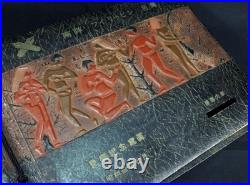
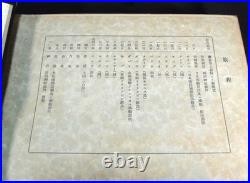
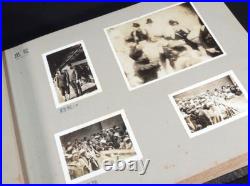
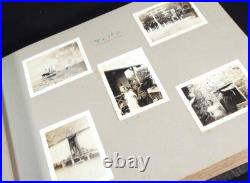
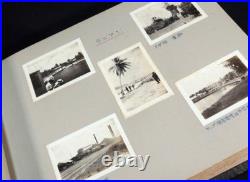
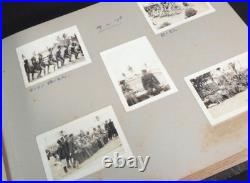
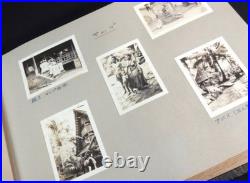
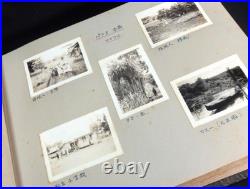
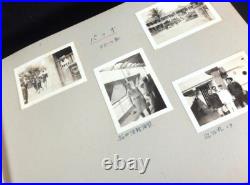
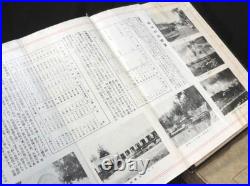
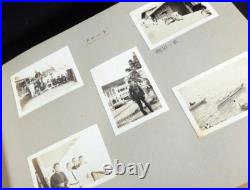
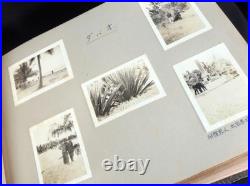
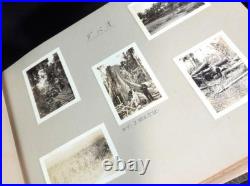
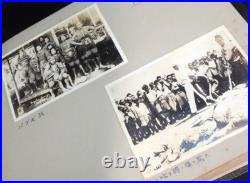
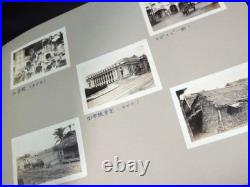
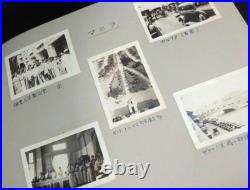
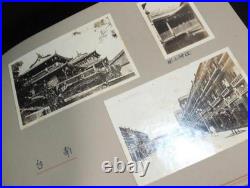
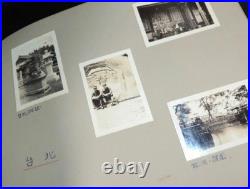
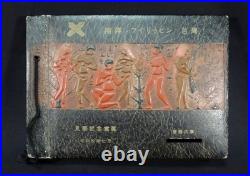
WWII Imperial Japanese South Seas, Philippines & Taiwan Photo Album (1935). This remarkable photo album contains approximately. Documenting a study tour made in. Through Japan’s overseas territories and areas of influence across the Pacific. Taiwan (Taipei and Tainan). Menado (Dutch East Indies). Along with many other locations throughout Southeast Asia and the South Pacific. Rather than focusing on military subjects, the album records everyday life throughout Japan’s expanding maritime sphere before the Pacific War. It includes ports, schools, government buildings, shrines, streets, villages, tropical landscapes, indigenous communities, traditional dances, canoes, local architecture, and Japanese settlements overseas. One of the most fascinating aspects of this album is its coverage of the. After Germany’s defeat in. Japan took control of many Pacific islands-including. Saipan, Tinian, Palau, and Yap. Under a League of Nations mandate. During the following two decades Japan developed these islands with schools, ports, government offices, and civilian communities. Everything changed during World War II. The Pacific campaign devastated many of these islands. Fierce battles were fought across Saipan, Tinian, and Peleliu, and much of the Japanese-built infrastructure disappeared forever. Many of the towns, buildings, and communities seen in this album no longer exist today. That is what makes this album so compelling. It preserves a peaceful world that vanished only a few years later. The photographs also document the Japanese community in. Then home to one of the largest Japanese populations outside Japan, as well as colonial Manila, Taiwan under Japanese administration, and parts of the Dutch East Indies. Together they create an unusually broad visual record of East and Southeast Asia immediately before the outbreak of the Pacific War. Although this album was compiled by students from. One of Japan’s oldest and most respected universities, that is not its greatest significance. Its real value lies in the extraordinary visual record it preserves-capturing places, cultures, and communities across the Japanese Pacific that would soon be transformed forever by war. The original travel itinerary is still included, allowing the entire route of the expedition to be followed. Many photographs retain handwritten captions identifying locations and subjects, making this an excellent resource for historians, researchers, and collectors. This is far more than a travel souvenir. It is a visual time capsule of a lost world. Own a Piece of History. International Buyers – Please Note. Thank you for your understanding.
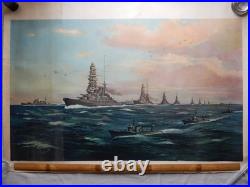
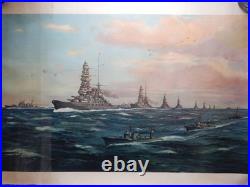
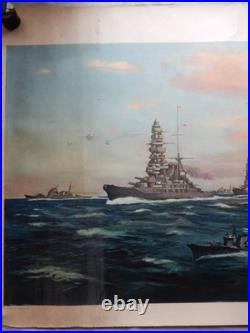
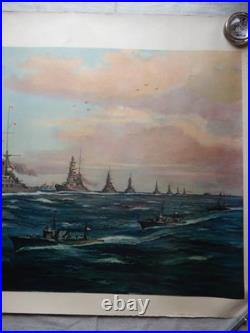
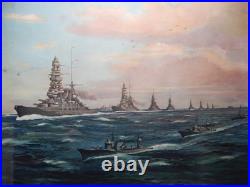
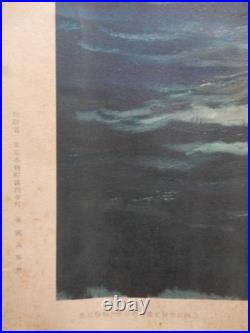
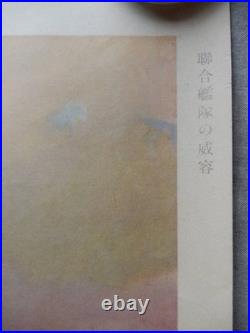
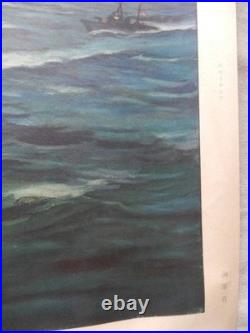
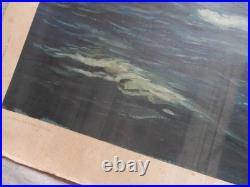
This is a large prewar Japanese naval color print titled “The Majesty of the Combined Fleet”, issued by the Imperial Japanese Navy Ministry in May 1935. The artwork presents the Combined Fleet as a powerful unified force: large battleships advancing in formation, destroyers cutting across the foreground, and aircraft flying overhead. Rather than portraying a single vessel, the composition was designed to express the scale, strength, and prestige of the Imperial Japanese Navy as a whole. The right margin is printed with: “The Majesty of the Combined Fleet” “May 1935″ “Navy Ministry” Additional printing information in the margin includes references to the printer in Uchisaiwaicho, Kojimachi Ward, Tokyo, and Teikoku Kaigun-sha. The date is especially important. This was published in 1935, six years before the Pacific War began, during a period when Japan still maintained a large and highly visible battle fleet. The image reflects how the Imperial Japanese Navy wished to present the Combined Fleet to the public: battleships at the center, supported by destroyers and naval aviation. At approximately 108 × 78 cm, this is a very large display piece with considerably more visual impact than ordinary wartime prints or postcards. There are age-related stains, discoloration, folds, edge wear, and other signs of use and storage. Please examine the photographs carefully for condition. More than simply a naval illustration, this is a surviving piece of prewar Japanese naval visual culture, showing how the Combined Fleet was represented at the height of its prestige. Own a Piece of History. International Buyers – Please Note.
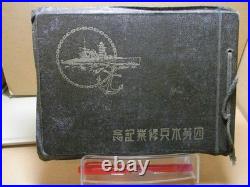
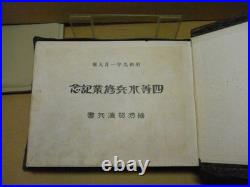
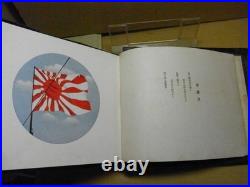
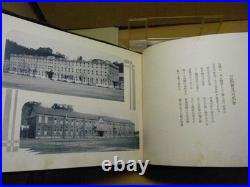
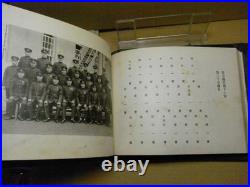
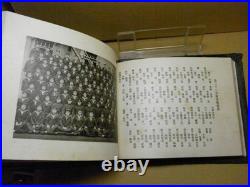
This is an original commemorative photo album produced in 1934 for sailors who completed their initial training at the Yokosuka Naval Barracks of the Imperial Japanese Navy. The title page reads: “Entered Service: January 1934″ “Commemorative Album for the Completion of Seaman Fourth Class Training” “Yokosuka Naval Barracks” The naval barracks were where newly enlisted sailors received their basic military education and training before moving on to active naval service. Yokosuka was one of the most important bases of the Imperial Japanese Navy and served as a major center for preparing sailors for service throughout the fleet. Inside are historical photographs documenting the environment in which these young sailors were trained, including Imperial Japanese Navy facilities and barracks, sailors in uniform, class and unit group photographs, the Rising Sun naval ensign, and pages identifying individual servicemen by name. What makes this album particularly interesting is that it does not simply preserve images of warships or famous officers. It preserves the faces of the ordinary sailors who formed the human foundation of the Japanese Navy. The album dates to 1934, seven years before the Pacific War began. It therefore records the Imperial Japanese Navy during the prewar period, when its peacetime training system and enormous fleet organization were still functioning before the devastating losses of the coming war. For collectors and researchers, this is a tangible record of how an ordinary young man entered the Imperial Japanese Navy and was transformed into a trained sailor. The album shows age-related wear, staining, discoloration, and rubbing consistent with an approximately 90-year-old military document. Please examine the photographs carefully for its condition. A fascinating surviving record of the men behind the Imperial Japanese Navy. Own a Piece of History. International Buyers – Please Note.