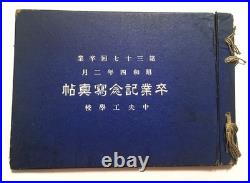
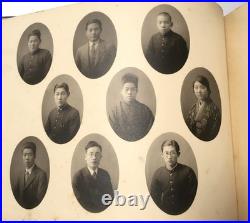
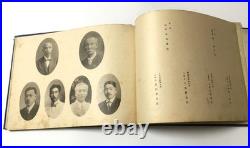
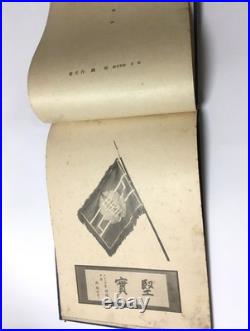
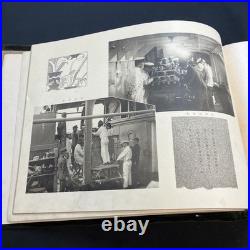
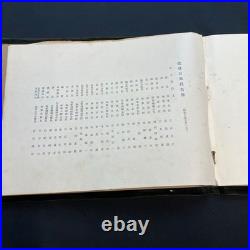
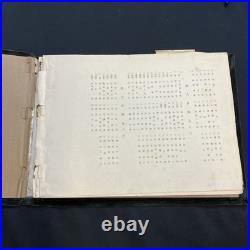
This is an original graduation commemorative photo album from Chuo Technical School in Tokyo, dated February 1929. Founded in 1909, Chuo Technical School trained practical engineers in fields such as architecture, machinery, electrical work, civil engineering, and surveying. Although it was a civilian technical school, these fields stood very close to Japan’s military, government, and industrial infrastructure during the prewar period. One particularly interesting feature is the portrait of the school’s principal, Rensaku Hayashi, a former Imperial Japanese Army Major General. This gives the album an unusual historical context. It is not a military academy album, but it shows how civilian technical education and the military world could overlap in prewar Japan. Skills such as surveying, civil engineering, construction, and mechanical engineering were essential not only to civilian development, but also to military logistics, fortifications, transport, and engineering units. The album contains portraits of faculty and students, group photographs, and a photograph of the school flag bearing the word “Kenjitsu, ” meaning “steadfast” or practical and sincere. These young men graduated in 1929, only two years before the Manchurian Incident. Many of them would go on to live and work through the period in which Japan rapidly expanded its heavy industry, infrastructure, and military mobilization. Rather than showing soldiers already at war, this album captures something earlier: the generation of young technical men who entered Japanese society just before the country moved into the turbulent 1930s and wartime era. There is age-related wear, staining, and deterioration around the binding. Please carefully examine the photographs for condition. Own a Piece of History. International Buyers – Please Note.
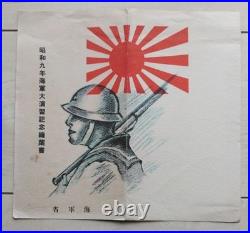
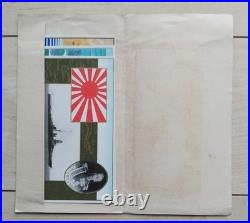
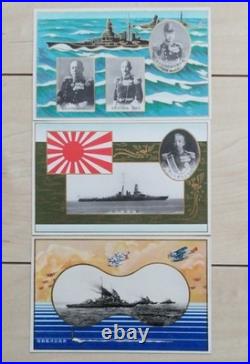
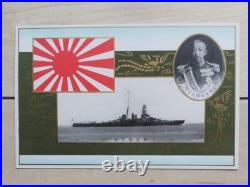
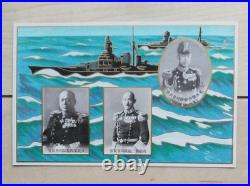
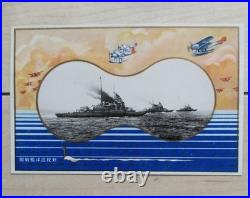
Own a piece of history. This is an original commemorative postcard set issued in Showa 9 (1934) by the Imperial Japanese Navy for the Great Naval Maneuvers (Kaigun Daienshu). The set includes 3 illustrated postcards with original envelope, issued by the Navy Ministry. About the Envelope (Cover Text). (“Commemorative Postcards of the Showa 9 Imperial Navy Grand Maneuvers – Navy Ministry”). What was the 1934 Great Naval Maneuvers? Who: Conducted by the Imperial Japanese Navy, under direct supervision of senior admirals. What: A large-scale naval exercise to test Japan’s latest fleet organization, new cruisers, and naval aviation coordination. 1934 (Showa 9) – a crucial pre-WWII moment as Japan expanded naval power under the London Naval Treaty limitations. Where: The maneuvers took place in Japanese waters and the Pacific coast, with participation of battleships, cruisers, destroyers, and aircraft. Why: To demonstrate naval readiness, showcase new warships, and strengthen command structure before escalating tensions in Asia and the Pacific. How: By mobilizing the Combined Fleet , including fleet reviews, simulated engagements, and inspection by the Emperor’s representatives. What is depicted in the postcards? Warships & Naval Aviation: New heavy cruisers at sea with fighter aircraft overhead. Commanders: Portraits of admirals such as fleet commanders and task force leaders, with battleships in the background. Rising Sun Flag motif: Symbolizing the Imperial Navy’s pride and expansion in the 1930s. Why it matters. This set is more than postcards-it is an authentic wartime propaganda item showing how Japan celebrated its naval power in the 1930s. Unlike postwar reproductions, it preserves the original art style, photography, and Navy-issued format. Collectors of WWII Japanese militaria. Vintage postcard and ephemera enthusiasts. Includes 3 postcards with original illustrated envelope. Some age toning, small stains, and wear due to 90 years of storage (see photos). No writing on reverse sides. Standard postcard format approx. 9 × 14 cm. Imperial Japanese Navy / IJN / 1930s Naval Exercises / Grand Maneuvers / Warship Postcards / Battleship / Cruiser / Admiral Portraits / WWII Propaganda / Rising Sun Flag / Showa 9 / Combined Fleet / Rare Ephemera. ? This is a rare primary source from pre-WWII Imperial Japan – don’t miss the chance to own a piece of naval history. Approximate 7-21days(To USA).
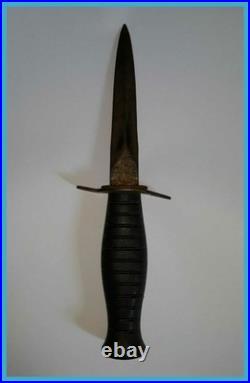
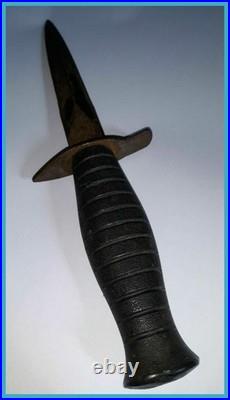
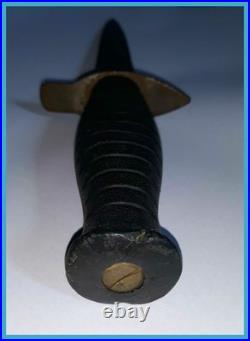
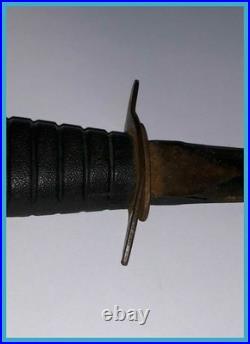
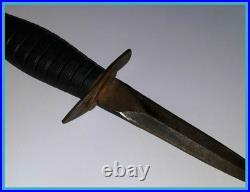
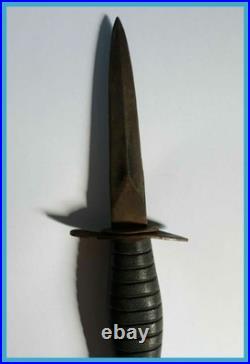
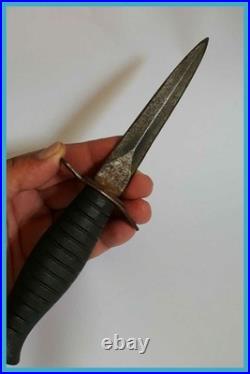
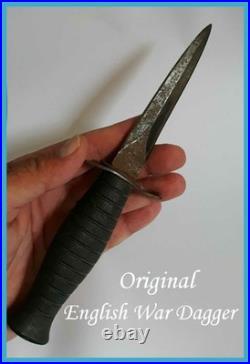
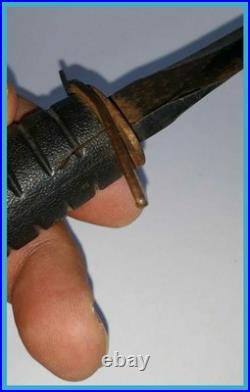
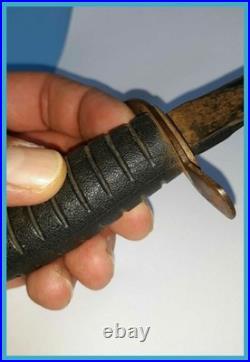
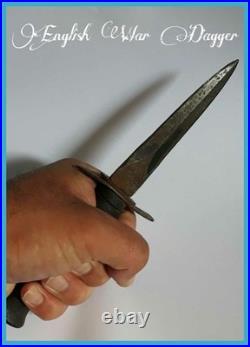
English Army War Dagger! An absolutely authentic item of the English army of the first half of the twentieth century! A more accurate period is approximately the forties of the twentieth century, when the troops of the British army were still on the territory of Israel at that time! Since that time, this dagger has not left the territory of Israel! I want to assure you that this item is absolutely genuine! The dagger has certain signs of wear, which, however, does not affect its general condition! The condition of the item can be assessed as very good! If necessary, a small restoration is sufficient, but this is up to you personally! This is the perfect acquisition of authentic combat daggers! Please take a close look at the photos I submitted! I will be glad to answer any questions you may have!
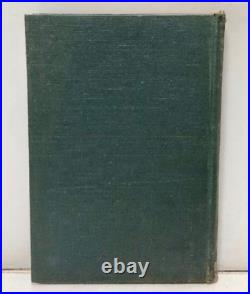
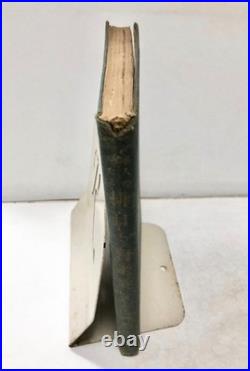
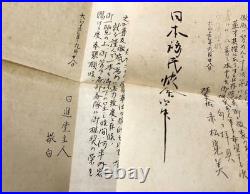
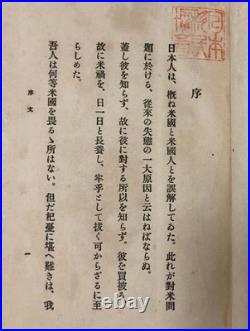
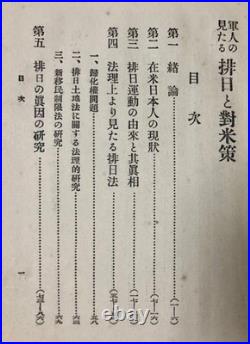
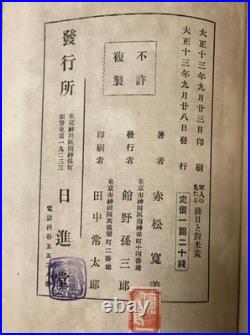
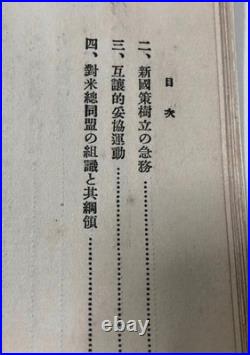
Original 1924 (Taisho 13) Japanese military-political book titled “Anti-American Policy and Countermeasures, ” written by Army Officer Akamatsu Hiromi. Published the same year as the U. Immigration Act of 1924 (Japanese Exclusion Act), this rare work reveals how Japan’s military thinkers viewed the growing tension with the United States after World War I. Akamatsu analyzed the anti-Japanese movement in America, the legal framework of the Exclusion Act, and proposed strategic countermeasures from Japan’s perspective. Chapters include comparisons of Japan and America’s military and naval power, the concept of a united anti-American alliance, and early ideas about air warfare and Pacific strategy. The Situation of Japanese Immigrants in the U. Legal study of the Exclusion Act. Racial and economic causes of anti-Japanese sentiment. Strategic comparison of Japan and America. Proposal for an “Anti-American Alliance”. Naval and aerial combat planning. ? This copy includes a handwritten presentation letter dated September 1924 from the publisher Nisshindo, addressed to a member of the Japanese aristocracy. Such accompanying documents make this a museum-level primary source of Japan’s interwar military thought. ? Title: Gunjin no Mitaru Haiji to Taibeisaku. ? Author: Akamatsu Hiromi. ? Publisher: Nisshindo, Tokyo. ? Published: September 18, 1924 (Taisho 13). ? Condition: Some wear, age spots, and stamps; complete and legible text. This is a rare pre-WWII Japanese military analysis that reflects Japan’s perception of the United States long before Pearl Harbor. Highly valuable for researchers of Japan-U. Relations, prewar propaganda, and military strategy history. ? Own a primary document that foreshadowed the Pacific War. International Buyers – Please Note. Thank you for your understanding.
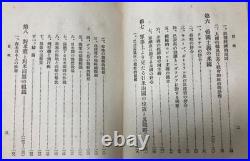
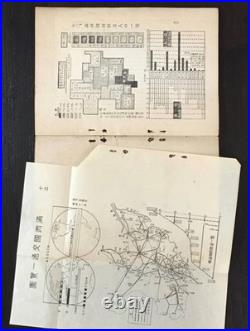
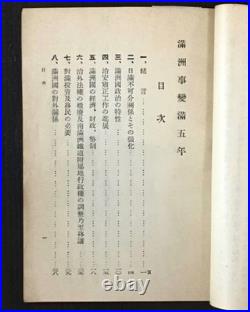
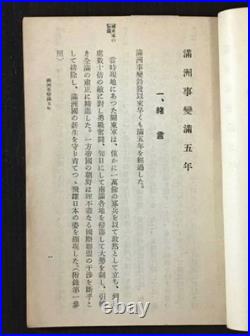
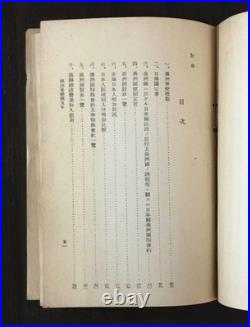
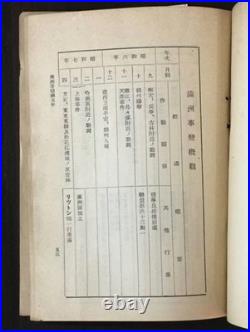
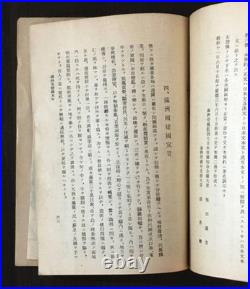
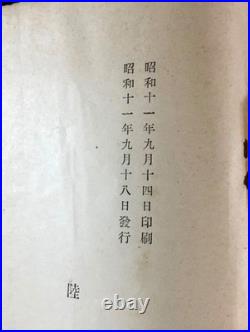
This is an original. 1936 publication issued by the Imperial Japanese Army Ministry. “Five Years Since the Manchurian Incident”. It was published on. Exactly five years after the beginning of the Manchurian Incident in 1931. The Manchurian Incident led to the expansion of Japanese military control in northeastern China and, in 1932, to the establishment of. This book was created by the Japanese Army to review what had happened during those five years and to explain how Manchuria had changed militarily, politically, economically, and logistically. What Happened After the Fighting? The book covers subjects including. The course of the Manchurian Incident. The establishment of Manchukuo. Relations between Japan and Manchukuo. Security operations and military control. Japanese settlement in Manchuria. Finance, industry, and natural resources. Railways and transportation networks. What makes this publication especially interesting is that it does not stop with the fighting itself. It shows what came afterward: railways were expanded, companies were organized, resources were moved, and administrative systems were built. In other words, this is a Japanese Army record of. How military conquest was followed by the construction of a political, economic, and transportation system in Manchuria. The book also includes a. Foldout map showing the transportation network of Manchukuo. In such a vast territory, railways were far more than ordinary civilian transportation. They moved troops, weapons, food, coal, agricultural products, industrial materials, and other strategic supplies. The railway network therefore supported both economic development and military logistics, making it one of the key systems behind Japanese control of Manchuria. A State That Existed for Only 13 Years. Manchukuo was established in 1932 and disappeared in 1945 after Japan’s defeat in World War II. It existed for only about. During that short period, a large political and economic system was created across what is now northeastern China under strong Japanese military and political influence. This book was published while Manchukuo still existed and was only a few years old. It is not a later history book. It is a contemporary primary source showing. How the Imperial Japanese Army itself presented the first five years of the Manchurian Incident and the creation of Manchukuo. This is an original period publication from approximately 90 years ago. The cover and pages show age-related toning, foxing, stains, rubbing, creases, and wear to the edges. The foldout map may also show folds, small tears, or other age-related wear. Please examine all photographs carefully for the exact condition and contents. From the military actions of 1931 came railways, corporations, cities, and eventually an entire state. This book preserves the early history of a country that existed for only thirteen years. Own a Piece of History. International Buyers – Please Note. Thank you for your understanding.
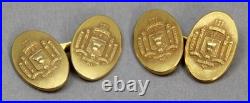
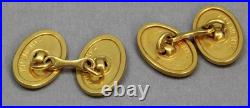
KREMENTZ US Naval Academy USNA Trident Cuff Links U. Gorgeous set of cufflinks in excellent condition as seen in the photos. Glynn Camera & Collectibles. About Us Glynn Camera has been in business since 1978. The digital camera pretty much made Glynn Camera obsolete so I closed my brick-and-mortar store in 2005. Vintage and used camera accessories are my main focus but my wife and I have always been fascinated with affordable antiques and collectibles so gradually I have added more and more items of that sort that we personally find interesting. Hopefully you will too! I also sell other peoples great items on consignment. Whether it’s my stuff or someone elses’s consignment stuff I will always try and accurately describe the item to the best of my ability. I take pride in providing interesting products at reasonable prices and I also strive to provide the best customer service possible. If you don’t hear from me then I probably overlooked your message or it disappeared somewhere in cyberspace! And you might want to try re-sending. I REALLY DO answer messages as soon as I can! All sales are final unless the item has not been accurately represented. If you feel this is the case, or if there is some other problem, feel free to contact me and we will work out a resolution that pleases both of us. But please remember – if you don’t let me know about a problem – I CAN’T FIX IT! Powered by SixBit’s eCommerce Solution.
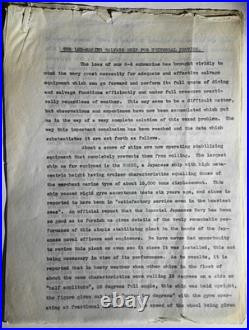
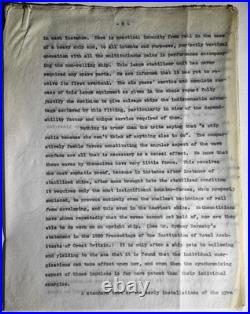
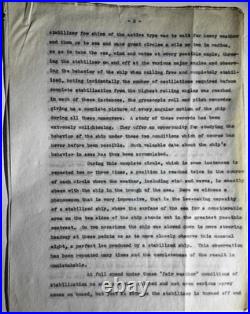
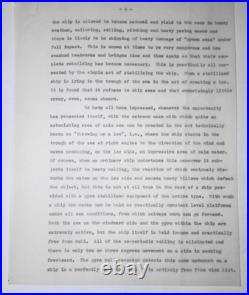
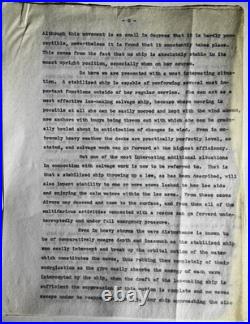
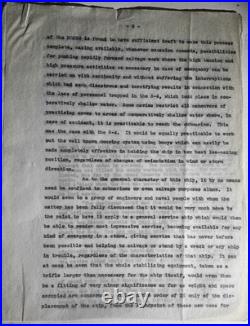
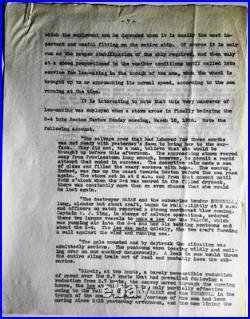
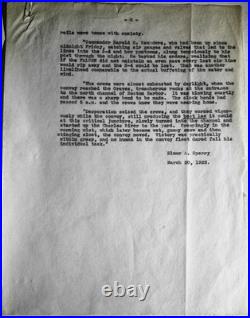
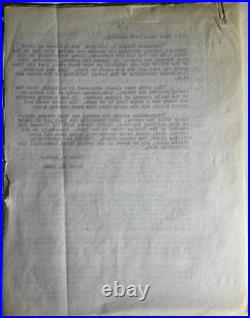
Sperry Date: March 20, 1928 Format: 8-Page Typed Document on Historical Onion-Skin Paper (Carbon Copy Era). HISTORICAL OVERVIEW: Original 1928 8-page technical proposal by legendary American inventor Elmer A. Sperry (founder of the Sperry Gyroscope Company). Written immediately following the tragic December 1927 sinking of the USS. Submarine, this document outlines Sperry’s visionary concept for a specialized salvage vessel. The end of the document features the typed name. (Note: This is a typed attribution from the era, not a hand-inked signature). Paper: Original, delicate onion-skin paper typical of late-1920s office duplicates. Flaws: No tears or rips. Expect light, natural age-toning/yellowing consistent with a 90+ year-old document. Text remains crisp, dark, and entirely legible. Track Page Views With.
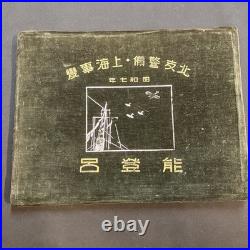
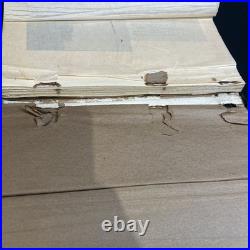
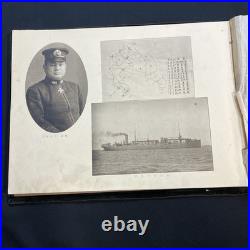
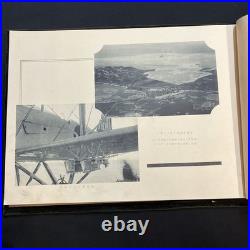
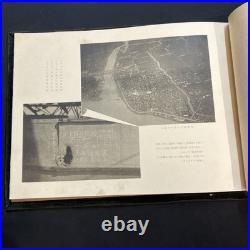
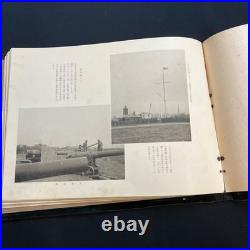
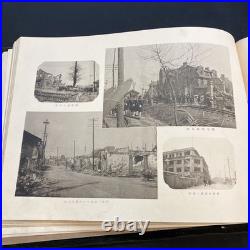
At the time, Notoro was commanded by Captain Teizo Minami. The front cover is clearly marked: “North China Security / Shanghai Incident” “Showa 7″ (1932) “Notoro” Notoro was originally built as an oiler and was later converted for use as a seaplane tender, becoming part of the early development of Imperial Japanese naval aviation. During the First Shanghai Incident in 1932, aircraft from Notoro operated in the Shanghai area on reconnaissance and combat-related missions. This is therefore more than a souvenir album. Seaplane tenders played an important role before aircraft carriers became dominant, supporting reconnaissance, observation, and other aviation operations. For that reason, this album is also an interesting document of the early era of Japanese naval aviation. The binding has significant age-related damage and some pages show staining and wear. Please review the photos carefully for condition. Recommended for collectors of the Imperial Japanese Navy, seaplane tenders, naval aviation, the First Shanghai Incident, and prewar military photography. Own a Piece of History. International Buyers – Please Note.
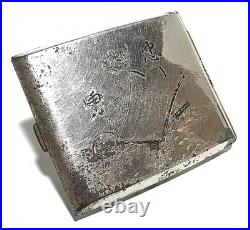
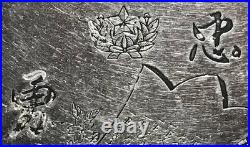
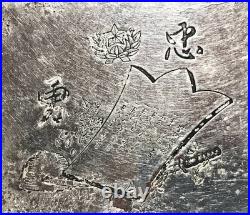
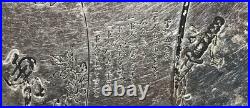
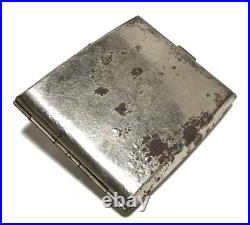
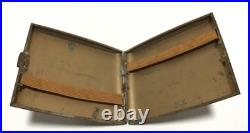
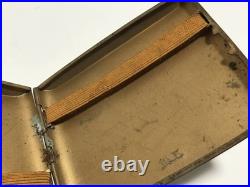
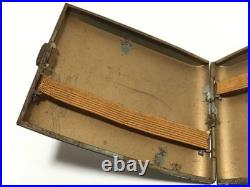
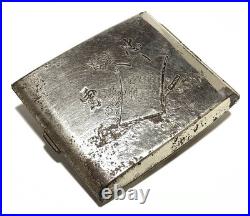
This is a prewar Imperial Japanese Army metal cigarette case associated with the Imperial Guard Division, one of the most prestigious formations of the former Japanese Army. At the top of the front is the distinctive Imperial Guard Division emblem, rather than a generic Army star. Large characters on either side read: – Loyalty – Valor Below the emblem is a design based on a commemorative plaque associated with Army Commemoration Day, and within the plaque are the Five Principles of the Imperial Rescript to Soldiers and Sailors. The Imperial Rescript to Soldiers and Sailors was issued by Emperor Meiji in 1882 and became one of the central foundations of military education in prewar Japan. Its five principal virtues were: Loyalty, Courtesy, Valor, Faithfulness, and Frugality. These principles were repeatedly taught to Japanese soldiers and sailors as the moral standards expected of military personnel. The combination of the Imperial Guard Division emblem, the words “Loyalty” and “Valor, ” and the Five Principles of the Imperial Rescript gives this small personal item unusually strong historical character. The Imperial Guard Division had its roots in the forces responsible for protecting the Emperor and the Imperial Palace. The original Guards Division organization was reorganized during World War II, and the Imperial Japanese Army itself ceased to exist following Japan’s surrender in 1945. The Imperial Rescript likewise lost its role as a military code with the dissolution of the armed forces. Cigarettes were also closely connected with everyday military life. A metal cigarette case was both a practical personal accessory and something a serviceman could carry in his uniform pocket. The original retaining straps remain inside the case. Approximate size: 7.5 × 9 × 1.5 cm The surface shows age-related wear, rust, scratches, and loss of plating. These signs of use are part of the object’s nearly century-old character. This is not simply a cigarette case. It is a small surviving object that preserves the symbols, values, and everyday material culture of Japan’s prewar military world. Own a Piece of History. International Buyers – Please Note.