
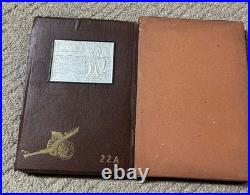
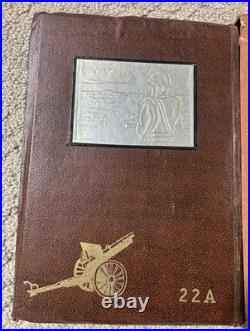
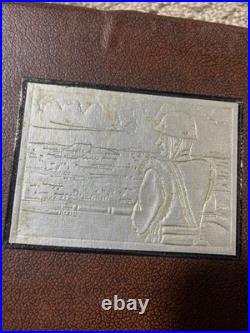
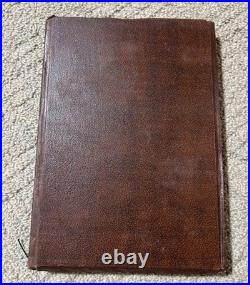
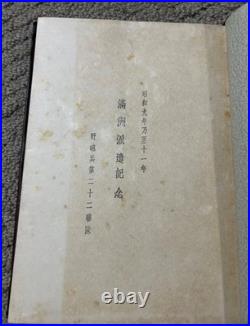
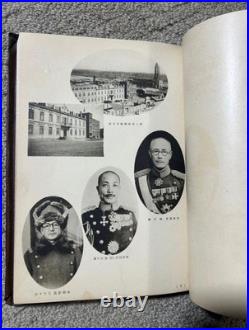
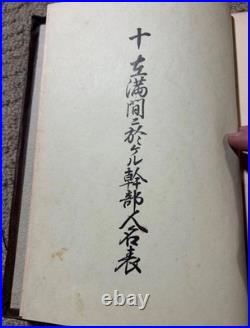
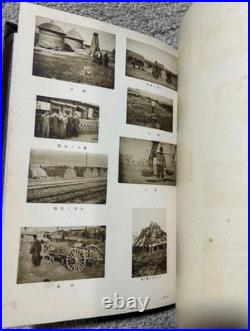
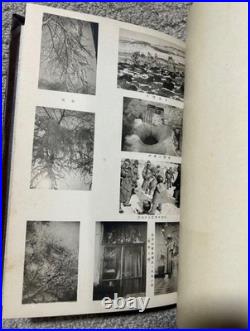

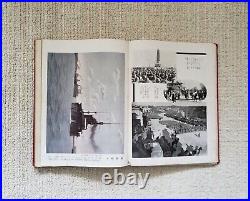
This is an original Imperial Japanese Army photo album commemorating the Manchuria deployment between 1934 and 1936. The album documents the overseas service of an Imperial Japanese Army field artillery regiment, recording the daily life, training, equipment, and surroundings of Japanese soldiers stationed in Manchuria during the early Showa period. Soldiers’ daily life and group portraits. Field artillery guns and equipment. Military training scenes and formations. Uniforms, insignia, and period gear. Landscapes and urban scenes of Manchuria. Rather than staged combat propaganda, the album presents a calm, documentary-style record of a Japanese Army artillery unit during a relatively stable pre-war phase. The unit documented in this album is identified as Field Artillery Regiment No. 22, a Japanese Army artillery regiment responsible for providing fire support to infantry formations. Artillery units played a crucial role in Imperial Japanese Army operations, requiring technical skill, coordination, and disciplined organization. This album captures the regiment before the later stages of the war, when material shortages and severe losses became widespread. Manchuria had become firmly established under Japanese control. Military organization and training were still relatively well-equipped. Large-scale total war conditions had not yet fully emerged. As such, this album preserves a moment before the extreme deterioration and collapse experienced by many units later in the war. Approximately 90 years old. Age-related toning, stains, and wear present. No major structural damage. Overall condition consistent with original military albums of this era. Please review all photos carefully. This album is more than a collection of old photographs. It is a primary historical document offering insight into. Imperial Japanese Army artillery units. Early Showa-era overseas deployment. The lived reality of soldiers stationed in Manchuria. Highly suitable for collectors of Japanese military history, Manchurian studies, and pre-World War II primary sources. International Buyers – Please Note. Thank you for your understanding.

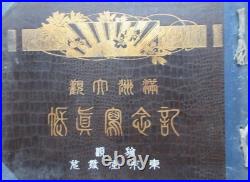
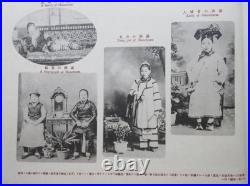
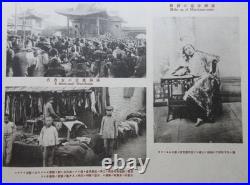
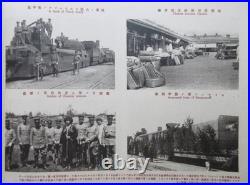
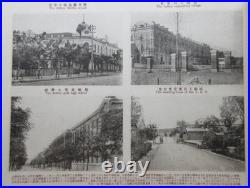
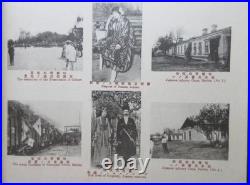
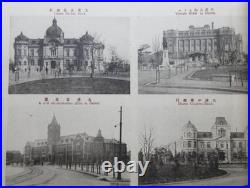
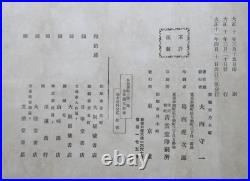
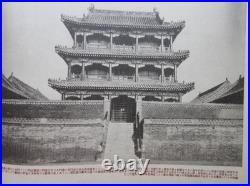
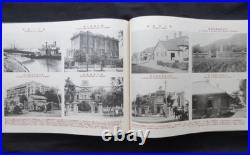
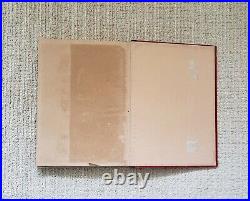
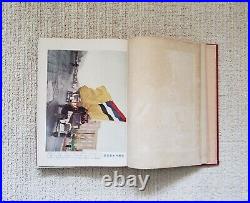
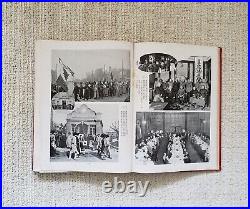
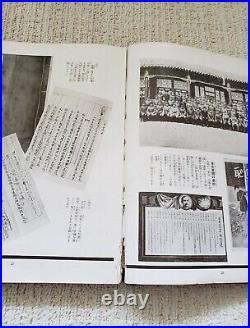
Published in 1922 (Taisho 11) by Seiun-do, this lavish photo album Manshu Taikan (“Great View of Manchuria”) presents a rare visual record of Manchuria during the Taisho era. “Manchuria” refers to the region of today’s Northeast China (Liaoning, Jilin, and Heilongjiang), a strategic crossroads where Japanese, Russian, and Chinese ambitions collided after the decline of the Qing dynasty and the 1911 Revolution. Following the Russo-Japanese War (1905), Japan gained influence over the South Manchurian Railway and the leased territory of the Kwantung Peninsula, fueling rapid urban development and railway expansion. It captures not only urban landscapes and colonial modernity but also the multi-ethnic character and exotic cultural impressions of the region. Issued a decade before the establishment of the Japanese-controlled state of “Manchukuo” (1932), this work preserves the fleeting image of a land that has since become a vanished nation. Today it stands as a valuable primary source for historians and collectors interested in the intersection of Imperial Japan and Manchuria. Own a Piece of History. Approximate 7-21days(To USA).

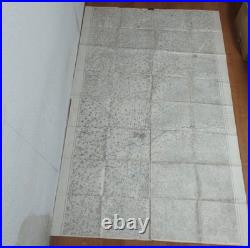
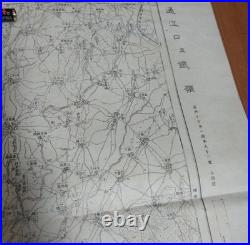
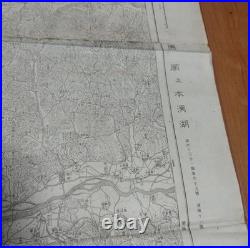
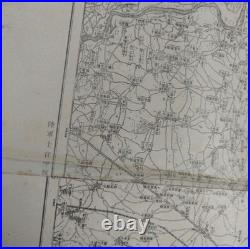
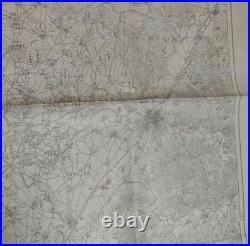
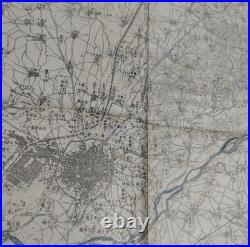
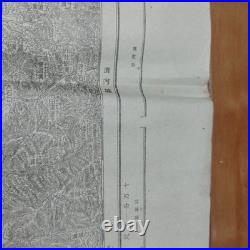
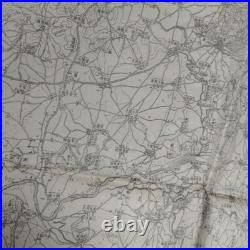
Pre-WWII Imperial Japanese Army topographical map. “Manchuria 1:100,000 Series”. This large folding military map covers the Fengtian (Mukden / modern Shenyang) region in Manchuria. “Manchuria 1:100,000 Map”. Tongjiangkou & Tieling. Fushun & Benxi Lake. Scale 1:100,000 (Japanese ri scale notation). “Army Cadet School” (Rikugun Shikan Gakko). Mukden urban grid layout. Fushun coal mining area. Benxi (major iron and steel industrial zone). South Manchurian Railway lines. Detailed river systems. Military-relevant transport routes. Extensive contour lines and terrain features. Numerous villages labeled in kanji. The Mukden region was one of Japan’s most strategically important areas in Manchuria following the Russo-Japanese War. The presence of “Army Cadet School” marking suggests it may have been used for military education and officer training. Large folding format, field-usable military issue. Original fold lines. Age toning and stains. No major structural loss observed (see photos). An excellent historical document for collectors of. Imperial Japanese Army materials. WWII Asian theater. International Buyers – Please Note. Thank you for your understanding.

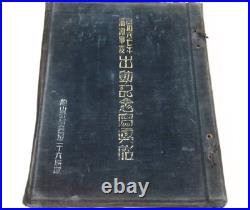
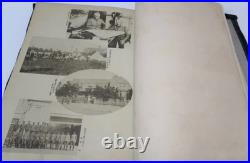
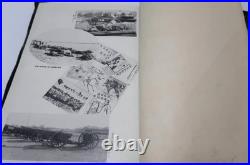
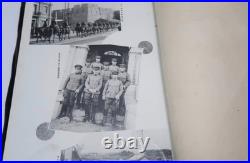
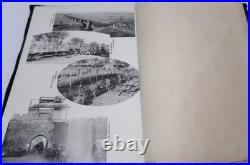
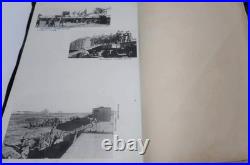
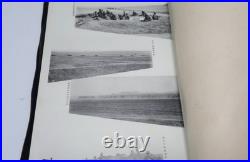
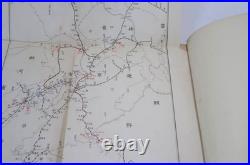
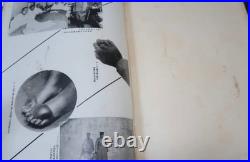
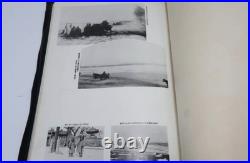
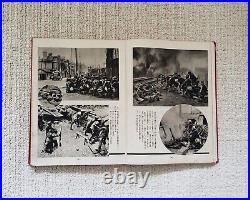
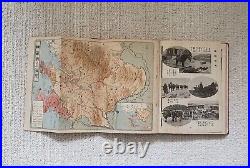
This is an original Japanese military photo album documenting the deployment of an artillery unit during the. The album was produced as a commemorative record of mobilization and includes period photographs and a folded operational route map. The images show artillery movement, transportation by rail carts, field deployment, security patrols, and daily scenes of the unit during its early continental assignment. The Manchuria Incident marked a major turning point in East Asian history and represents the beginning of Japan’s large-scale overseas military operations prior to World War II. This album provides valuable visual reference material for researchers and collectors interested in early 20th-century military history, artillery operations, and historical photo documentation. Artillery transport and deployment scenes. Early 1930s military infrastructure and logistics. This is an original vintage item. Wear consistent with age is present, including surface wear, toning, and minor repairs to the map. A rare reference item suitable for collectors, historians, and archival research. Approximate 7-21days(To USA).

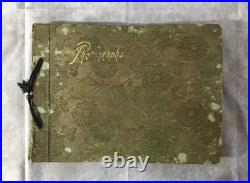
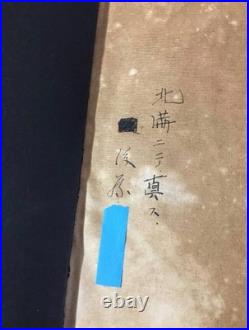
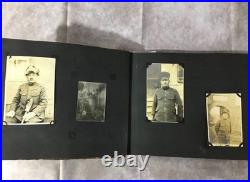
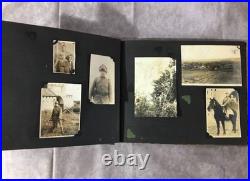
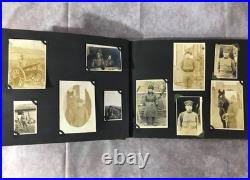
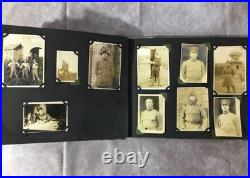
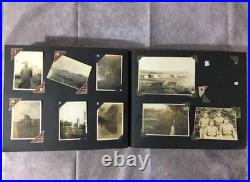
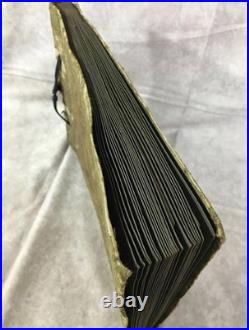
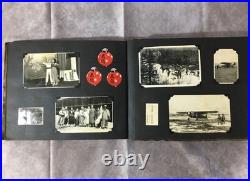
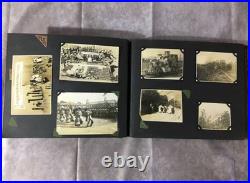
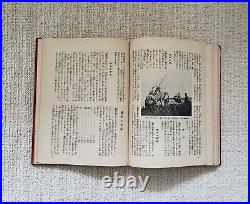
This is a pre-World War II Japanese personal photo album, compiled around circa 1935 (early Showa period). The album contains over 200 original photographs, carefully mounted by the original owner. It is not a commercial publication, but a privately assembled personal archive, making it a unique one-of-a-kind historical record. During the mid-1930s, Japan maintained a long-term presence in Manchuria, which became a major political and social focus following the early 1930s. Individuals stationed there often spent extended periods living, training, and working on site. This album documents not only official activities, but also daily life, surroundings, and personal moments, offering a continuous visual record of the era from a firsthand perspective. Photographs in this album include. Portraits of individuals in period uniforms. Daily life scenes and group photographs. Training and outdoor activities. Vehicles, horses, and equipment of the era. Aircraft and artillery-related scenes. Streets, buildings, and landscapes in Manchuria. Ceremonial and commemorative moments. Some images reflect the harsh realities of the time, making this more than a souvenir. It is a primary historical source documenting the atmosphere and lived experience of the period. Over 200 original photographic prints. Original cloth-covered album with gilt “Photographs” title. All photos appear to be period originals (not reproductions). Carefully organized by the original owner. Age-related wear to the album cover (stains, fading, fabric wear). Some photos show corner wear or minor lifting. No major missing sections; overall condition consistent with age. Please review all images carefully. Collector & Research Value. This album provides a rare, large-scale visual record of Japanese presence in Manchuria during the early Showa period. Suitable for collectors, researchers, museums, and institutional archives seeking authentic primary materials. Approximate 7-21days(To USA).

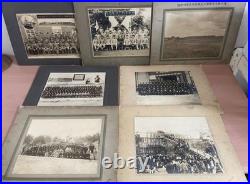
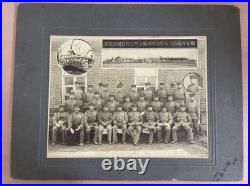
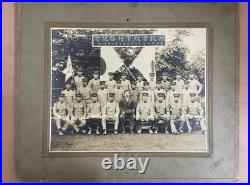
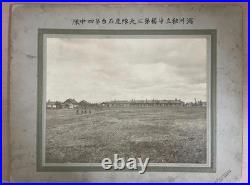
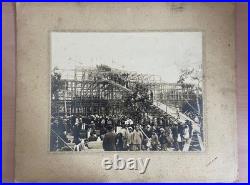
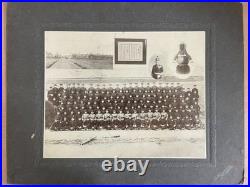
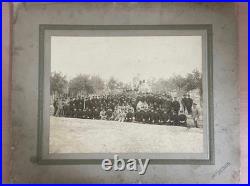
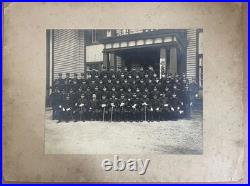
Thank you for your interest. This is a set of seven large-format military group photographs, all believed to be related to the Independent Garrison 3rd Battalion stationed in Manchuria during the late Taisho to early Showa period (1920s-1930s). Several mounts include inscriptions such as. (Independent Garrison 3rd Battalion, Manchuria). Barracks and training grounds of units stationed in Manchuria. Large formation group photos of officers, NCOs, and enlisted men. Scenes that appear to show construction work, training, and ceremonial events. These photographs were reportedly commemorative prints distributed to soldiers who served in the unit, and examples of this size and completeness are seldom seen on the market today. During the late Taisho and early Showa years, Japan’s Kwantung Army expanded its influence across Manchuria, and many independent garrison units were deployed to secure railways, protect settlements, and maintain order. This period represents the rising tension that later developed into the Mukden Incident (1931) and the establishment of Manchukuo. For this reason, materials documenting small-unit structure, daily life, and on-site conditions in Manchuria hold strong research value for scholars of Japanese military history and Manchurian studies. The original mounts show age-related wear, but the photographs themselves retain excellent clarity and atmosphere typical of the period. Highly recommended for collectors and researchers of. Kwantung Army and garrison units. Pre-WW2 East Asian military studies. International Buyers – Please Note. Thank you for your understanding.

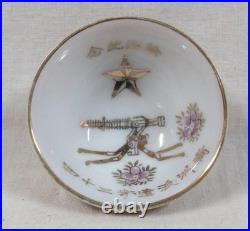

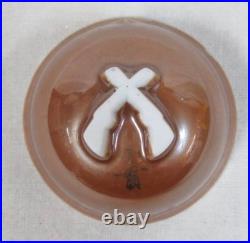
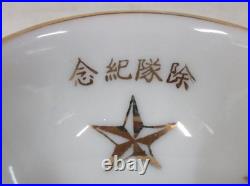
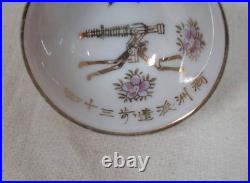
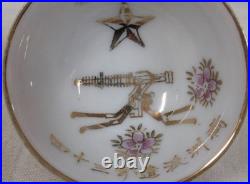
Original Pre-WW2 Imperial Japanese Army Sake Cup – Manchuria Expedition 34th Infantry Regiment, Machine Gun Design, Helmet Shape, Gold Trim. This rare commemorative sake cup was presented to a soldier of the 34th Infantry Regiment of the Imperial Japanese Army upon his discharge after service in Manchuria. The 34th Infantry Regiment, part of the 6th Division (Kumamoto Division), was originally formed in the Meiji period. During the early 1930s, this regiment was sent to Manchuria as part of Japan’s expanding continental operations following the Mukden Incident (1931). After returning home, soldiers who completed their mission were honored with these beautifully crafted commemorative cups, symbolizing their safe return and loyal service. ? Design & Symbolism. Gold Imperial Army Star – the emblem of the Japanese Army. Heavy Machine Gun – representing the regiment’s combat role. Cherry Blossoms – symbolizing bravery and transient life. Helmet-style shape with crossed rifles in relief, a rare and highly collectible design among military sake cups. These cups were not just souvenirs – they were symbols of pride, brotherhood, and survival. Soldiers and their families would toast with them to celebrate the end of service and safe return home. 5.5 cm diameter. Design: Gold-painted Imperial Star, machine gun, and cherry blossoms. Shape: Helmet type, crossed rifles in relief on the base. Condition: Excellent for age; minor wear to gold trim, no cracks or chips. ? Collector’s Note. This cup captures the spirit of prewar Japan – military pride combined with refined craftsmanship. It is not only a wartime relic but also a beautiful artifact of the human stories behind the Manchurian campaign. A valuable piece for collectors of Japanese militaria, early Showa porcelain, or anyone studying Imperial Japanese history. International Buyers – Please Note. Thank you for your understanding.

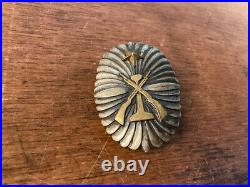
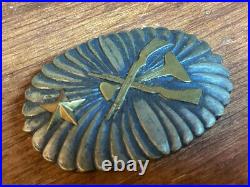
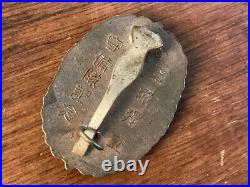
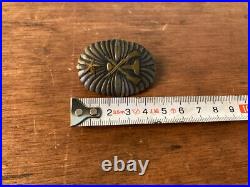
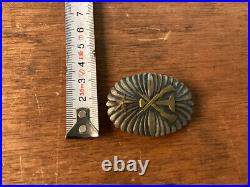
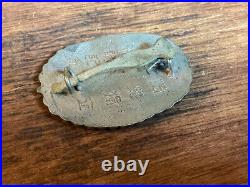
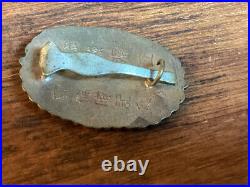
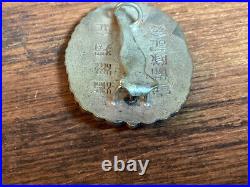
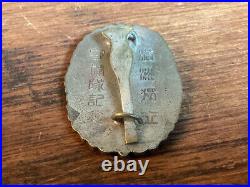
Of the former Japanese army. Manchurian Independence Garrison commemorative badge. There are scratches and stains due to age. How about military collector? International Buyers – Please Note.

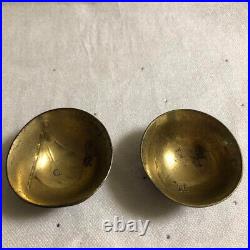
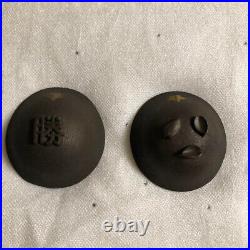
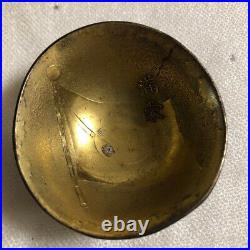
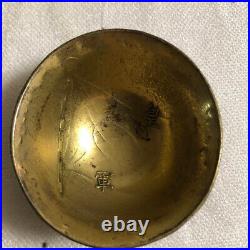
Former Japanese Army original. It’s from war time. Copper Size: Height approx. 2.5cm Width approx. 5.7cm Weight approx. There have scratch and dirt. How about a military fan? International Buyers – Please Note.

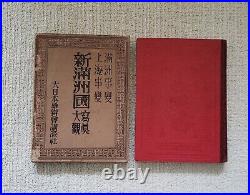
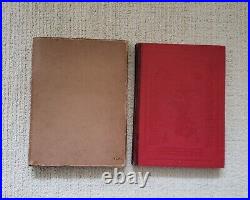
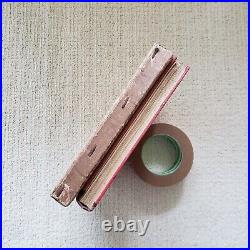
Japanese text / Si ze: 27cm x 20.5cm (Circa) / 160 + 84 pages.