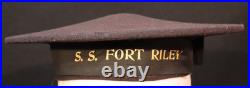
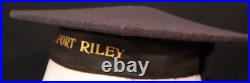
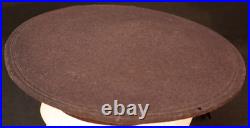
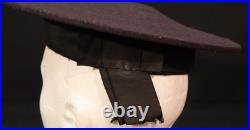
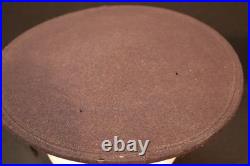
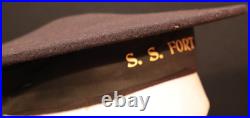
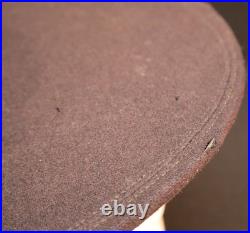
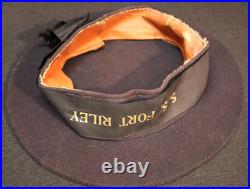
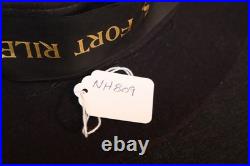
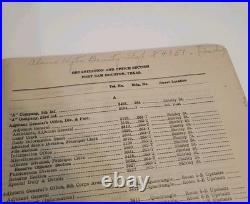
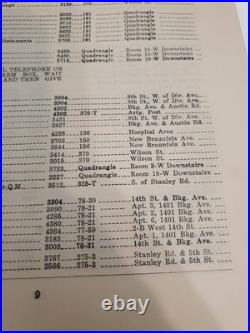
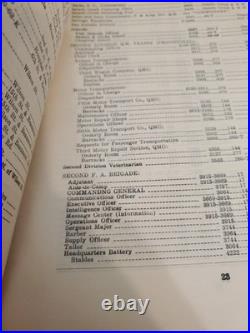
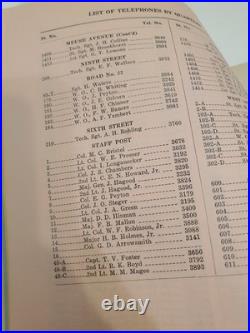
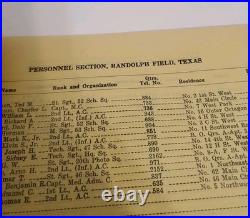
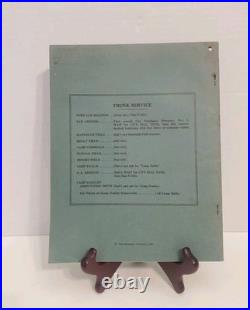
WWI – Interwar USN Navy Service Type Sailors Flat Cap S. FORT RILEY Tally with some moth hits as shown – Overall Good Condition. As Photographed with wear and age as seen (see photos for condition). A Great Candidate for any Collection, War Room, or Display. Recent Estate Collection Acquisition & Presented as Acquired, Scarce. Check back often – we search estates and sources across the world to bring a fine selection of militaria. Please review all photos for details regarding the condition of the item listed – further condition information will be included in the listing as is relevant, if you need additional photographs or have questions regarding the condition please do not hesitate to ask. I describe all items to the best of my ability – please do not hesitate to ask any and all questions prior to the close of the listing. Mistakes very rarely occur – however if one does please rest assured that it will be corrected. International Buyers are Welcome!
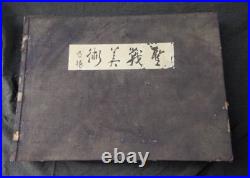
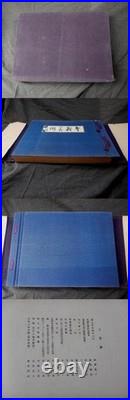
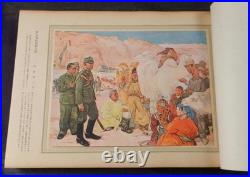
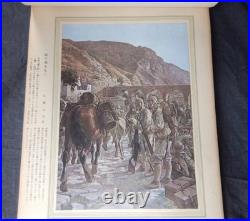
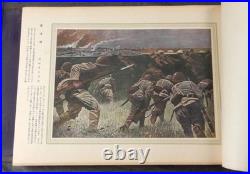
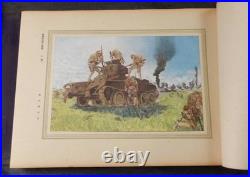
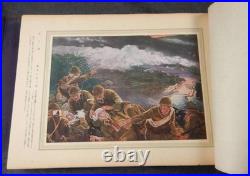
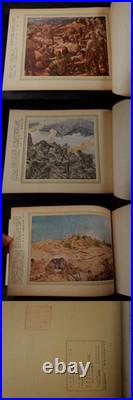
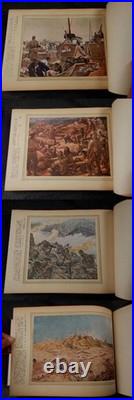
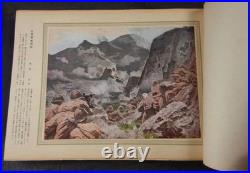
This is an original pre-WWII Japanese military art book titled. “Seisen Bijutsu (Sacred War Art)”, published in 1936. Compiled by the Imperial Japanese Army Art Association. This book represents a rare example of official war art produced under direct military authority. During the 1930s, the Japanese Army organized and supported a group of leading artists. To document real battlefields through visual art. This was not simply artistic expression. ? It was a state-driven project combining art, propaganda, and historical record. Artists were sent to the front lines, and their works were used to convey. The reality – and narrative – of war to the public. About the Army Art Association. The Imperial Japanese Army Art Association gathered many prominent artists of the time. Forming a powerful network backed by military authority. This movement included figures such as. ? Tsuguharu Foujita (Leonard Foujita) – internationally recognized painter from the École de Paris. This highlights an important fact. ? World-class artists were mobilized to depict war. The book contains large-format, highly detailed color plates depicting. Battle of Nankou Pass (North China front). Hangzhou / Lin’an operations. Infantry assaults and front-line combat. Field medical treatment of wounded soldiers. Logistics, transport, and armored warfare. These are not fictional scenes, but visual interpretations based on real military operations. This item exists at the intersection of. ? A work of art. ? A historical document. ? A reflection of wartime ideology. Large-format war art books like this are increasingly difficult to find in complete form. Age-related wear, stains, and discoloration. Damage to cover and spine. Please refer to the photos for details. This is not just a book. It is a piece of how war was seen, recorded, and presented. A rare surviving artifact from a time when. Art and military power were deeply intertwined. Own a Piece of History. International Buyers – Please Note. Thank you for your understanding.
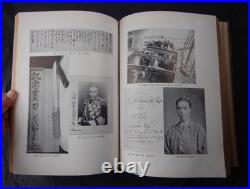
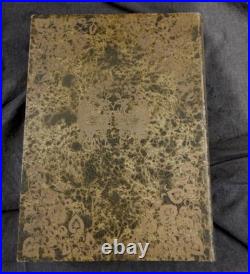
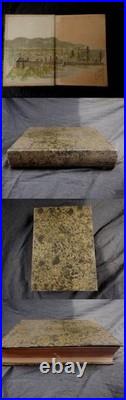
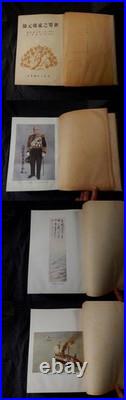
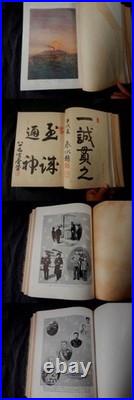
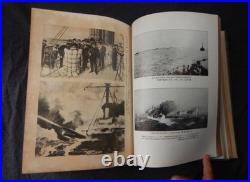
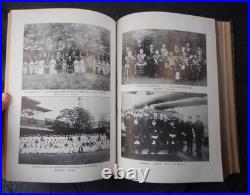
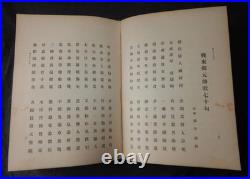
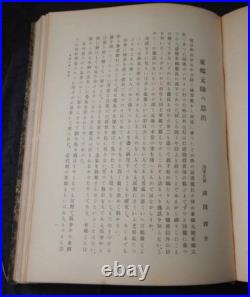
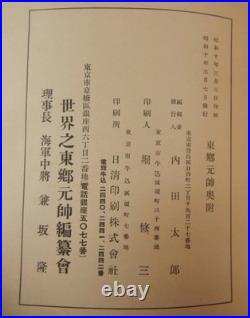
WWII Imperial Japanese Navy Admiral Togo Heihachiro Memorial Book (1935). A rare large-format commemorative book dedicated to one of Japan’s most legendary naval figures. Title: “Sekai no Togo Gensui” (The World’s Marshal Togo). Published: March 7, 1935 (Showa 10). This book was compiled one year after Admiral Togo’s death (1934). Making it a true memorial volume, not just a biography. Who Was Admiral Togo? Admiral Togo Heihachiro was the commander of the Imperial Japanese Navy during the. He led Japan to victory in the Battle of Tsushima. Defeating the Russian Baltic Fleet. Because of this achievement, he became internationally known as. ? “The Nelson of the East”. This book represents how Japan chose to remember Togo after his death. It is not simply a historical record. It is a posthumous tribute shaped by the national mindset of pre-WWII Japan. Inside you will find. Memorial essays such as “Memories of Marshal Togo”. Rare photographs of naval officers and historical moments. Warships and battle-related imagery. Documents, calligraphy, and archival materials. Poems and commemorative writings honoring Togo. This book captures a unique moment in history. ? The transformation of a real naval officer into a national symbol. All preserved in one volume. Large format book approx. 31.3 × 23 × 6.5 cm. Shows age: stains, toning, wear. Structurally solid and readable. Please check photos for details. This is not just a book about a man. It is a book about how a nation chose to remember him. A rare opportunity to hold a piece of pre-war historical narrative in your hands. Own a Piece of History. Approximate 7-21days(To USA).
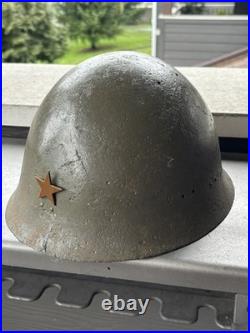
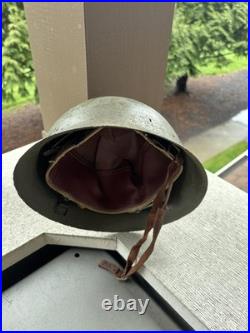
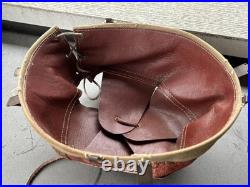
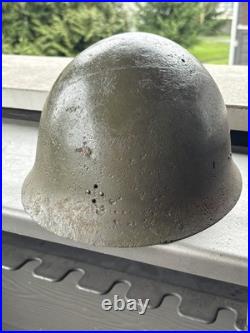
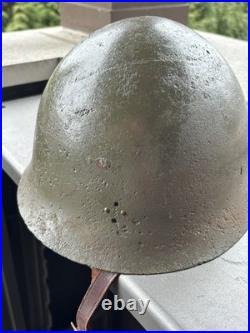
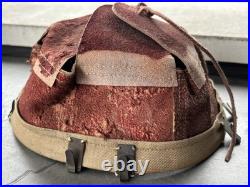
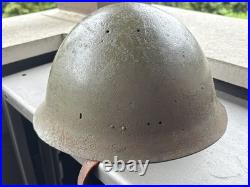
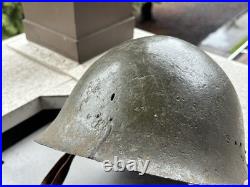
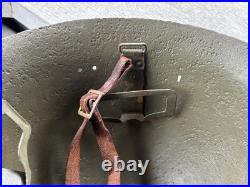
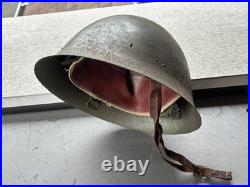
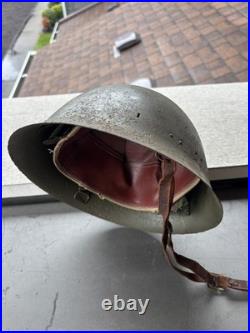
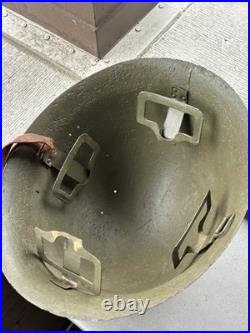
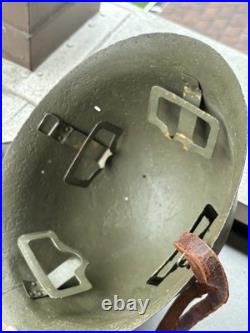
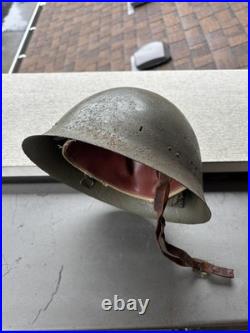
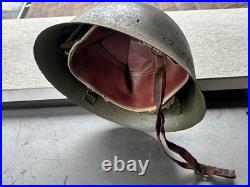
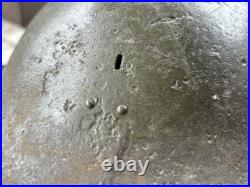
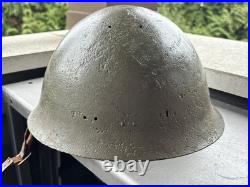
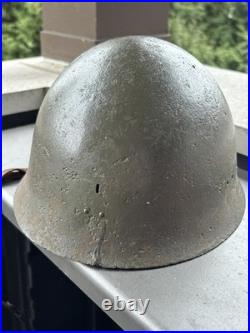
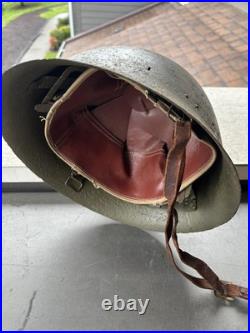
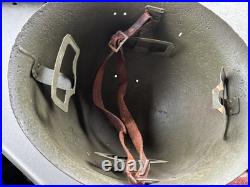
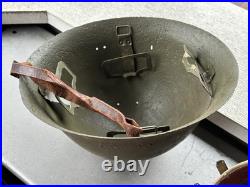
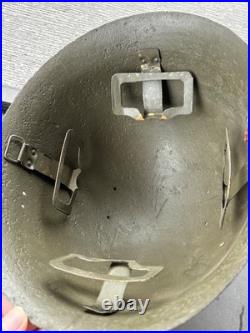
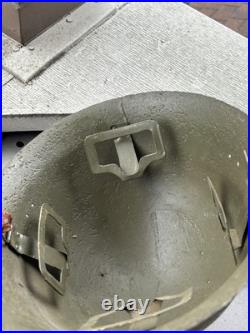
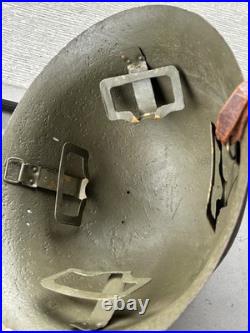
Original Type 90 Thailand Siam (Japanese) Helmet w/ Liner. The helmet used to be Japanese. It has heavy pitting, so my best guess is used extensively during ww2 and/or before. Star area in front has shadowing Otho al Thai shield but is missing now. I hav included replica Star for front. The liner is Thai and put in when converted. Leather chin strap is broken on one side. Overall great helmet for display to cover Japanese and Thai armies.
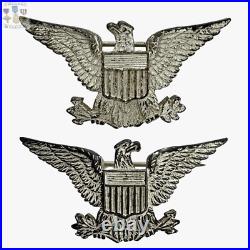
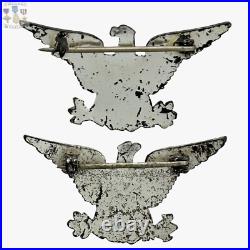
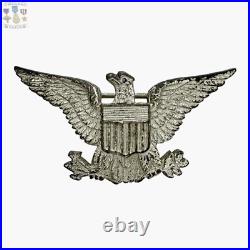
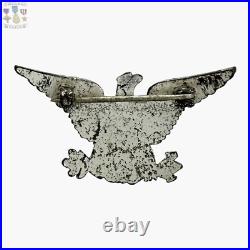
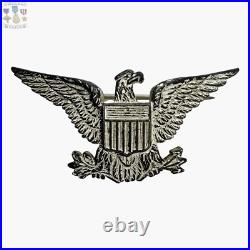
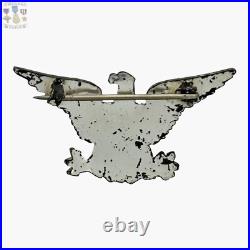
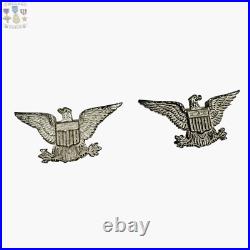
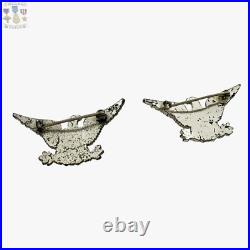
ORIGINAL 1930’S UNITED STATES ARMY & MARINE CORPS COLONEL – NAVY CAPTAIN “WAR EAGLES” INSIGNIA, 1-3/8 INCH X 5/8 INCH SIZE, PIN-BACK W/ OPEN “C” CATCH. The insignia for a colonel is a silver eagle which is a stylized representation of the eagle dominating the Great Seal of the United States (which is the coat of arms of the United States). As on the Great Seal, the eagle has a U. Shield superimposed on its chest and is holding an olive branch and bundle of arrows in its talons. However, in simplification of the Great Seal image, the insignia lacks the scroll in the eagle’s mouth and the rosette above its head. On the Great Seal, the olive branch is always clutched in the eagle’s right-side talons, while the bundle of arrows is always clutched in the left-side talons. The head of the eagle faces towards the olive branch, rather than the arrows, advocating peace rather than war. As a result, the head of the eagle always faces towards the viewer’s left. Some colonel eagles from the 1920s to the 1950s faced the arrows, though this is no longer done. The full-sized colonel eagle is exactly two inches in diameter from the tips of each wing. Please let me know if there’s anything else I can do for you!
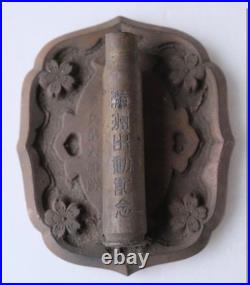
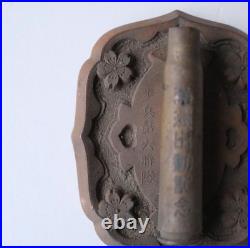
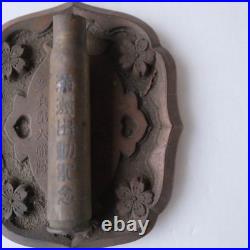
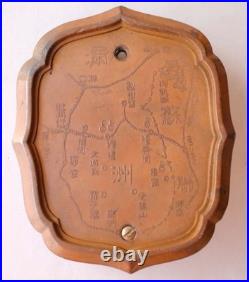
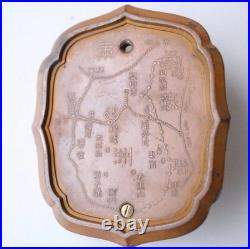
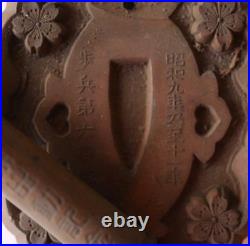
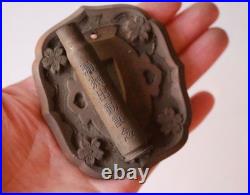
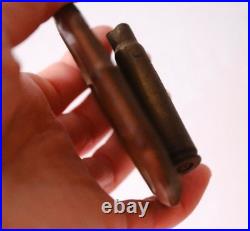
Imperial Japanese Army Manchuria Deployment Commemorative Paperweight. This is a rare Imperial Japanese Army commemorative paperweight made in the shape of a. Japanese sword tsuba (guard). Spent bullet casing decoration. These types of items were often made as. Military souvenirs or commemorative objects. For soldiers who were deployed overseas. On the bullet casing. On the front of the tsuba. On the reverse side. Showing major regions and railway routes. Refers to Japanese military deployments to Manchuria (northeastern China) following the. Manchurian Incident of 1931. After the establishment of. Japanese forces maintained large troop deployments in the region for military control, border security, and operations. This piece likely commemorates service in Manchuria during the period. Was part of the Imperial Japanese Army and had a long history dating back to the Meiji era. The regiment participated in. Early Imperial Japanese military campaigns. During World War II, elements of the regiment were sent to overseas battlefields. Like many Japanese Army units, the regiment suffered heavy losses and was effectively dissolved at the end of the war in 1945. Tsuba (Japanese sword guard) shaped design. Real bullet casing decoration. Engraved Manchuria map on reverse. Early Showa military commemorative item. Unit-specific commemorative items are relatively scarce today. And are collected by military history collectors worldwide. 7.5 cm × 6 cm. Vintage item with age-related wear. Please check photos for details. Approximate 7-21days(To USA).
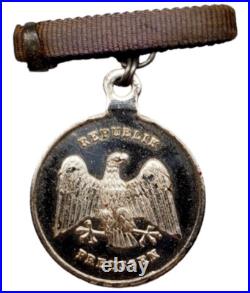
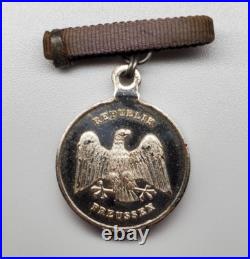
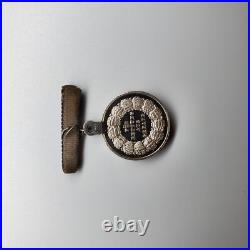
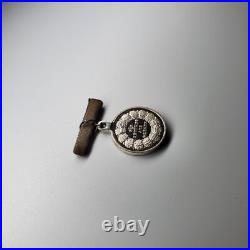
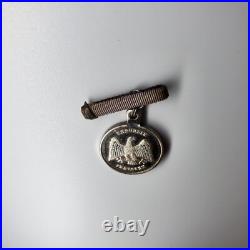
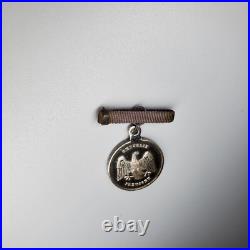
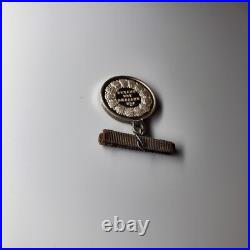
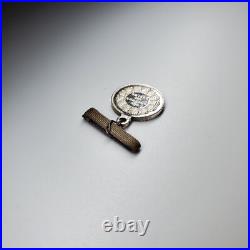
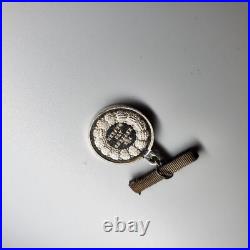
Offered here is a Prussian (Preussen) rescue-from-danger miniature medal mounted to its original-style miniature bar/hanger. The medal features the Prussian eagle with the legend “REPUBLIK PREUSSEN” and the reverse reads “FÜR RETTUNG AUS GEFAHR” within a wreath-an attractive, displayable German/Prussian civil bravery / lifesaving award piece. Exact text: “REPUBLIK PREUSSEN” / “FÜR RETTUNG AUS GEFAHR”. Format: Miniature medal attached to a miniature medal bar/hanger. Construction: Cloth bar with metal reinforcement and metal closure. 5/8 (15.9 mm) across (not including loop). Great for: German awards collectors, Prussia/Weimar displays, miniature bar collections. Shows light use overall. Bar/ribbon shows age toning and wear; structure appears intact. Please review all photos closely as they are part of the description. Check out our other WW2 & historical militaria items in our store-combined orders always welcome. Type: Medal / Decoration (Miniature). Country/Region of Manufacture: Germany (Prussia). Region of Origin: Prussia (Preussen). Era: Weimar Republic / Interwar approx. Conflict: Pre-WWII / Interwar Period. Theme: German / Prussian Awards, Lifesaving / Civil Bravery. Material: Metal (exact alloy unknown) + cloth miniature bar with metal reinforcement. Color: Silver tone medal; dark bar. Condition: Used / vintage (see description). 5/8 (15.9 mm) across, not incl. Brand: Unmarked / Unknown.
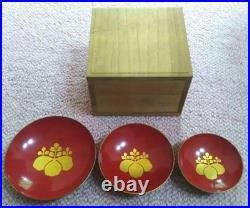
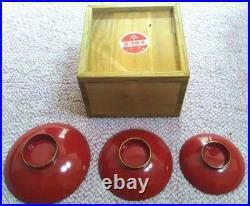
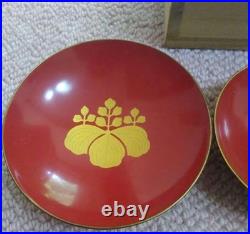
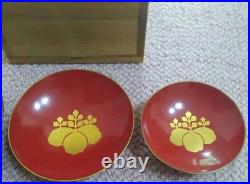
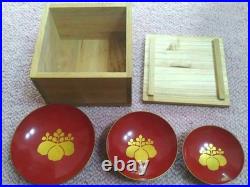
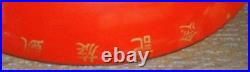
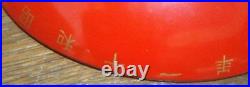
This is an original Imperial Japanese Army commemorative lacquer sake cup set. Dated May 1936 (Showa 11). Junior Officers and NCO Corps of the 18th Infantry Regiment. To commemorate their return (Victory/”Gaisen”) from military operations. Nearly 90 years old. The year 1936 was a crucial moment in pre-WWII Japan. The 18th Infantry Regiment had already served in the Sino-Japanese War. Russo-Japanese War, Jinan Incident, and later campaigns in China. Ultimately, the regiment was annihilated in the Pacific War. During the Battles of Saipan and Guam in 1944. This cup set represents the regiment in its active years. Before its final destruction. The Special Meaning of Sake Cups in the Japanese Army. In the Imperial Japanese military, sake cups were not casual tableware. They were used in. Pledges of loyalty. Farewell before battle. Drinking from the same cup symbolized shared fate. Sometimes literally life and death. Because of this ceremonial role. Military commemorative cups are often rarer than field equipment. They were not battlefield gear. They survived only if preserved intentionally. Three-piece graduated set (Large / Medium / Small). Gosan no Kiri (Paulownia Crest). A high-status emblem historically associated with the Japanese government and authority. Gold maki-e style decoration on deep red lacquer. The large cup bears gold inscription. 18th Infantry Regiment Junior Officers & NCO Corps. May 1936 Victory Commemoration. Original wooden storage box included. Cups: very good overall condition considering age. Box: exterior shows age-related wear; interior relatively clean. No original cushioning material was included. Why It Is Rare. Regiment name fully written. Exact date inscribed. Specific rank group (Junior Officers & NCO Corps). Complete 3-piece set. Pre-WWII Showa period original. Direct connection to a regiment later destroyed in the Pacific War. This is not just a military souvenir. It is a surviving ceremonial artifact tied to a real regiment. With a documented combat history ending in total loss. A tangible piece of Imperial Japanese military history. International Buyers – Please Note. Thank you for your understanding.