
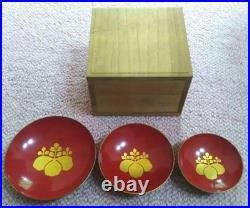
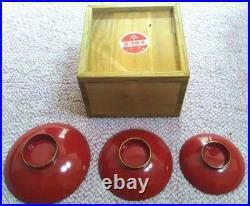
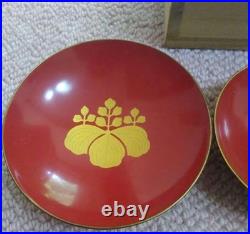
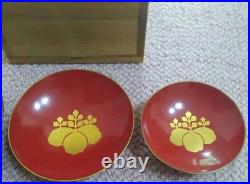
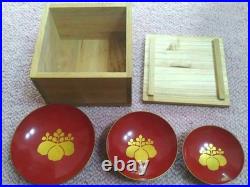
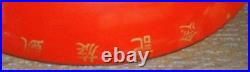
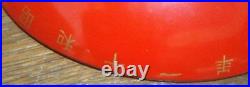
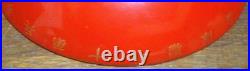

This is an original Imperial Japanese Army commemorative lacquer sake cup set. Dated May 1936 (Showa 11). Junior Officers and NCO Corps of the 18th Infantry Regiment. To commemorate their return (Victory/”Gaisen”) from military operations. Nearly 90 years old. The year 1936 was a crucial moment in pre-WWII Japan. The 18th Infantry Regiment had already served in the Sino-Japanese War. Russo-Japanese War, Jinan Incident, and later campaigns in China. Ultimately, the regiment was annihilated in the Pacific War. During the Battles of Saipan and Guam in 1944. This cup set represents the regiment in its active years. Before its final destruction. The Special Meaning of Sake Cups in the Japanese Army. In the Imperial Japanese military, sake cups were not casual tableware. They were used in. Pledges of loyalty. Farewell before battle. Drinking from the same cup symbolized shared fate. Sometimes literally life and death. Because of this ceremonial role. Military commemorative cups are often rarer than field equipment. They were not battlefield gear. They survived only if preserved intentionally. Three-piece graduated set (Large / Medium / Small). Gosan no Kiri (Paulownia Crest). A high-status emblem historically associated with the Japanese government and authority. Gold maki-e style decoration on deep red lacquer. The large cup bears gold inscription. 18th Infantry Regiment Junior Officers & NCO Corps. May 1936 Victory Commemoration. Original wooden storage box included. Cups: very good overall condition considering age. Box: exterior shows age-related wear; interior relatively clean. No original cushioning material was included. Why It Is Rare. Regiment name fully written. Exact date inscribed. Specific rank group (Junior Officers & NCO Corps). Complete 3-piece set. Pre-WWII Showa period original. Direct connection to a regiment later destroyed in the Pacific War. This is not just a military souvenir. It is a surviving ceremonial artifact tied to a real regiment. With a documented combat history ending in total loss. A tangible piece of Imperial Japanese military history. International Buyers – Please Note. Thank you for your understanding.

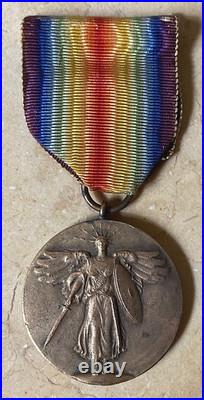
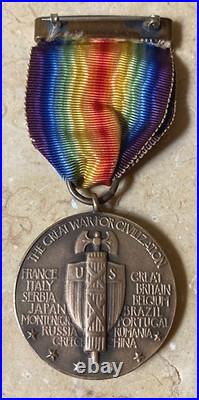
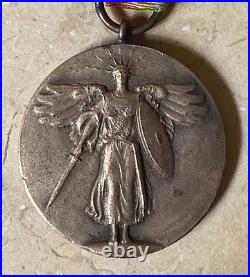
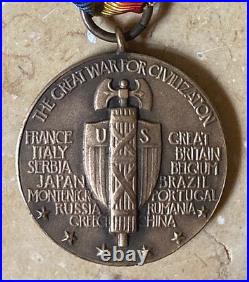
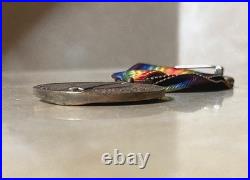
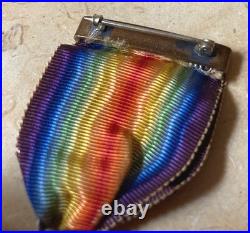
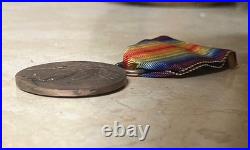
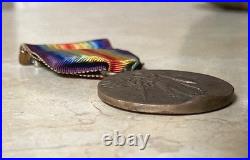
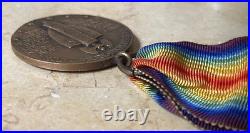
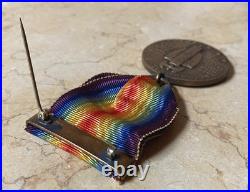
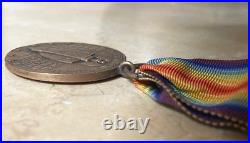
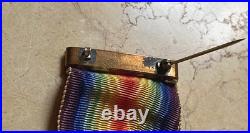
VICTORY MEDAL WITH ORIGINAL RIBBON (TYPE 1 WIRE LOOP). THIS IS NOT A REPRODUCTION.

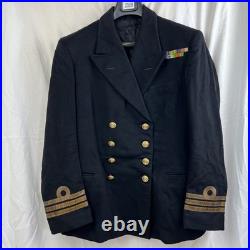
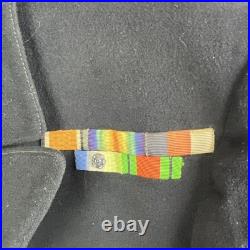
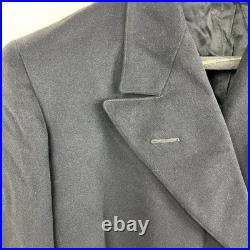
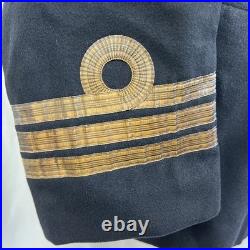
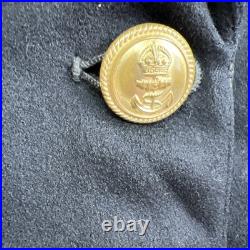
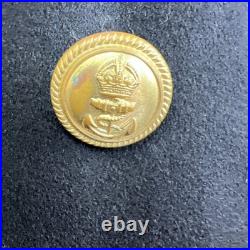
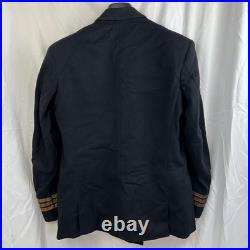
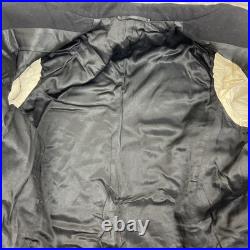
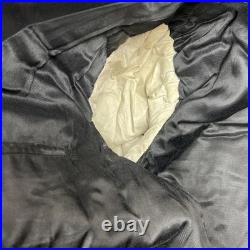
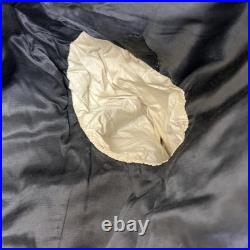
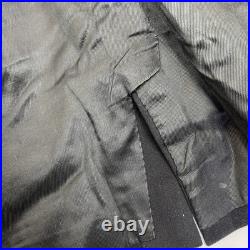
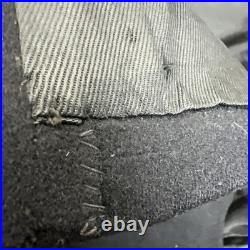
Royal Navy Commander’s uniform. The owner served in both world wars.

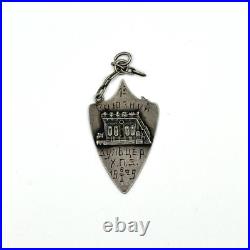
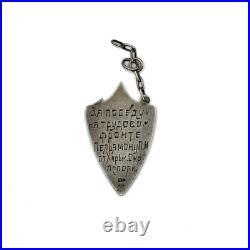
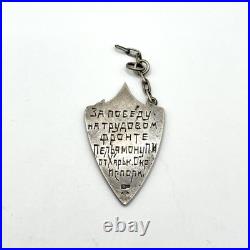
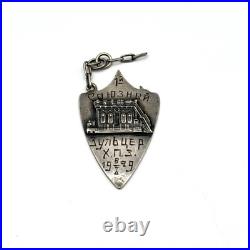
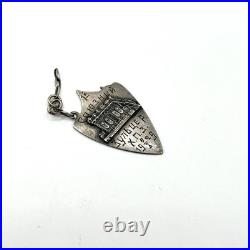
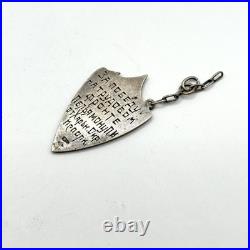
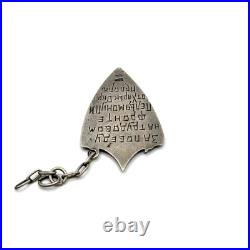
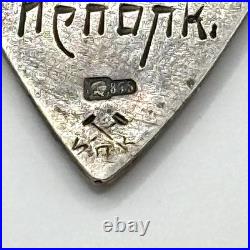
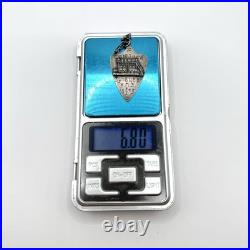
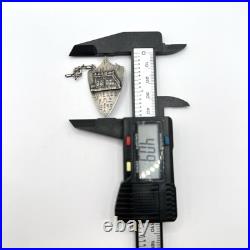
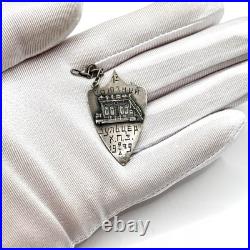
Rare Soviet Silver Badge Token Jeton USSR Award 1929 Victory On The Labour Front. Offered for sale is a rare commemorative silver token (875 silver hallmark), awarded in 1929 for achievement on the labour front. The token commemorates the 1st Union competition held at the Kharkiv Locomotive Plant (???) and was presented to comrade P. Peltzman by the Kharkiv District Executive Committee. The front features a detailed Sulzer locomotive image; the reverse carries the engraved dedication and official hallmarks. Origin: USSR, Kharkiv. Date: 9 October 1929 (9/X/1929). Material: Sterling silver. Weight: 6.80 grams. Condition: Excellent antique condition with natural patina. The chain is snapped. «1-???????????????? . (1st Union Sulzer, Kharkiv Locomotive Plant, 9 Oct 1929). «???????????????????????? . For Victory on the Labour Front. From Kharkiv District Executive Committee. Silver hallmarks present on the reverse: [875], crossed hammers, and inspection symbol. A unique artifact of early Soviet industrial history, highly collectible for those interested in USSR labour awards and transport heritage.


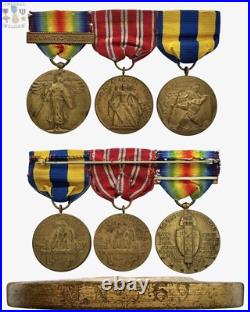
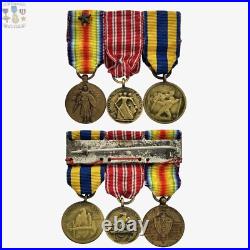
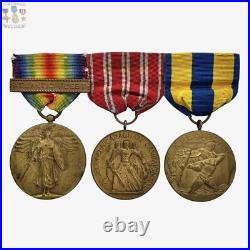
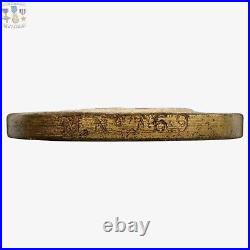
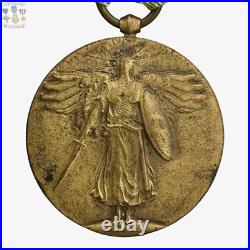
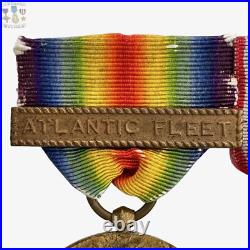
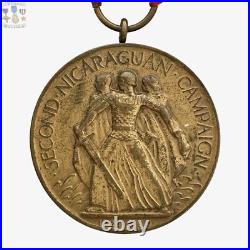
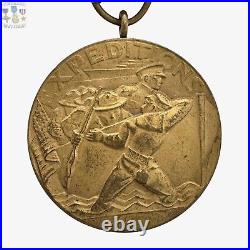
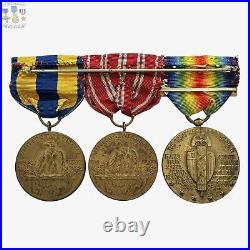
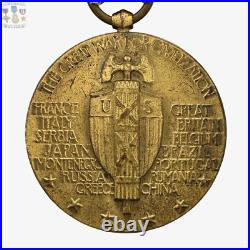
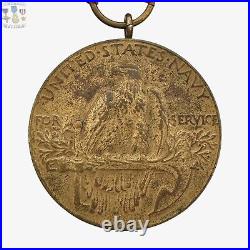
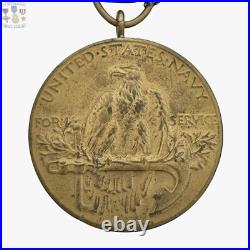
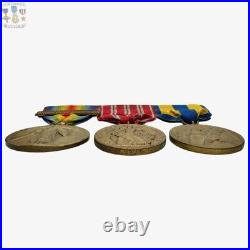
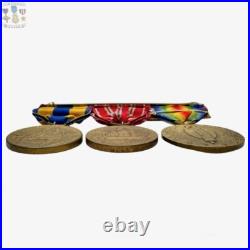
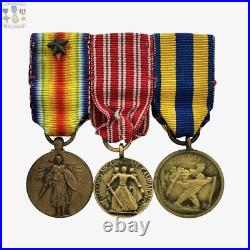
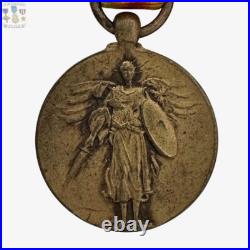
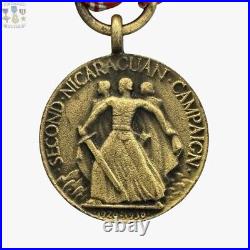
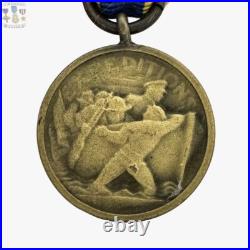
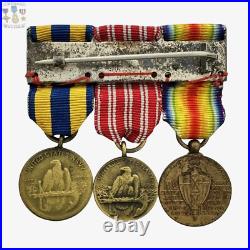
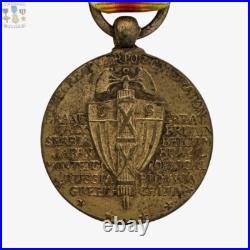
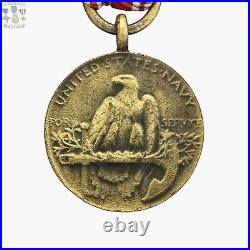
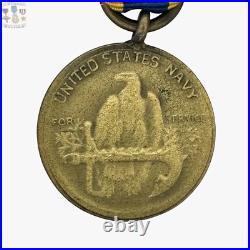
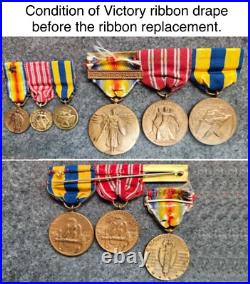
Make sure to read all of the information I have provided, I do my absolute best to identify and describe the item. The photos are of the actual item. ORIGINAL WORLD WAR I UNITED STATES NAVY VICTORY MEDAL W/ ATLANTIC FLEET CLASP. (RE-RIBBONED DRAPE, THE LAST PHOTO SHOWS THE CONDITION OF THE RIBBON DRAPE BEFORE REPAIRED). 2ND NICARAGUAN CAMPAIGN MEDAL. PROPER CUT BAIL RING & PRODUCED BY THE U. ORIGINAL 1930’S UNITED STATES NAVY EXPEDITIONS MEDAL. ORIGINAL 1930’S ERA MATCHING SET OF MINIATURE MEDALS. Please let me know if there’s anything else I can do for you!

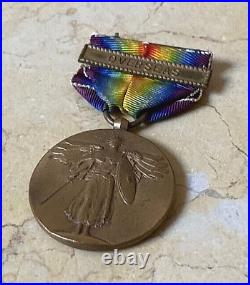
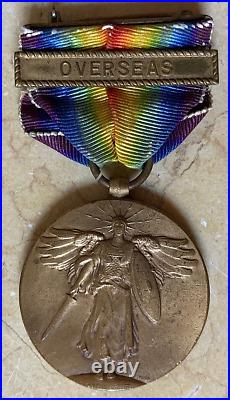
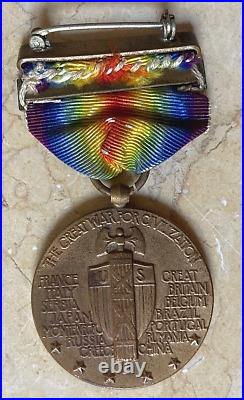
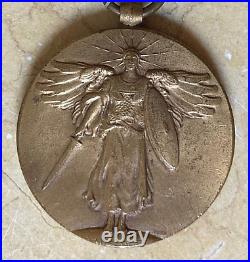
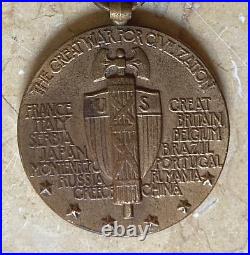
VICTORY MEDAL with ORIGINAL RIBBON and OVERSEAS CLASP.

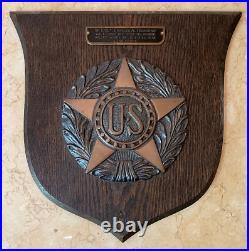
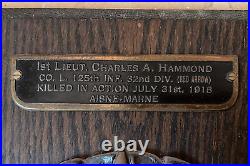
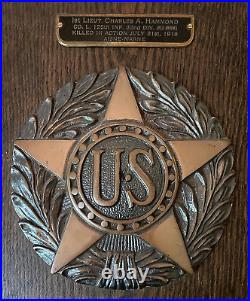
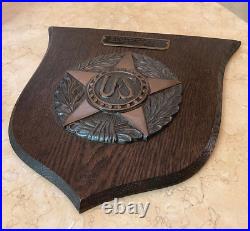
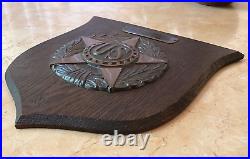
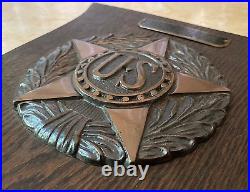
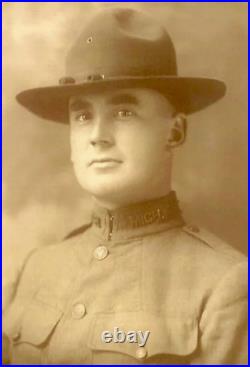
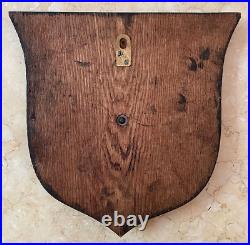
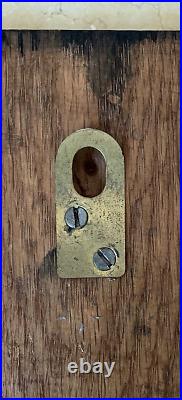
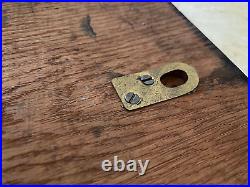
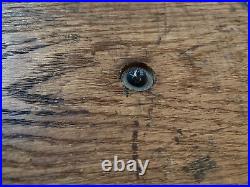
ARMY ID’d 32nd DIVISION VICTORY MEDAL KIA PLAQUE JULY 31, 1918. ARMY ID’d 32nd DIVISION VICTORY MEDAL KIA PLAQUE JULY 31, 1918 NAMED TO WAR HERO. KILLED IN ACTION JULY 31st, 1918. BIRTH: 11 Jan 1887 Port Huron Township, St. Clair County, Michigan, USA. DEATH: 31 Jul 1918 (aged 31) Sergy, Departement de l’Aisne, Picardie, France. BURIAL: Lakeside Cemetery Port Huron, St. Charles Hammond Son of Robert Hammond born in Ireland, and Sarah Rosetta McIntosh born in Ontario, and brother to John J. Born in Canada and Francis W. His dad was a railroad engineer. Charles was a member of the national guard, well liked and respected by the men who chose him to be promoted to the rank of 2nd Lieutenant, which. Was customary in that time. Also, a member of the Masonic Lodge, and articles about him were often found in the local newspaper. He also was an excellent machinist by trade. He enlisted in the U. Army in 1910, at the age of 23. When his regiment was activated, they were sent to El Paso Texas to deal with Poncho Villa. He was promoted at that time to 1st lieut. When ww1 began, the unit was deployed. To France on Feb. 1918, the 125th Infantry, 32d Division, A. Being then, a part of the Red Arrow Division. It was on July 31 1918 that they were tasked with destroying a machine gun nest on hill 212. While leading his men of Company L into the battlefield of France, he was wounded in the arm but continued on leading his men but received a fatal wound killing him in action on July 31, 1918, on Hill 212 in Sergy, France. After his death, his men accomplished their mission, taking out Hill 212. He was one of the first men from Port Huron to die and many more from across America and abroad were to follow as the war raged on. His funeral was befitting a hero and the casket displayed at the old city hall was finally placed on a Caisson, and the long procession of legionnaires, mason, dignitaries and ordinary folks, slowly and solemnly, wound it’s way to the cemetery for burial. Many honors were awarded to him Posthumously: The Distinguished Service Cross for heroism. Croix de Guerre (The Cross of War) France’s highest medal award to a non French Citizen Medals from the British, and Belgian American Legion Post 8 in Port Huron was named in his honour (1919,). Army Company L, 125th Infantry Regiment, 32d Division, A. Date of Action: July 31, 1918. Citation: The Distinguished Service Cross is presented to Charles A. Hammond, First Lieutenant, U. Army, for extraordinary heroism in action near Sergy, France, July 31, 1918. Advancing up and beyond Hill No. 212, First Lieutenant Hammond was shot through the arm, yet he refused to go to the rear, even for first-aid treatment, but continued to assault with his platoon, until he received two more wounds, the last of which caused his death. 1918 Home Town: Port Huron, MI. Army, World War One-Pvt. Hammond died in the service of his Country. Awards: Purple Heart Medal, WW1 Victory Medal. THE EXACT DESIGN OF THE VICTORY MEDAL STAR IN THE CENTER OF THE PLAQUE IS ALSO USED IN THE U. WW1 VICTORY MEDAL LAPEL BUTTON THAT WAS MADE IN CONJUNCTION WITH THE WW1 U. VICTORY MEDAL COMMISIONED BY THE U. WAR DEPARTMENT AND U. THE SOLID BRONZE EMBLEM WAS DESIGNED BY SCULPTOR ADOLPH ALEXANDER WEINMAN OF NEW YORK CITY UNDER SUPERVISION OF THE COMMISSION OF FINE ARTS. THE BRONZE WORKMANSHIP IS VERY WELL DONE AND REFLECTS A HIGH LEVEL OF QUALITY AND CRAFTSMANSHIP. The World War I Victory Lapel Button first issued November 14,1919 is a five-pointed star 5/8-inch in diameter on a wreath with the letters U. For persons wounded in action, the lapel button is silver; for all others, the lapel button is bronze. Eligibility requirements are the same for the World War I Victory Medal. VICTORY MEDAL STAR IS SOLID BRASS. PLAQUE IS WOOD (OAK). RETAINS ITS ORIGINAL BRASS HANGER ON THE REVERSE. EMBOSSED ON THE FRONT LOWER APEX : J. J. R. WITH AN A CIRCLE WITHIN A CIRCLE JUST ABOVE IT. OVERALL DIMENSIONS: HEIGHT 12″ x WIDTH 11 5/8″ x THICKNESS 1. The Victory Button was designed by. The sculptor, Adolph Alexander Weinman of New York City. Under the supervision of the Commission of Fine Arts. HAMMOND IN HIS WW1 ERA MICHIGAN NATIONAL UNIFORM PROVIDED WITH THE PICTURES IN THIS LISTING IS FOR REFERENCE ONLY AND IS NOT INCLUDED. THIS IS NOT A REPRODUCTION.

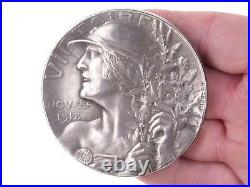
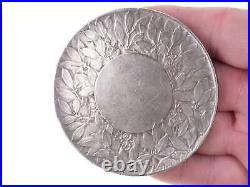

His designs were used on medals and the Art Deco style coinage of France during the 1930s.

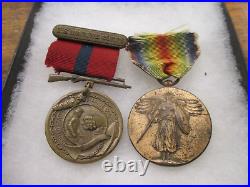
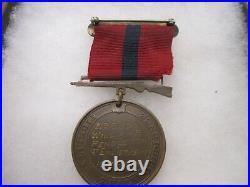
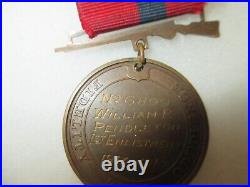
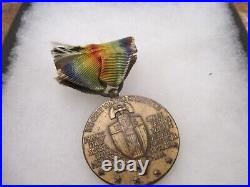
Named and dated WW1 USMC Good Conduct medal with WW1 Victory Medal. The Good Conduct Medal is in excellent condition and is named and dated on back. The ribbon on the Victory medal is worn.

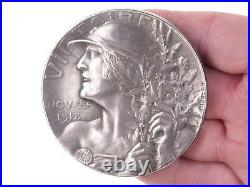
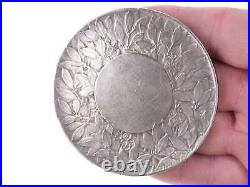

His designs were used on medals and the Art Deco style coinage of France during the 1930s.