
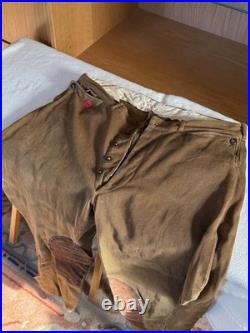
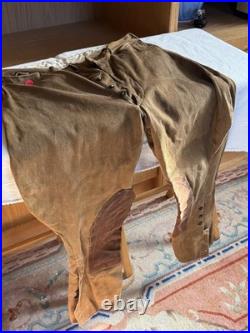
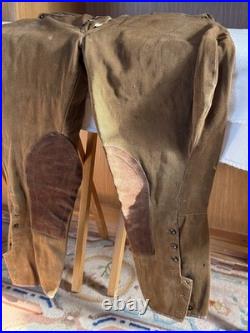
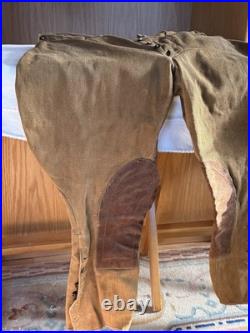
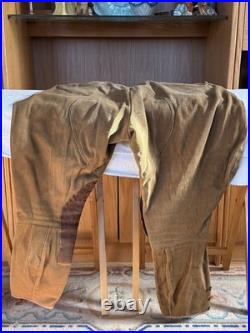
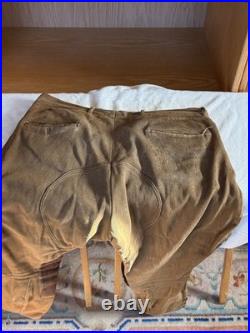

Era: 1930s (Interwar Period). Type: Men’s Riding Breeches / Jodhpurs. Material: Brown twill cotton (visual texture resembles heavy Bedford cord/corduroy) with brown suede leather knee patches. Size: US Waist 34. All buttons and pockets present. Interior label reads: Breaking test-100 lb. Guaranteed for length of garment. Description: An authentic pair of vintage 1930s riding breeches featuring durable construction suitable for steeplechase or hunting. These jodhpurs are designed with a classic flared hip and tapered calf with button closures. The knees are reinforced with brown suede leather pads. A rare survivor from the 1930s era.

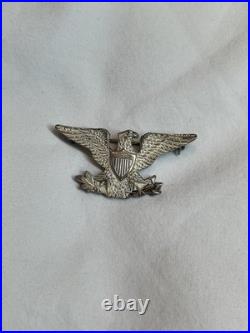
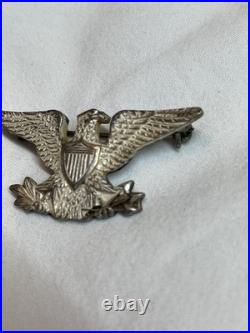
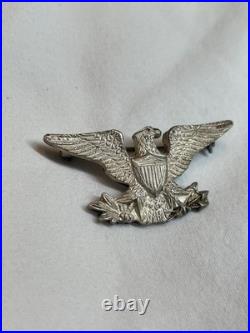
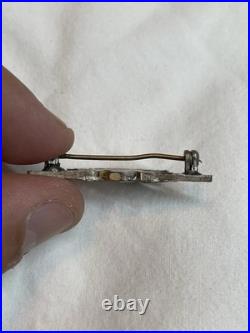
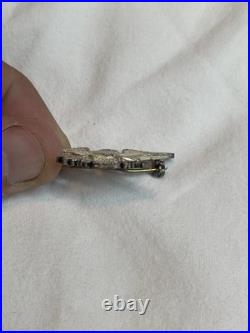
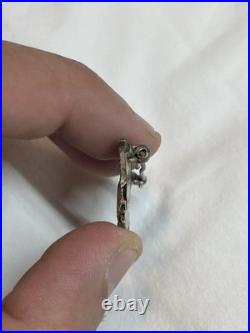
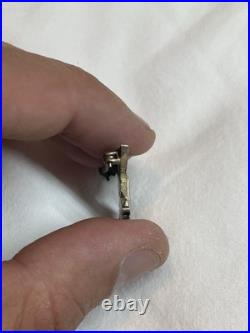
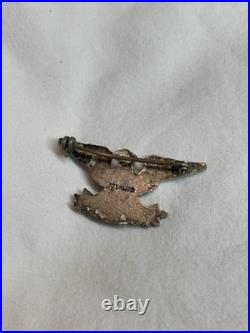
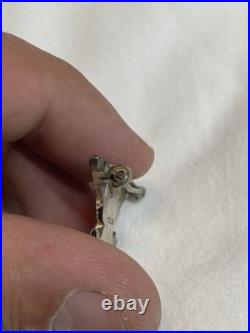
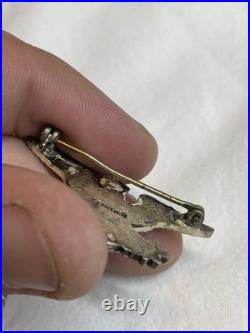
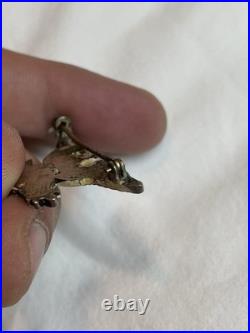
PRE WWII US NAVY CAPTAIN WAR EAGLE INSIGNIA USMC COLONEL 1930’S Silver Pin (1). Used, signs of wear, age, and light tarnishing. Light bending/wear to pinback but still works fine. See pictures above for best details. For any other questions feel free to send me a message.

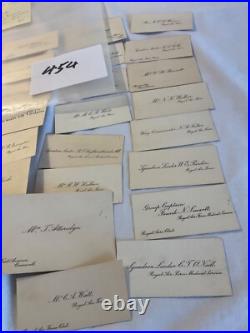
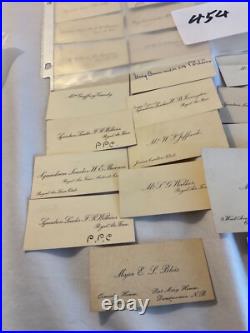
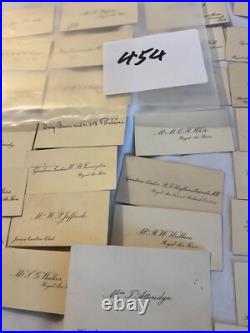
Also, once an item is brought I will no alter any information on any form. All items will have a confirmation number. Feedback will not be sent until I receive feedback. Please feel free to read my feedback. I’m very proud of my feedback. I sell military collectables. If you choose to wear or actually use items, it is at you own risk.

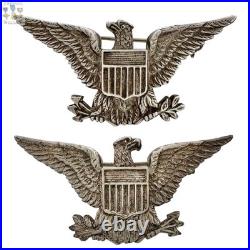
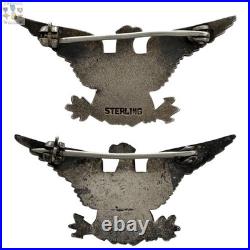
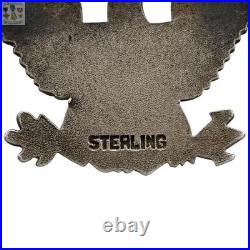
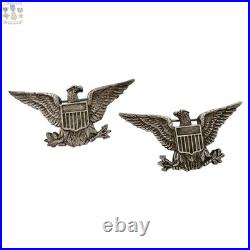
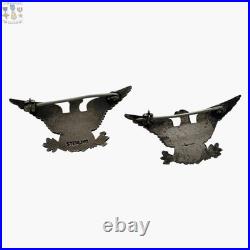
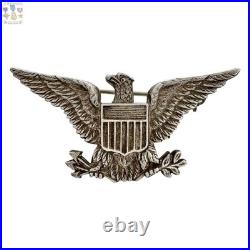
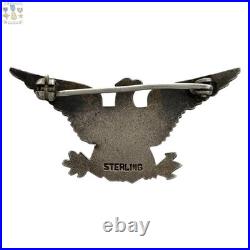
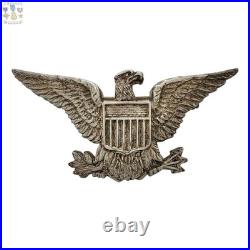
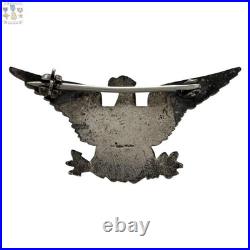
ORIGINAL 1930’S UNITED STATES ARMY & MARINE CORPS COLONEL – NAVY CAPTAIN “WAR EAGLES” INSIGNIA, 1-3/8 INCH X 3/4 INCH SIZE, PIN-BACK W/ LOCKING CATCH. (1 SET OF 2). The insignia for a colonel is a silver eagle which is a stylized representation of the eagle dominating the Great Seal of the United States (which is the coat of arms of the United States). As on the Great Seal, the eagle has a U. Shield superimposed on its chest and is holding an olive branch and bundle of arrows in its talons. However, in simplification of the Great Seal image, the insignia lacks the scroll in the eagle’s mouth and the rosette above its head. On the Great Seal, the olive branch is always clutched in the eagle’s right-side talons, while the bundle of arrows is always clutched in the left-side talons. The head of the eagle faces towards the olive branch, rather than the arrows, advocating peace rather than war. As a result, the head of the eagle always faces towards the viewer’s left. Some colonel eagles from the 1920s to the 1950s faced the arrows, though this is no longer done. The full-sized colonel eagle is exactly two inches in diameter from the tips of each wing. Please let me know if there’s anything else I can do for you!

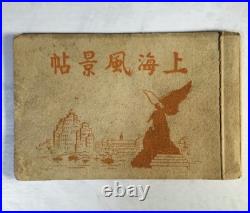
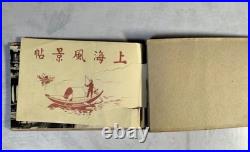
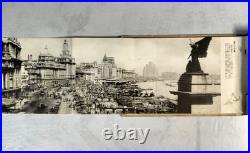
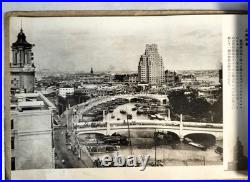
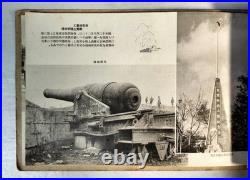
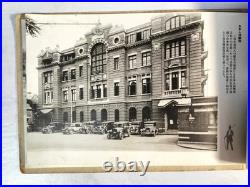
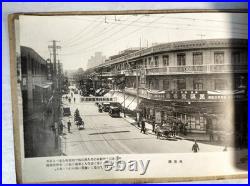
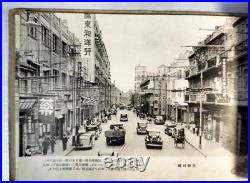
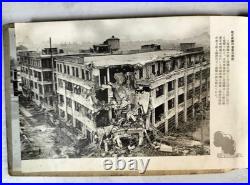
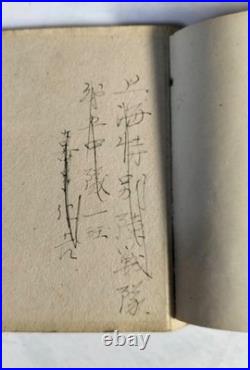
This is an original 1930s. Carried by a member of the Imperial Japanese Navy Special Naval Landing Force (SNLF) stationed in Shanghai. Although the photos are printed images and not real photographs, the book contains. Valuable scenes of pre-war Shanghai. Nanjing Road street scenes. The Japanese Club. Ruins and bomb-damaged buildings from the Shanghai Incident. (Matsue coastal artillery site). Early automobiles, rickshaws, trams, and mixed modern/colonial architecture. Inside the cover, there is a handwritten note indicating. Ownership by an SNLF soldier. Which adds historical significance. Items documenting everyday landscapes of pre-war Shanghai are increasingly scarce. This is a valuable reference piece for collectors of militaria, Asian history, or pre-WW2 Shanghai materials. Approximate 7-21days(To USA).

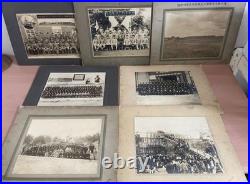
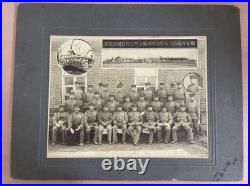
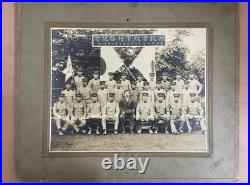
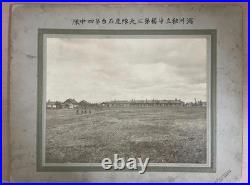
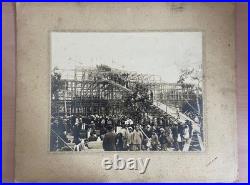
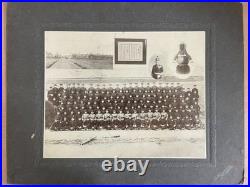
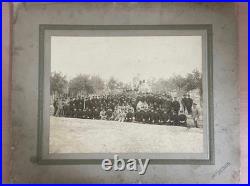
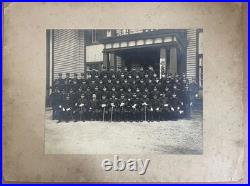
Thank you for your interest. This is a set of seven large-format military group photographs, all believed to be related to the Independent Garrison 3rd Battalion stationed in Manchuria during the late Taisho to early Showa period (1920s-1930s). Several mounts include inscriptions such as. (Independent Garrison 3rd Battalion, Manchuria). Barracks and training grounds of units stationed in Manchuria. Large formation group photos of officers, NCOs, and enlisted men. Scenes that appear to show construction work, training, and ceremonial events. These photographs were reportedly commemorative prints distributed to soldiers who served in the unit, and examples of this size and completeness are seldom seen on the market today. During the late Taisho and early Showa years, Japan’s Kwantung Army expanded its influence across Manchuria, and many independent garrison units were deployed to secure railways, protect settlements, and maintain order. This period represents the rising tension that later developed into the Mukden Incident (1931) and the establishment of Manchukuo. For this reason, materials documenting small-unit structure, daily life, and on-site conditions in Manchuria hold strong research value for scholars of Japanese military history and Manchurian studies. The original mounts show age-related wear, but the photographs themselves retain excellent clarity and atmosphere typical of the period. Highly recommended for collectors and researchers of. Kwantung Army and garrison units. Pre-WW2 East Asian military studies. International Buyers – Please Note. Thank you for your understanding.

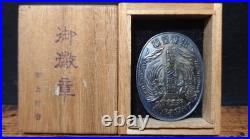
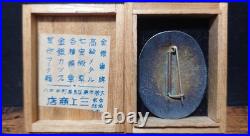
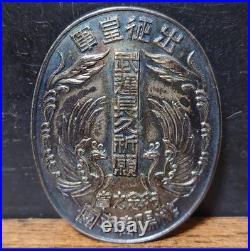
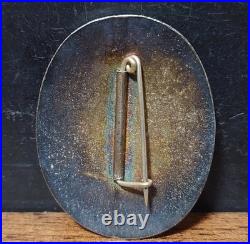
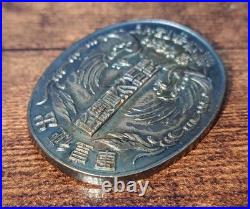
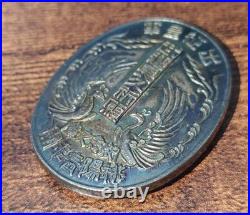
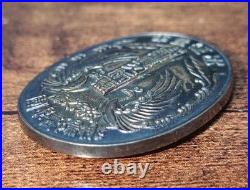
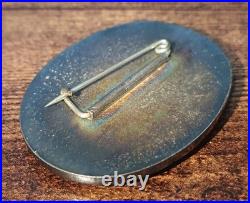
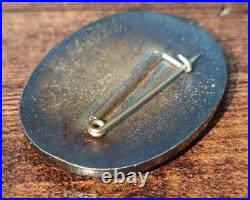
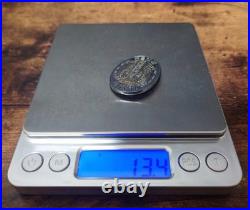
This is a rare pre-war Imperial Japanese “Good Luck in Battle” commemorative badge. Presented by the Toyo Youth Group (Toyo Seinen-dan) to a local soldier who was leaving for the front. What the inscriptions say. “Shusse Kogun” – “Departing Imperial Soldier”. “Bu’un Chokyu Kigan” – “Prayer for Long-Lasting Good Fortune in Battle”. “Toyo Seinen-dan Kinen-zo” – “Presented by the Toyo Youth Group”. The badge features two phoenixes, a traditional symbol of protection, rebirth, and auspicious fortune. What was the Youth Group (Seinen-dan)? The Seinen-dan was a pre-war local youth organization in every village and town in Japan. They supported community events and, importantly, organized send-off ceremonies for soldiers. Members would create and present items like this badge to wish for. Long-lasting fortune in battle. And to show the community’s support. This makes the badge not only a military item but a deeply personal community artifact. 3.5 cm tall. Weight: 13.4 g. Material: silver-tone metal (possibly silver, not tested). Condition: Light aging, very good for its age. Comes with original wooden box and the maker’s paper label (rare). A valuable piece for collectors of Imperial Japanese militaria, pre-WWII youth organizations, and historical badges. International Buyers – Please Note. Thank you for your understanding.

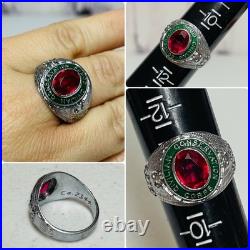
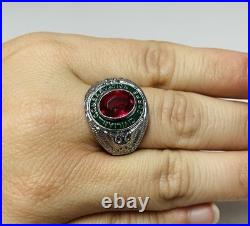
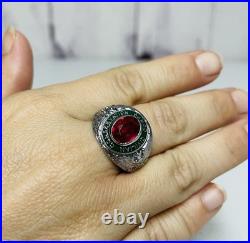
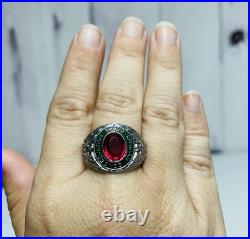
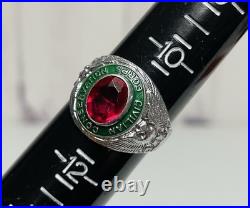
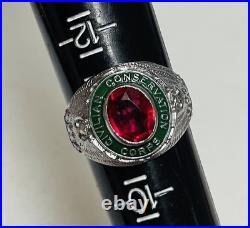
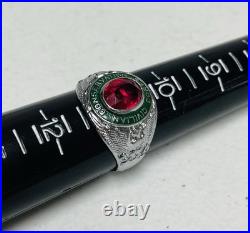
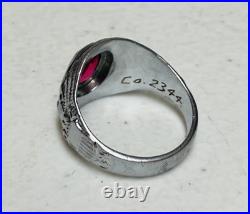
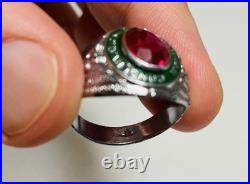
Vintage Civilian Conservation Corps Sterling Silver Enamel Ring Size 11 Rare! This ring is a collectible piece of U. Here’s some history. The Civilian Conservation Corps was a public work relief program that operated from. As part of President Franklin D. It provided jobs to young men during the Great Depression, focused on conservation projects like Planting trees, Building trails, shelters, and fire towers in national parks, and Erosion and flood control. It’s considered one of the most successful New Deal programs. This ring likely belonged to a CCC enrollee or was given as a commemorative or service piece. The ring has the following features. The name “Civilian Conservation Corps” embossed on the front. Green enamel inlay – green is common, referencing conservation. Jeweler’s mark on the inside. Rings like this were not mass-produced in large quantities. This is a rare ring. I couldn’t find another one like it anywhere.

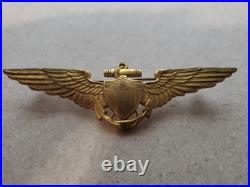
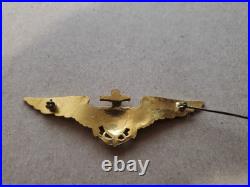
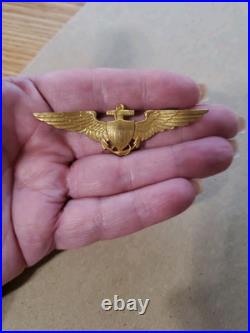
US Navy 1920′ – 1930’s Aviator Wings.

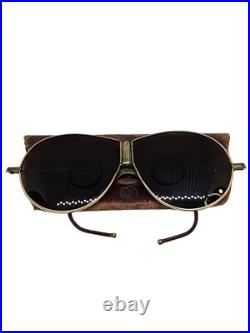
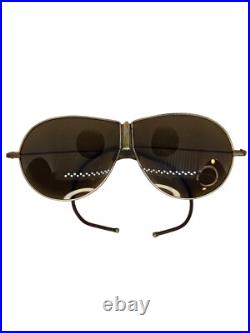
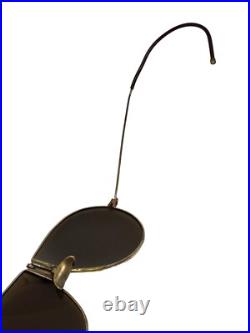

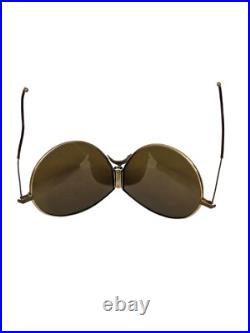
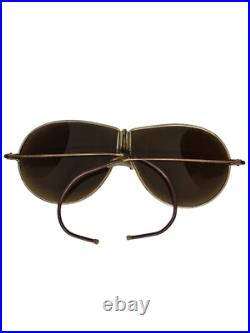
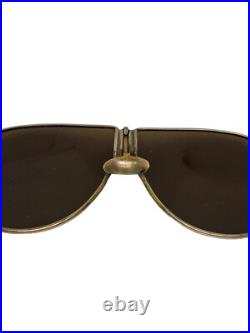
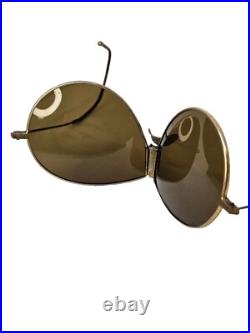
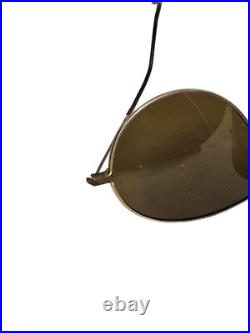
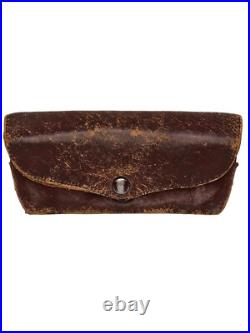
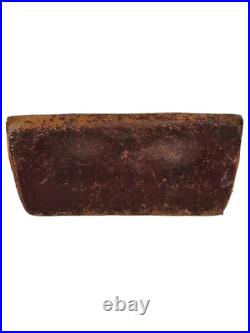
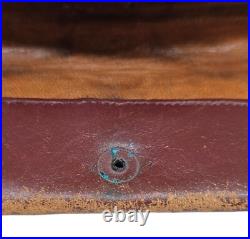
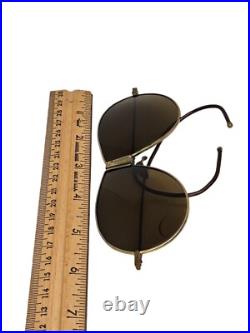
Vintage 1930s US Air Corps Type Aviator Sunglasses Looped Arms Single Nose Grip. The glasses are bendable at center. The sunglasses are in great condition. Please see pictures for additional details. Comes with a sunglasses case. Unfortunately, the rivet button is missing.