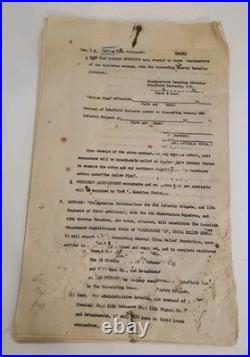
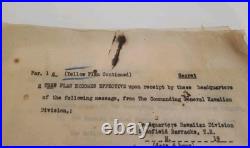
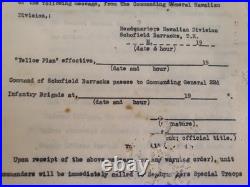
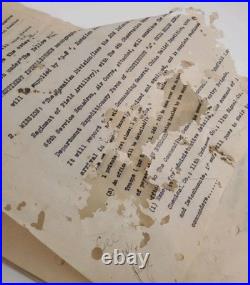
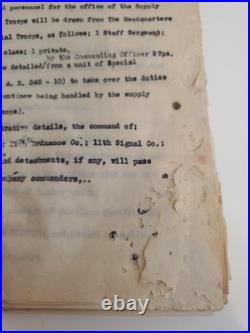
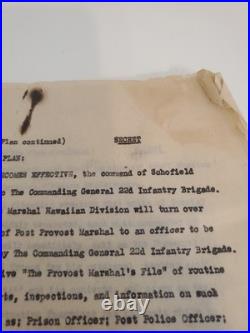
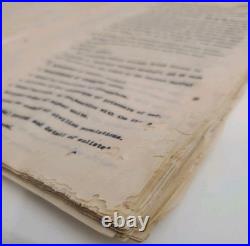
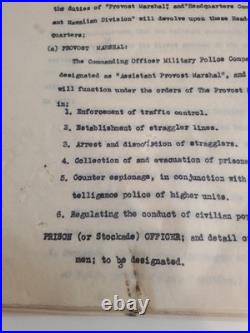
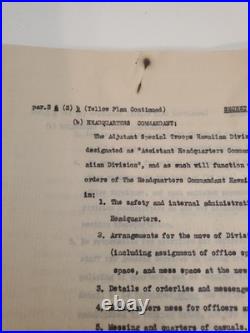
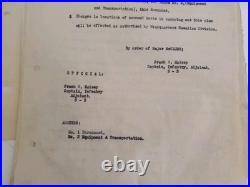
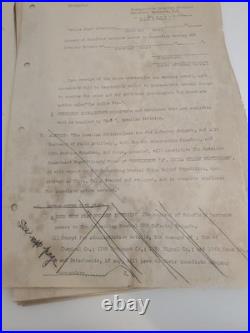
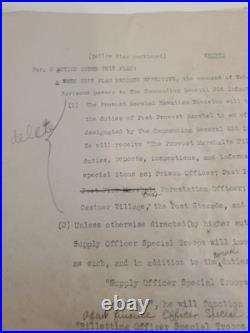
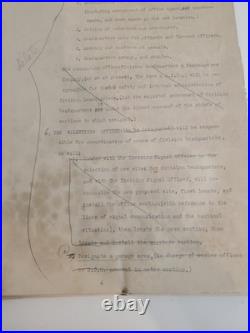
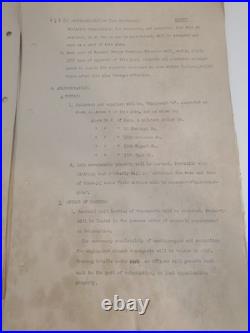
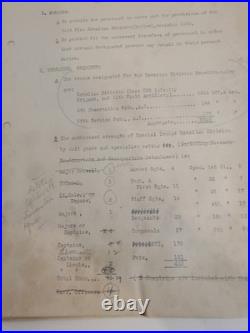
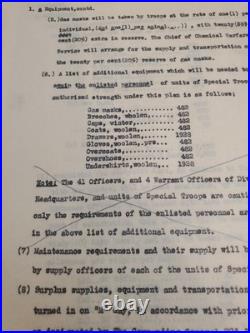
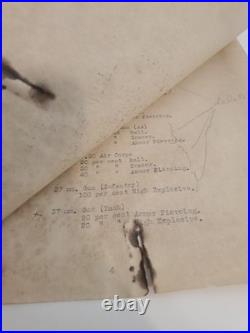
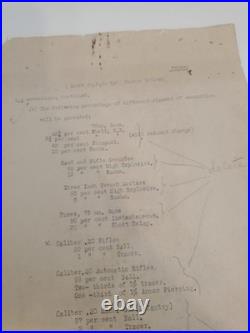
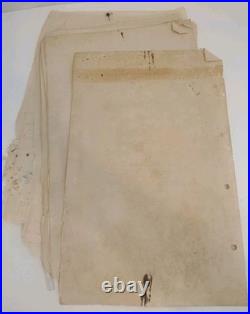

Up for sale is a rare, original multi-document packet from the U. Marked “SECRET” throughout, this is the “Yellow Plan” – one of the interwar color-coded war contingency plans for potential U. Expeditionary operations in China (protecting interests amid unrest, akin to Boxer Rebellion scenarios). 10-page printed Yellow Plan with handwritten edits, signed by Capt. & Adjutant Frank W. 10-page carbon copy of the main plan. Annex 1: Unit Plan Special Troops Hawaiian Division (1929 Revision) – 6-page printed + 6-page carbon. Annex 2: 3-page printed + 3-page carbon. Total 44 pages detailing personnel, equipment incl. Gas masks, woolens, rations, troop lists e. 22nd Infantry Brigade, 4th Artillery, 65th Service Regiment, mission for China Relief Expedition, activation procedures, and more. From the estate of Capt. Halsey (Adjutant, Hawaiian Division). These highly classified plans were withdrawn by 1939 and are seldom found in private hands – a unique piece of pre-WWII Pacific strategy history. Condition: Aged paper with some insect damage/fading (one paragraph partially unreadable), rusted clip marks removed, but overall legible and intact. No reproductions – authentic 1930s mimeo/printed originals. Perfect for militaria collectors, WWII historians, or museums interested in color-coded war plans (Yellow for China).

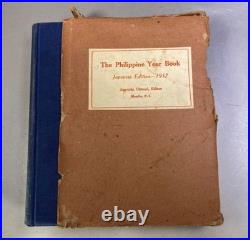
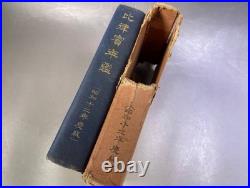
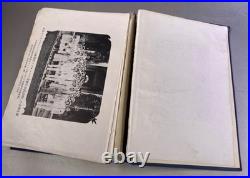
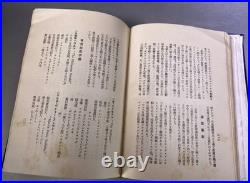
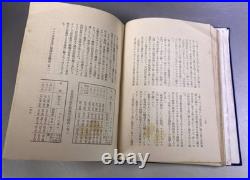
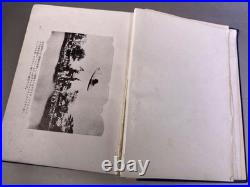
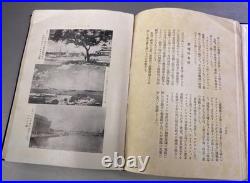
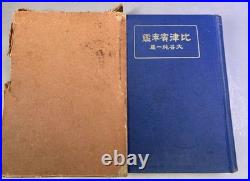
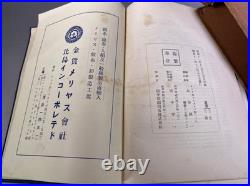
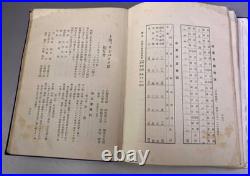
This item is the “Philippine Year Book – Japanese Edition (1937)”. Edited by Jun-ichi Otani and published in Manila. This large-format yearbook documents the Japanese community and economic activities in the Philippines immediately before World War II, during a period when Japan was expanding its overseas presence in Southeast Asia. Rather than being a military publication, this book focuses on civilian life and infrastructure, including. Japanese residents and communities. Commerce, trade, and industry. Population statistics and education. Medical and social institutions. Ports, transportation, and urban development. Period photographs and detailed statistical tables. Published in 1937 (Showa 12), just as the Second Sino-Japanese War began, this volume captures the pre-war reality of Japanese overseas society, before large-scale military occupation in the South. Because it was produced locally in Manila and written in Japanese, it serves as a primary historical source for researchers and collectors interested in. Philippine economic and social history. Japanese colonial and expansion-era studies. Asian trade networks before the Pacific War. The book comes with its original outer paper case. There is visible age wear, foxing, stains, and edge damage consistent with pre-war publications, but the contents remain readable and complete. This is not propaganda, but a rare civilian record of Japanese overseas life on the eve of major historical change. Approximate 7-21days(To USA).

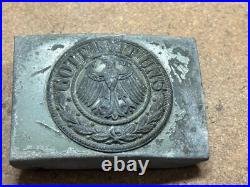
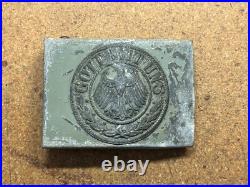
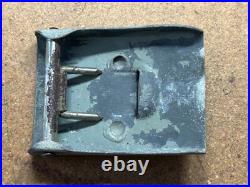
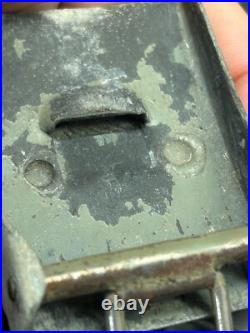
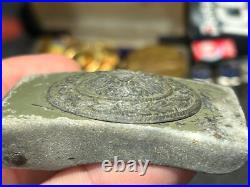
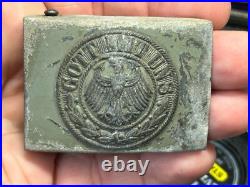
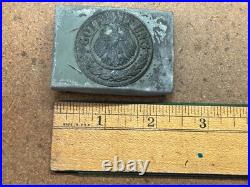
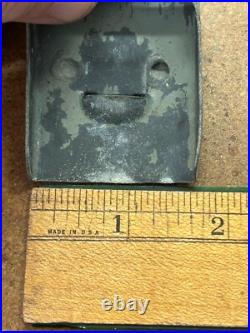
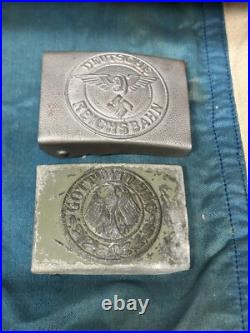
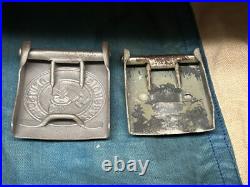
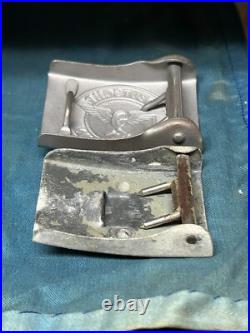
I have other WWII and military collectibles and unique items listed. Here is a rare extra small 2 piece construction Inter-War German Belt Buckle. This was made anywhere from 1920 until 1933. The last few pics show this buckle compared to one from WWII Germany. This one is noticeably smaller than most. I’ve also seen very few TWO PIECE belt buckles. IF SOMEONE HAS MORE INFO ON THIS, PLEASE MESSAGE ME AS I WOULD ALSO LIKE TO KNOW! Please see pics for more details. I HAVE NO CONTROL OVER IT. VOTE TO CHANGE THINGS!

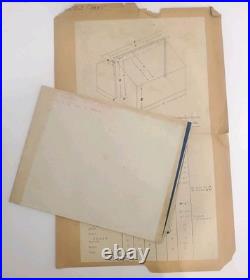
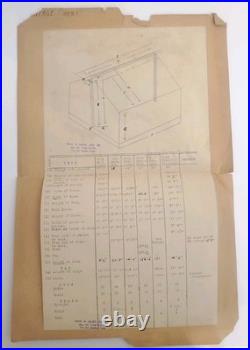
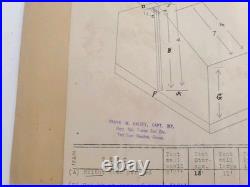
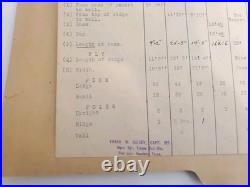
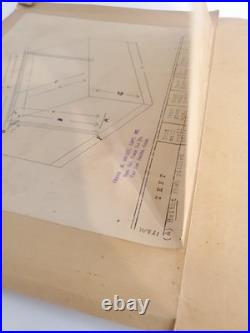



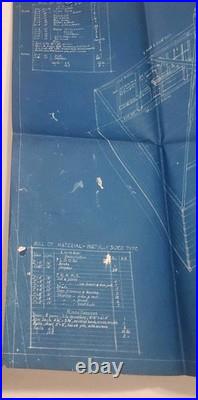
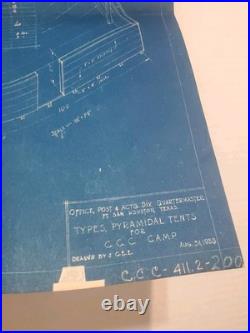
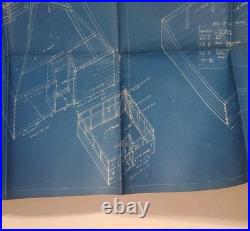
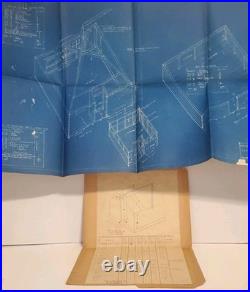
Presented is an original CCC tent blueprint for Ft Sam Houston. The Civilian Conservation Corps, established in 1933 under President Franklin D. Roosevelt, employed millions of young men in conservation and infrastructure projects during the Great Depression. The Army, including officers like Capt. Halsey, managed CCC camps, providing logistical support, including tents, uniforms, and equipment.

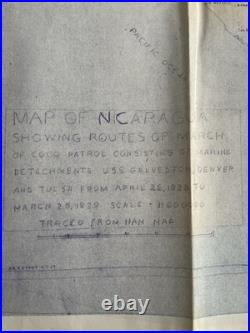
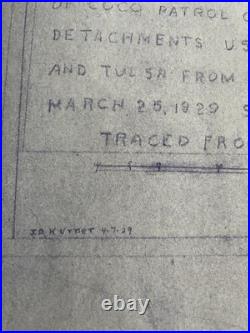
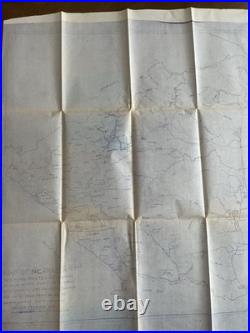
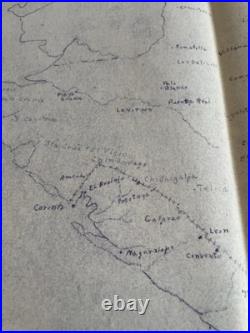
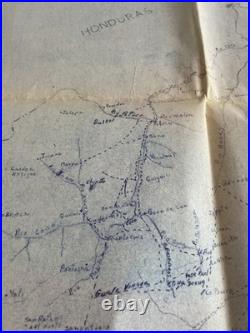
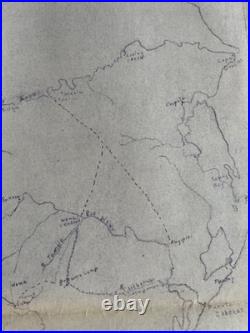
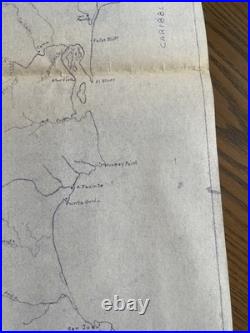
Marine Corps operational map of Nicaragua, titled. MAP OF NICARAGUA: Showing Routes of March of COCO Patrol Consisting of Marine Detachments USS Galveston, Denver, and Tulsa from April 26, 1928 to March 25, 1929. Hand-traced: The lower left corner is signed J. Scale: 1:600,000. Medium: Purple mimeograph/blueprint-style tracing on thin drafting paper. Purpose: Depicts actual Marine patrol march routes during the U. Coco River region. Towns, camps, rivers, patrol routes (dotted and solid). East Coast towns Bluefields, Puerto Cabezas, Monkey Point, etc. Interior towns Ocotal, Jalapa, Quilalí, Santa Cruz, etc. Southern border to Costa Rica. Pacific Coast areas including Corinto & León. Maps like this were typically produced in extremely small numbers within Marine units. Original fold lines throughout (as issued). Some edge wear, small corner creases. Mild yellowing consistent with 95-year-old paper. Purple mimeograph lines still legible; no major tears seen. Overall Very Good for age. ? Why this is significant. Maps like this were hand-produced inside the Marine Corps, and most did not survive. USMC history collectors. Sandino Rebellion / Banana Wars historians. Military cartography collectors. Nicaragua regional historical researchers.

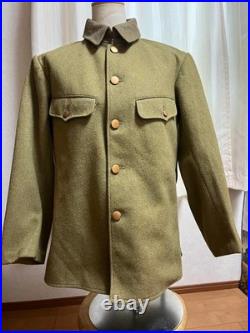
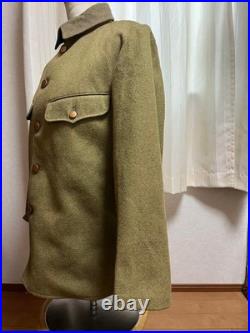
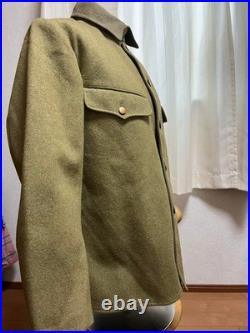
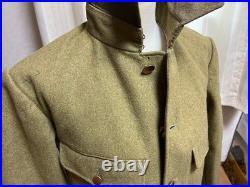
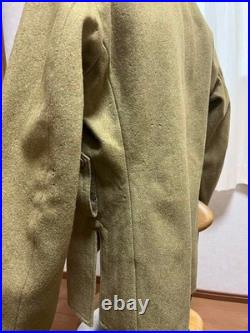
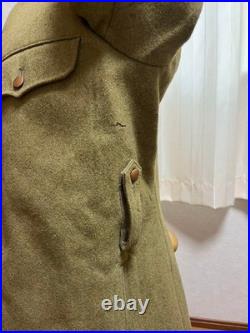
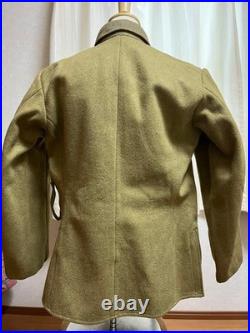
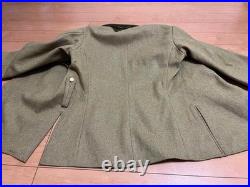
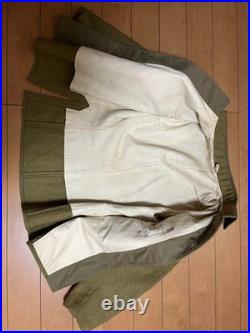
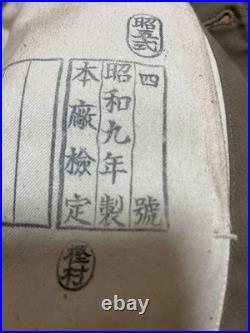
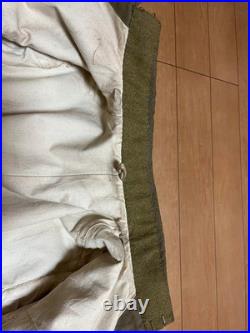
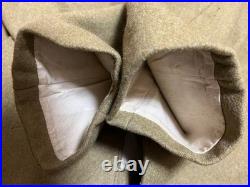
This is sho 5 type winter tunic from the former Japanese army. It’s from war time. The stand-up collar of the Showa 5th style has been modified to a folded collar. Made of wool and supplied by the government. Military stamps from the Army Clothing Factory Headquarters, made in 1934, size 4. There are some insect bites etc. On the wool, but the wool fabric and lining are in good condition. The length is approximately 66cm (not including the collar) and the shoulder width is approximately 43cm. Perfect for your collection or mannequin! How about military collectors? International Buyers – Please Note.

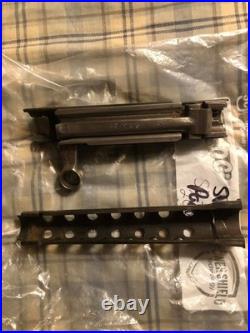
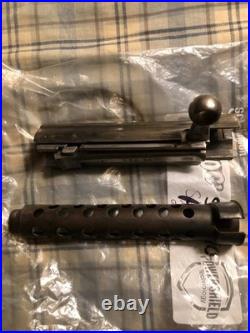
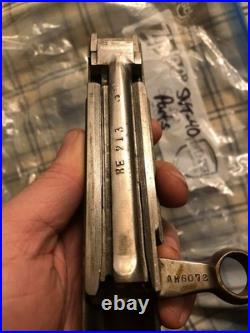

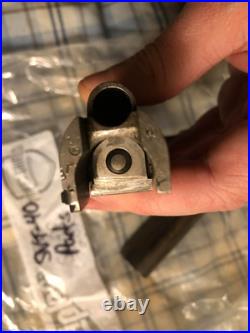
SVT Bolt and Heat Shroud. Product shown is what you will receive.

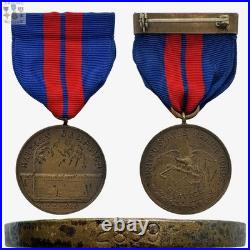
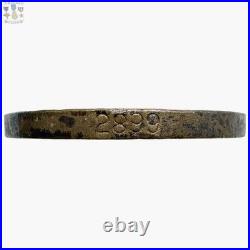
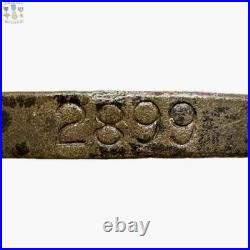
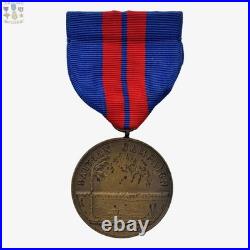
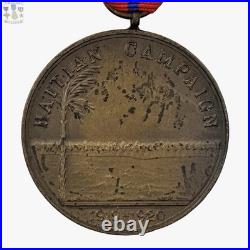
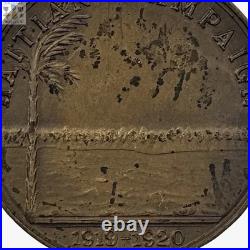

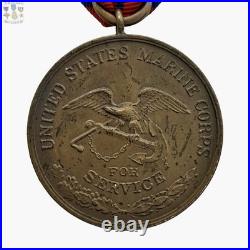

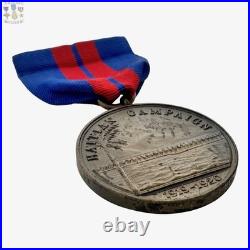
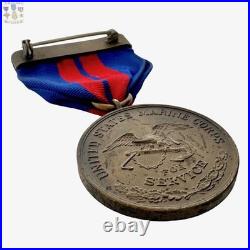
RE-RIBBONED DRAPE TESTED U. Specifically, it recognizes service between April 1, 1919, and June 15, 1920, encompassing operations against armed opposition or under circumstances deemed equivalent by the Department of the Navy. Please let me know if there’s anything else I can do for you!

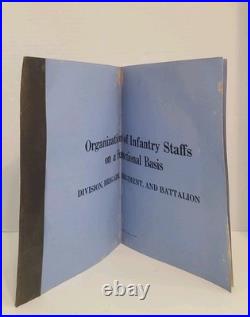
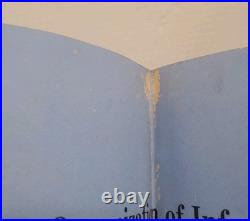

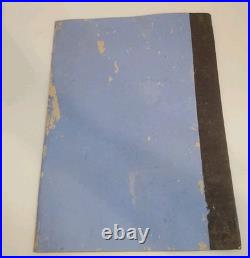

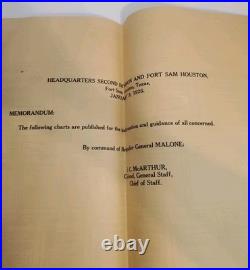

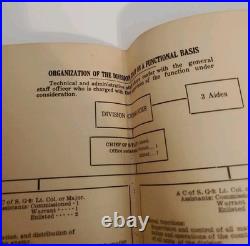
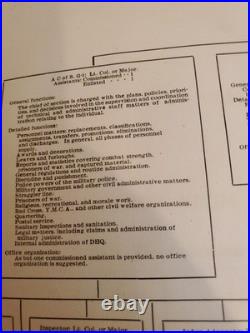
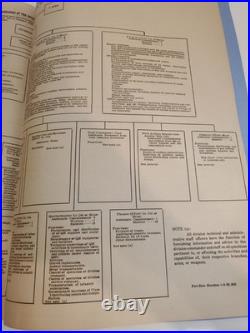
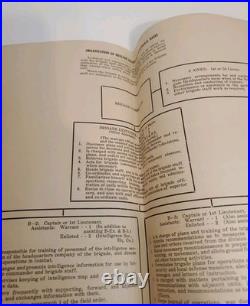
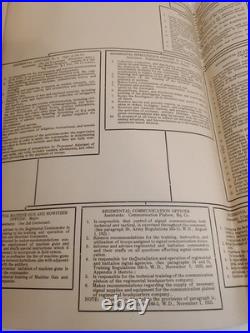
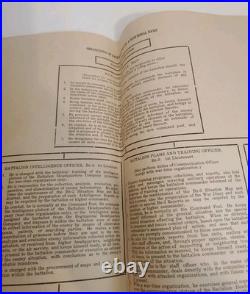
Up for sale is a scarce, original 1926 military training booklet produced at Fort Sam Houston, Texas (imprint: Fort Sam Houston -1-9-26; -500). Dated January 9, 1926, this large-format pamphlet (4 pages of content plus title spread) features detailed organizational charts and functional breakdowns of infantry staffs across division, brigade, regiment, and battalion levels. Printed on heavy blue paper, it includes intricate flowcharts detailing staff roles e. Chief of Staff, G-1 through G-4 sections, Adjutant, Intelligence, Supply, Plans & Training Officers, personnel counts (commissioned, warrant, enlisted), general/detailed functions, assistants, and notes on operations, training, logistics, and more. This reflects the U. Army’s interwar reorganization of infantry doctrine post-WWI, making it a valuable piece for military history.