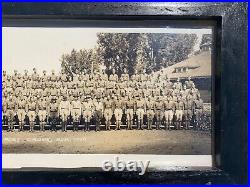
US Army Aviation Photos Fort Riley 9th Photo Section Fort Crook 1919-30 Lot 7
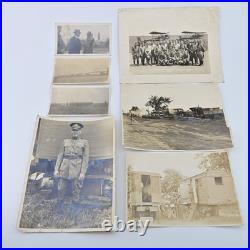
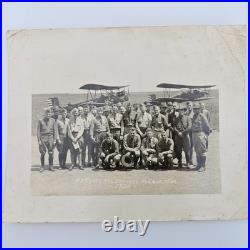
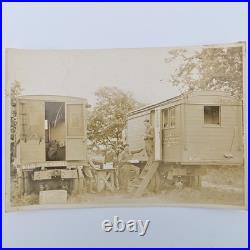
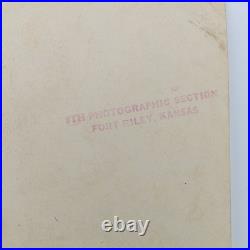
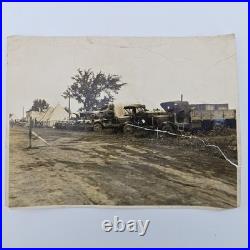
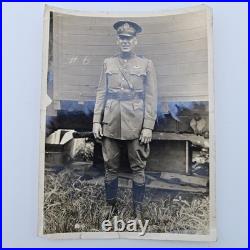
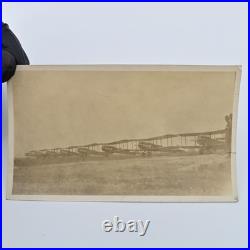
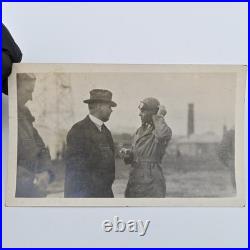

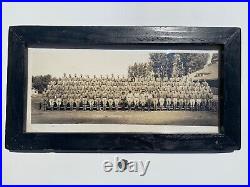
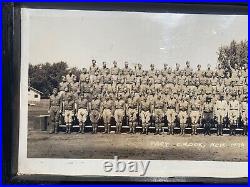
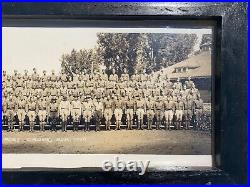
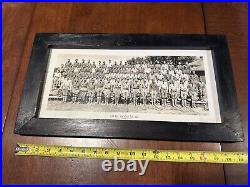
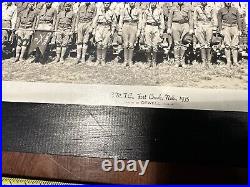
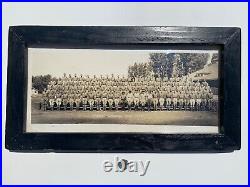
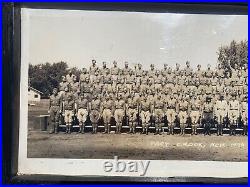
This seven-photograph collection documents U. Army military and aviation history from the immediate post-World War I period through the development of the interwar Army Air Corps. The group includes military photographic operations at Fort Riley, Kansas, early Army motor transport, biplane aviation, period military personnel, an unidentified marching formation, and a directly dated 1930 photograph of Air Corps Reserve officers at Fort Crook, Nebraska. Rather than representing one single event or unit, the photographs preserve several connected parts of the Army’s changing military and aviation system: aircraft and pilots, specialized photographic equipment, motorized ground support, organized troop formations and Reserve aviation personnel. Why These Photographs Belong Together. Military aviation required much more than airplanes and pilots. Observation and reconnaissance depended on photography; photography required specialized processing facilities; aviation and field units depended on vehicles and other ground infrastructure; and military training relied on large organized formations of personnel. Two photographs in this group carry matching “9th Photographic Section / Fort Riley, Kansas” stamps on their reverses. Another is directly captioned Air Corps Res. A newly added uniformed-serviceman portrait appears to belong to the same numbered-trailer sequence as the Fort Riley photographic-support material, while a separate marching-formation photograph preserves an unresolved possible Camp Lee research lead. The seven photographs are not represented as having been taken at one location, by one photographer, during one event or of one military unit. Where exact unit, date, place or identity remains unresolved, that uncertainty and the surviving research leads are intentionally preserved. 1919 Fort Riley – U. Military Aeronautics Dark Room Trailer 254. The strongest documentary photograph in this group shows five servicemen working between two mobile trailers. Lettering painted directly on one vehicle reads substantially: U. Military Aeronautics / Photo Dark Room Trailer / 254. An exact archival match to this photograph survives in the National WWI Museum and Memorial’s collections and is cataloged as a photograph of soldiers at Fort Riley, Kansas, in 1919. The archival record specifically associates the scene with military aeronautics and aerial photography. Mobile photographic facilities such as this allowed military photographic personnel to process negatives and prints near aviation and field operations rather than relying entirely on fixed laboratories. Photography was essential to early aerial observation, mapping, reconnaissance and military intelligence. The reverse of this physical print carries a 9th Photographic Section / Fort Riley, Kansas stamp. Historical records indicate that the 9th Photo Section became established at Fort Riley after 1919, so the stamp is best understood as a later unit or collection association rather than proof that the 9th Photo Section made the original exposure in 1919. Uniformed Serviceman Beside Numbered Trailer – Fort Riley Series Correlation. A newly added large-format portrait shows a uniformed Army serviceman standing directly in front of a wood-sided mobile trailer. A large chalk or painted “#6″ is visible on the trailer immediately beside him. This photograph became significantly more interesting when compared with the documented Fort Riley military-aeronautics trailer material preserved in the same broader collection. The photographic-support sequence includes another similarly constructed wood-sided trailer carrying a neighboring “#5″ marking. The horizontal siding, lower structural framing, placement of the number and sequential #5 / #6 markings create a strong visual case that the two photographs may belong to the same trailer or photographic-support series. The serviceman has not been identified, and the photograph itself carries no known location or date inscription. The Fort Riley / military-aeronautics relationship is therefore presented as a strong internal collection correlation rather than a confirmed identification of the exact trailer, man, date or location. 9th Photographic Section – Fort Riley, Kansas. During the interwar period, Fort Riley’s Marshall Field became an important Army aviation facility. Historical Army records place the 16th Observation Squadron and 9th Photo Section at Marshall Field during the 1920s. Photographic sections were an integral part of Army observation aviation. Their personnel processed and handled aerial and ground photographs used for reconnaissance, mapping, training and documentation. The matching 9th Photographic Section stamps on two prints in this collection provide a direct physical connection between the surviving photographs and that Fort Riley photographic organization. Fort Riley Military Motor Transport Photograph. The second stamped photograph shows a long row of early U. Military trucks beside tents and other camp infrastructure. Multiple vehicles carry visible “USA” identification and numerical markings. One vehicle marking appears to include U. , an abbreviation historically used for the United States Motor Transport Corps. Because the lettering is partially obscured, this reading should be considered probable rather than definitive. Most importantly, the reverse bears the same 9th Photographic Section / Fort Riley, Kansas stamp found on the 1919 dark-room trailer print. That matching physical stamp creates a direct archival/provenance relationship between the two photographs even though the exact date and specific activity shown in the motor-transport scene remain unresolved. Unidentified WWI-Era Marching Formation – Possible Camp Lee Context. Another original photograph shows a large formation of U. Soldiers marching in organized ranks across an open field. The exact unit, installation, date and purpose of the formation have not been identified. This photograph survived within the same broader historical collection as separate military-formation panoramas associated with Camp Lee, Virginia. One of those comparison photographs carries a visible “305 / C” guidon and has been very strongly identified through research as Company C, 305th Field Signal Battalion, 80th Division. The 305th Field Signal Battalion was part of the 80th Division’s Camp Lee organization during late 1917 through spring 1918, before the battalion departed for overseas service in May 1918. Division embarkation records show the 305th Field Signal Battalion sailing from Newport News aboard. On May 26, 1918. The marching photograph shares the broad World War I-era open-field formation character of the documented Camp Lee material. This made Camp Lee, approximately late 1917 to spring 1918, a reasonable research direction. However, this print has no identifying inscription, unit marking or recovered landmark that proves it was taken there or that it depicts the 305th Field Signal Battalion. The Camp Lee / 305th FSB information is preserved here as a research breadcrumb for future study rather than presented as a concluded identification. The comparison panoramas referenced above are part of separate collection material and are not included in this seven-photo lot. Original antique photographic prints: Seven physical photographs in varying sizes; see listing photographs for relative scale. All show varying age-related wear including edge/corner wear, creasing, surface marks, discoloration or soiling and mild waviness. Important condition issue: The Fort Riley military motor-transport photograph has a major tear beginning at the right edge and extending across much of the image area. The lower-right portion is nearly separated from the remainder of the print. The large #6 trailer portrait shows substantial age-related creasing, cracking/fold lines and edge wear visible in the listing photographs. Additional smaller creases, edge imperfections and surface wear are present across the collection. The 9th Photographic Section stamps remain visible on the reverses of the two associated Fort Riley prints. Please review all listing photographs closely for exact condition, size, markings and damage. 1919 Fort Riley U. Military Aeronautics Dark Room Trailer 254 photograph with 9th Photographic Section reverse stamp. Uniformed serviceman portrait beside trailer marked #6 – probable same numbered-trailer / photographic-support series. Military motor-transport photograph with matching 9th Photographic Section reverse stamp. Unidentified WWI-era marching military formation photograph with preserved possible Camp Lee research lead. 1930 Air Corps Reserve Officers at Fort Crook, Nebraska photograph. Unidentified early military biplane lineup photograph. Unidentified period aviator with civilian/suited man photograph. Seven physical original photographs total. Any ruler or other reference object shown for scale is not included. 1930 Air Corps Reserve Officers – Fort Crook, Nebraska. The largest group portrait is directly captioned in the negative: Air Corps Res. The photograph shows a large group of Army aviation personnel posed in front of two military biplanes. Because the identification and date are incorporated directly into the photograph, this print provides the strongest chronological anchor for the later end of the collection. Fort Crook’s aviation field was officially named Offutt Field in 1924, honoring First Lieutenant Jarvis J. During the interwar period, Offutt/Fort Crook supported Army aviation activity including Reserve flying and cross-country military operations. Period aviation directories place both Fort Crook/Offutt Field in Nebraska and Marshall Field/Fort Riley in Kansas within the broader Seventh Corps Area aviation organization. This creates meaningful institutional context between the two documented geographic anchors represented in this collection. The inscription identifies the men collectively as Air Corps Reserve officers, but individual officers have not been identified and no specific Reserve squadron is claimed. Unidentified Early Military Biplane Lineup. One smaller photograph shows a long line of early biplanes parked wing-to-wing on an open field. At the far right, two people are visible standing near the aircraft; at least one appears to wear period military-style headgear. The photograph was found with the other Army aviation material and its subject is consistent with early military aviation, but the exact aircraft models, unit, airfield and date have not been independently established. The aircraft also appear different from the two biplanes visible behind the 1930 Fort Crook Reserve officers, so the photographs are not represented as documenting the same event. Unidentified Aviator & Civilian. Another photograph shows an aviator in leather flying clothing, flight helmet and goggles speaking with a man in civilian or business attire. The scene provides an unusually close view of a period military-era pilot rather than aircraft alone. A tall tower-like structure and industrial chimney or stack are visible in the background, but the location has not been determined. The identities of both men, the event and the airfield remain unknown. The background tower is not represented as a radio or communications tower because its exact function cannot be established from the photograph alone. Exact archival match documented at Fort Riley in 1919; U. Military Aeronautics mobile photographic facility; later 9th Photo Section stamp. Uniformed serviceman beside wood-sided trailer marked #6; strong visual correlation to neighboring #5 trailer sequence, but exact man/place/date unresolved. Military vehicle camp; same 9th Photographic Section / Fort Riley reverse stamp; exact date unresolved. Possible Camp Lee research lead preserved because related collection material includes a 305/C Company C, 305th FSB panorama; connection unproven. Directly captioned Air Corps Reserve Officers photograph with two military biplanes at Fort Crook, Nebraska. Unidentified early military aviation scene showing multiple biplanes and personnel. Unidentified period aviator in flying gear speaking with a civilian/suited man; location and individuals unresolved. Army military & aviation photographs. 7 physical photographic prints. World War I-era through interwar U. 1919 and 1930; other prints undated. Fort Riley, Kansas; Fort Crook, Nebraska. Possible Camp Lee context for marching formation – unconfirmed. Military Aeronautics; 9th Photographic Section; U. Army Air Corps Reserve. Military photography, mobile darkroom, Army transport, troop formation, biplanes, pilots and Reserve officers. Varying; see listing photographs for scale. Antique / used with varying wear; one photograph has a major near-through tear. Historical identifications and context for this group were developed through comparison of the physical photographs with archival, institutional and period military-aviation records. Original captions, reverse stamps, vehicle markings, trailer numbers and other identifying details present on the physical photographs. National WWI Museum and Memorial archival photographic collections. Fort Riley historical records concerning Marshall Field and early Army aviation. Army organizational records for the 9th Photographic Section and observation aviation. Aviation directories documenting Fort Riley / Marshall Field and Fort Crook / Offutt Field. Official historical records concerning Fort Crook and the development of Offutt Field. Archival records concerning the United States Motor Transport Corps. Internal comparison with surviving Camp Lee military-formation material from the same broader photographic collection. Direct evidence on the physical photographs is distinguished from archival research, internal collection correlation and unresolved research leads. Unidentified aircraft, people, units and locations are intentionally left unresolved rather than presented as confirmed. From World War I Military Support to the Army Air Corps. Together, these photographs span an important transitional period in American military and aviation history. The 1919 Fort Riley dark-room trailer represents the photographic and reconnaissance infrastructure inherited from World War I. The numbered-trailer portrait may preserve another view from that same support environment. The unresolved marching formation adds a broader view of organized Army personnel during the same general era. The 9th Photographic Section stamps connect the collection with the specialized Army photography organizations that developed during the 1920s, while the Fort Crook portrait carries the story into 1930 and the institutional Army Air Corps Reserve. The seven photographs were created on different occasions and are not represented as one continuous unit archive. Their value as a group comes from their overlapping U. Army, military-photography and early-aviation subject matter, together with the direct Fort Riley / 9th Photographic Section / Fort Crook documentation and the research correlations preserved with the unidentified supporting images. Special care will be taken to support the severely torn motor-transport photograph during packing and transit. Additional disclosures appear directly below this description.